





Training for the Unexpected: Michigan’s Defensive Driving Certification
Grants Push Michigan Toward 900 Clean School Buses
The state is investing $35.9 million to help school districts expand their electric and propane bus fleets.
October 17, 2025
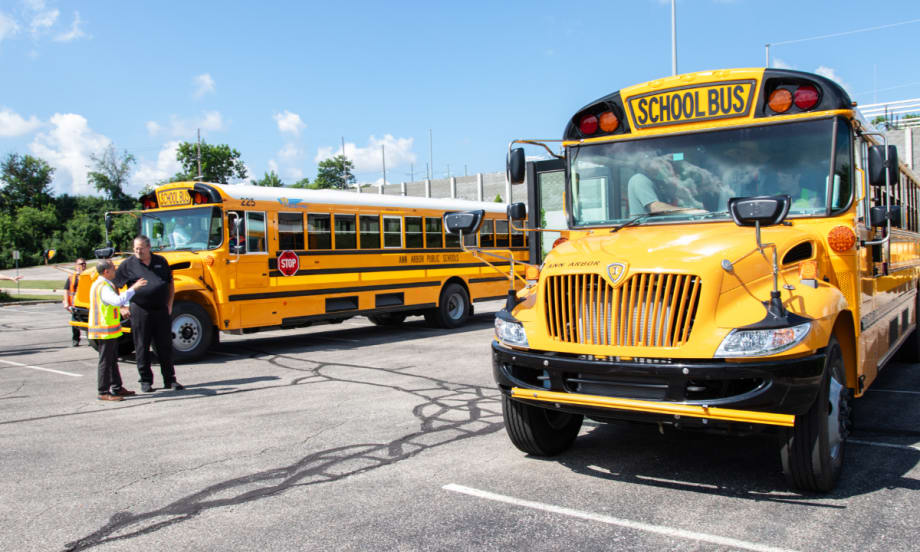
The new grants are round three of the CBEG program, which to date has awarded more than $81 million to Michigan schools for buses and associated infrastructure.
Photo: Durham School Services Ann Arbor
4 min to read
A new round of investment is increasing the number of sustainable school buses in Michigan. Approximately $35.9 million from the Michigan Department of Education's (MDE) $125 million Clean Bus Energy Grant (CBEG) program will help 23 schools and districts add 87 electric buses and 10 propane buses to fleets across the state.
"Children and others in their communities benefit from cleaner air," said Interim State Superintendent Dr. Sue C. Carnell. "We are happy to work with our partners at the MDE, Great Lakes, and Energy (EGLE) to make our state greener. The Clean Bus Energy Grant program helps us move toward Goal 3 in Michigan's Top 10 Strategic Education Plan, to improve the health, safety, and wellness of all learners."
Together, grants and rebates so far account for nearly 900 buses — some yet to be purchased or enter service. According to a state release, funds generally cover a significant portion of the costs for vehicles and infrastructure, with the balance paid from local sources.
EGLE has consistently supported clean power for Michigan's nearly 17,000 buses, which transport more than 800,000 students each year.
"Under Governor Whitmer's leadership, we are investing in clean-powered school buses, improving air quality, and freeing up schools to invest in the classroom, and advancing the goals of the MI Healthy Climate Plan," EGLE Director Phil Roos said.
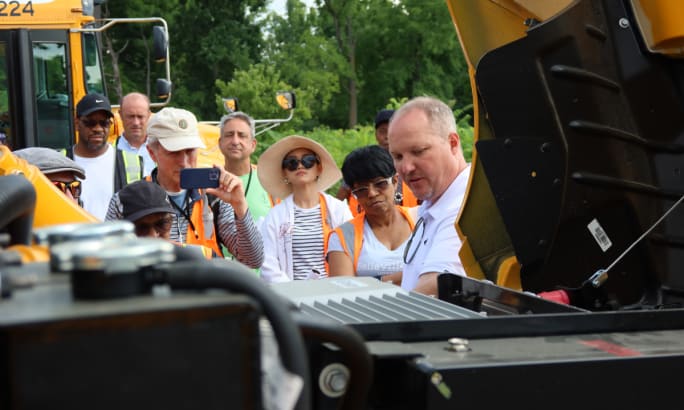
Event participants take a closer look under the hood of an electric school bus to see how clean energy technology replaces traditional diesel engines.
Photo: Durham School Services Ann Arbor
Partnerships Power Michigan's Shift to Cleaner School Buses
As part of the transition to clean buses, school districts across Michigan and nationwide are sharing solutions and working together to address challenges. Groups such as the Michigan electric school bus coalition, It's Electric!, advocate for school districts and support regular meetings with school transportation staff.
"We have enjoyed supporting school districts as they receive funds to transition their fleets from older, dirtier diesel buses to cleaner, quieter, newer models. This is a win for schools, kids, drivers, mechanics, and the surrounding community," said Kindra Weid, It's Electric! coalition coordinator. "We know change comes with challenges, but these buses are worth the effort, and school districts across Michigan are experiencing lower maintenance costs, quieter rides, and improved air quality as a result of their efforts in pioneering new technology."
"Safety on the school bus is my top priority," said Katrina Morris, executive director of the advocacy group Michigan Association of Pupil Transportation. "I want all kids to have a safe ride to and from school, so cleaner air for the kids, drivers, and the greater community is a victory. We are grateful for MDE and EGLE for supporting this transition to cleaner school buses."
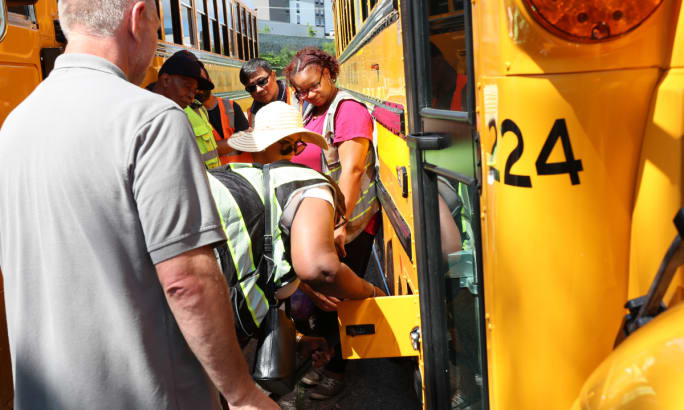
Event attendees try out the bus’s charging equipment, learning how districts are powering the new vehicles.
Photo: Durham School Services Ann Arbor
Michigan's Path to a Greener Fleet
The new grants are the latest step in Michigan school transportation's clean-power transition. Milestones along the way include:
In 2019 and 2020, EGLE awarded about $13 million in grants through its now-closed Fuel Transformation Program to purchase 317 electric, clean diesel, and propane school buses and to support infrastructure for more than 25 districts across the state.
In November 2022, the U.S. Environmental Protection Agency (EPA) invested $54 million from its Clean School Bus Rebates program toward 138 new electric school buses and infrastructure for 25 Michigan school districts, from Southeast Michigan to the Upper Peninsula. The EPA's Clean School Bus Program (CSBP) of grants and rebates provides $5 billion nationwide over fiscal years 2022-26.
In January 2024, three districts each received $5.9 million in CSBP funding to purchase 15 clean-powered school buses. Reports at the time said five additional Michigan districts were expected to receive 21 new clean buses through multistate CSBP grants.
In May 2024, the CSBP rebate competition announced $23.98 million to help 27 Michigan schools and districts buy 97 buses powered by electricity and three powered by propane.
Also in 2024, MDE announced its first and second rounds of CBEG program funding: nearly $30 million in June to help 29 school districts and intermediate school districts buy a total of 114 buses powered by electricity, propane, or natural gas; and $15.2 million in October to help 21 districts buy 40 electric buses and 17 propane buses.
The new grants are round three of the CBEG program, which to date has awarded more than $81 million to Michigan schools for buses and associated infrastructure. Applications for the final CBEG round, totaling approximately $44 million, are due Dec. 18, 2025.
More Alternative Fuels

CALSTART and Forth Combine to Form Catalyst Mobility
The new name represents a renewed vision for the nonprofit focused on advancing clean, equitable, and affordable transportation solutions that move people and goods.
Read More →
Alt-Fuel Moves: New Buses, Charging Hubs & Real-World EV Testing
Propane and electric school bus deployments continue to grow as districts add new vehicles, expand charging infrastructure, and gather more real-world operating data.
Read More →
Fewer Electric School Bus Models Reshape the U.S. Market
WRI’s latest buyer’s guide points to a consolidating electric school bus market, but fewer options may reflect a maturing industry rather than fewer meaningful choices for school bus operators.
Read More →
The Fuel Budget You Can Actually Predict: How Propane Autogas Keeps Money in the Classroom
Learn how propane autogas helps school districts manage fuel costs with predictable pricing, lower maintenance, and reduced emissions from former transportation director Joel Stutheit.
Read More →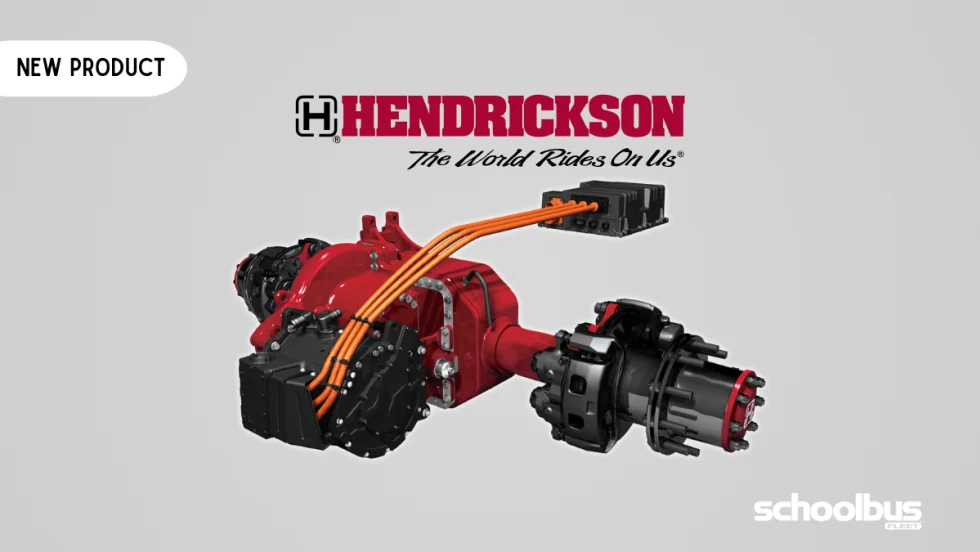
Hendrickson, Driventic Introduce New Electric Powertrain for School Buses
ELECTRAAX, the electrified, lightweight drive axle offers integrated ePowertrain efficiency and modular flexibility for Class 6–7 school bus use.
Read More →
The Mobility House Joins PowerFlex in Fleet Electrification Deal
The acquisition combines intelligent charging software, bidirectional charging expertise, and fleet electrification services to support the growing adoption of electric school buses across North America.
Read More →
Alt-Fuel Moves: Electric School Bus Investments Hit the Road
See which districts across the U.S. are putting electric school buses into service, expanding charging infrastructure, and planning the next phase of fleet electrification.
Read More →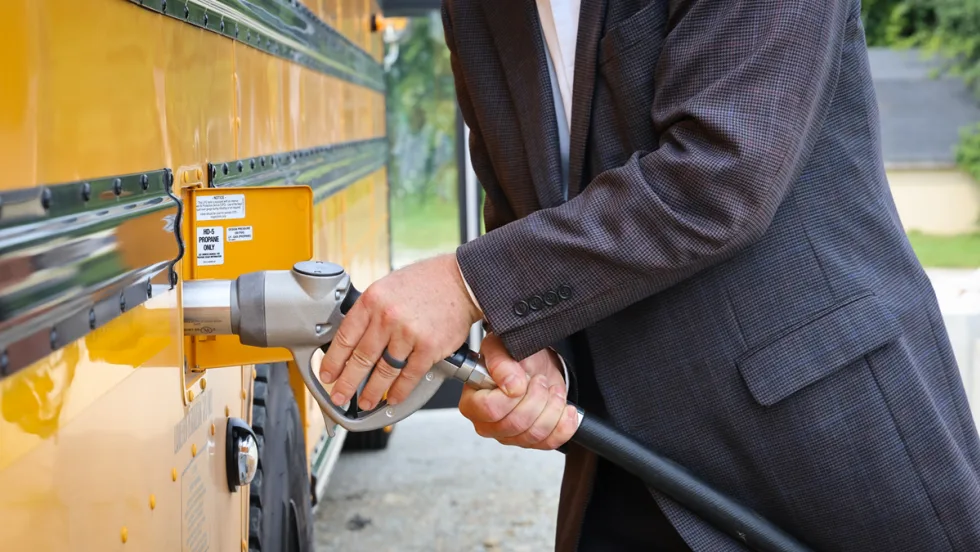
With Fuel Volatility Ahead, School Districts Turn to Propane
While diesel prices peaked above $5 this spring, districts with propane autogas-powered fleets paid under $2 per gallon, according to PERC.
Read More →
EPA Unveils Proposed Changes to 2027 Heavy-Duty Engine Rules
The federal agency has proposed changes to next year’s targets that would eliminate DEF derates, ease warranty requirements, and retain current NOx emissions standards.
Read More →
Alt-Fuel Moves: EV Charging & Infrastructure Projects Gain Momentum
The latest developments include new funding, charging infrastructure, utility investments, and fleet technologies designed to support the transition to electric school buses nationwide.
Read More →