




First Blue Bird Electric School Buses Delivered
Customers in California and Ontario will operate a total of seven Blue Bird Type D electric buses and one Micro Bird Type A electric model.

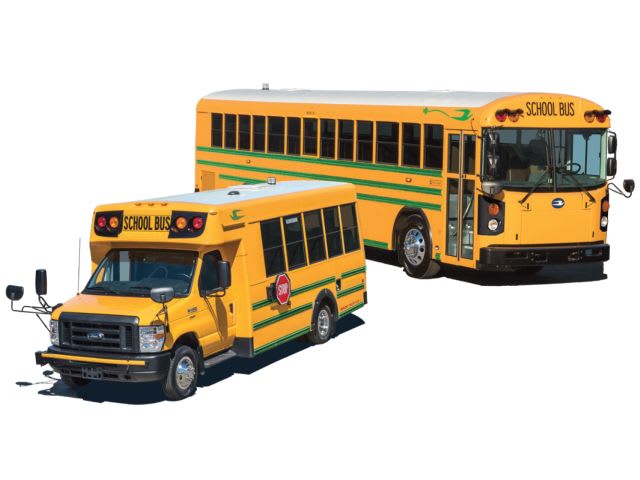
Customers in California and Ontario will operate a total of seven Blue Bird Type D electric buses (right) and one Micro Bird Type A electric model.
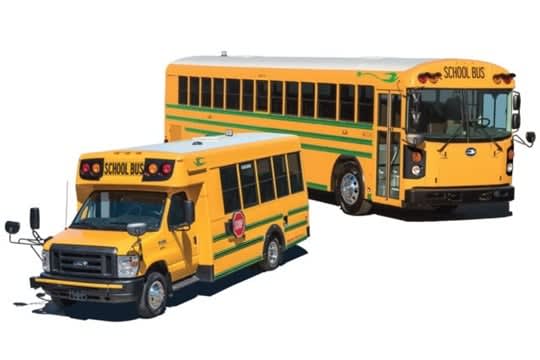
Customers in California and Ontario will operate a total of seven Blue Bird Type D electric buses (right) and one Micro Bird Type A electric model.
Blue Bird has delivered its first electric-powered school buses to customers in California and Ontario, the manufacturer announced on Thursday.
Seven Type D All American Rear Engine Electric school buses and one Type A Micro Bird G5 Electric school bus will be in operation this year, according to Blue Bird.
The customers who obtained electric school buses were aided by grants from various entities and government programs. Blue Bird said that the grants helped to pay for all or part of the cost of the buses, as well as some necessary infrastructure costs.
Jack Matrosov of Wheelchair Accessible Transit, based in Toronto, Ontario, added a Micro Bird G5 Electric school bus to his fleet through the Electric and Hydrogen Vehicle Incentive Program (EHVIP), which is offered by Ontario’s government.
"When the EHVIP grant became available, we were thrilled to find out that Micro Bird had an electric bus solution in the works,” Matrosov said. “Over 90% of our fleet are Micro Bird buses, and we feel these buses offer great quality and good local service when needed.”
The larger, 72-passenger buses ordered by customers in California have a similar design to the Blue Bird Type D compressed natural gas (CNG) school buses that many school districts in the state already operate. Districts utilized California-based grants to help cover the cost of the electric buses and infrastructure.
"We were excited to find out, in the midst of the search process, that Blue Bird had created an electric bus solution,” said Hector Morales, supervisor of maintenance, operations, and transportation for Mountain View School District in El Monte, California. “Our mechanic is familiar with Blue Bird Type D buses, so it was an easy choice for our fleet."
"We decided to go with Blue Bird's electric school buses, because we know the level of service we require will be available to us," said Mark Toti, transportation manager at Bellflower (Calif.) Unified School District. "We currently operate 26 Blue Bird CNG buses, and feel comfortable relying on local support from Blue Bird in order to introduce this new technology to our existing fleet."
While grants were widely responsible for the purchase of these electric buses, Blue Bird officials said they see a future in this technology that will make it more affordable and widespread as a viable alternative-fuel solution.
“We are thrilled to see our all-new Blue Bird electric school buses going into the hands of customers for the first time,” said Phil Horlock, president and CEO of Blue Bird Corp. “With zero emissions, our electric school buses provide the cleanest possible environment for our customers and the children they transport. Also, with battery technology constantly advancing and becoming more efficient, we foresee a great future for growth.”
Blue Bird and Micro Bird announced their development of electric-powered school buses in 2017, promising deliveries starting in 2018.
More Alternative Fuels

CALSTART and Forth Combine to Form Catalyst Mobility
The new name represents a renewed vision for the nonprofit focused on advancing clean, equitable, and affordable transportation solutions that move people and goods.
Read More →
Alt-Fuel Moves: New Buses, Charging Hubs & Real-World EV Testing
Propane and electric school bus deployments continue to grow as districts add new vehicles, expand charging infrastructure, and gather more real-world operating data.
Read More →
Fewer Electric School Bus Models Reshape the U.S. Market
WRI’s latest buyer’s guide points to a consolidating electric school bus market, but fewer options may reflect a maturing industry rather than fewer meaningful choices for school bus operators.
Read More →
The Fuel Budget You Can Actually Predict: How Propane Autogas Keeps Money in the Classroom
Learn how propane autogas helps school districts manage fuel costs with predictable pricing, lower maintenance, and reduced emissions from former transportation director Joel Stutheit.
Read More →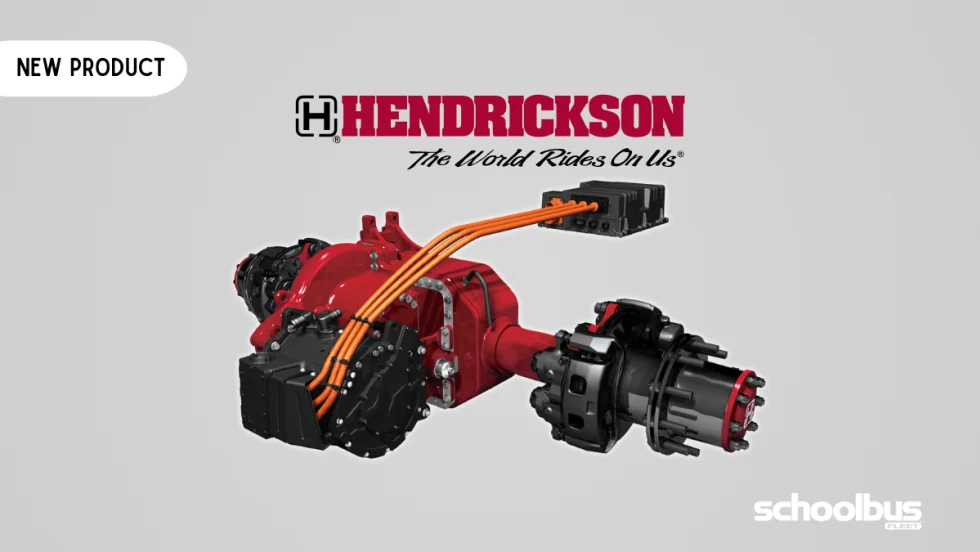
Hendrickson, Driventic Introduce New Electric Powertrain for School Buses
ELECTRAAX, the electrified, lightweight drive axle offers integrated ePowertrain efficiency and modular flexibility for Class 6–7 school bus use.
Read More →
The Mobility House Joins PowerFlex in Fleet Electrification Deal
The acquisition combines intelligent charging software, bidirectional charging expertise, and fleet electrification services to support the growing adoption of electric school buses across North America.
Read More →
Alt-Fuel Moves: Electric School Bus Investments Hit the Road
See which districts across the U.S. are putting electric school buses into service, expanding charging infrastructure, and planning the next phase of fleet electrification.
Read More →
With Fuel Volatility Ahead, School Districts Turn to Propane
While diesel prices peaked above $5 this spring, districts with propane autogas-powered fleets paid under $2 per gallon, according to PERC.
Read More →
EPA Unveils Proposed Changes to 2027 Heavy-Duty Engine Rules
The federal agency has proposed changes to next year’s targets that would eliminate DEF derates, ease warranty requirements, and retain current NOx emissions standards.
Read More →
Alt-Fuel Moves: EV Charging & Infrastructure Projects Gain Momentum
The latest developments include new funding, charging infrastructure, utility investments, and fleet technologies designed to support the transition to electric school buses nationwide.
Read More →