




FCC Votes to Cut E-Rate Funding for School Bus Wi-Fi
Federal funding for internet connectivity on school buses has been on the line since the E-Rate program expanded, and a late September ruling ends the approx. $40M spend as the FCC reverses its 2023 decision.

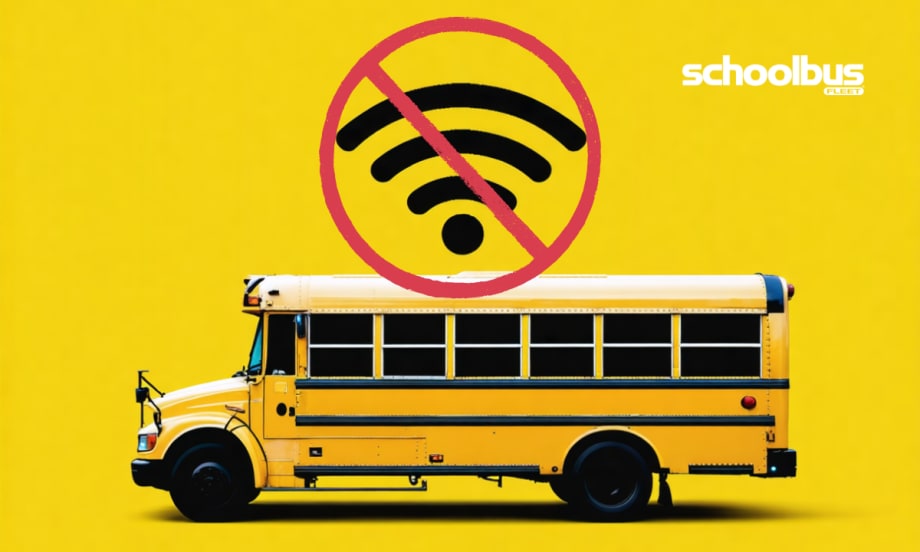
In early September, the FCC chair proposed ending federal funding through the E-Rate program; now, the agency officially reversed its 2023 ruling.
Photo: School Bus Fleet. This image was created in whole or part using GenAI.
On September 30, 2025, the Federal Communications Commission (FCC) announced that school bus Wi-Fi is no longer eligible for E-Rate funding, reversing the agency’s 2023 decision that permitted its use.
A federal release cited lack of “educational purpose” as defined by E-Rate program rules and noted conflicts with the statute’s direction to enhance access to E-Rate-eligible services for classrooms and libraries.
Through the action, the Universal Service Administrative Company will be directed to deny 2025 pending funding requests for E-Rate funds to support the use of Wi-Fi on school buses.
FCC Chair Brendan Carr proposed the action earlier in September. "...giving kids unrestricted access to the internet while riding the school bus is bad policy," Carr said in a statement. "Children are among the most impressionable members of our society. Parents have a right to decide when — and how — their kids access the internet. Wi-Fi on school buses removes both the supervision that helps keep kids safe and the parental control that protects them from harmful or inappropriate content."
Carr was appointed by the Trump administration and began the role Jan. 20, 2025. Previous FCC chair was Jessica Rosenworcel.
The E-Rate program was authorized by Congress in 1996. In 2023, the FCC expanded its E-Rate program. Districts and libraries that applied for funding for fiscal year 2025 requested $42.6 million to use E-Rate funds for hotspots and $15.3 million for school bus Wi-Fi, according to federal data.
Industry Reactions
While some applaud the decision, not all educational agencies and industry proponents agree, and some are stepping up to serve those affected.
FCC's own commissioner Anna M. Gomez dissented the vote, saying: "For more than 25 years, the FCC’s E-Rate Program has helped us narrow the digital divide by making telecommunications and information services more affordable for schools and libraries...The Commission’s move to roll back federal funding for hotspots and Wi-Fi on school buses ignores our nation’s educational landscape today and the need to equip students with digital skills for the future. Let me be clear, these decisions benefit no one."
Mission Telecom Discount Matching Opportunity
Mission Telecom announced an offer to help schools and libraries remain whole after losing the federal E-Rate funding. The company will honor the post-discount applicant share of cost on Form 471, not the quote cost from the provider, covering the loss of E-rate subsidies.
To qualify for Mission Telecom's new offer, schools and libraries need to complete this sign-up form. Mission Telecom will then match their post-discount cost for broadband, guaranteeing unlimited 4G/5G Wi-Fi service at the same rate they would have paid under E-Rate.
"Just two weeks ago, the FCC made the unfortunate decision to end E-Rate support for school bus Wi-Fi and mobile hotspots. But that decision widens the digital divide," said Mark Colwell, director of broadband operations at Mission Telecom. "Communities still rely on these tools to keep students and library patrons connected. That's why Mission Telecom is stepping in to help schools and libraries worried about maintaining this critical connectivity with tight budgets. By matching their subsidized E-Rate costs, we are helping provide affordable, reliable broadband so that every student and lifelong learner can stay connected."
Kajeet Commits to Support
Connectivity provider Kajeet used the news to reaffirm its commitment to America’s school districts and libraries as funding ends. “Our mission hasn’t changed because policy winds shifted,” said Landon Garner, president of Kajeet. “We are here for districts and libraries — full stop. We have built contingency plans so teaching and learning don’t miss a beat, and we bring a variety of options to the table to fit budgets and timelines. From filtered hotspots and school-bus connectivity to private wireless networks and multi-carrier coverage, we’ll help education and library leaders keep students and patrons connected — when access to connectivity is a crucial part of success and equity in our society."
A Kajeet blog post said that "(program) critics argue that student connectivity through school-provided hotspots could lead to unrestricted access to platforms like TikTok, but the data tells a different story. In 2024 alone, Kajeet’s advanced filtering technology blocked over 2.7 billion attempts to access TikTok on E-Rate-funded devices, reinforcing the effectiveness of these safeguards."
“While disappointed in the vote by the FCC today, our team won’t let districts and libraries go it alone,” Garner added. “We’ll map a path that sustains equitable access and keeps modern connectivity tools at the forefront of those who need them most.”
Educational Agencies Respond
The School Superintendents Association's Chief Advocacy & Governance Officer Noelle Ellerson Ng expressed disappointment in the FCC vote, calling it a backward step for student connectivity, especially in low-income or rural communities.
“For too many children and library patrons, especially in rural and low-income communities, a borrowed hotspot or long commute to school has been their only chance to complete their schoolwork, apply for jobs, or access telehealth,” added Joey Wender, executive director of Schools, Health & Libraries Broadband (SHLB) Coalition, in a statement. “Removing these connections ignores the reality that learning doesn’t stop at the school door or the library steps. The Homework Gap predated the pandemic and will now, unfortunately, only widen as a result of this proposal.”
More Policy & Regulations
Ohio Transportation Workgroup Calls for End to 'Impractical to Transport' Payments
A final report from Ohio's Pupil Transportation Workgroup proposes ending "impractical to transport" payments and expanding transportation options through regional partnerships, but not all industry pros agree on the approach.
Read More →
The BUILD America 250 Act Has Big Implications for School Buses, Too [Updated]
Buried within a sweeping federal transportation bill are provisions that could affect school bus driver requirements, illegal passing enforcement, and even the future role of autonomous technology in pupil transportation.
Read More →
School Bus Laws to Watch: New York Delays EV Mandate
Plus, federal lawmakers seek new funding for school bus safety as states weigh stop-arm enforcement, disability protections, and education spending.
Read More →
School Bus Laws To Watch: Seat Belt Bills, Funding Fights & EV Changes
From national bills on seat belts and driver oversight to driver awareness campaigns referencing “Finn’s Rule” and ongoing transportation funding debates in Alaska, here’s the latest in school bus legislation across the U.S.
Read More →
School Bus Laws To Watch: Driver Shortages, EV Debates & Safety Upgrades
From driver shortage solutions in Tennessee and rural connectivity debates in Utah to new safety laws in Wisconsin and ongoing electric bus mandate discussions in New York and Connecticut, here’s the latest in school bus legislation across the U.S.
Read More →
School Bus Laws To Watch: Stop-Arm Enforcement, EV Mandates & Seat Belts
From North Dakota public charter school regulations, tracking illegal school bus passing consequences in multiple states, and the continued debate on New York’s electric school bus mandate, here’s the latest in school bus legislation across the U.S.
Read More →
School Bus Laws To Watch: Anti-Trafficking Curriculum, Passing Loopholes & Tougher Penalties
From Nebraska CDL training add-ons, tackling stop arm passing loopholes in Minnesota, and increased penalties for school bus driver DUIs and firearm incidents, here’s the latest in school bus legislation across the U.S.
Read More →
School Bus Laws To Watch: Driver Penalties, Funding Fights & New Safety Initiatives
From New York driver penalty changes to stop-arm camera programs, reliable special education transportation, and a Kentucky budget shortfall, here’s the latest in school bus legislation across the U.S.
Read More →
School Bus Laws To Watch: Stop-Arm Cameras, Safety Retrofits & Driver Shortage Fixes
From Maine bus safety upgrades to stop-arm camera bills, electric bus funding, and an Alabama workforce solution, here’s the latest in school bus legislation across the U.S.
Read More →
State Grant Program Advances School Bus Safety Upgrades Across Ohio
$10 million in state grants will fund safety upgrades and new features on school buses serving students across the Buckeye State.
Read More →