




Dubai sees increases in school bus ridership, safety
Officials say that Dubai’s school transport law and partnerships with international entities, including NAPT, have helped bolster the Emirate’s pupil transportation system.

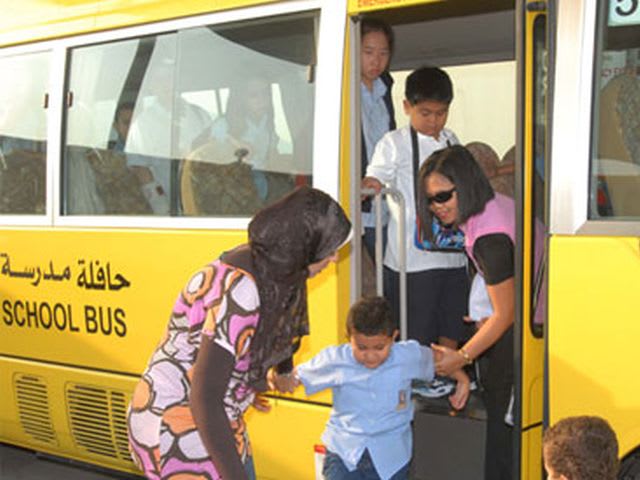
Officials say that Dubai’s school transport law and partnerships with international entities have helped bolster pupil transportation.
DUBAI, United Arab Emirates — School transportation in Dubai has grown and become safer over the past several years, officials announced this week.
The Public Transport Agency at the Roads and Transport Authority (RTA) said that there were increases in the numbers of students transported, buses deployed and bus conductors appointed during the period of 2011 to 2014.
“The number of students lifted by school transport services has increased by 14% between 2011 and 2014,” said Adel Mohammed Shakri, director of planning and business development at RTA’s Public Transport Agency.
Shakri attributed the growth to the implementation of the school transport law issued by the Dubai Executive Council. The law was initiated by the RTA, which has worked to oversee its implementation at the highest international standards, Shakri said.
To that end, RTA formed partnerships with several specialized international entities, including the National Association for Pupil Transportation (NAPT) in the U.S. The RTA worked with NAPT to hold an international conference on school transportation in Dubai in 2013.
“The implementation of the school transport law has played a pivotal role in securing the safety of students of different ages served by school transport services,” Shakri said. “The sound implementation of the law contributed to cutting the number of accidents recorded in this sector by 10%, thanks to the fruitful cooperation between the RTA, school managements, school transport companies and parents.”
Most notably, the number of fatalities in school transportation in Dubai dropped to zero in 2014, according to the RTA.
Officials said that implementation of the school transport law has had positive social, environmental, economic and educational implications. The social dimension has reportedly included higher confidence in the school transportation system and more attention to people who have disabilities — which is reflected in the designing and deploying of 50 buses to assist the mobility of this community segment.
According to the RTA, the key economic impacts have been saving parents time (an estimated 24,689 hours) and saving fuel consumed by vehicles (equivalent to 20,095 hours of travel).
The school transport law has also had an environmental aspect, reducing the carbon footprint from vehicles by as much as 22,000 kilograms (48,502 pounds) in four years, officials said.
The RTA is considering the introduction of new technologies in school transportation, such as placing sensors underneath bus seats to send signals if a child is left behind. Also, an online educational module is being developed, and safety tips will be taught through cartoons that simulate child safety issues.
More Safety
School's Back. Here's What Happened to Traffic, Speeding & Distraction
What happens to traffic when school resumes? New data analysis examines changes in distracted driving, congestion, and speeding around schools.
Read More →
Geotab Expands Fleet Safety Tools With Video Coaching, Risk Insights
New safety and video capabilities aim to help fleet managers assess risk, support drivers, and take targeted action through video coaching, red-light violation detection, and more.
Read More →
How to Build a Better School Bus Driver Training Program
Is it time to strengthen your driver training? Here’s how to pick the right talent and improve recruitment, retention, and safety. This video is brought to you by IC Bus.
Read More →

Recent School Bus Accidents Leave 2 Dead, 2 Injured
Four school bus crashes in Florida, Illinois, and Georgia highlight risks in transportation lots, at bus stops, and during student loading and unloading.
Read More →
When Every Second Matters, Clarity Keeps Routes Moving
From routine delays to urgent incidents, strong communication practices help drivers, dispatchers, schools, and families respond with confidence.
Read More →
What Happens When a School Bus Catches Fire — and What Can Help
School bus fires are rare but can be devastating. Learn how advances in fire suppression and asset protection help fleets detect fires earlier, reduce damage, and improve safety.
Read More →
Geotab Launches Tool to Help Fleets Investigate Road Incidents
Geotab Investigations combines telematics data, video, documents, and other evidence to help fleets reconstruct incidents, resolve claims, and determine what happened.
Read More →
Texas Sixth Grader Wins 2026 National School Bus Safety Poster Contest
Sai Darshana Yekolu of Moseley Middle School in Prosper, Texas, was named the newest winner for her artwork, bringing the theme of “Safe Rides, Everyday Heroes” to life.
Read More →
Doing More With Less: How Transportation Directors Can Prioritize Safety Amid Budget Uncertainty
With diesel prices soaring and nearly one-third of transportation directors expecting budget cuts, maintaining student safety has never been more challenging. Download this guide to learn how leading districts are prioritizing risk, funding critical safety technology, and building stronger budget cases with data.
Read More →
Walton County Schools Adds Gatekeeper Stop-Arm Enforcement System
The Florida district will deploy Gatekeeper’s updated Student Protector technology, which now incorporates AI to improve video evidence.
Read More →