





Check Out: Saved by the Bell: Surprising Positive Effects of Start-Time Changes
Report Outlines Barriers to School Transportation for Vulnerable Students
The Equitable Access to Transportation Advisory Council's report highlights barriers to transportation for vulnerable students, emphasizing the need for creative policy solutions to address inequities. The council aims to provide solutions in a forthcoming white paper.
June 7, 2024
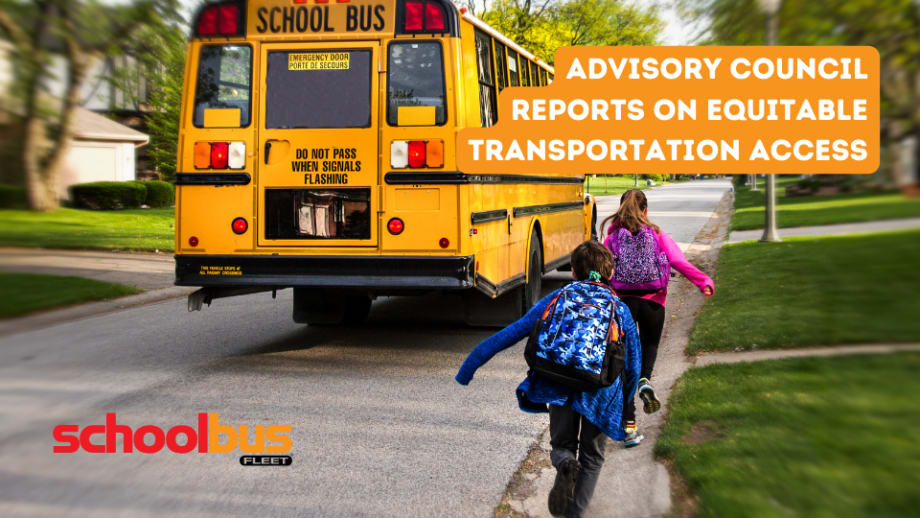
EATAC identified the following factors leading to disparities in transportation access for vulnerable populations, including students and families facing multiple layers of instability involving socioeconomic factors such as housing, food, or transportation insecurity; restraints in personal mobility; and medical conditions.
Source: Canva
3 min to read
The Equitable Access to Transportation Advisory Council (EATAC) in its first report outlined the elements that prevent equitable access to transportation—a lifeline to opportunity—for students in the United States.
“Extending equitable access to transportation means that first, every child can access transportation; and second, they can access a transportation mode that meets that child’s unique needs, connecting them to school, support services, extracurricular activities, and other critical parts of childhood,” EATAC stated in the report, "Transportation as an Opportunity Lifeline."
Addressing Chronic Absenteeism and Transportation Inequities
Chronic absenteeism and other indications students aren’t regularly attending school, as recently flagged by the Biden-Harris administration, highlight the need for creative thinking around policy change and new solutions. This is one of the driving forces behind the formation of the council, which is made up of 10 experts from various organizations devoted to transportation, child welfare, road safety, community planning, education, and technology.
EATAC identified the following factors leading to disparities in transportation access for vulnerable populations, including students and families facing multiple layers of instability involving socioeconomic factors such as housing, food, or transportation insecurity; restraints in personal mobility; and medical conditions:
Budget cuts.
Individualized student needs.
Policy changes and regulation requirements.
Systemic inequities.
Information access.
Route difficulties.
Unsafe roads and environments.
Lack of infrastructure.
Cost of purchasing and maintaining a safe vehicle.
Distance traveled.
Inaccessibility.
EATAC’s Vision and Future Policy Solutions
“School rides, and transportation in general, are a lifeline to opportunity in the United States, but not all students have the safe, equitable access they deserve,” EATAC wrote in its report. “While this inequity is systemic and damaging—the result of compounding factors—it does present us with the opportunity to re-examine our traditional ways of doing things.”
After examining the devastating role mobility gaps can play in the lives of the 54 million students enrolled in U.S. schools, EATAC will next offer reasonable solutions and potential new policies in a second white paper.
The Equitable Access to Transportation Advisory Council was established in March 2024, in partnership with HopSkipDrive, a technology company trying to solve complex transportation challenges where there is a heightened need for safety, equity, and care.
Founding members of the Equitable Access to Transportation Advisory Council:
Nadia Anderson, Ph.D., Senior Vice President, Chief of Staff and Strategy, Silicon Valley Leadership Group.
Kerry Chausmer, Program and Member Services Director, Governors Highway Safety Association.
Torine Creppy, President, Safe Kids Worldwide.
Vanessa Davis, Co-Manager, Foster Youth in Action.
Natalie Draisin, Director of the North American office, FIA Foundation.
Kim Dvorchak, National Association of Counsel for Children.
Robert Enlow, President and CEO, EdChoice.
Ta’Londa Holland, Senior Director of Policy and Influence, Urban Strategies Inc.
Zahra Marin, National Policy and Organizing Director, National Foster Youth Institute (NFYI).
Kristie Stutler, Vice President of Policy and Influence, Urban Strategies Inc.
More Special Needs Transportation
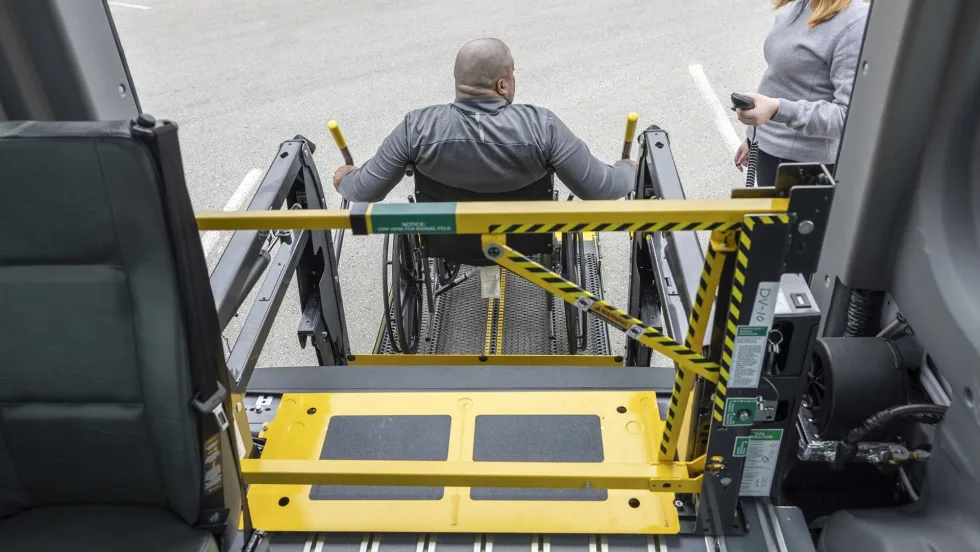
BraunAbility Introduces New Safety Barrier for Wheelchair Lifts
LiftSentinel is designed to add another layer of protection during wheelchair loading and unloading and can be retrofitted to many existing commercial lift installations.
Read More →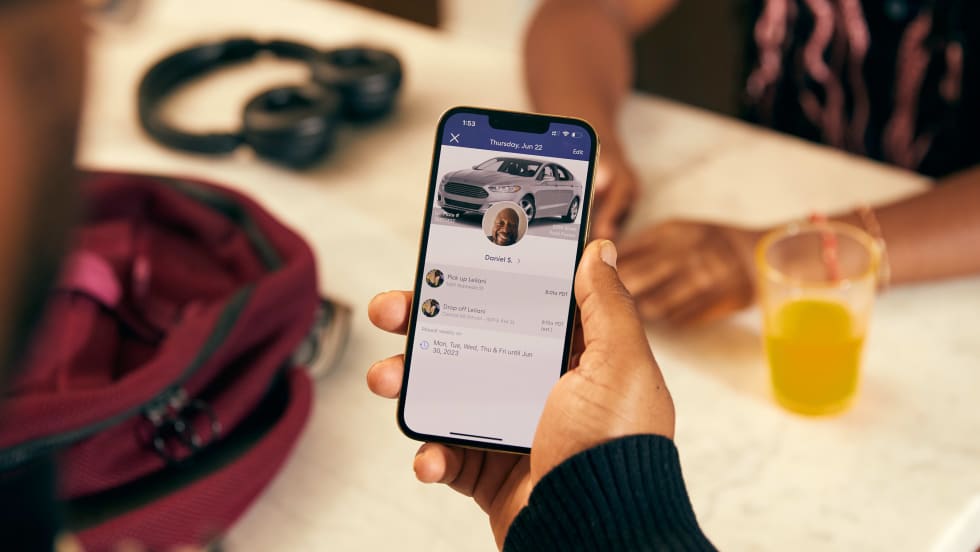
HopSkipDrive Launches New Safety, Driver Consistency Features for 2026-27 School Year
The company’s free ride recording, live ride tracking, and consistent driver assignments aim to improve safety and continuity for diverse student transportation needs.
Read More →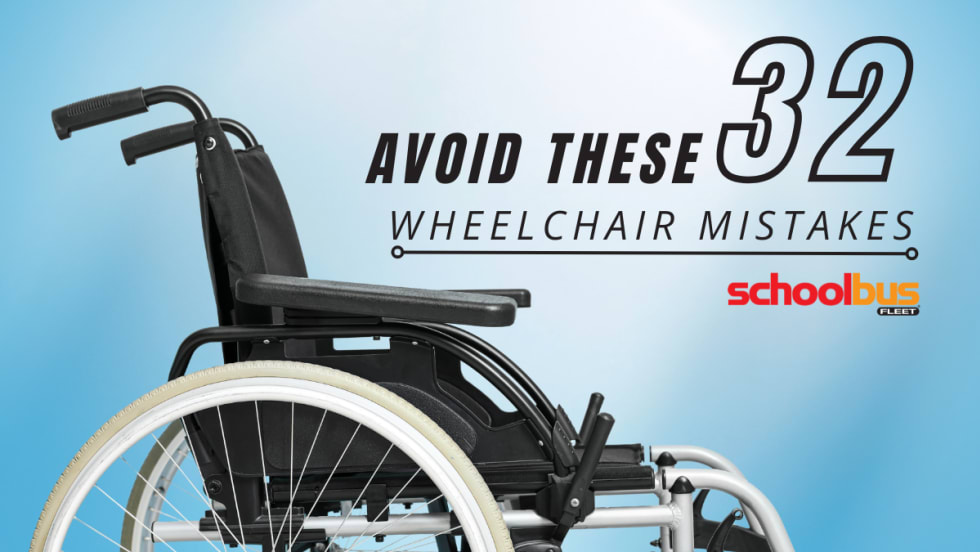
The Most Common Wheelchair Securement Mistakes on School Buses (and How to Fix Them)
Small missteps in wheelchair securement can have serious consequences. Here are 32 tips from experts to reduce risk and increase student safety on the bus.
Read More →
Inside AMF Bruns’ New Showroom: School Bus Securement Solutions Explained
Go inside AMF Bruns America’s new Ohio showroom with Maritza Valentin to see its FutureSafe technology, driver training tools, securement systems, and seating innovations.
Read More →
What AMF Bruns’ New Facility Means for Customers [Video]
Inside AMF Bruns’ new Stow, Ohio, operations: See how expanded space and innovation will enhance customer support and operations.
Read More →
AMF Bruns Expands in Ohio, Investing in Growth and Community
With expanded production space, local investment, and a growing workforce, AMF Bruns is scaling its U.S. presence. Here’s an exclusive first look inside the new Stow, Ohio, HQ.
Read More →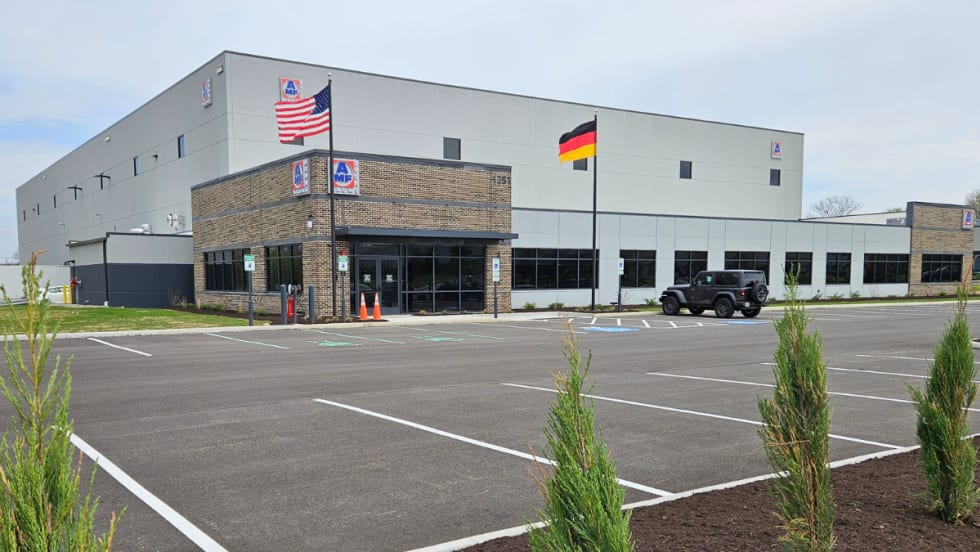
Inside AMF Bruns of America’s New Ohio Manufacturing Facility [Photos]
Take a behind-the-scenes look at AMF Bruns of America’s new 41,000-square-foot Stow, Ohio, headquarters, featuring advanced manufacturing, expanded space, and future-ready mobility solutions.
Read More →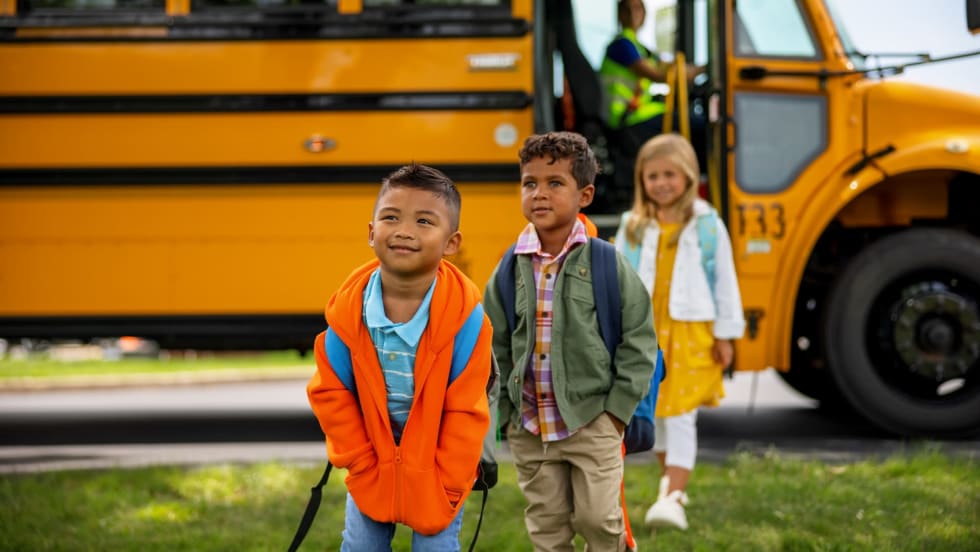
First Student Boosts Student Support in Wichita & Texas
First Student and Wichita Public Schools are using behavioral support strategies to improve student ride experiences, while a separate initiative expands access to after-school programs through a bus donation.
Read More →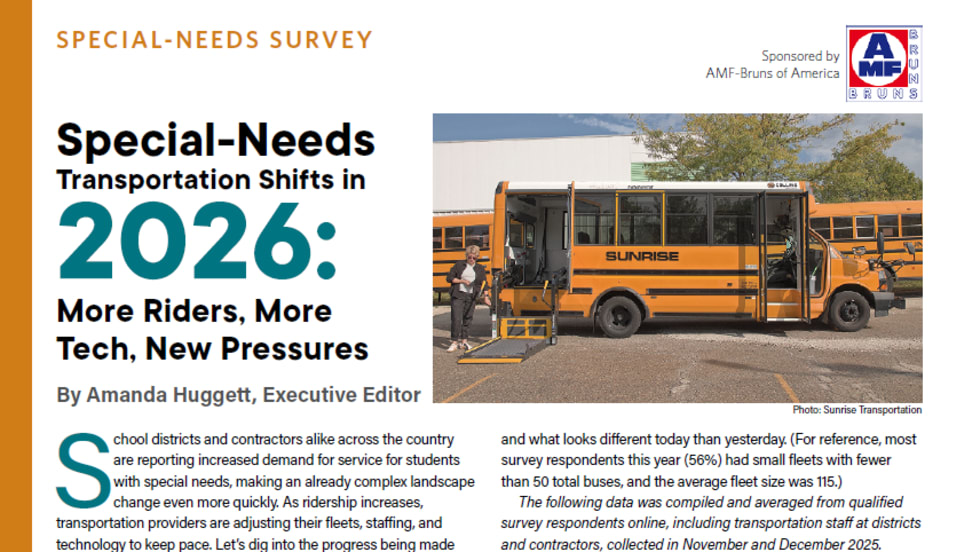
2026 Special-Needs Transportation Survey
What’s changing in special-needs transportation? This year, student transportation operators report a rising need, easing driver shortages, growing tech adoption, and evolving challenges. Sponsored by AMF Bruns of America.
Read More →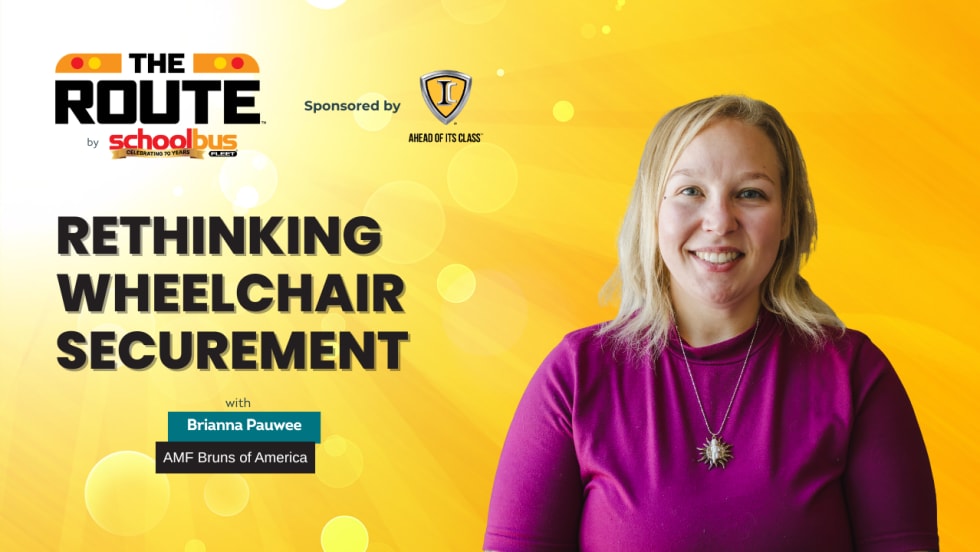
The Lived-Experience Gap in Mobility Tech: An Expert Take on Safe Student Transportation
Brianna Pauwee, a product application specialist at AMF Bruns of America and a wheelchair user, drops in to The Route to share practical securement and training insights, plus the story behind the new “Beyond Mobility” podcast. The Route is sponsored by IC Bus.
Read More →