




As Demand for DEF Grows, School Bus Fleet Enhances Storage Capacity, Access
A new 1,200-gallon diesel exhaust fluid system enables Maconaquah School Corp. to improve access for drivers while saving money on the fluid by buying in bulk.

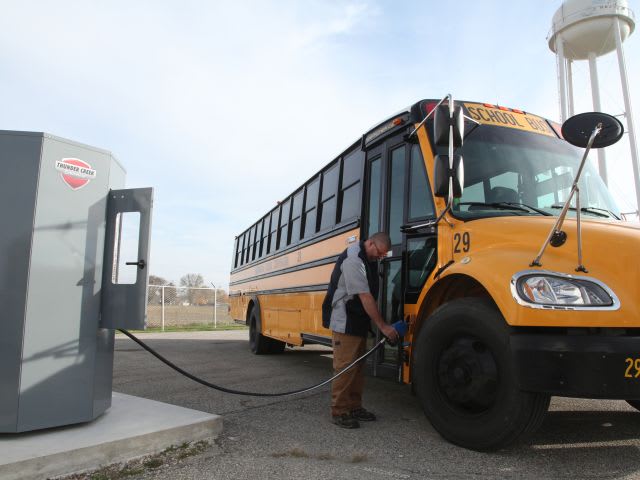
Maconaquah School Corp. implemented a new 1,200-gallon bulk diesel exhaust fluid system from Thunder Creek Equipment.
Maconaquah School Corp. implemented a new 1,200-gallon bulk diesel exhaust fluid system from Thunder Creek Equipment.
BUNKER HILL, Ind. — Like many other school bus fleet operators, Maconaquah School Corp. recently faced a difficult decision: how to best handle the growing need for diesel exhaust fluid (DEF).
Half of Maconaquah’s fleet of 43 school buses already required the fluid, and the school district rotates in three new buses every year — all of which require DEF.
Maconaquah opted to implement a new 1,200-gallon bulk DEF system from Thunder Creek Equipment. According to Joseph Benge, the district's maintenance supervisor, the system fit seamlessly into his operation’s fueling setup and ensured that DEF wouldn't freeze thanks to an internal heating system.
The expanded DEF capacity also allowed the district to purchase the fluid in bulk quantities from supplier Jackson Oil at lower prices. Meanwhile, the new system helped save time and hassle for Maconaquah’s school bus drivers, who previously had to drive to a separate building hundreds of yards away from the fueling station to add DEF.
“They would fuel up [at the fueling island], then go down there and go through another process, open up another building to get in to get their DEF,” Benge said, “so this was a perfect option for us.”
Evolution of DEF Handling
Like many school bus fleet managers, Benge has addressed the increasing need for DEF in stages. He first bought 2.5-gallon jugs, and then moved up to a 55-gallon drum that he stored in the shop.

With the 1,200-gallon system, Maconaquah pays about $1.50 per gallon for DEF through bulk buying from Jackson Oil.
Then Benge bought 330-gallon totes. The larger size began addressing the quantity needs of the Maconaquah school bus fleet, but it couldn’t be stored outside near the fueling island, because it didn’t have an effective heating mechanism to prevent the DEF from freezing.
The transition to a 1,200-gallon system that could accommodate large bulk drop-offs helped Maconaquah secure DEF at a lower price point than with the smaller systems. For example, the district was initially paying roughly $2.40 per gallon of DEF while using 2.5-gallon jugs. With the 55-gallon drum, the price dropped to about $2 per gallon. Now, with the 1,200-gallon system, Maconaquah pays about $1.50 per gallon for DEF through the bulk buying from Jackson Oil.
Benge said the move was “a good way to save cost — and when you’re working with schools and budgets, you’ve got to.”
Controlling DEF Flow, Quality
The double-walled 1,200-gallon system features a steel outer tank and an internal stainless steel tank (also available in high-density polyethylene) that provides complete DEF containment.
For Maconaquah School Corp., which sees freezing temperatures throughout the winter months, the optional Powerblanket heating system and heated dispensing cabinet is ultimately what enabled Benge to position the system immediately adjacent to the fueling island. This eliminated the trips that the school bus drivers would take — a few hundred yards away to the heated maintenance shop — to fill up with DEF.
The 1,200-gallon DEF system is filled through a common 2-inch dry lock coupler that connects directly to the bulk truck and fills the stainless steel tank. For dispensing, a submersible pump moves the DEF out of the tank through a dispensing nozzle. According to Thunder Creek Equipment, this ensures that the DEF is not exposed to the atmosphere until it is pumped through the nozzle into the bus — ultimately reducing the opportunities for it to become contaminated.
As Maconaquah School Corp. anticipates doubling its DEF use in the next four years, Benge said that the new system will keep them ahead of demand and remove any concerns over DEF quality, access, or dispensing systems.
“It’s going to work out for more years in the long run than to continue what we were doing,” he said.
More Maintenance
The Essential Guide to School Bus Maintenance and Student Safety
Your district's buses carry students to school every day. This guide shows how predictive maintenance powered by fleet data helps keep buses reliable, drivers accountable and students safer from the first bell to the last stop.
Read More →
Kerry Brothers Grows Michigan School Bus Repair Network
The acquisition of Downriver Truck and Bus expands Kerry Brothers’ school bus maintenance footprint across southeast Michigan, adding repair capacity, diagnostic resources, and state inspection support.
Read More →
Noregon Introduces CAN Bus Diagnostic Tool, Expands JPRO Features
CAN Mentor and the latest JPRO update aim to simplify vehicle network diagnostics and improve repair efficiency for technicians of all experience levels.
Read More →
Cummins on Smarter, Simpler Engine Innovation
Cummins discusses its first-ever gasoline engine for school buses, EPA 2027, and why bus fleets still want durable, simpler internal combustion options.
Read More →
Report: 72% of Diesel School Buses Now Use Advanced Low-Emission Engines
New data shows advanced low-emission diesel technology continues expanding across school bus fleets, even as electric bus adoption gains momentum.
Read More →
Vampire Tools' CAIMAN 7.5-Inch Multi-Purpose Screw Extractor Long-Nose Pliers with Crimper
Vampire Tools introduced the VAMPLIERS Caiman 7.5-inch multi-purpose pliers, combining screw extraction, cutting, crimping, and gripping functions into a single tool designed for fleet maintenance professionals.
Read More →
How Advanced Diagnostics Helps Bus Fleets Stay Ahead of Repairs
Chat with Noregon’s Kevin Smallhorn at ACT Expo about bus diagnostic tools, telematics integration, CNG maintenance support, and strategies to help reduce downtime and improve uptime.
Read More →
How School Bus Fleets are Getting Ahead of Breakdowns
Don’t let bus downtime wear you down. Here’s how bus operators are shifting from manual processes to AI-powered, data-driven maintenance systems for improved reliability and safety.
Read More →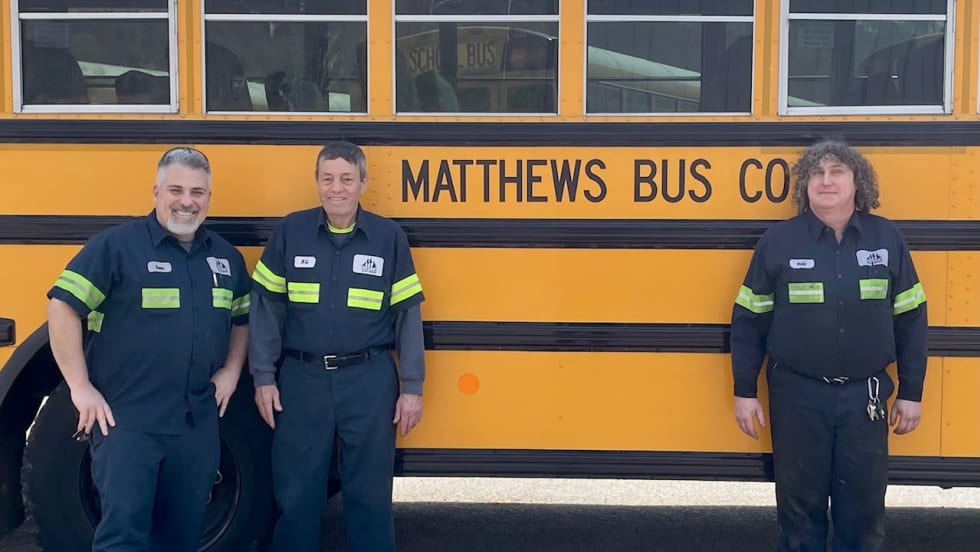
Pennsylvania School Bus Maintenance Team Praised for Dedication to Safety
Matthews Bus Company’s West Jefferson received a letter of commendation from the Pennsylvania State Police for their fleet inspections.
Read More →
From Chaos to Clarity: How School Districts Are Running Leaner Transportation Operations
Covering 38 routes on a Friday afternoon. Buses idling while routes overlap. Parents calling nonstop about late arrivals. Sound familiar? This whitepaper explores how district transportation leaders solved these exact problems — and what measurable results followed.
Read More →