




3 Districts Honored for Propane School Bus Leadership
The first Leadership with Propane Autogas Awards go to school districts in Iowa, Texas, and Alabama.

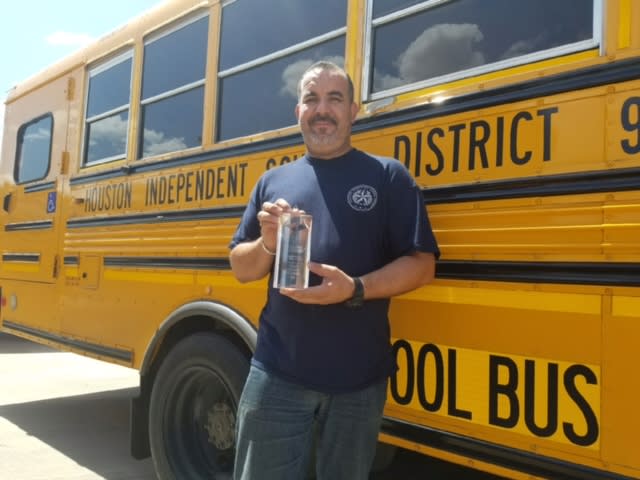
Mahmoud Chami, transportation mechanic team lead at Houston Independent School District, shows off the Leadership with Propane Autogas Award that the district received recently.
Mahmoud Chami, transportation mechanic team lead at Houston Independent School District, shows off the Leadership with Propane Autogas Award that the district received recently.
The Propane Education & Research Council (PERC) recently presented the first Leadership with Propane Autogas Awards to three school districts.
East Sac County Community School District in Iowa, Houston Independent School District in Texas, and Mobile County Public Schools in Alabama were recognized by PERC for their commitment to sustainable practices. The awards were presented during a ceremony on July 26 at the STN Expo in Reno, Nevada.
“These three award-winning districts are saving money, helping the environment, and being good stewards of their community and constituents by transitioning their school bus fleets to propane buses,” said Michael Taylor, PERC’s director of autogas business development.
Here are details on the three districts:
East Sac County Community School District
Director of Transportation Phil Howes said that student safety was the primary reason East Sac County Community School District purchased propane buses. The northwest Iowa district transports about 1,000 students in six small towns. Winter temperatures can drop to minus 20 degrees, and diesel buses needed to idle long before departing with students. This practice wasted fuel and caused premature wear for major engine and emissions system components, according to the district.
Along with health benefits for students during the winter, Howes said that each propane school bus saves the district as much as $8,000 per year on fuel costs and decreased maintenance.
“I eventually plan on switching our whole fleet over to propane,” Howes said.
Houston Independent School District
Houston Independent School District has more than 34,000 students enrolled at 240 schools, with a total of 1,100 buses collectively covering 14 million miles each year. The district’s school bus fleet includes 123 propane buses, and plans call for adding 40 more propane buses during the fall 2016 semester.
Andres Montes, senior manager of fleet operations for the district, said the financial benefits have helped the district see value in continuing to purchase more propane buses. “Fuel savings has been the primary benefit, combined with lower maintenance costs for an overall savings of up to $3,000 per bus per year,” he said, adding that the district was also attracted to propane buses’ ability to help reduce air pollution.
“I’m honored that we were one of three districts in the nation to receive this award,” said Nathan Graf, general manager of transportation for Houston Independent School District. “It speaks highly of our mechanics and our team that we took steps to green our fleet.”
Mobile County Public Schools
Mobile County Public Schools runs 80 propane school buses — almost 11% of its total bus fleet. The buses help serve a total population of nearly 60,000 students. “We anticipate purchasing more,” said Pat Mitchell, director of transportation.
Since adding propane buses, Mitchell said that the district has saved in fuel costs, reduced maintenance costs, and reduced downtime, because the buses don’t go in for repairs as much. He added that he is also considering using propane to fuel other vehicles in the district’s fleet.
“The feedback has all been positive,” Mitchell said. “Drivers especially like them.”
More Alternative Fuels

CALSTART and Forth Combine to Form Catalyst Mobility
The new name represents a renewed vision for the nonprofit focused on advancing clean, equitable, and affordable transportation solutions that move people and goods.
Read More →
Alt-Fuel Moves: New Buses, Charging Hubs & Real-World EV Testing
Propane and electric school bus deployments continue to grow as districts add new vehicles, expand charging infrastructure, and gather more real-world operating data.
Read More →
Fewer Electric School Bus Models Reshape the U.S. Market
WRI’s latest buyer’s guide points to a consolidating electric school bus market, but fewer options may reflect a maturing industry rather than fewer meaningful choices for school bus operators.
Read More →
The Fuel Budget You Can Actually Predict: How Propane Autogas Keeps Money in the Classroom
Learn how propane autogas helps school districts manage fuel costs with predictable pricing, lower maintenance, and reduced emissions from former transportation director Joel Stutheit.
Read More →
Hendrickson, Driventic Introduce New Electric Powertrain for School Buses
ELECTRAAX, the electrified, lightweight drive axle offers integrated ePowertrain efficiency and modular flexibility for Class 6–7 school bus use.
Read More →
The Mobility House Joins PowerFlex in Fleet Electrification Deal
The acquisition combines intelligent charging software, bidirectional charging expertise, and fleet electrification services to support the growing adoption of electric school buses across North America.
Read More →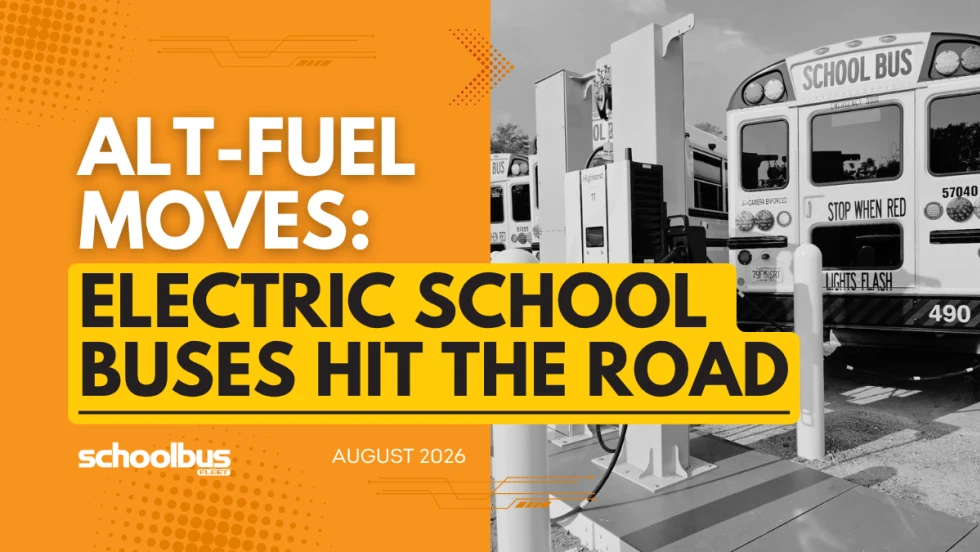
Alt-Fuel Moves: Electric School Bus Investments Hit the Road
See which districts across the U.S. are putting electric school buses into service, expanding charging infrastructure, and planning the next phase of fleet electrification.
Read More →
With Fuel Volatility Ahead, School Districts Turn to Propane
While diesel prices peaked above $5 this spring, districts with propane autogas-powered fleets paid under $2 per gallon, according to PERC.
Read More →
EPA Unveils Proposed Changes to 2027 Heavy-Duty Engine Rules
The federal agency has proposed changes to next year’s targets that would eliminate DEF derates, ease warranty requirements, and retain current NOx emissions standards.
Read More →
Alt-Fuel Moves: EV Charging & Infrastructure Projects Gain Momentum
The latest developments include new funding, charging infrastructure, utility investments, and fleet technologies designed to support the transition to electric school buses nationwide.
Read More →