




Related: Options Abound for Adopting a Stop-Arm Camera Program
Taking on the Stop-Arm Running Epidemic
What seems simple — stop when a school bus is stopped — is proving challenging for motorists, and our nation’s children could pay the price.
by Ronna Weber
September 30, 2019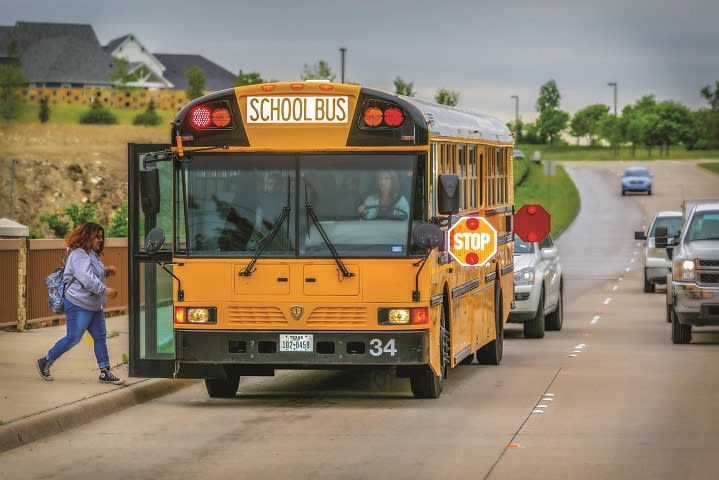
Every state has some type of law requiring motorists to stop when school buses are stopped. Photo courtesy Mitzi Bowers
3 min to read
Every state has some type of law requiring motorists to stop when school buses are stopped. Photo courtesy Mitzi Bowers
Transportation via the iconic yellow school bus is one of the safest forms of transportation available. Yet, while every life is important and we as an industry put safety first every day, accidents continue to happen.
In 2017, four passengers were killed inside the school bus and seven were killed outside the bus. While we focus efforts to increase safety on the road, we must also focus our efforts to increase the safety of our passengers as they board and depart the school bus each day. To increase the safety of our passengers outside the bus, our biggest focus should be to educate, with the goal of reducing or eliminating illegal passing of stopped school buses.
We as an industry see it very simply. A bus is stopped and all moving vehicles around it should also stop until all children are safely away from the bus and on their way. But it’s just not that simple. Drivers are more distracted than ever before. Drivers are in a hurry. Drivers think they don’t have to stop. Drivers claim they didn’t see the bus until it was too late to stop. Those drivers are putting children’s lives in jeopardy every single day, either knowingly or — equally as concerning — unknowingly.
The National Association of State Directors for Pupil Transportation Services (NASDPTS) conducts an annual survey of illegal passing incidents of stopped school buses each year. Their 2019 survey found that over 95,000 drivers ran school bus stop arms in one day during the 2018-19 school year. More than 27% of U.S. school bus drivers in 39 states participated in the survey, and 130,963 of them reported the passing incidents.
These sample results point to more than 17 million violations among America’s motoring public throughout a 180-day school year, according to NASDPTS. The organization also noted that because not all school bus drivers participated in the survey, the number of incidents is probably greater. As an industry and as a society, this is unacceptable.
Every state has some type of law requiring motorists to stop when school buses are stopped. There are variances, however, in when and where drivers must stop. Many states also have penalties for violating these laws, although that is a deterrent, and deterrents look to address the situation after the fact. We need to focus on preventing the passing before it even happens.

Ronna Weber is a consultant working with the American Bus Association.
Further compounding driver distraction are a host of different circumstances that prove puzzling for them, such as divided highways and intersections, not to mention the added impairment of weather issues or darkness. What seems simple — stop when a school bus is stopped — is proving challenging for motorists, and our nation’s children could pay the price.
There are several steps that you as a school transportation professional can take to increase awareness in those around you, such as:
• Review the resources available at schoolbusfacts.com and promote their placement in high-visibility areas in the schools you serve.
• Be sure your school bus drivers and students are trained to follow uniform procedures for safety at the bus stop and while getting on and off the bus.
• Speak to PTA/PTO groups and community associations to help educate the community.
• Partner with local law enforcement and encourage a focused day or campaign (think public service announcement) to increase awareness.
• Promote safe practices and your state’s laws on social media.
Subscribe to Our Newsletter
More Blog Posts
The Sound of Summer Starting [Guest Editorial]
That unmistakable school bus rumble? It carries childhood memories, community routines, and a whole lot of unseen work behind the scenes.
Read More →
The Technology Power Combo That Enables EV Charging on Difficult Sites
As the pace of fleet electrification increases and charging infrastructure continues to pose challenges, many fleets find themselves puzzling over the question: how do I install charging infrastructure faster and more cost-efficiently?
Read More →
Trip Sheet: Farewell, Faithful Readers – Keep on Rolling
Executive Editor Wes Platt offers parting thoughts as he parks the School Bus Fleet bus to focus on ultra-local community journalism, making way for someone else to take the wheel as the pupil transportation industry continues to evolve.
Read More →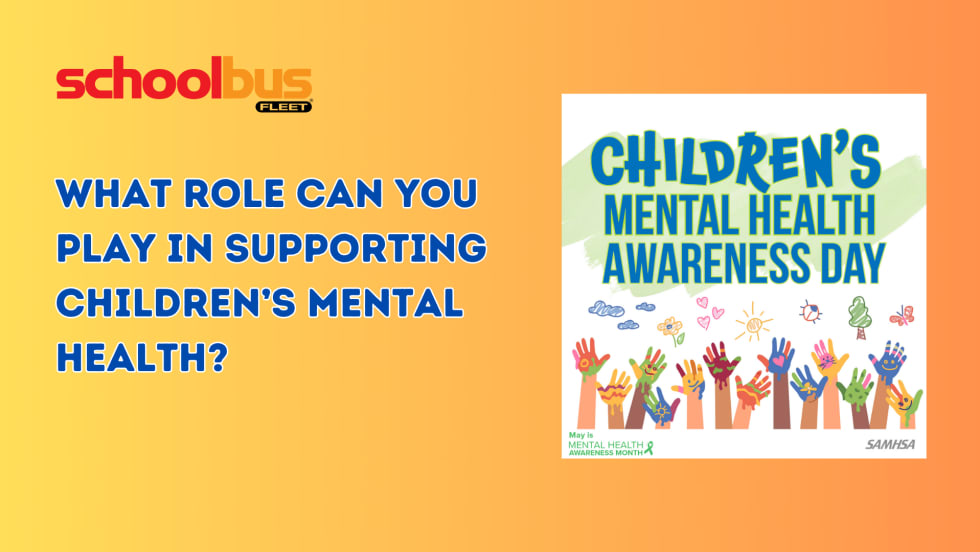
Trip Sheet: School Transportation Pros Can Champion Children's Mental Health
Children's Mental Health Awareness Day underscores the significance of school bus drivers in fostering supportive environments during students' journeys. SAMHSA's initiatives, including stigma reduction and access to resources, complement the Biden-Harris administration's funding efforts to enhance youth mental health services and workforce development.
Read More →
Trip Sheet: Is It Time for Daylight Saving Time to Clock Out?
How do you think the potential shift to permanent Daylight Saving Time or standard time would impact our daily lives and routines, especially considering the divided approach across various states?
Read More →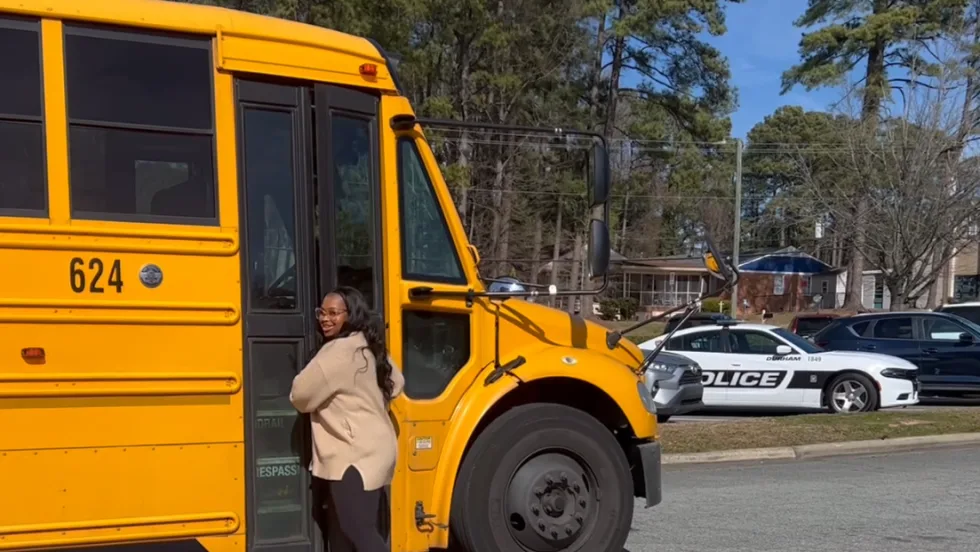
Trip Sheet: Meeting a Hero in My Own Back Yard
I remain impressed by the matter-of-fact heroism that’s often demonstrated by school bus drivers like Deona Washington who are caught in these situations where the best of us might lose our cool and panic. But, then again, bus drivers are a unique breed.
Read More →
Trip Sheet: 3 Takeaways from the EPA Clean School Bus Grant Program
Most applicants sought grant funding to acquire electric school buses, with propane coming in a distant second. No one indicated plans to purchase compressed natural gas (CNG) buses in this round. That’s not terribly surprising, I suppose, given how few school districts listed the inclusion of CNG buses in their fleets for our 2023 top district fleets survey.
Read More →
Trip Sheet: Let's Get Rolling: What's Coming in 2024?
Calendar pages keep flipping toward the mandates set in states like New York and California to transition their school bus fleets from diesel to zero-emission, but there’s plenty of reluctance and pushback.
Read More →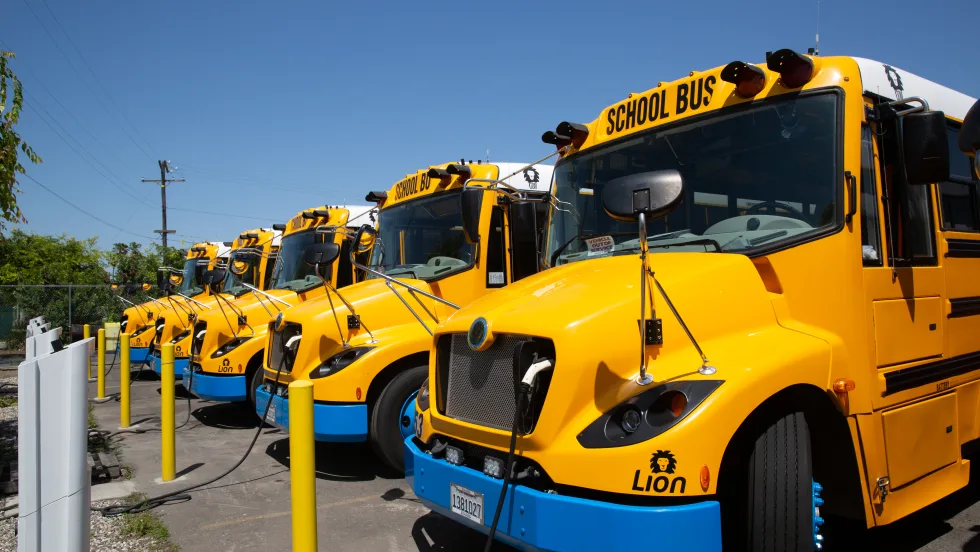
California School Children Ride in Green School Buses
Today, California prides itself on utilizing the most zero-emission (ZE) school buses in the country with over 1,689 being used by California school districts; and while the state is on a positive health trajectory thanks to a decree to eliminate gas and diesel vehicles, more work needs to be done to improve children’s well-being.
Read More →
Behind The Wheel of Childrens’ Safety Aboard the School Bus
Bus drivers are the primary caretakers of children during their commute and thus bear responsibility for their safety. By prioritizing proper operating procedures, maintenance checks, and additional precautions, drivers can help avoid the loss of precious young lives under their care.
Read More →