




Signs of Hope as We Brave a New Year
Whether through advocacy or technology, in easy or tough times, success comes down to the incredibly dedicated people of this industry to bring us beyond hope and help all schoolchildren safely access an education every day.

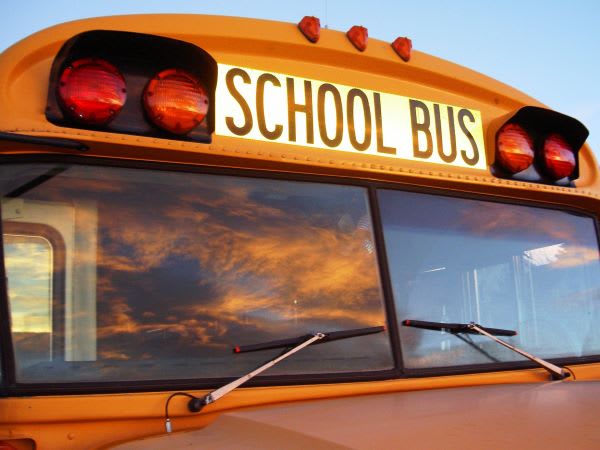
File photo courtesy John Horton
As I write this, the COVID-19 pandemic still has the country in a tight grip, with variants of the virus contributing to higher case numbers, hospitals overwhelmed in many states, and businesses and schools staying closed or mostly shuttered for now.
Burbio, a community events data service that tracks school openings, reported that from late November through mid-December just about 50% of K-12 students in the U.S. were attending virtual-only schools due to the pandemic. (That number has fallen in recent weeks, but not by much.) The data service also noted, unfortunately, a trend of an increase in failing grades among students, and expects to see at districts large and small learning deficits likely caused by a lack of consistent in-person learning since March.
Still, on the horizon, we have signs of hope, with the first vaccines being administered to first responders, other essential workers, and those in the 65-plus age group. Educators and those on the transportation front lines, such as our bus drivers, will hopefully not be far behind.
The National School Transportation (NSTA) stepped up again at the end of 2020 for pupil transporters, urging the Centers for Disease Control and Prevention (CDC) to classify school bus drivers as a high priority in federal recommendations for COVID-19 vaccine allocations. (Read more about their efforts in our January issue.)
And, in 2020, we saw more developments that will advance the industry further toward electrification, such as the Dominion Energy-Thomas Built Buses electric bus partnership. In a Q & A, Dan Weekley, vice president of innovation policy and development at Dominion Energy, mentions that vehicle-to-grid technology, which the buses in the pilot are equipped for, will help support the integration of renewable energy across Virginia while also providing grid stability during periods of high-electricity usage.
Meanwhile, technology keeps enhancing safety, which is critical as we do our best to hopefully, finally move past the worst of this health, economic, and education crisis. Our feature on the latest in ridership tracking technology covers how it has helped boost the safety and efficiency of school transportation operations with contact tracing, streamlining parent communication, and managing sanitization practices.
Whether through advocacy or technology, in easy or tough times, success comes down to the incredibly dedicated people of this industry to help all schoolchildren safely access an education every day.
One classic example is Kim Frye, the director of transportation services for Orange County (Fla.) Public Schools (OCPS), and our 2020 Administrator of the Year. Frye went above and beyond in 2020, making sure that when the pandemic hit, her employees felt heard and that her team was connected. She created a Facebook group page and shared as many updates as possible on return-to-work dates, safety, and birthday and work anniversary announcements.
Frye also used Facebook Live videos to hold a trivia contest with gift card prizes (for which she raised funds), designed to help put employees at ease and get to know each other better.
We also recently turned to a few other transportation directors, among others in the industry, to get some perspectives on what 2021 will bring. Overall, the outlook was upbeat.
Doris Bean, manager of transportation for Glendale Elementary School District #40, told School Bus Fleet that she hopes that schools in her district will be able to open for in-person learning by the end of February and that she is excited to return to normal.
“Our buses are squeaky clean, shiny, and [are] ready for all the students to return in 2021,” she says.
Meanwhile, Teena Mitchell, the special needs transportation coordinator for Greenville County (S.C.) Schools, said that she sees the industry “being better prepared in 2021 for the challenges.” She points to all the savvy pupil transportation employees have gained on virtual technology.
“We are Zooming, using webinars, and conducting a large portion of our training online,” Mitchell notes.
We hope that you also see these developments and observations as uplifting and are having a great start to your 2021.
More Blog Posts
The Sound of Summer Starting [Guest Editorial]
That unmistakable school bus rumble? It carries childhood memories, community routines, and a whole lot of unseen work behind the scenes.
Read More →
The Technology Power Combo That Enables EV Charging on Difficult Sites
As the pace of fleet electrification increases and charging infrastructure continues to pose challenges, many fleets find themselves puzzling over the question: how do I install charging infrastructure faster and more cost-efficiently?
Read More →
Trip Sheet: Farewell, Faithful Readers – Keep on Rolling
Executive Editor Wes Platt offers parting thoughts as he parks the School Bus Fleet bus to focus on ultra-local community journalism, making way for someone else to take the wheel as the pupil transportation industry continues to evolve.
Read More →
Trip Sheet: School Transportation Pros Can Champion Children's Mental Health
Children's Mental Health Awareness Day underscores the significance of school bus drivers in fostering supportive environments during students' journeys. SAMHSA's initiatives, including stigma reduction and access to resources, complement the Biden-Harris administration's funding efforts to enhance youth mental health services and workforce development.
Read More →
Trip Sheet: Is It Time for Daylight Saving Time to Clock Out?
How do you think the potential shift to permanent Daylight Saving Time or standard time would impact our daily lives and routines, especially considering the divided approach across various states?
Read More →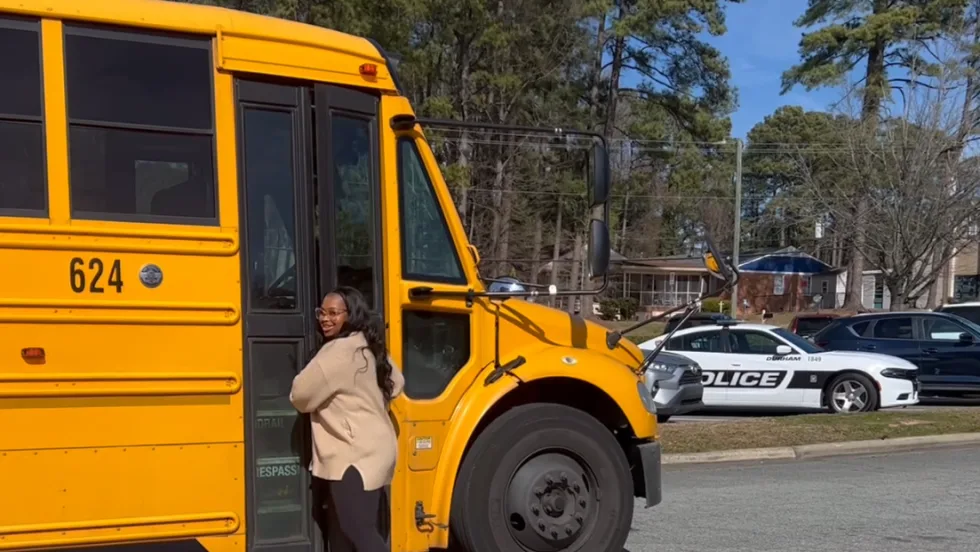
Trip Sheet: Meeting a Hero in My Own Back Yard
I remain impressed by the matter-of-fact heroism that’s often demonstrated by school bus drivers like Deona Washington who are caught in these situations where the best of us might lose our cool and panic. But, then again, bus drivers are a unique breed.
Read More →
Trip Sheet: 3 Takeaways from the EPA Clean School Bus Grant Program
Most applicants sought grant funding to acquire electric school buses, with propane coming in a distant second. No one indicated plans to purchase compressed natural gas (CNG) buses in this round. That’s not terribly surprising, I suppose, given how few school districts listed the inclusion of CNG buses in their fleets for our 2023 top district fleets survey.
Read More →
Trip Sheet: Let's Get Rolling: What's Coming in 2024?
Calendar pages keep flipping toward the mandates set in states like New York and California to transition their school bus fleets from diesel to zero-emission, but there’s plenty of reluctance and pushback.
Read More →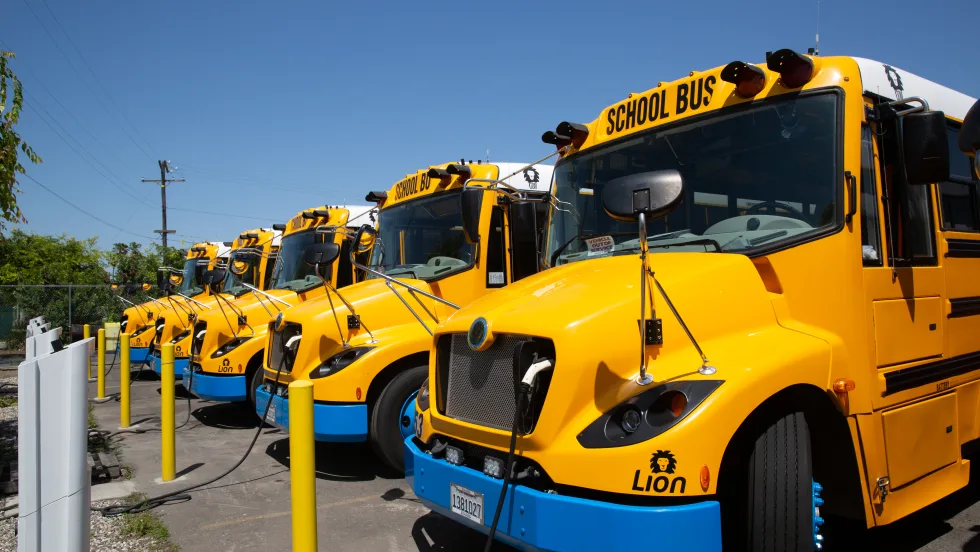
California School Children Ride in Green School Buses
Today, California prides itself on utilizing the most zero-emission (ZE) school buses in the country with over 1,689 being used by California school districts; and while the state is on a positive health trajectory thanks to a decree to eliminate gas and diesel vehicles, more work needs to be done to improve children’s well-being.
Read More →
Behind The Wheel of Childrens’ Safety Aboard the School Bus
Bus drivers are the primary caretakers of children during their commute and thus bear responsibility for their safety. By prioritizing proper operating procedures, maintenance checks, and additional precautions, drivers can help avoid the loss of precious young lives under their care.
Read More →