




Related: How Ridesharing Can Meet a Variety of Student Needs
Scooters Are Coming to Your Town. Are You Prepared?
Even if scooters aren’t in your community today, they are likely in the neighboring areas your buses travel to on field trips, and they may even be in your community tomorrow. Being aware can help your drivers to ensure continued safety.
by Ronna Weber
July 24, 2019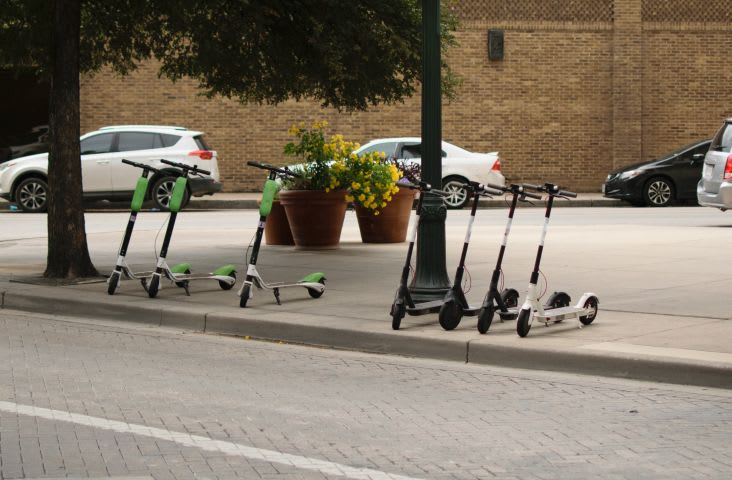
More than 85,000 scooters are now available for rent in the U.S. in over 100 cities. Photo courtesy FerrizFrame/signature collection/gettyimages
3 min to read
More than 85,000 scooters are now available for rent in the U.S. in over 100 cities. Photo courtesy FerrizFrame/signature collection/gettyimages
Ridesharing has expanded beyond Uber and Lyft into what is known as “shared micromobility.” This now encompasses bike-sharing and scooter-sharing, with scooters seemingly popping up all over the place, as they were in many cases dropped overnight in cities across the country.
According to a report by the National Association of City Transportation Officials (NACTO), between 2017 and 2018 the use of ridesharing has more than doubled across the country to a total of 84 million trips. Almost half of the increase in rides is attributed to scooter usage, with more than 85,000 scooters now available for rent in the U.S. in over 100 cities.
Scooter rental cost is quite reasonable, and can easily be a cheaper alternative than other transportation services for short distances. The average cost is $1.00 to unlock the scooter and $0.15 per mile thereafter. The rider downloads the app associated with the scooter vendor, enters credit card information, scans a driver’s license and unlocks the device. Once they are done riding, they use the app to lock the scooter and leave it — hopefully — in a relatively safe place. In addition, riders have to attest they are 18 years of age or older to use the device.
However, scooters are often found on sidewalks or along the road, which can be troublesome, especially if they are knocked over (and like dominos, when one goes down, they all do). Scooters don’t come with helmets either, meaning a rider has to be prepared, or is forced to ride without any protective gear.
This is all great for adult riders, but what about when kids skirt the rules and ride them anyway?
Arlington, Va., which has a population of just over 230,000, is 26 square miles in size, and is located just outside Washington, D.C., embarked on a pilot program to study scooter usage once the devices appeared on city streets. Now, with over seven companies providing scooters in Arlington, the two main struggles have become how to dissuade younger riders from using them, and how to enforce the ban prohibiting their use on trails and sidewalks.

Ronna Weber is a consultant working with the American Bus Association.
Scooters are often seen parked outside schools and are frequently seen being used by students, especially at the high schools. Scooters move quickly and riders often weave in and out of traffic, especially during congested travel periods like school dismissal. Added congestion at school dismissal only compounds safety concerns, and scooters are another way that the safety of all students can be compromised if schools and communities do not plan accordingly.
Even if scooters aren’t in your community today, they are likely in the neighboring areas your buses travel to on field trips, and they may even be in your community tomorrow. Being aware and ever-vigilant can only help your drivers to ensure continued safety.
Here are some tips that you as a transportation professional should consider if scooters are in your community:
• Ensure the school districts you serve have a scooter policy.
• Confirm that students and parents are informed about the policy.
• Educate your drivers on these devices and encourage them to watch for them during their travels in general and at peak travel times in particular.
• Work with your school board and school leadership to educate them about the safety concerns of these devices.
• Make sure there is a place to deposit and store these devices at the schools you serve that is at least located away from the area your school buses primarily use.
• Be mindful that neighboring communities you travel through on field trips may have scooters and ensure your drivers are aware of their impact on traffic.
• Review current scooter usage and plans your locality has for these devices frequently, or as changes warrant.
Topics:ridesharing
Subscribe to Our Newsletter
More Blog Posts

The Sound of Summer Starting [Guest Editorial]
That unmistakable school bus rumble? It carries childhood memories, community routines, and a whole lot of unseen work behind the scenes.
Read More →
The Technology Power Combo That Enables EV Charging on Difficult Sites
As the pace of fleet electrification increases and charging infrastructure continues to pose challenges, many fleets find themselves puzzling over the question: how do I install charging infrastructure faster and more cost-efficiently?
Read More →
Trip Sheet: Farewell, Faithful Readers – Keep on Rolling
Executive Editor Wes Platt offers parting thoughts as he parks the School Bus Fleet bus to focus on ultra-local community journalism, making way for someone else to take the wheel as the pupil transportation industry continues to evolve.
Read More →
Trip Sheet: School Transportation Pros Can Champion Children's Mental Health
Children's Mental Health Awareness Day underscores the significance of school bus drivers in fostering supportive environments during students' journeys. SAMHSA's initiatives, including stigma reduction and access to resources, complement the Biden-Harris administration's funding efforts to enhance youth mental health services and workforce development.
Read More →
Trip Sheet: Is It Time for Daylight Saving Time to Clock Out?
How do you think the potential shift to permanent Daylight Saving Time or standard time would impact our daily lives and routines, especially considering the divided approach across various states?
Read More →
Trip Sheet: Meeting a Hero in My Own Back Yard
I remain impressed by the matter-of-fact heroism that’s often demonstrated by school bus drivers like Deona Washington who are caught in these situations where the best of us might lose our cool and panic. But, then again, bus drivers are a unique breed.
Read More →
Trip Sheet: 3 Takeaways from the EPA Clean School Bus Grant Program
Most applicants sought grant funding to acquire electric school buses, with propane coming in a distant second. No one indicated plans to purchase compressed natural gas (CNG) buses in this round. That’s not terribly surprising, I suppose, given how few school districts listed the inclusion of CNG buses in their fleets for our 2023 top district fleets survey.
Read More →
Trip Sheet: Let's Get Rolling: What's Coming in 2024?
Calendar pages keep flipping toward the mandates set in states like New York and California to transition their school bus fleets from diesel to zero-emission, but there’s plenty of reluctance and pushback.
Read More →
California School Children Ride in Green School Buses
Today, California prides itself on utilizing the most zero-emission (ZE) school buses in the country with over 1,689 being used by California school districts; and while the state is on a positive health trajectory thanks to a decree to eliminate gas and diesel vehicles, more work needs to be done to improve children’s well-being.
Read More →
Behind The Wheel of Childrens’ Safety Aboard the School Bus
Bus drivers are the primary caretakers of children during their commute and thus bear responsibility for their safety. By prioritizing proper operating procedures, maintenance checks, and additional precautions, drivers can help avoid the loss of precious young lives under their care.
Read More →