




School buses play a key position in athletics
With running having become a lifelong pursuit for me, I recently found myself once again riding a school bus to an important race, just like in high school. On April 20, I ran in the Boston Marathon for the first time. ...


Thomas McMahon is executive editor of School Bus Fleet.
We’ve often written about how school buses are a vital link in the nation’s education system, but what about their role in the world of sports?
School buses transport some 25 million children every day in the U.S. Without the yellow bus, many students wouldn’t have a safe and reliable way to get to and from school.
You’ve read that message here before. What we may not have pointed out is the importance of the yellow bus in school athletics. Sports teams of all kinds rely on school buses to get to and from their games.
Without transportation, student athletes can’t compete. And there’s no safer or more efficient way than the school bus to get the football team, for example, to an out-of-town game.
It would be interesting to survey the nation’s professional athletes to find out how many of them rode school buses to their competitions when they were in school. My guess is that almost all of them did, meaning that the yellow bus helped them along the way to their athletic careers.
I’m no professional athlete, but I ran cross country and track in high school in Oregon. My teammates and I logged thousands of miles on school buses to get to our away meets. We traveled all over the state and even across the border into Washington to compete against other runners, who in turn would ride school buses to our town when we had a home meet.
I have many fond memories of those trips on the bus: joking around with friends, sitting next to a cute girl (cross country is a coed sport, after all), gazing out at Oregon’s vast forests, mountains and rivers, eagerly awaiting the next rest stop, mentally preparing for the big race.
Interestingly enough, with running having become a lifelong pursuit for me, I recently found myself once again riding a school bus to an important race.
On April 20, I ran in the Boston Marathon for the first time. For those who aren’t familiar with it, Boston is the oldest and perhaps the most prestigious marathon in the world. After having to run a qualifying time for Boston in another marathon last year, I considered it a great honor to be able to compete in the 119th edition of the race alongside nearly 30,000 other runners from around the globe.
The 26.2-mile course starts in a small town called Hopkinton, which isn’t exactly equipped to handle 30,000 cars arriving for a marathon. The solution? School buses.
A fleet of yellow buses from school transportation providers in the region transports marathon runners from downtown Boston to Hopkinton in four waves for the four start times (notice any similarity to school bell times?). The shuttle operation seemed to run very smoothly and efficiently, and security was enhanced by police escorts along the way.
In the Boston Marathon two years ago, school bus drivers who were transporting injured runners during the race stepped up to respond to a horrendous emergency. After two bombs exploded near the finish line, eight school bus drivers from AA Transportation quickly began working with authorities to transport people away from the site.
In this year’s Boston Marathon, while the 2013 tragedy was still in the back of everyone’s minds, and while the weather was cold and rainy, the mood was celebratory. It was a celebration of the runners’ dogged efforts, of the communities that come out in droves to cheer, of the resilience of this historic marathon.
Hours before the race, I walked across Boston Common, the shuttle pickup site, in the chilly morning air. As I stepped aboard a warm school bus, greeted the driver and made my way down the aisle to an empty seat, I thought back on my high school running days. Then and now, it was the yellow bus that got me to the starting line.
More Blog Posts

The Sound of Summer Starting [Guest Editorial]
That unmistakable school bus rumble? It carries childhood memories, community routines, and a whole lot of unseen work behind the scenes.
Read More →
The Technology Power Combo That Enables EV Charging on Difficult Sites
As the pace of fleet electrification increases and charging infrastructure continues to pose challenges, many fleets find themselves puzzling over the question: how do I install charging infrastructure faster and more cost-efficiently?
Read More →
Trip Sheet: Farewell, Faithful Readers – Keep on Rolling
Executive Editor Wes Platt offers parting thoughts as he parks the School Bus Fleet bus to focus on ultra-local community journalism, making way for someone else to take the wheel as the pupil transportation industry continues to evolve.
Read More →
Trip Sheet: School Transportation Pros Can Champion Children's Mental Health
Children's Mental Health Awareness Day underscores the significance of school bus drivers in fostering supportive environments during students' journeys. SAMHSA's initiatives, including stigma reduction and access to resources, complement the Biden-Harris administration's funding efforts to enhance youth mental health services and workforce development.
Read More →
Trip Sheet: Is It Time for Daylight Saving Time to Clock Out?
How do you think the potential shift to permanent Daylight Saving Time or standard time would impact our daily lives and routines, especially considering the divided approach across various states?
Read More →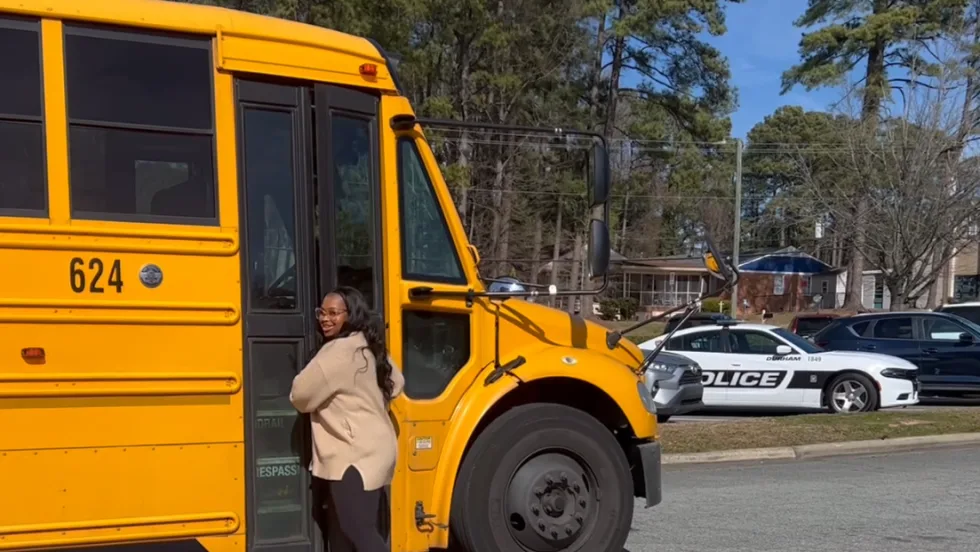
Trip Sheet: Meeting a Hero in My Own Back Yard
I remain impressed by the matter-of-fact heroism that’s often demonstrated by school bus drivers like Deona Washington who are caught in these situations where the best of us might lose our cool and panic. But, then again, bus drivers are a unique breed.
Read More →
Trip Sheet: 3 Takeaways from the EPA Clean School Bus Grant Program
Most applicants sought grant funding to acquire electric school buses, with propane coming in a distant second. No one indicated plans to purchase compressed natural gas (CNG) buses in this round. That’s not terribly surprising, I suppose, given how few school districts listed the inclusion of CNG buses in their fleets for our 2023 top district fleets survey.
Read More →
Trip Sheet: Let's Get Rolling: What's Coming in 2024?
Calendar pages keep flipping toward the mandates set in states like New York and California to transition their school bus fleets from diesel to zero-emission, but there’s plenty of reluctance and pushback.
Read More →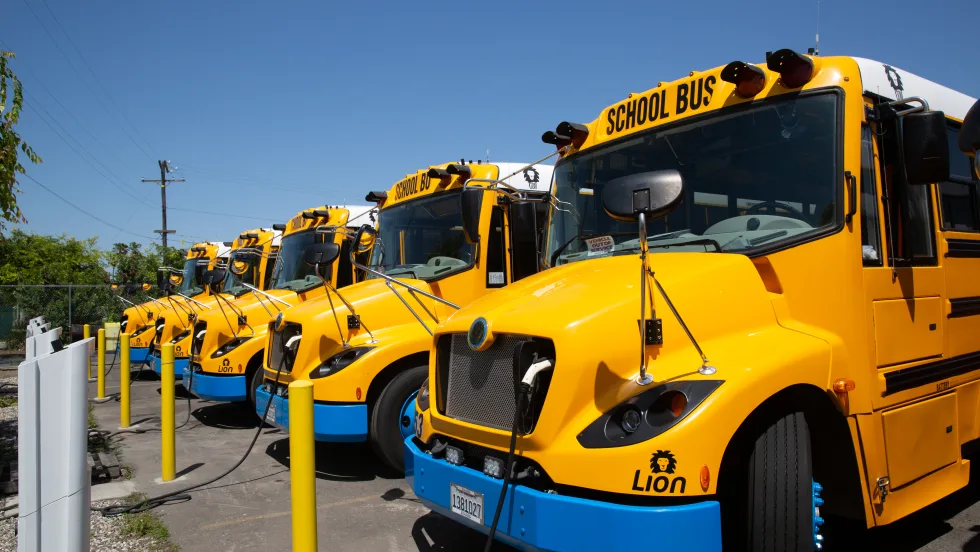
California School Children Ride in Green School Buses
Today, California prides itself on utilizing the most zero-emission (ZE) school buses in the country with over 1,689 being used by California school districts; and while the state is on a positive health trajectory thanks to a decree to eliminate gas and diesel vehicles, more work needs to be done to improve children’s well-being.
Read More →
Behind The Wheel of Childrens’ Safety Aboard the School Bus
Bus drivers are the primary caretakers of children during their commute and thus bear responsibility for their safety. By prioritizing proper operating procedures, maintenance checks, and additional precautions, drivers can help avoid the loss of precious young lives under their care.
Read More →