




Running the Numbers, in Air Quality and School Buses
Wildfire smoke spurred me to start checking an air quality index. The data-driven experience brought to mind how, more than ever, numbers are readily available to track pupil transportation performance.

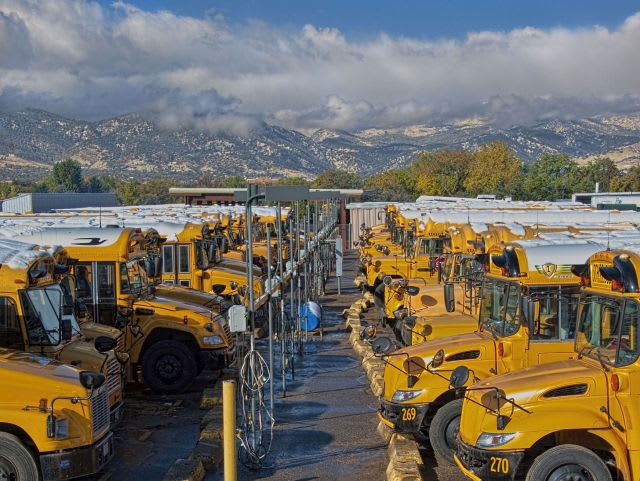
More than ever, numbers are readily available to track all aspects of pupil transportation performance.

More than ever, numbers are readily available to track all aspects of pupil transportation performance.
Smoke in the air recently led me to a place I hadn’t been in many years: a gym.
Don’t get me wrong — I’m a big proponent of physical fitness. I just prefer to get my exercise in the great outdoors. Most days, I go for a run on the rugged trails of the Santa Monica Mountains here in Southern California.
I live in Ventura County, which you probably hadn’t heard of until last month, when the savage Thomas fire made national headlines as it destroyed hundreds of houses.
Fortunately, this devastating blaze didn’t come close to my home, although at night I could see its glowing menace on a distant hillside. But the powerful winds that fanned the flames did carry the smoke our way at times.
Air quality concerns spurred my kids’ school district to cancel classes one day shortly after the Thomas fire broke out. (Other parts of the country have snow days this time of year; here in Southern California, we have fire days.)
The wildfire’s impact on air quality also forced me, grudgingly, to reconsider my outdoor running. Last year, I was diagnosed with exercise-induced asthma, so I knew I should be particularly careful about exposing my lungs to smoke.
Initially, I relied on my senses to determine whether I should go out for a run. I would look around at the air and take a whiff to see if I could detect smoke. Some days, there was no mistaking its husky presence. At other times, it was harder to tell, and I was admittedly biased toward approving the air for running.
Then I found a more reliable way to make the call: numbers. Specifically, I discovered the AirNow.gov website, which provides access to the government’s Air Quality Index (AQI). Some 3,000 monitors across the country supply data for more than 450 cities.
As the AirNow website puts it, “The AQI translates air quality data into numbers and colors that help people understand when to take action to protect their health.”
So, when the AQI for my area was below 50, in the “Good” range, I could confidently lace up my running shoes, hit the trails, and breathe in the fresh air. Even in the “Moderate” category (51 to 100), I felt comfortable venturing out for exercise.
But when the AQI was over 100, in the unsettling category called “Unhealthy for Sensitive Groups,” the message was clear to me: Stay inside. Or at least avoid heavy exertion outside. And so I quickly ducked into my car, drove to a nearby gym, and signed up for a free trial. Then I stepped onto a treadmill and started running. And, to my surprise, it wasn’t half bad.
This fancy fitness machine even gave me some useful numbers: miles run, calories burned, level of incline, and speed (I got up to 10 mph!).
Naturally, this data-driven experience led me to think about school buses. More than ever, with advances in technology, numbers are readily available to track all aspects of pupil transportation performance.
The question is: Which numbers are most important for you and your stakeholders? In other words, what are the key data that objectively show the safety and efficiency of your operation?
John Franklin, our 2017 Administrator of the Year, identified multiple performance indicators that were deficient when he arrived at Atlanta Public Schools, and he implemented multiple strategies to improve them. One critical statistic was bus on-time percentage, which Franklin led his department to increase from about 70% to 94%.
As thoughts turn to New Year’s resolutions, consider picking one or two key numbers for your transportation team to focus on boosting in 2018.
As another goal for the year, you might commit to getting outside for a daily walk, run, or bike ride. That is, if the air quality is OK.
More Blog Posts

The Sound of Summer Starting [Guest Editorial]
That unmistakable school bus rumble? It carries childhood memories, community routines, and a whole lot of unseen work behind the scenes.
Read More →
The Technology Power Combo That Enables EV Charging on Difficult Sites
As the pace of fleet electrification increases and charging infrastructure continues to pose challenges, many fleets find themselves puzzling over the question: how do I install charging infrastructure faster and more cost-efficiently?
Read More →
Trip Sheet: Farewell, Faithful Readers – Keep on Rolling
Executive Editor Wes Platt offers parting thoughts as he parks the School Bus Fleet bus to focus on ultra-local community journalism, making way for someone else to take the wheel as the pupil transportation industry continues to evolve.
Read More →
Trip Sheet: School Transportation Pros Can Champion Children's Mental Health
Children's Mental Health Awareness Day underscores the significance of school bus drivers in fostering supportive environments during students' journeys. SAMHSA's initiatives, including stigma reduction and access to resources, complement the Biden-Harris administration's funding efforts to enhance youth mental health services and workforce development.
Read More →
Trip Sheet: Is It Time for Daylight Saving Time to Clock Out?
How do you think the potential shift to permanent Daylight Saving Time or standard time would impact our daily lives and routines, especially considering the divided approach across various states?
Read More →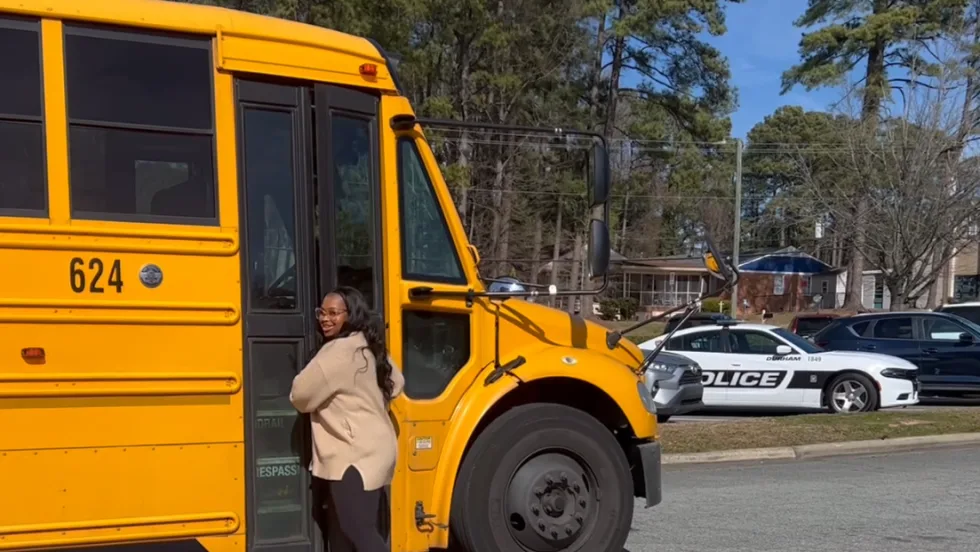
Trip Sheet: Meeting a Hero in My Own Back Yard
I remain impressed by the matter-of-fact heroism that’s often demonstrated by school bus drivers like Deona Washington who are caught in these situations where the best of us might lose our cool and panic. But, then again, bus drivers are a unique breed.
Read More →
Trip Sheet: 3 Takeaways from the EPA Clean School Bus Grant Program
Most applicants sought grant funding to acquire electric school buses, with propane coming in a distant second. No one indicated plans to purchase compressed natural gas (CNG) buses in this round. That’s not terribly surprising, I suppose, given how few school districts listed the inclusion of CNG buses in their fleets for our 2023 top district fleets survey.
Read More →
Trip Sheet: Let's Get Rolling: What's Coming in 2024?
Calendar pages keep flipping toward the mandates set in states like New York and California to transition their school bus fleets from diesel to zero-emission, but there’s plenty of reluctance and pushback.
Read More →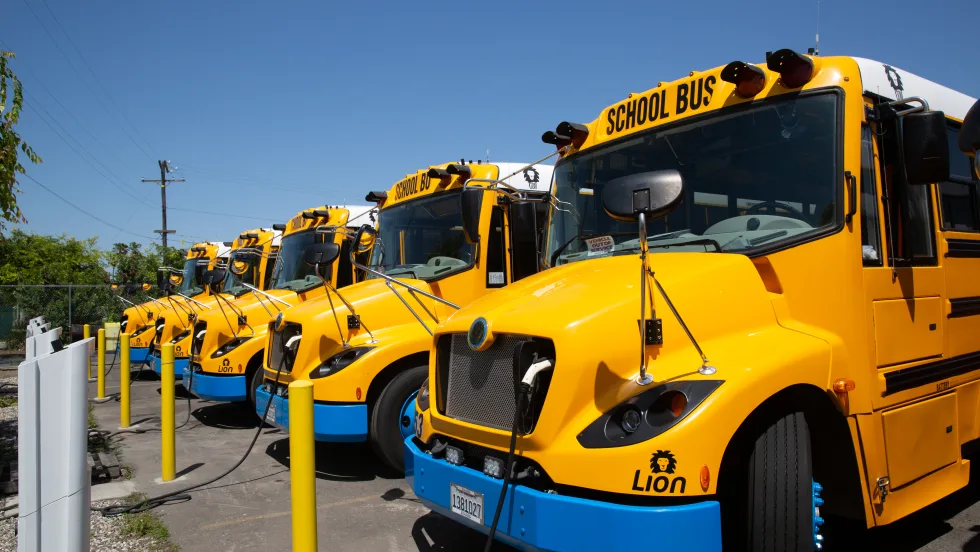
California School Children Ride in Green School Buses
Today, California prides itself on utilizing the most zero-emission (ZE) school buses in the country with over 1,689 being used by California school districts; and while the state is on a positive health trajectory thanks to a decree to eliminate gas and diesel vehicles, more work needs to be done to improve children’s well-being.
Read More →
Behind The Wheel of Childrens’ Safety Aboard the School Bus
Bus drivers are the primary caretakers of children during their commute and thus bear responsibility for their safety. By prioritizing proper operating procedures, maintenance checks, and additional precautions, drivers can help avoid the loss of precious young lives under their care.
Read More →