Roundtable Continued: School Bus Contractors on Job Highlights, Industry Changes
Read more from our conversation with four contracting pros. In this web exclusive, they discuss changes they’ve seen in the industry and what they like most about working in school transportation.
Thomas McMahon・Executive Editor
June 18, 2018
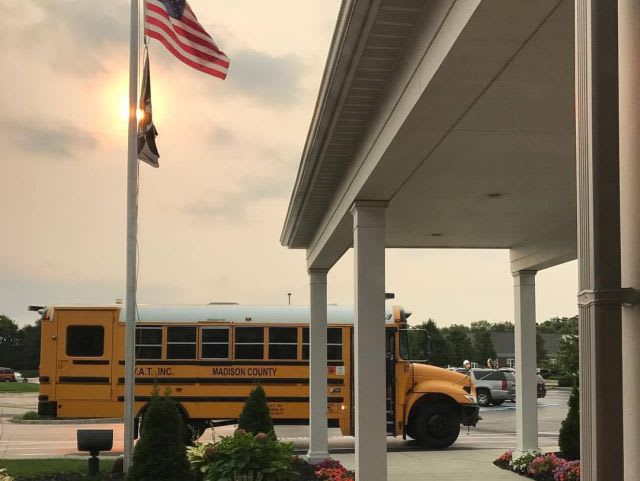
Photo courtesy VAT Inc.
5 min to read
Photo courtesy VAT Inc.
In this web exclusive, four school bus contractors from four states discuss changes they’ve seen in the industry throughout their careers and what they like most about working in school transportation.
The conversation comes from a recent conference call conducted by School Bus Fleet. The rest of this roundtable discussion — covering topics like driver recruitment, technology, and fuel choices — appears in SBF’s forthcoming July print issue and is available online here.
Ad Loading...
SBF: How long have you been in the business of school transportation, and what changes have you seen since you started?
Mike Forbord: I have been with Schmitty & Sons for a little over eight years now in a variety of roles. So I've seen a lot of different things from different perspectives. I would say the biggest change that I have seen is just in the technology that is expected to be on the buses as far as the cameras, the AVL [automatic vehicle location] systems, the different types of stop arms, and lighting. And then just the general increase in the quality of the buses — they're a lot more reliable and dependable than when I first started.
Julie Vendetti-Lomberto: I've been in the family business [Vendetti Motors] for about 18 years. I grew up in this business that my grandfather started in 1967. It changes every day, and I think the role of the bus driver has changed dramatically. There's more responsibility with less support. Years ago, I think there used to be mutual respect for the driver. If there was … an issue on the bus and the student misbehaved, the driver simply stopped the bus, let the student out, and nothing was ever said beyond that. Behavior changed. Now, that’s completely different. The driver may be arrested if they ever stopped to let a child out for disrespecting them.
I also think it's an overwhelming process to attract school bus drivers … with having to be fingerprinted, having to have your CORI [Criminal Offender Record Information] form notarized, having to have 60 hours [of training, in Massachusetts] before you're able to get your license, and a DOT [Department of Transportation] physical where you're not even going to your own doctor — you're going to another doctor that you don't even have a relationship with. So there's a lot of things that are piled up and a lot of pressures that I feel are with the drivers.
Arlen Sanden: Well, I started in 1986. I've been doing this 32 years. I'm the director of school bus operations for Fullington. And changes, I have seen a ton. The kids' behavior is worse — sorry, and I'm going to blame the parents for that.
Vendetti: I agree. You have my support.
Ad Loading...
Sanden: But I've seen a lot of good innovations [on the buses] over the years. I remember … when the crossing arms first were put on, and the stop signs. My first bus I ever drove was a '69 International, and I've gotten to drive brand new ones — they're so much different.
SBF: Almost 50 years of buses there. Wow.
Paul Vellani (VAT Inc.): I think the biggest [change] is just the technology that's been introduced, whether that's on diesel engines and buses in general or Zonar, GPS tracking, camera systems that can do everything under the sun. The whole landscape has changed. It was a relatively simple business. They called, you hauled, and they paid a bill, and on we went. And now it's evolved just like the world has, but it's evolved in a way I never expected. That's for sure.
SBF: One more question: What do you like most about working in school transportation?
Sanden: I started out as a driver-mechanic, and I've worked my way up to director, and I can't see myself doing anything else. I love working with the kids. There are some good kids out there — I'm not saying there's not — but I see a big difference in how the parents are raising them. But I love the kids; I love the drivers. There's nothing better than a dedicated school bus driver. They're just the greatest people in the world.
Vellani: Every once in a while, I get to go drive a bus. It's the kids, and it's the drivers. We've got a great staff here that bend over backwards to help the company and do their jobs to the best of their abilities. And ... it's great to be involved with some of the institutions we work closely with.
Ad Loading...
Vendetti: I agree with what everyone is saying. I think it's the kids. I think it's the relationships. At this point now we've been transporting generations of the same family over the years. It's just really neat to be out at an event and see a child, and you're just starting to have a conversation with them, and then they're talking about school, and then you ask them if they ride the bus, and they get all excited, and you let them know that you know their bus driver. And there are times when you might be filling in and seeing that child themselves, and they say, "I remember you." … And they're happy to be on that big, yellow bus.
Forbord: I think what everybody else has been saying, that's the positive impact that you can have starting a student's day. It could be the difference between having a good day at school and a bad day at school. [It’s] making sure you say “hello” and “good morning,” and engaging with the students. It is an extension of the school day. Having that positive impact and seeing what that means to the students — that's what I do it for.
Meet the Panel Paul Vellani Years in School Transportation: 24 Title: President Company: VAT Inc. Location: London, Ohio School Buses: 80
Julie Vendetti-Lomberto Years in School Transportation: 18 Title: Vice President, School Bus Operations Company: Vendetti Motors Location: Franklin, Massachusetts School Buses: 150
Arlen Sanden Years in School Transportation: 32 Title: Director of School Bus Operations Company: Fullington School Bus LLC Location: Clearfield, Pennsylvania School Buses: 297
Mike Forbord Years in School Transportation: 8 Title: Divisional Operations Manager Company: Schmitty & Sons Location: Lakeville, Minnesota School Buses: 220
As the pace of fleet electrification increases and charging infrastructure continues to pose challenges, many fleets find themselves puzzling over the question: how do I install charging infrastructure faster and more cost-efficiently?
Executive Editor Wes Platt offers parting thoughts as he parks the School Bus Fleet bus to focus on ultra-local community journalism, making way for someone else to take the wheel as the pupil transportation industry continues to evolve.
Children's Mental Health Awareness Day underscores the significance of school bus drivers in fostering supportive environments during students' journeys. SAMHSA's initiatives, including stigma reduction and access to resources, complement the Biden-Harris administration's funding efforts to enhance youth mental health services and workforce development.
How do you think the potential shift to permanent Daylight Saving Time or standard time would impact our daily lives and routines, especially considering the divided approach across various states?
I remain impressed by the matter-of-fact heroism that’s often demonstrated by school bus drivers like Deona Washington who are caught in these situations where the best of us might lose our cool and panic. But, then again, bus drivers are a unique breed.
Most applicants sought grant funding to acquire electric school buses, with propane coming in a distant second. No one indicated plans to purchase compressed natural gas (CNG) buses in this round. That’s not terribly surprising, I suppose, given how few school districts listed the inclusion of CNG buses in their fleets for our 2023 top district fleets survey.
Calendar pages keep flipping toward the mandates set in states like New York and California to transition their school bus fleets from diesel to zero-emission, but there’s plenty of reluctance and pushback.
Today, California prides itself on utilizing the most zero-emission (ZE) school buses in the country with over 1,689 being used by California school districts; and while the state is on a positive health trajectory thanks to a decree to eliminate gas and diesel vehicles, more work needs to be done to improve children’s well-being.
Bus drivers are the primary caretakers of children during their commute and thus bear responsibility for their safety. By prioritizing proper operating procedures, maintenance checks, and additional precautions, drivers can help avoid the loss of precious young lives under their care.