




Related - Pupil Transporters Work to Meet Changes Aimed at Helping More Homeless Students
Possible Support for Pupil Transportation as Student Homelessness Grows
One-and-a-half million students reportedly experienced homelessness during the 2017-18 school year. This tragic situation impacts many pupil transporters.

Nicole Schlosser・Former Executive Editor

Photo via Getty Images by Bodnacharuk
4 min to read

Photo via Getty Images by Bodnacharuk
I have only been to Dallas once, very briefly, on business. Still, I did get a sense of how large the city is. (Its estimated population in 2018, according to the United States Census Bureau, was 1.3 million.)
Apparently, though, that Texas city’s substantial population is, sadly, just less than the number of homeless students in the U.S.
That stunning statistic comes from CBS News, and is based on numbers in a report released in January by the National Center for Homeless Education. Findings in that report show that more than 1.5 million students experienced homelessness during the 2017-18 school year. That reflects an increase of 15% over the 2015-16 school year. It’s important to note that that figure does not reflect the total number of homeless students, because it only includes those enrolled in public schools or local education agencies, and doesn’t capture students who only experience homelessness during the summer or who have dropped out of school.
Sixteen states, according to the report, saw an increase in their identified homeless student populations of 10% or more and eight states experienced growth in the homeless student population of 20% or more.
This tragic situation impacts many pupil transporters. Although his district is not located in one of those states, I did learn from Michael Shields, the director of transportation and auxiliary services for Salem-Keizer Public Schools in Salem, Ore., that his transportation team is dealing with a significant spike in homeless students.
Salem-Keizer started the last two school years (2018-19 and 2019-20) with about 180 homeless students. At the end of the spring semester in 2019, they were transporting 511 of these students and are currently serving 476 of them.
Although the number of locations of pickups and drop-offs for homeless students and those in foster care has not changed significantly, the mileage has increased, Shields said.
“We have purchased nine vans since the spring of last year to meet the need,” he added.
And, as you likely have heard, the issue of homelessness here in Los Angeles is very prevalent. A 2019 count estimated close to 60,000 homeless people were living in Los Angeles County, according to the Los Angeles Times. Of those people, many are children. Austin Beutner, the superintendent of Los Angeles Unified School District (USD), for example, identified about 25,000 homeless students in a December op-ed piece he wrote for the newspaper. (The district, he noted in the piece, serves about 700,000 students.)
In our February issue, we published a story on how alternative transportation services can be enlisted to help meet the needs of homeless students, special-needs students, and those in foster care. More recently, we reported news that could contain another solution to help these students and the district transportation departments that are working hard to help them, but that are already struggling with driver shortages and limited budgets.
The Los Angeles County Metropolitan Transportation Authority (Metro) has approved research on providing free transportation to all K-12 students. A report will include data on existing free transit services offered to students, and provide cost estimates and information on potential funding, students’ interest in transit, and transit dependency.
The issue of homeless students and families living in poverty came up at Metro’s Jan. 23 board of directors meeting in which the plan to research the program was approved. Los Angeles USD added in a news release about the meeting that 80% of its students live in poverty. Beutner told the transit agency’s board of directors that the ability to afford a bus pass could stand in the way of a student’s access to education.
He also wrote the following in his op-ed piece, which discussed the need for more funds to help schools support students dealing with homelessness (unfortunately, there is no mention of pupil transportation): “The promise of a great education is something we owe to every child. It’s a civil right and the best path out of poverty.”
So many in the pupil transportation industry are driven by these very beliefs. The big yellow bus is of course the safest method of student transportation, but in a time and place of such urgent need, some support from alternative and public transportation — in cases where it makes sense — could be an educational lifeline for some students.
Subscribe to Our Newsletter
More Blog Posts
The Sound of Summer Starting [Guest Editorial]
That unmistakable school bus rumble? It carries childhood memories, community routines, and a whole lot of unseen work behind the scenes.
Read More →
The Technology Power Combo That Enables EV Charging on Difficult Sites
As the pace of fleet electrification increases and charging infrastructure continues to pose challenges, many fleets find themselves puzzling over the question: how do I install charging infrastructure faster and more cost-efficiently?
Read More →
Trip Sheet: Farewell, Faithful Readers – Keep on Rolling
Executive Editor Wes Platt offers parting thoughts as he parks the School Bus Fleet bus to focus on ultra-local community journalism, making way for someone else to take the wheel as the pupil transportation industry continues to evolve.
Read More →
Trip Sheet: School Transportation Pros Can Champion Children's Mental Health
Children's Mental Health Awareness Day underscores the significance of school bus drivers in fostering supportive environments during students' journeys. SAMHSA's initiatives, including stigma reduction and access to resources, complement the Biden-Harris administration's funding efforts to enhance youth mental health services and workforce development.
Read More →
Trip Sheet: Is It Time for Daylight Saving Time to Clock Out?
How do you think the potential shift to permanent Daylight Saving Time or standard time would impact our daily lives and routines, especially considering the divided approach across various states?
Read More →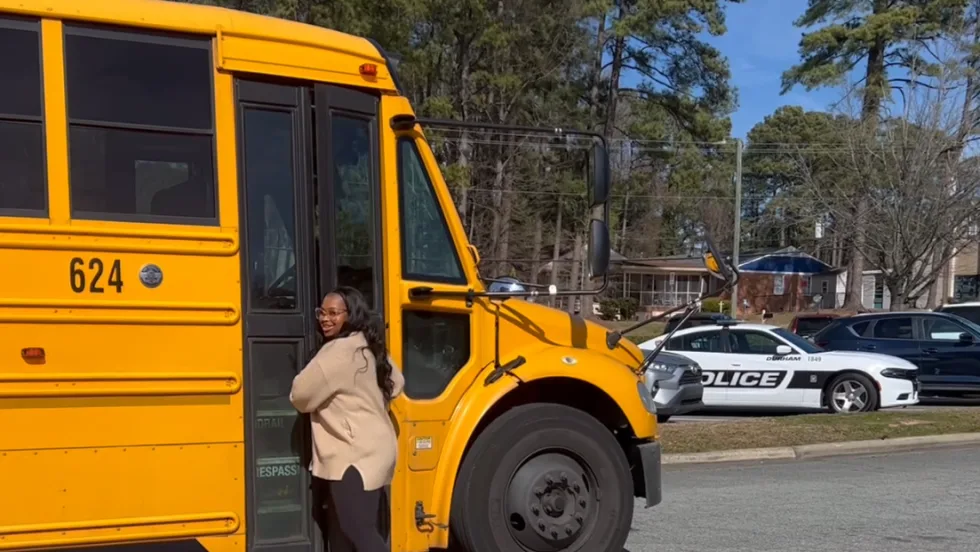
Trip Sheet: Meeting a Hero in My Own Back Yard
I remain impressed by the matter-of-fact heroism that’s often demonstrated by school bus drivers like Deona Washington who are caught in these situations where the best of us might lose our cool and panic. But, then again, bus drivers are a unique breed.
Read More →
Trip Sheet: 3 Takeaways from the EPA Clean School Bus Grant Program
Most applicants sought grant funding to acquire electric school buses, with propane coming in a distant second. No one indicated plans to purchase compressed natural gas (CNG) buses in this round. That’s not terribly surprising, I suppose, given how few school districts listed the inclusion of CNG buses in their fleets for our 2023 top district fleets survey.
Read More →
Trip Sheet: Let's Get Rolling: What's Coming in 2024?
Calendar pages keep flipping toward the mandates set in states like New York and California to transition their school bus fleets from diesel to zero-emission, but there’s plenty of reluctance and pushback.
Read More →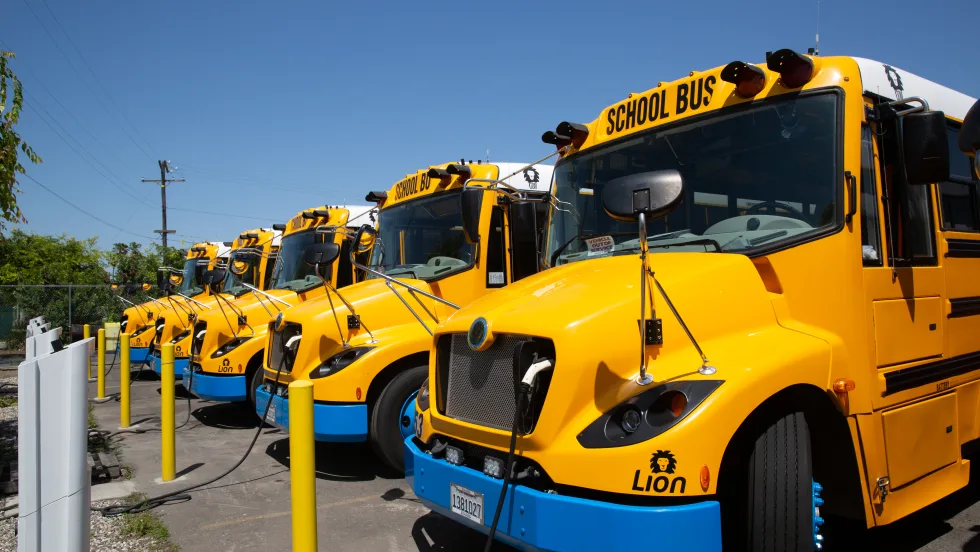
California School Children Ride in Green School Buses
Today, California prides itself on utilizing the most zero-emission (ZE) school buses in the country with over 1,689 being used by California school districts; and while the state is on a positive health trajectory thanks to a decree to eliminate gas and diesel vehicles, more work needs to be done to improve children’s well-being.
Read More →
Behind The Wheel of Childrens’ Safety Aboard the School Bus
Bus drivers are the primary caretakers of children during their commute and thus bear responsibility for their safety. By prioritizing proper operating procedures, maintenance checks, and additional precautions, drivers can help avoid the loss of precious young lives under their care.
Read More →