




6 Tips to Empower Women in Pupil Transportation: Leaders Share Advice
Op-Ed: VOCE to Challenge Sexism in Student Transportation
The co-founder of a group seeking to empower women in the workplace notes that changing a culture of sexism in the industry will take asking the right questions, sharing experiences, and working together for change.
by Nicole Philbrick
May 13, 2021
Photo by Sora Shimazaki via Pexels
5 min to read
Have you ever avoided eating a banana at work?
Imagine this: You’re running a little late as you scrounge around the kitchen, looking for something you can eat when you get to the bus lot. Glancing at the counter, you see the bananas you picked up at the store yesterday. You grin as you remember meticulously selecting a bunch that looked a little too green, knowing that they would ripen enough for today. Your plan worked. They look perfect.
You reach for the bunch, hand closing around the cool skin, when you hesitate, remembering the jokes that were made the last time you ate a banana at work.
“You should take bigger bites.” “Ouch. Should you really use so many teeth?”
You laughed along, making an exaggerated chomping gesture to show that you really got the joke, but today you’re just not in the mood to deal with it, so you grab a granola bar instead.
Have you ever had to put so much thought into a piece of fruit? It’s exhausting.
Whether bus monitor, driver, office staff, mechanic, or manager, many women in student transportation have learned to work within a culture of sexism in which the low-level hum of innuendo is a constant, and where gender often outweighs accomplishment. We learn to measure our words carefully, ensuring that we will be received as competent but not arrogant, direct but not too intense. We bring along trusted male colleagues as backup to these conversations, knowing that they will help to carry our message when we are interrupted, challenged, or ignored. We come up with quick retorts when our hair is pulled, when we are told to smile, and we avoid eating bananas because they look too suggestive.
While it seems obvious that the correct thing to do is to report inappropriate behaviors, doing so isn’t always straightforward. We experience shame or doubt, and we worry about our careers. We tell ourselves things like, “No one else is reporting it, so it must not be that big of a deal,” or “This is the way things are; I just need to be less uptight and learn to fit in.”
Unfortunately, as we learn to “fit in,” we further twist the narrative. We have made it this far despite the obstacles we have had to overcome. We applaud ourselves for our ability to survive in a male-dominated industry. We are capable, we are strong. We are proud of what we have achieved. Those who are unable to keep up become collateral damage. Instead of knocking down obstacles so that other women might have a chance to thrive, we spend time reinforcing the barriers, further isolating ourselves.
The longer we are in this environment, the more unbearable it becomes to imagine a world in which our culture could have been different. To do so would mean what we have endured was a waste. It would mean wondering: What could we have accomplished if our time and energy hadn’t been taken up simply surviving?
That, however, is exactly one of the questions we must ask. What is the culture we wish to create? What advancements could we — not just women, but all of us in student transportation — make? Improve staffing, student safety? Do more for our communities? As we work together, the possibilities become endless.
As we give voice to these questions, hope for change becomes possible. Though painful, we can begin to imagine a future that looks different for the next generations of student transportation staff. To move toward this change, we must first recognize that the persistent behaviors of sexual harassment are not the root of the problem, but a troubling symptom of it. Our concern is with the culture that allows sexist behaviors, such as harassment, discrimination, and inequality to run amock within our bus lots. This is a promising — albeit uncomfortable — truth. It means that we cannot always dismiss the perpetrators as “bad guys.”
Instead, they are our colleagues, friends, and mentors. They are you and me. We cannot dismiss the problem as “not ours,” because culture belongs to everyone. The work of cultural change is sometimes awkward, and often messy, but it is possible if we are willing to embrace humility, empathy, and vulnerability. It is possible if we are willing to start the conversation, giving voice to our experiences.

Nicole Philbrick (shown left) and Erica Shelangoski started VOCE, a group aiming to empower women in the workplace.
Photo courtesy Nicole Philbrick
VOCE, a group I co-founded with Erica Shelangoski to empower women in the workplace, is hosting a live Zoom chat on May 18 at 10 a.m. Central Standard Time for all women and allies working in the student transportation industry. We will share some additional experiences and data, but our primary goal is to hear from you. We want to know what you have experienced, and what empowerment looks like through your eyes.
We will take another step on July 20 at 3:20 p.m. at the Iowa Pupil Transportation Association’s annual conference in Des Moines when we meet in person to discuss these ideas and the next steps.
None of us can change a culture alone. Together, we can encourage and empower all women working within school transportation to reach their highest potential and drive change within the industry. We can start the conversation, and we hope you’ll join us.
In the meantime, please keep in touch. To do this, or to register for the May 18 meeting, fill out a brief survey with your contact information and level of interest at http://bit.ly/ourvoce.
Subscribe to Our Newsletter
More Blog Posts
The Sound of Summer Starting [Guest Editorial]
That unmistakable school bus rumble? It carries childhood memories, community routines, and a whole lot of unseen work behind the scenes.
Read More →
The Technology Power Combo That Enables EV Charging on Difficult Sites
As the pace of fleet electrification increases and charging infrastructure continues to pose challenges, many fleets find themselves puzzling over the question: how do I install charging infrastructure faster and more cost-efficiently?
Read More →
Trip Sheet: Farewell, Faithful Readers – Keep on Rolling
Executive Editor Wes Platt offers parting thoughts as he parks the School Bus Fleet bus to focus on ultra-local community journalism, making way for someone else to take the wheel as the pupil transportation industry continues to evolve.
Read More →
Trip Sheet: School Transportation Pros Can Champion Children's Mental Health
Children's Mental Health Awareness Day underscores the significance of school bus drivers in fostering supportive environments during students' journeys. SAMHSA's initiatives, including stigma reduction and access to resources, complement the Biden-Harris administration's funding efforts to enhance youth mental health services and workforce development.
Read More →
Trip Sheet: Is It Time for Daylight Saving Time to Clock Out?
How do you think the potential shift to permanent Daylight Saving Time or standard time would impact our daily lives and routines, especially considering the divided approach across various states?
Read More →
Trip Sheet: Meeting a Hero in My Own Back Yard
I remain impressed by the matter-of-fact heroism that’s often demonstrated by school bus drivers like Deona Washington who are caught in these situations where the best of us might lose our cool and panic. But, then again, bus drivers are a unique breed.
Read More →
Trip Sheet: 3 Takeaways from the EPA Clean School Bus Grant Program
Most applicants sought grant funding to acquire electric school buses, with propane coming in a distant second. No one indicated plans to purchase compressed natural gas (CNG) buses in this round. That’s not terribly surprising, I suppose, given how few school districts listed the inclusion of CNG buses in their fleets for our 2023 top district fleets survey.
Read More →
Trip Sheet: Let's Get Rolling: What's Coming in 2024?
Calendar pages keep flipping toward the mandates set in states like New York and California to transition their school bus fleets from diesel to zero-emission, but there’s plenty of reluctance and pushback.
Read More →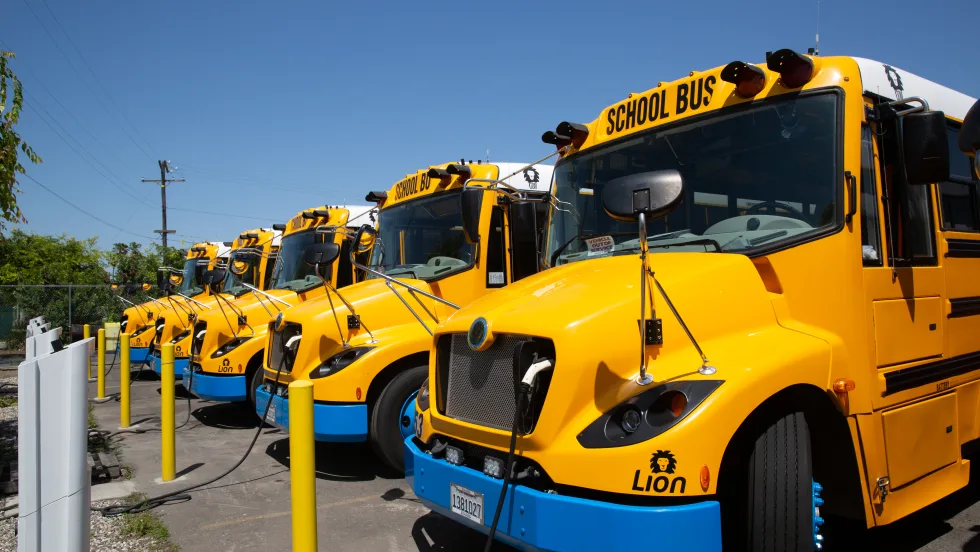
California School Children Ride in Green School Buses
Today, California prides itself on utilizing the most zero-emission (ZE) school buses in the country with over 1,689 being used by California school districts; and while the state is on a positive health trajectory thanks to a decree to eliminate gas and diesel vehicles, more work needs to be done to improve children’s well-being.
Read More →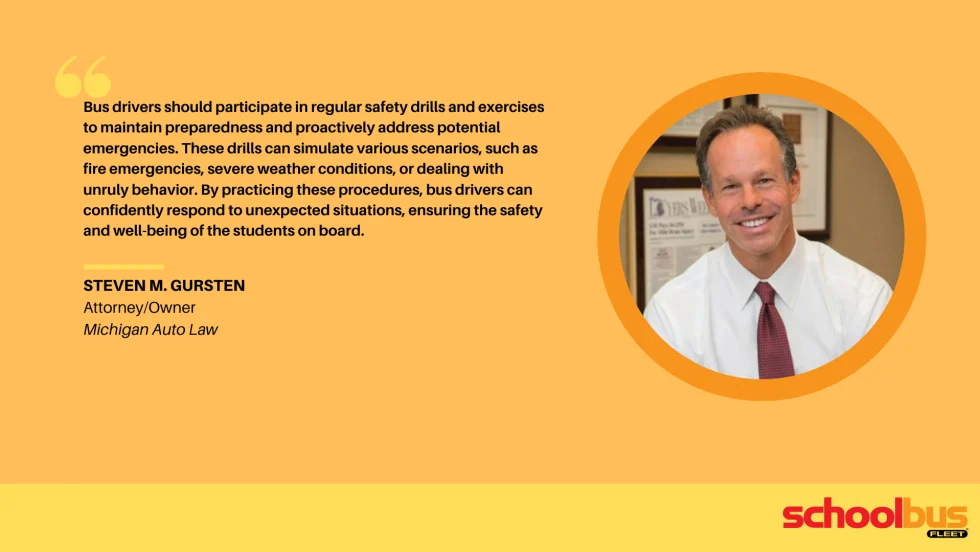
Behind The Wheel of Childrens’ Safety Aboard the School Bus
Bus drivers are the primary caretakers of children during their commute and thus bear responsibility for their safety. By prioritizing proper operating procedures, maintenance checks, and additional precautions, drivers can help avoid the loss of precious young lives under their care.
Read More →