




Related - VIDEO: 2020 Love the Bus Kickoff Events
NSTA Advocacy in Action — My Inspiring Love the Bus Experience
National School Transportation Association President John Benish Jr. shares how the American School Bus Council's Love the Bus kickoff activities on Feb. 3 affected him.
by John Benish Jr.
February 19, 2020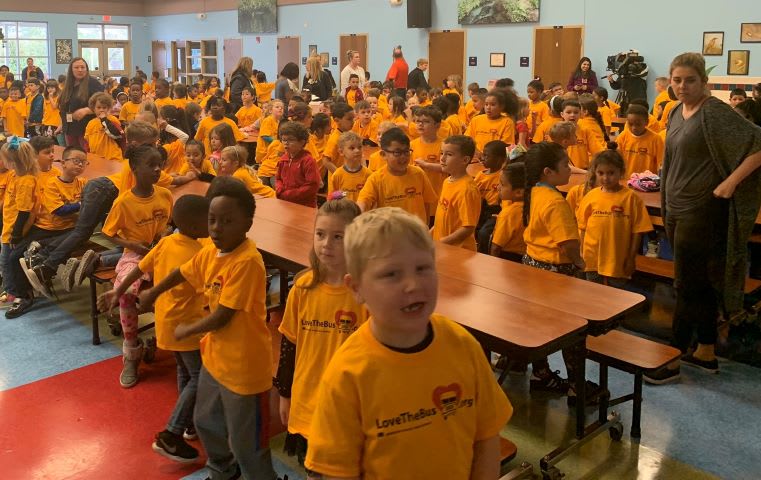
The American School Bus Council launched its annual “Love the Bus” campaign at Orange County (Fla.) Public Schools on Feb. 4. Photo courtesy National School Transportation Association
4 min to read

The American School Bus Council launched its annual “Love the Bus” campaign at Orange County (Fla.) Public Schools on Feb. 4. Photo courtesy National School Transportation Association
On Feb. 3, I was honored to be part of an American School Bus Council (ASBC) delegation that traveled to Orange County Public Schools (OCPS) in central Florida to kick off “Love the Bus” activities.
For those of you who are not familiar, ASBC is comprised of the three major student transportation organizations: National Association for Pupil Transportation (NAPT), National Association of State Directors of Pupil Transportation Services (NASDPTS), and my organization — National School Transportation Association (NSTA). In addition, the major original equipment manufacturers — Blue Bird, IC Bus, and Thomas Built Buses — are major supporters of this effort. The main purposes of ASBC are to highlight the iconic yellow school bus and increase ridership, and Love the Bus remains a major part of the organization’s effort.
Although it is usually difficult to fit in travel during this time of year, the trip was time incredibly well spent. On the first day, after we handled some ASBC business, our contingent took a tour of the new Pine Hills bus depot that OCPS recently opened in Apopka. Here we engaged with transportation staff: administrators, dispatchers, mechanics, and, of course, drivers. That gave me an opportunity to take a look at the operation, talks with folks involved in the often-underpublicized area of repair and maintenance, and compare and contrast my operations against what these professionals were doing, 1,200 miles away from my home base. (Truthfully, there were a few takeaways that I brought back to my operation — Cook-Illinois Corp. — but in several cases, the visit reinforced procedures that we utilize.)
I thought about how impactful Love the Bus month is, and how we should take steps to highlight the iconic yellow bus, our drivers, … and anyone else who makes sure that our children make it to school safely, efficiently, and on time.
I was convinced that the tour would be the highlight of my trip, but the very next day, we launched our Love the Bus activities at Rock Springs Elementary School. The school cafeteria was alive as the students were clearly hyped to support their bus drivers. Pastor A.L. Reeves gave an energetic speech designed to get the youngsters to think about safety. Those who know Pastor Reeves understand that he can make any topic entertaining, but he engaged the students and created incredible energy around the yellow bus. Yet he also got the important message about safety across to these young students in an understandable way. It was a great way to start the day, and there was more to come.
After our school visit, our delegation journeyed back to the transportation compound, where we represented the industry by riding the yellow bus. Even as adults, the bus trip was an enjoyable experience, as we traded stories and engaged in a little bit of shop talk. (When we get a group of folks together who all bleed yellow, you can’t expect us not to talk about what we love to do.)
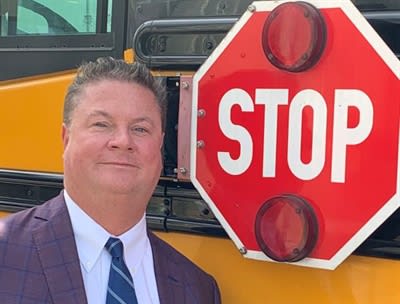
John Benish Jr. is the president of the National School Transportation Association.
And it didn’t end there. Back at the transportation center, we again heard from Pastor Reeves, who inspired a large contingent of wonderful bus drivers by highlighting the importance of the yellow bus and its drivers in the education process. He emphasized that a child’s school day starts every morning with their bus driver greeting them. Every bus driver has the ability to brighten a child’s day with a simple smile and hello, and we appreciate them for doing that. A special thanks to Kim Frye and Bill Wen from OCPS for handling all the details, and making this a truly special event.
Overall, the trip left me invigorated and inspired. As I headed back home to Illinois, I thought about how impactful Love the Bus month is, and how we should take steps to highlight the iconic yellow bus, our drivers, aides, administrators, mechanics, dispatchers, and anyone else who makes sure that our children make it to school safely, efficiently, and on time. This is no small task, and it often amazes me how seamless the process can be because of the committed professionals working in our proud industry.
Subscribe to Our Newsletter
More Blog Posts
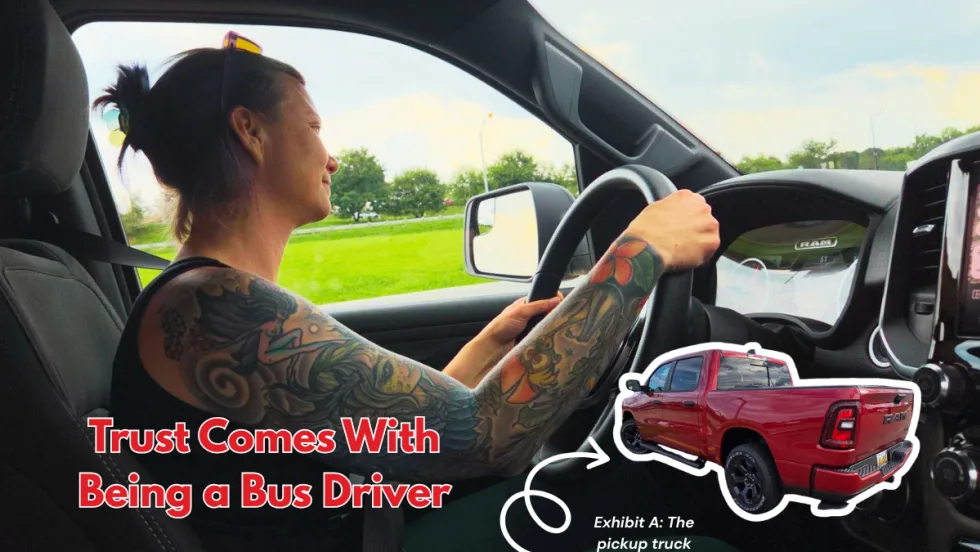
'I’m a School Bus Driver, You Can Trust Me'
A crowded Cleveland parking lot, a full-size pickup, and five unexpected words turned a stressful moment into a reminder of just how much trust we place in school bus drivers every day.
Read More →
The Sound of Summer Starting [Guest Editorial]
That unmistakable school bus rumble? It carries childhood memories, community routines, and a whole lot of unseen work behind the scenes.
Read More →
The Technology Power Combo That Enables EV Charging on Difficult Sites
As the pace of fleet electrification increases and charging infrastructure continues to pose challenges, many fleets find themselves puzzling over the question: how do I install charging infrastructure faster and more cost-efficiently?
Read More →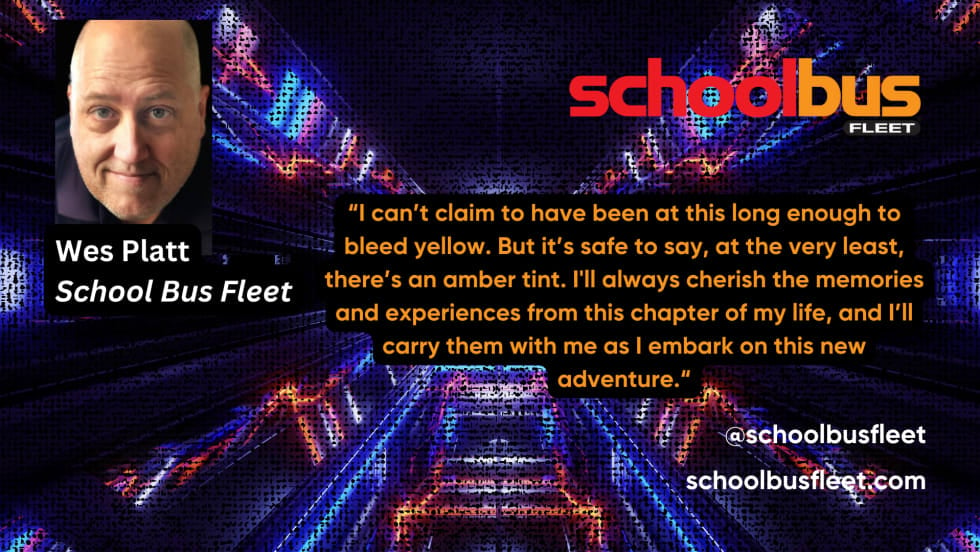
Trip Sheet: Farewell, Faithful Readers – Keep on Rolling
Executive Editor Wes Platt offers parting thoughts as he parks the School Bus Fleet bus to focus on ultra-local community journalism, making way for someone else to take the wheel as the pupil transportation industry continues to evolve.
Read More →
Trip Sheet: School Transportation Pros Can Champion Children's Mental Health
Children's Mental Health Awareness Day underscores the significance of school bus drivers in fostering supportive environments during students' journeys. SAMHSA's initiatives, including stigma reduction and access to resources, complement the Biden-Harris administration's funding efforts to enhance youth mental health services and workforce development.
Read More →
Trip Sheet: Is It Time for Daylight Saving Time to Clock Out?
How do you think the potential shift to permanent Daylight Saving Time or standard time would impact our daily lives and routines, especially considering the divided approach across various states?
Read More →
Trip Sheet: Meeting a Hero in My Own Back Yard
I remain impressed by the matter-of-fact heroism that’s often demonstrated by school bus drivers like Deona Washington who are caught in these situations where the best of us might lose our cool and panic. But, then again, bus drivers are a unique breed.
Read More →
Trip Sheet: 3 Takeaways from the EPA Clean School Bus Grant Program
Most applicants sought grant funding to acquire electric school buses, with propane coming in a distant second. No one indicated plans to purchase compressed natural gas (CNG) buses in this round. That’s not terribly surprising, I suppose, given how few school districts listed the inclusion of CNG buses in their fleets for our 2023 top district fleets survey.
Read More →
Trip Sheet: Let's Get Rolling: What's Coming in 2024?
Calendar pages keep flipping toward the mandates set in states like New York and California to transition their school bus fleets from diesel to zero-emission, but there’s plenty of reluctance and pushback.
Read More →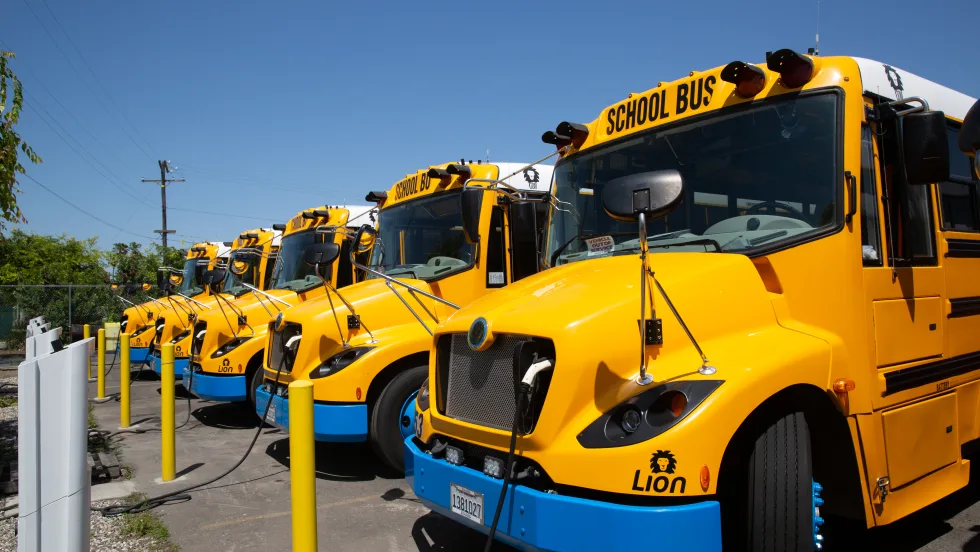
California School Children Ride in Green School Buses
Today, California prides itself on utilizing the most zero-emission (ZE) school buses in the country with over 1,689 being used by California school districts; and while the state is on a positive health trajectory thanks to a decree to eliminate gas and diesel vehicles, more work needs to be done to improve children’s well-being.
Read More →