




Related: NSTA Advocacy in Action — Driving the School Bus Route to Capitol Hill
NSTA Advocacy in Action — How Our Regulatory Efforts Benefit Contractors
The National School Transportation Association's president explains how its comments on pending rules and regulations help shape the landscape of pupil transportation across the U.S.
by John Benish Jr.
January 7, 2020
File photo
3 min to read
File photo
One of the most important goals of any trade association is to advocate for the industry it represents. At the National School Transportation Association (NSTA), we pride ourselves on being an effective advocate for private school bus contractors around the country. This also includes working with the National Association for Pupil Transportation (NAPT) and student transportation state directors when school bus safety is being discussed. We take our role of representing pupil transportation seriously, and for this reason we engage in policy debates in several places, one of which is the regulatory arena.
Regulatory analysis is not usually an activity that gets much attention from the general public. We are on constant guard when it comes to regulatory issues; as we know, the yellow bus is a constant target. For purposes of this conversation, understand that our legislative activity comes in the form of lobbying members of Congress to support or oppose a piece of pending legislation. Having myself testified before the House Transportation and Infrastructure Committee in July, I fully acknowledge the difference between regulatory and legislative activity.
That is why I am highlighting our work on commenting on pending rules and regulations being considered by federal departments and agencies. Our comments help shape the landscape of pupil transportation in all fleets in the U.S., even if they are far removed from the spotlight of our nation’s Capital.
Last year alone, NSTA sent comments to regulators on 12 separate occasions. For example, we filed comments with the National Highway Traffic Safety Administration (NHTSA) and the Federal Motor Carrier Safety Administration (FMCSA) regarding the implementation of Commercial Motor Vehicle Automated Driving Systems (ADS).
That particular rulemaking process recognized the vital stake that school transportation has when it comes to the integration of ADS into our school buses. As such, NSTA focused on educating regulators on the importance of other automated vehicles being able to detect the unique stopping patterns of a school bus. We also pointed out that precautions must be taken to ensure automated systems are not vulnerable to cyber security threats. Finally, NSTA stood firm on its position that regardless of the ultimate level of automation a school bus employs, a human “driver” must always be present on a school bus.
NSTA also filed comments with federal regulators in support of reducing Commercial Driver’s License (CDL) testing barriers by allowing drivers to take knowledge tests in another state, as well as supporting the FMCSA’s proposal to increase the “on-duty” hours of service for short-haul commercial drivers (i.e. school bus drivers).
Finally, NSTA submitted other comments to FMCSA supporting their proposal to identify non-preventable crashes on an operator’s Behavior Analysis and Safety Improvement Category (BASIC) prioritization algorithm and making the Crash Preventability Demonstration Program permanent. We previously submitted comments in July 2015 regarding non-preventable crashes and urged FMCSA to address the issue of crash preventability as it places an undue regulatory burden on carriers, and severely affects their Safety Management System percentile rankings.

John Benish Jr. is the president of the National School Transportation Association.
Those involved with pupil transportation know that impeccable safety rankings are not the exception, but rather the standard for school transportation operators. NSTA sought to emphasize to FMCSA that removing non-preventable crashes from a school bus contractor’s ranking was simply an issue of fundamental fairness.
We continue to advance in many ways the interests of school transportation through our advocacy efforts. While you may not see them being boasted about on social media or as a trending story in the news, understand that they have a cumulative impact in supporting private school bus contractors.
Subscribe to Our Newsletter
More Blog Posts
'I’m a School Bus Driver, You Can Trust Me'
A crowded Cleveland parking lot, a full-size pickup, and five unexpected words turned a stressful moment into a reminder of just how much trust we place in school bus drivers every day.
Read More →
The Sound of Summer Starting [Guest Editorial]
That unmistakable school bus rumble? It carries childhood memories, community routines, and a whole lot of unseen work behind the scenes.
Read More →
The Technology Power Combo That Enables EV Charging on Difficult Sites
As the pace of fleet electrification increases and charging infrastructure continues to pose challenges, many fleets find themselves puzzling over the question: how do I install charging infrastructure faster and more cost-efficiently?
Read More →
Trip Sheet: Farewell, Faithful Readers – Keep on Rolling
Executive Editor Wes Platt offers parting thoughts as he parks the School Bus Fleet bus to focus on ultra-local community journalism, making way for someone else to take the wheel as the pupil transportation industry continues to evolve.
Read More →
Trip Sheet: School Transportation Pros Can Champion Children's Mental Health
Children's Mental Health Awareness Day underscores the significance of school bus drivers in fostering supportive environments during students' journeys. SAMHSA's initiatives, including stigma reduction and access to resources, complement the Biden-Harris administration's funding efforts to enhance youth mental health services and workforce development.
Read More →
Trip Sheet: Is It Time for Daylight Saving Time to Clock Out?
How do you think the potential shift to permanent Daylight Saving Time or standard time would impact our daily lives and routines, especially considering the divided approach across various states?
Read More →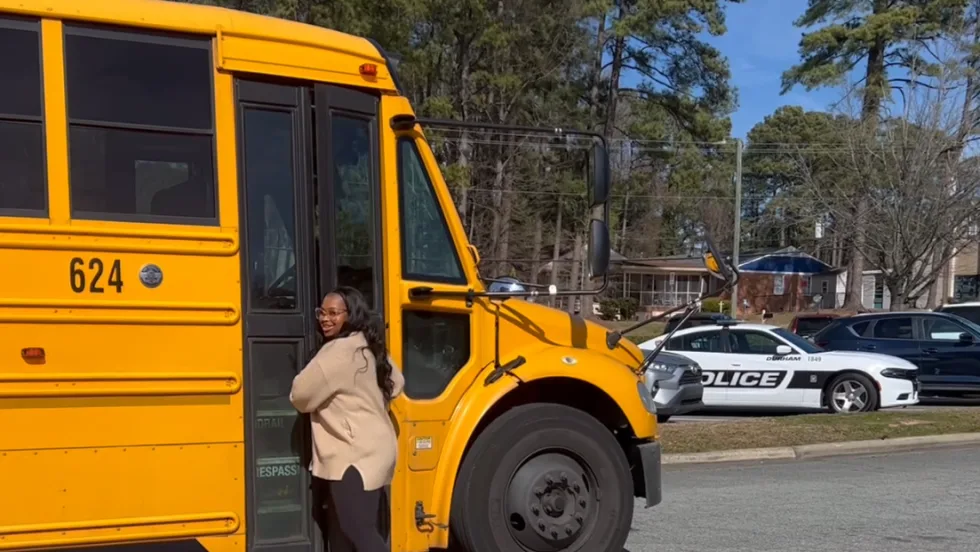
Trip Sheet: Meeting a Hero in My Own Back Yard
I remain impressed by the matter-of-fact heroism that’s often demonstrated by school bus drivers like Deona Washington who are caught in these situations where the best of us might lose our cool and panic. But, then again, bus drivers are a unique breed.
Read More →
Trip Sheet: 3 Takeaways from the EPA Clean School Bus Grant Program
Most applicants sought grant funding to acquire electric school buses, with propane coming in a distant second. No one indicated plans to purchase compressed natural gas (CNG) buses in this round. That’s not terribly surprising, I suppose, given how few school districts listed the inclusion of CNG buses in their fleets for our 2023 top district fleets survey.
Read More →
Trip Sheet: Let's Get Rolling: What's Coming in 2024?
Calendar pages keep flipping toward the mandates set in states like New York and California to transition their school bus fleets from diesel to zero-emission, but there’s plenty of reluctance and pushback.
Read More →
California School Children Ride in Green School Buses
Today, California prides itself on utilizing the most zero-emission (ZE) school buses in the country with over 1,689 being used by California school districts; and while the state is on a positive health trajectory thanks to a decree to eliminate gas and diesel vehicles, more work needs to be done to improve children’s well-being.
Read More →