




Related: Navigating Autonomous Vehicle Safety in the 'In-Between Time'
NSTA Advocacy in Action — FCC: Don’t Tinker With Vehicle-to-Everything Evolution
The FCC's proposal to reallocate most of the 5.9 gigahertz band for unlicensed Wi-Fi usage would take 45 megahertz away from Vehicle-to-Everything (V2X) technologies.
by John Benish Jr.
April 6, 2020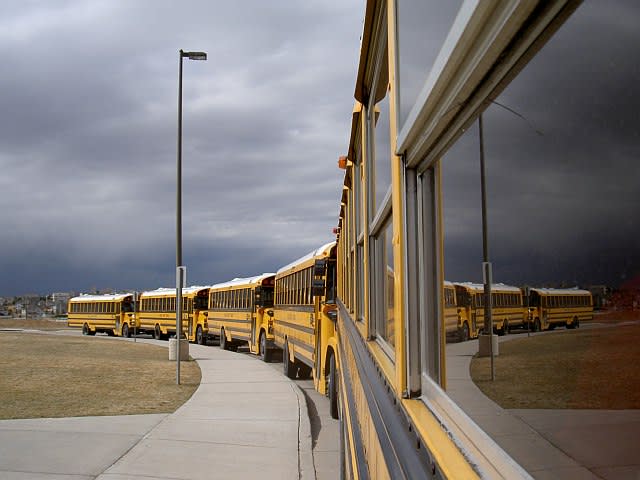
The FCC's proposal to reallocate most of the 5.9 gigahertz band for unlicensed Wi-Fi usage would take 45 megahertz away from Vehicle-to-Everything technologies. File photo courtesy John Horton
3 min to read
The FCC's proposal to reallocate most of the 5.9 gigahertz band for unlicensed Wi-Fi usage would take 45 megahertz away from Vehicle-to-Everything technologies. File photo courtesy John Horton
Many of us grizzled veterans in student transportation continue to marvel at the technological evolution taking place in the industry before our eyes. Ever-changing technology and enhancements promise to make the already safe endeavor of transporting students to and from school even safer.
This union of safety and technology recently brought the National School Transportation Association (NSTA) to the table on a new issue: discussing with the Federal Communications Commission (FCC) an initiative affecting Vehicle-to-Everything (V2X) technologies.
The same FCC that regulates content over the radio and television airwaves is proposing to reallocate and give away most of the spectrum dedicated to transportation safety. In March, NSTA submitted comments opposing this action.
In a nutshell, V2X technologies allow vehicles to communicate with other vehicles, infrastructure, and pedestrians/bicyclists to prevent traffic crashes. These evolving technologies are critical to increasing safety in student transportation, and overall, they can be an avenue to reduce the more than 37,000 fatalities that occur annually on our nation’s roads.
Regarding pupil transportation, V2X technologies need dedicated spectrum to ensure uninterrupted high-speed communication and can be used for numerous safety applications: collision avoidance; emergency response priority; pedestrian in crosswalk notification; and red light, work zone, reduced speed zone, and weather impact warnings.
The FCC has proposed to reallocate the majority of the 5.9 gigahertz (GHz) band for unlicensed Wi-Fi usage. This would take 45 megahertz (MHz) away from transportation safety, leaving only 30 MHz for life-saving V2X technologies. Unfortunately, the reduction would not leave enough spectrum for all V2X technologies, thereby severely limiting which ones can be used. Research from the U.S. Department of Transportation (DOT) shows that this proposal would also likely cause significant interference with V2X technologies operating in the remaining spectrum, which could, in effect, render the spectrum useless for transportation safety. According to the DOT, V2X technologies have the potential to prevent 80% of unimpaired crashes.
Very simply, less spectrum means less safety. Hopefully the FCC will come to the same conclusion.
The FCC position in favor of reducing the size of the 5.9 GHz band centers on a simple, but largely misleading, premise: that the 5.9 GHz was allocated 20 years ago, and the transportation industry has not done anything with the spectrum.
While it is true that the 5.9 GHz band was allocated in 1999, the FCC position does not acknowledge that a spectrum sharing agreement with satellite companies previously operating in the band, which allowed V2X to begin operating in the band, was not finalized until 2008. In addition, the Middle Class Tax Relief and Job Creation Act of 2012 required the National Telecommunications and Information Administration to study whether unlicensed devices could operate within the band, increasing regulatory uncertainty.
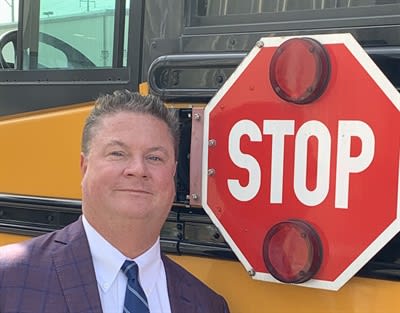
John Benish Jr. is the president of the National School Transportation Association.
Then, in 2015, Congress requested testing on the operation of unlicensed devices in the band to ensure they would not interfere with V2X technologies. The results of the first of three planned tests were released in 2019, the other two tests have not yet been completed. And in 2018, two FCC commissioners wrote a letter to Toyota, which was planning to deploy V2X technology in all of its vehicles starting in 2021, to suggest that the FCC could re-channelize the 5.9 GHz band, again significantly delaying V2X deployment.
Finally, the FCC says it is increasing transportation safety by allowing a newer technology (C-V2X) and dedicating three channels to public safety use. To be clear, the FCC should allow C-V2X, or any future V2X technologies, to operate in the band, but reducing the amount of available spectrum will not increase safety.
Limiting the spectrum will make it impossible to deploy advanced collision avoidance and vehicle-to-pedestrian applications and increase the likelihood that interference from other devices operating near V2X will obstruct V2X communications. Very simply, less spectrum means less safety. Hopefully the FCC will come to the same conclusion.
Subscribe to Our Newsletter
More Blog Posts
The Sound of Summer Starting [Guest Editorial]
That unmistakable school bus rumble? It carries childhood memories, community routines, and a whole lot of unseen work behind the scenes.
Read More →
The Technology Power Combo That Enables EV Charging on Difficult Sites
As the pace of fleet electrification increases and charging infrastructure continues to pose challenges, many fleets find themselves puzzling over the question: how do I install charging infrastructure faster and more cost-efficiently?
Read More →
Trip Sheet: Farewell, Faithful Readers – Keep on Rolling
Executive Editor Wes Platt offers parting thoughts as he parks the School Bus Fleet bus to focus on ultra-local community journalism, making way for someone else to take the wheel as the pupil transportation industry continues to evolve.
Read More →
Trip Sheet: School Transportation Pros Can Champion Children's Mental Health
Children's Mental Health Awareness Day underscores the significance of school bus drivers in fostering supportive environments during students' journeys. SAMHSA's initiatives, including stigma reduction and access to resources, complement the Biden-Harris administration's funding efforts to enhance youth mental health services and workforce development.
Read More →
Trip Sheet: Is It Time for Daylight Saving Time to Clock Out?
How do you think the potential shift to permanent Daylight Saving Time or standard time would impact our daily lives and routines, especially considering the divided approach across various states?
Read More →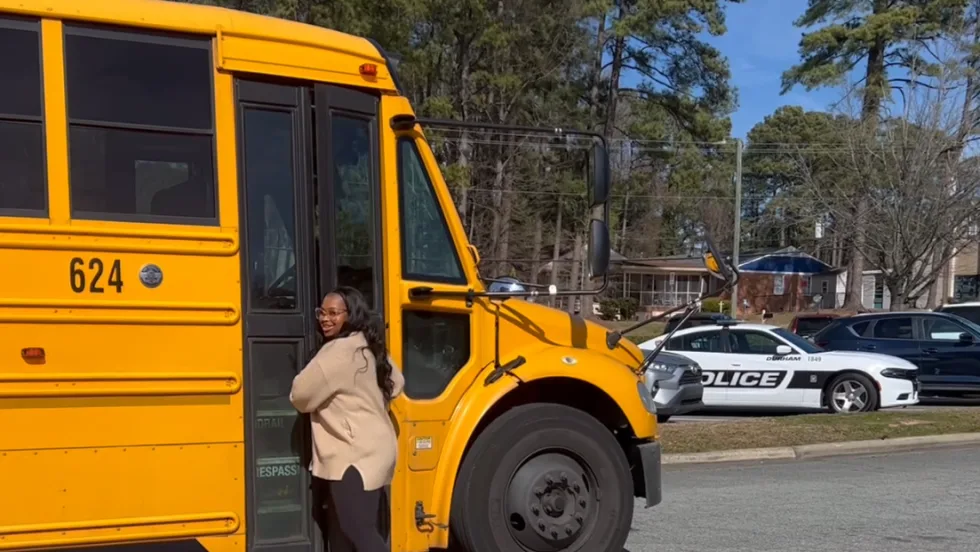
Trip Sheet: Meeting a Hero in My Own Back Yard
I remain impressed by the matter-of-fact heroism that’s often demonstrated by school bus drivers like Deona Washington who are caught in these situations where the best of us might lose our cool and panic. But, then again, bus drivers are a unique breed.
Read More →
Trip Sheet: 3 Takeaways from the EPA Clean School Bus Grant Program
Most applicants sought grant funding to acquire electric school buses, with propane coming in a distant second. No one indicated plans to purchase compressed natural gas (CNG) buses in this round. That’s not terribly surprising, I suppose, given how few school districts listed the inclusion of CNG buses in their fleets for our 2023 top district fleets survey.
Read More →
Trip Sheet: Let's Get Rolling: What's Coming in 2024?
Calendar pages keep flipping toward the mandates set in states like New York and California to transition their school bus fleets from diesel to zero-emission, but there’s plenty of reluctance and pushback.
Read More →
California School Children Ride in Green School Buses
Today, California prides itself on utilizing the most zero-emission (ZE) school buses in the country with over 1,689 being used by California school districts; and while the state is on a positive health trajectory thanks to a decree to eliminate gas and diesel vehicles, more work needs to be done to improve children’s well-being.
Read More →
Behind The Wheel of Childrens’ Safety Aboard the School Bus
Bus drivers are the primary caretakers of children during their commute and thus bear responsibility for their safety. By prioritizing proper operating procedures, maintenance checks, and additional precautions, drivers can help avoid the loss of precious young lives under their care.
Read More →