




How School Bus Driving Champ Larry Hannon Prepares for Safety Competitions
With the coming of “roadeo” season, we spotlight drivers who have taken part in the School Bus Driver International Safety Competition. First up is nine-time winner Larry Hannon Sr.

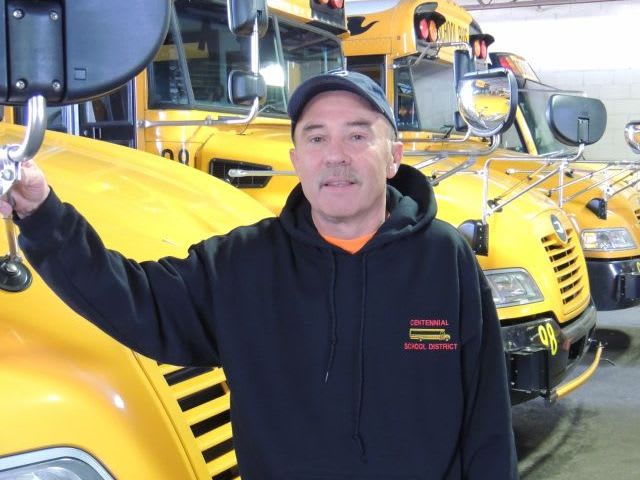
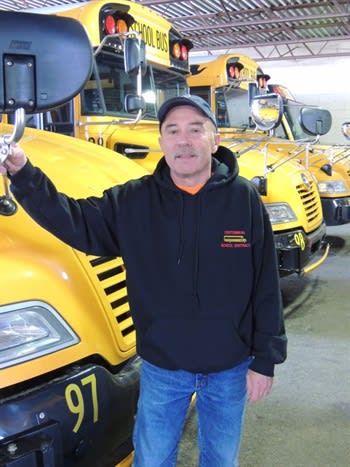
Larry Hannon Sr. has placed first nine times at the School Bus Driver International Safety Competition.
With the coming of “roadeo” season, we’re shining the spotlight on a handful of drivers who have advanced to (and in some cases won) the School Bus Driver International Safety Competition in past years. This is the first in an occasional series.
WARMINSTER, Pa. — For Larry Hannon Sr., studying CDL manuals and practicing driving skills are only part of the process for getting ready for school bus safety competitions.
“It’s mental preparation, too,” Hannon said. “It’s definitely mentally draining. You’re thinking of every event — especially when you get to the international level.”
If anyone could be considered an all-star in competitive school bus driving, it’s Hannon, who has racked up about four decades of experience and multiple championship titles. He started working as a school bus driver in 1976 and entered his first safety competition (aka roadeo) two years later.
Since then, Hannon, who has been driving for Pennsylvania’s Centennial School District for his entire career, said that he has taken part in “well over 100” school bus safety competitions at the local, state, and international levels.
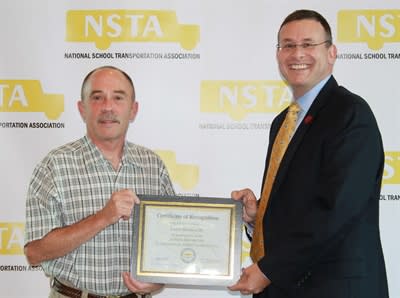
Hannon is seen here with NSTA President Todd Monteferrario at last year’s School Bus Driver International Safety Competition. Photo courtesy NSTA
Along with numerous state titles, Hannon has placed first nine times at the School Bus Driver International Safety Competition — which could be considered the World Series for school bus drivers from across the U.S. and Canada. Still, even with his extensive experience, Hannon spends considerable time training for school bus safety competitions: In a year in which he competes three times, he puts in about 10 hours of studying and 25 hours of driving skills practice. His annual process starts with reviewing CDL manuals.
“That’s the first thing we do — you can do it in bad weather,” Hannon said.
Drivers in Pennsylvania can study a state-specific CDL manual for local and state competitions. (“There are subtle differences in states,” Hannon noted.)
When preparing to contend at the international level, Hannon studies a non-state-specific CDL manual as well as his state version. He also reviews first aid procedures, which is a typical topic on the international competition’s written test.
When the weather permits, Hannon and other Centennial School District drivers who are preparing for their local competition — including his son, Larry Hannon Jr. — practice field events on weekends or weekday evenings.
“For the most part, you get a booklet before each roadeo … [which lists] what the field events will be,” Hannon said. “We set up the majority of events at our bus garage. … We can do a few at a time.”
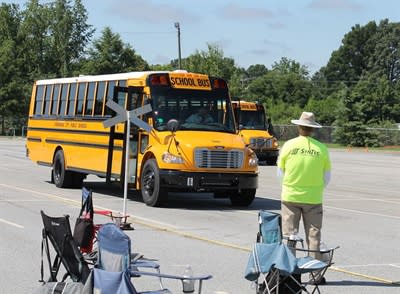
Safety competitions test a variety of driving skills, including railroad crossing procedures. Seen here is last year’s School Bus Driver International Safety Competition. Photo courtesy NSTA
Along with a pre-trip inspection, field events typically test a wide variety of driving skills, like turns, backing, straight line, railroad crossings, parallel parking, and diminishing clearance. Hannon and other Centennial school bus drivers are now getting ready for their local competition, which combines school districts from Bucks County and Montgomery County. That event will be held April 29 in Warminster.
The top 10 contestants from each county advance to the Pennsylvania School Bus Driver Safety Competition, which this year will be held June 23 and 24 in State College.
In any state or Canadian province, a total of six drivers per year can qualify for the School Bus Driver International Safety Competition. That can include two drivers (one public sector, one private sector) in each school bus category: transit class (Type D), conventional class (Type C), and small bus class (Type A).
The National School Transportation Association hosts the School Bus Driver International Safety Competition each year. The 2017 event will be held July 16 in Indianapolis. (For more details, go to www.yellowbuses.org/safety-competition.)
For Hannon, one of the benefits of taking part in the international competition has been the chance to meet school bus drivers from across the nation and to learn about the differences in pupil transportation practices from state to state.
“It’s really neat to build friendships with competitors from around the country,” Hannon said. "There's camaraderie between competitors."
Also, he said that the time and energy he spends preparing for multiple competitions each year has helped him on the job.
“The practicing and studying, that sharpens your driving skills and your knowledge,” Hannon said. “As you do it every year, it helps, because there’s things you forget and you learn new things each time. It all comes down to being a safer driver.”
More Blog Posts
The Sound of Summer Starting [Guest Editorial]
That unmistakable school bus rumble? It carries childhood memories, community routines, and a whole lot of unseen work behind the scenes.
Read More →
The Technology Power Combo That Enables EV Charging on Difficult Sites
As the pace of fleet electrification increases and charging infrastructure continues to pose challenges, many fleets find themselves puzzling over the question: how do I install charging infrastructure faster and more cost-efficiently?
Read More →
Trip Sheet: Farewell, Faithful Readers – Keep on Rolling
Executive Editor Wes Platt offers parting thoughts as he parks the School Bus Fleet bus to focus on ultra-local community journalism, making way for someone else to take the wheel as the pupil transportation industry continues to evolve.
Read More →
Trip Sheet: School Transportation Pros Can Champion Children's Mental Health
Children's Mental Health Awareness Day underscores the significance of school bus drivers in fostering supportive environments during students' journeys. SAMHSA's initiatives, including stigma reduction and access to resources, complement the Biden-Harris administration's funding efforts to enhance youth mental health services and workforce development.
Read More →
Trip Sheet: Is It Time for Daylight Saving Time to Clock Out?
How do you think the potential shift to permanent Daylight Saving Time or standard time would impact our daily lives and routines, especially considering the divided approach across various states?
Read More →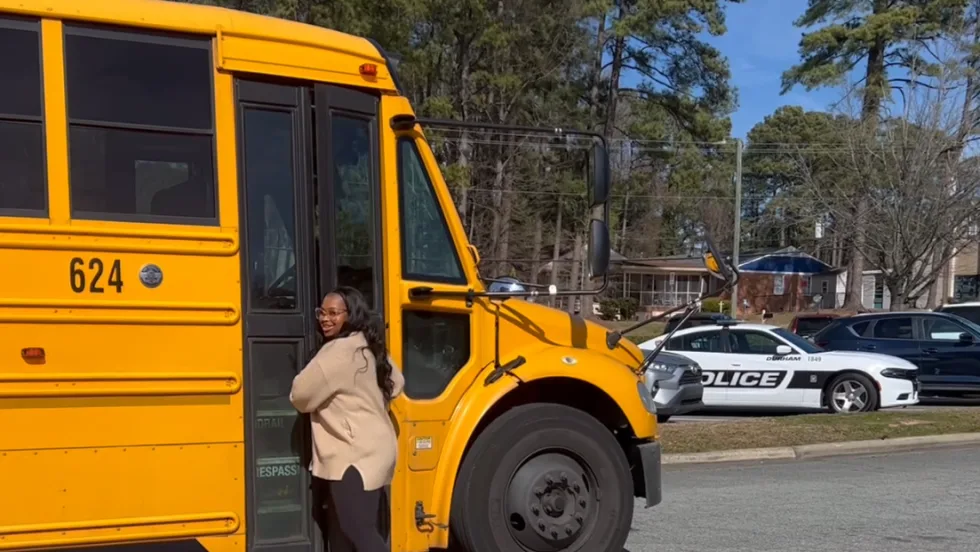
Trip Sheet: Meeting a Hero in My Own Back Yard
I remain impressed by the matter-of-fact heroism that’s often demonstrated by school bus drivers like Deona Washington who are caught in these situations where the best of us might lose our cool and panic. But, then again, bus drivers are a unique breed.
Read More →
Trip Sheet: 3 Takeaways from the EPA Clean School Bus Grant Program
Most applicants sought grant funding to acquire electric school buses, with propane coming in a distant second. No one indicated plans to purchase compressed natural gas (CNG) buses in this round. That’s not terribly surprising, I suppose, given how few school districts listed the inclusion of CNG buses in their fleets for our 2023 top district fleets survey.
Read More →
Trip Sheet: Let's Get Rolling: What's Coming in 2024?
Calendar pages keep flipping toward the mandates set in states like New York and California to transition their school bus fleets from diesel to zero-emission, but there’s plenty of reluctance and pushback.
Read More →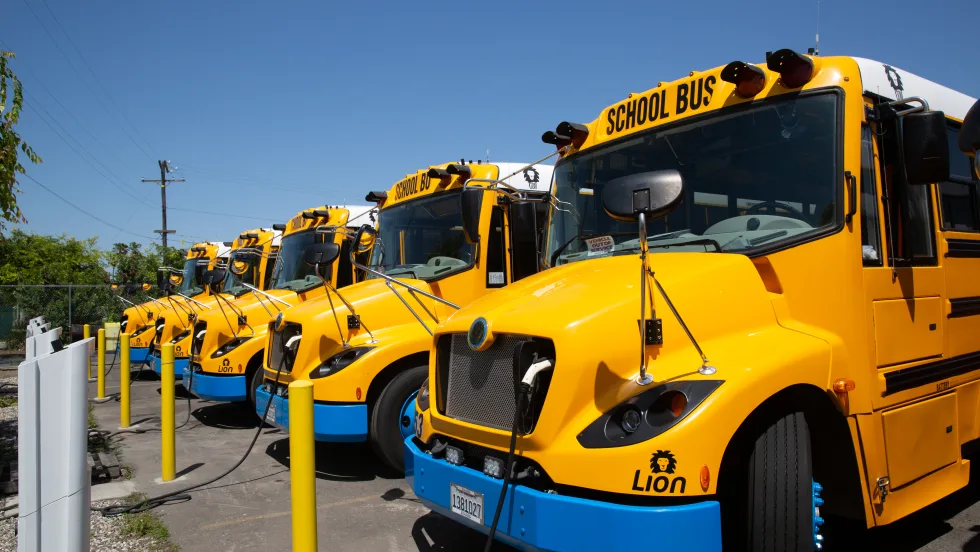
California School Children Ride in Green School Buses
Today, California prides itself on utilizing the most zero-emission (ZE) school buses in the country with over 1,689 being used by California school districts; and while the state is on a positive health trajectory thanks to a decree to eliminate gas and diesel vehicles, more work needs to be done to improve children’s well-being.
Read More →
Behind The Wheel of Childrens’ Safety Aboard the School Bus
Bus drivers are the primary caretakers of children during their commute and thus bear responsibility for their safety. By prioritizing proper operating procedures, maintenance checks, and additional precautions, drivers can help avoid the loss of precious young lives under their care.
Read More →