



Related - 5 Questions: Steve Whaley on Growing Propane Adoption, Ease of Use
A New, Green School Bus Ride for Jack
A special-needs student in South Carolina advocates for his school to add a propane school bus to its fleet. He ends up getting a “green” bus all his own.
by Tim Waller
September 18, 2020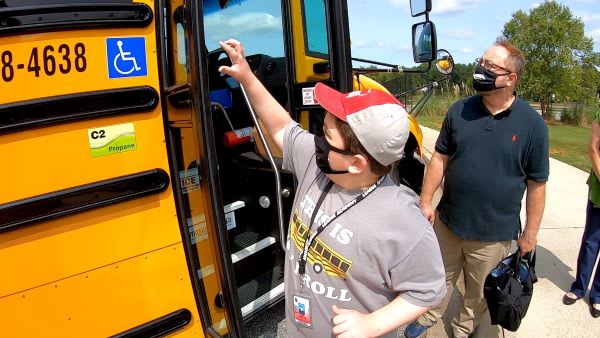
Student Jack Kendrick advocated for his school to add a propane bus to its fleet. He ended up getting one dedicated to him in a recent ceremony. He is shown here with his father.
Photo courtesy Greenville (S.C.) County Schools
2 min to read
No one is 100-percent sure when Jack Kendrick’s love for school buses began. But if the pictures of buses that he draws or the bus-themed shirts he wears to school each day are any indication, his love for school buses runs deep — especially for new propane-powered buses.
On Sept. 15, the South Carolina special-needs student, who attends seventh grade at League Academy in Greenville, S.C., was presented with a propane bus of his own.
“Jack, this is going to be your bus that you take to school,” Mary Leslie Anderson, the school’s principal, told him as he stared at the bus with wonder.
While Greenville County already has more than 20 propane-powered buses in its fleet, this is the first propane bus designed for special-needs students. And it’s all because of Jack.
Jack’s dedication and keen communication skills stood out in his efforts to get the bus added to the fleet, Adam James, the director of transportation for Greenville County Schools, explained.
“Jack originally petitioned his bus driver, Miss Gerry, then he sent me a letter,” he said. “I asked Jack if I could give that letter to the transportation director for the state Department of Education, which I did. Then it was passed on to state Superintendent Molly Spearman. It all happened from there.”
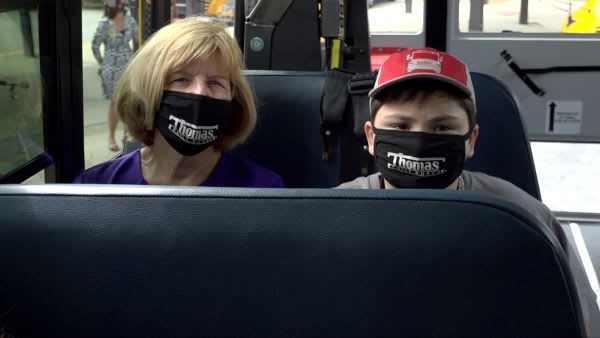
State Superintendent Molly Spearman attended the dedication ceremony and joined Jack for a quick ride on the new bus.
Photo courtesy Greenville (S.C.) County Schools
Several dignitaries, including Spearman, traveled to Jack’s school for the presentation of the bus. Spearman shared a seat with him as the shiny new bus took a spin through the school parking lot.
“I couldn’t miss this today,” Spearman said. “What’s so impressive is how well Jack is communicating and advocating. League Academy is a communications magnet school and I would say Jack is a great communicator.”
Jack was born with both autism and club feet, and has undergone several surgeries in his lifetime.
Dr. W. Burke Royster, superintendent of Greenville County Schools, said Jack has shown what a little determination on the part of a student can do.
“Jack has shown how students can help to get things done in a positive way when they see an issue or a problem that needs to be addressed,” Royster said.

Tim Waller is the director of media relations for Greenville County Schools.
Photo courtesy Greenville (S.C.) County Schools
No one is prouder than League Academy’s Anderson, who said Jack is a stickler for details.
“He studied the inspection sticker. He studied the green propane sticker. Then he said, ‘This is a propane bus!’” Anderson said. “He also pointed out it’s a 2021 model.”
Since Jack is an advocate for the environment, his passion for propane buses makes sense, because they produce fewer emissions, she added.
Tim Waller is the director of media relations for Greenville County Schools.
Subscribe to Our Newsletter
More Blog Posts

The Sound of Summer Starting [Guest Editorial]
That unmistakable school bus rumble? It carries childhood memories, community routines, and a whole lot of unseen work behind the scenes.
Read More →
The Technology Power Combo That Enables EV Charging on Difficult Sites
As the pace of fleet electrification increases and charging infrastructure continues to pose challenges, many fleets find themselves puzzling over the question: how do I install charging infrastructure faster and more cost-efficiently?
Read More →
Trip Sheet: Farewell, Faithful Readers – Keep on Rolling
Executive Editor Wes Platt offers parting thoughts as he parks the School Bus Fleet bus to focus on ultra-local community journalism, making way for someone else to take the wheel as the pupil transportation industry continues to evolve.
Read More →
Trip Sheet: School Transportation Pros Can Champion Children's Mental Health
Children's Mental Health Awareness Day underscores the significance of school bus drivers in fostering supportive environments during students' journeys. SAMHSA's initiatives, including stigma reduction and access to resources, complement the Biden-Harris administration's funding efforts to enhance youth mental health services and workforce development.
Read More →
Trip Sheet: Is It Time for Daylight Saving Time to Clock Out?
How do you think the potential shift to permanent Daylight Saving Time or standard time would impact our daily lives and routines, especially considering the divided approach across various states?
Read More →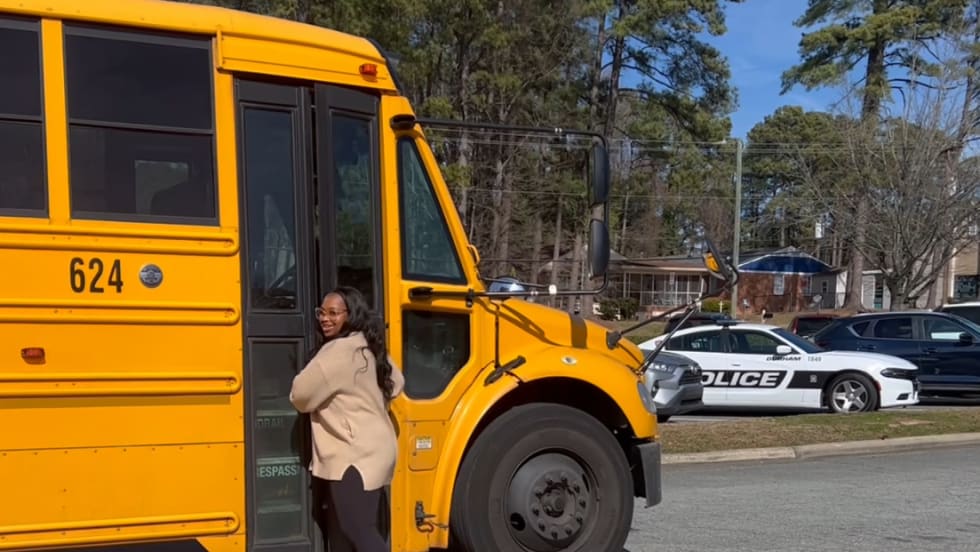
Trip Sheet: Meeting a Hero in My Own Back Yard
I remain impressed by the matter-of-fact heroism that’s often demonstrated by school bus drivers like Deona Washington who are caught in these situations where the best of us might lose our cool and panic. But, then again, bus drivers are a unique breed.
Read More →
Trip Sheet: 3 Takeaways from the EPA Clean School Bus Grant Program
Most applicants sought grant funding to acquire electric school buses, with propane coming in a distant second. No one indicated plans to purchase compressed natural gas (CNG) buses in this round. That’s not terribly surprising, I suppose, given how few school districts listed the inclusion of CNG buses in their fleets for our 2023 top district fleets survey.
Read More →
Trip Sheet: Let's Get Rolling: What's Coming in 2024?
Calendar pages keep flipping toward the mandates set in states like New York and California to transition their school bus fleets from diesel to zero-emission, but there’s plenty of reluctance and pushback.
Read More →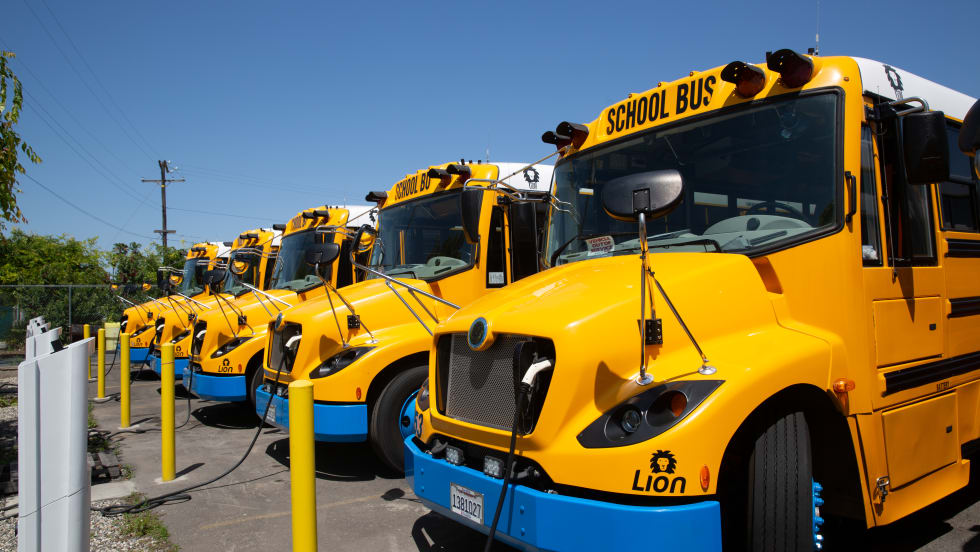
California School Children Ride in Green School Buses
Today, California prides itself on utilizing the most zero-emission (ZE) school buses in the country with over 1,689 being used by California school districts; and while the state is on a positive health trajectory thanks to a decree to eliminate gas and diesel vehicles, more work needs to be done to improve children’s well-being.
Read More →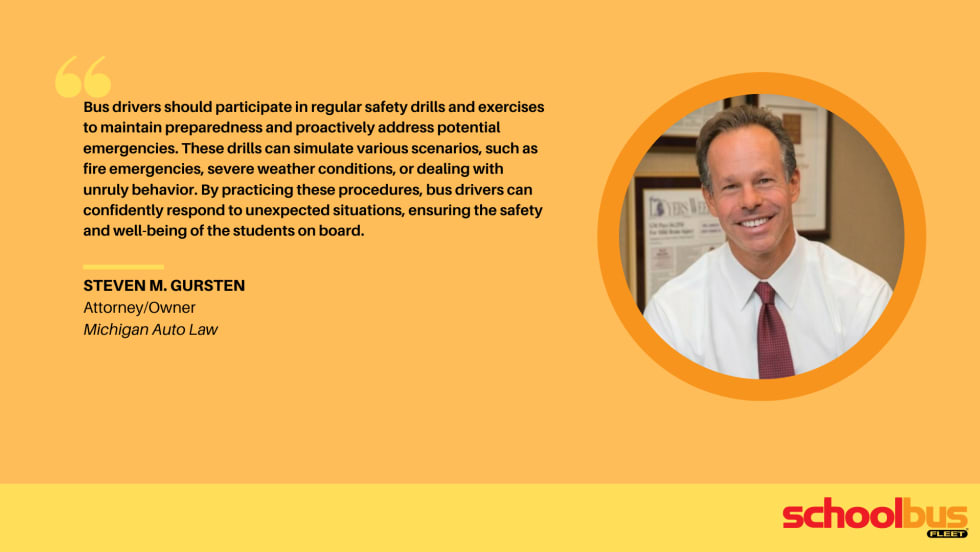
Behind The Wheel of Childrens’ Safety Aboard the School Bus
Bus drivers are the primary caretakers of children during their commute and thus bear responsibility for their safety. By prioritizing proper operating procedures, maintenance checks, and additional precautions, drivers can help avoid the loss of precious young lives under their care.
Read More →