




What You Need to Know About Latex Allergies
As an increasing number of students are being diagnosed with latex allergies, school bus operators must learn to minimize triggers, while at the same time gearing up for potential reactions.
Students with latex allergies look no different from other students. However, for a student with latex allergies, exposure to latex could cause very serious complications.
What is latex?
Latex is a natural product from the sap of the rubber tree and is a major ingredient in most rubber products. Rubber made with latex is called natural rubber latex (NRL) and is often chosen as a material due to its low manufacturing cost, flexibility, strength and elasticity.
Many of us are not aware of how many items that we come into contact with on a daily basis contain latex. These items can range from pacifiers to rubber bands to rubber clothing, such as raincoats.
Two kinds of NRL are produced — crepe rubber and liquid latex. Crepe rubber is hardened and can be found in tires and rubber balls. Liquid latex is used to make thin stretchy items such as surgical gloves, balloons and rubber bands. Most people with latex allergies are allergic to products made from liquid latex.
Who is prone to allergy?
With the spread of infectious diseases over the past 10 years, healthcare workers have increased their use of surgical gloves and other liquid latex products. Increased use breeds increased sensitivity, which can, in turn, lead to an allergic reaction.
In 1975, it was estimated that 5 to 10 percent of all healthcare workers had become sensitive to latex. In 1997, the number of latex-sensitive healthcare workers had risen to 17 percent. With repeated exposure to liquid latex (as noted, liquid latex is found in many household products), more and more children and adults are developing allergic reactions to it.
Children with complex medical needs who have been exposed to liquid latex products since birth are particularly susceptible to latex allergies. Children with spina bifida, for example, often have multiple surgeries early in life and are exposed to a greater-than-normal amount of latex. The Spina Bifida Association of America and the FDA estimate that as many as 65 percent of children with spina bifida have a latex allergy. Other children who have had spinal injuries or multiple congenital defects have an incidence of latex allergies above 25 percent. Children who have had three or more surgeries have a 33 percent incidence of latex allergy. The tendency to develop allergies is inherited. Those with latex allergies are often also allergic to avocados, bananas, kiwi, potatoes and chestnuts.
What is a reaction like?
When someone who is allergic to latex is exposed to it, the allergic reaction may actually involve parts of the body which did not even touch the NRL. For example, the use of latex gloves during a tooth filling may cause hives over the patient’s entire body. In more severe cases, the reaction may involve the person’s airway, lungs and heart.
Symptoms of a latex allergic reaction to be aware of, as noted by the Asthma and Allergy Foundation of America, include the following:
Hives or itchy welts that may appear on any part of the body.
Hay fever-like symptoms, including nasal stuffiness, sneezing, runny nose and itching of the nose, eyes or roof of the mouth.
Wheezing, coughing and shortness of breath.
Anaphylaxis, a life-threatening reaction that is characterized by a blocked airway, swelling of the throat and a drop in blood pressure.
Beyond having a basic understanding of latex allergies, a school transportation provider can take the following steps to minimize the risk of allergic reaction on the bus.
1. Know student health
It is critical to know the medical conditions of all the students you transport. The transportation department is an integral part of the school system and has not only the right, but also the responsibility to know the medical needs of transported students. The transportation staff must be aware of students who are allergic to latex (and other allergens such as bee stings) and follow medical procedures as established by their school systems.As a child or adult becomes more sensitive to latex, his or her chances of having a life-threatening anaphylactic reaction also increase. Anaphylaxis is a medical emergency, and the sooner it is treated, the less severe it will be.
2. Use picture ID cards
Specific medical information about each student must be kept in a secure area on every bus a student rides. Keep this in mind when a student rides different buses in the morning and afternoon. This information must be updated whenever there is a change in a student’s medical condition or medications. Serious allergies, such as a latex allergy, should be noted in the emergency information.However, is having written emergency information on the bus enough? Not necessarily. Picture the following scenario: There has been a school bus accident. Both driver and monitor are unconscious and the students are non-verbal. The paramedics arrive at the scene. How do they know which emergency information is for which student? They don’t.
For this reason, it critical that a recent photo be attached to each emergency information card. A simple and inexpensive tool for adding photos to emergency cards is the new Polaroid I-Zone camera. This camera takes instant pictures that print on stickers, which can then be applied to emergency information cards. You can find these cameras at most department and drug stores. (When taking pictures of students, remember that parental notification is required.)
3. Identify reaction triggers
A person who is allergic to latex does not necessarily have to come into direct contact with it to have an allergic reaction. Some people may be allergic to the powder that comes off the latex gloves. For others, just the smell of latex may cause a reaction. Because of varying sensitivities, rubber balloons and other products that may contain latex should not be allowed on school buses.However, there may be latex lurking in places you never suspected, such as within the structure of the bus itself or in the products you use to clean it.
Here’s a perfect example: One of the physical therapists in the Palm Beach County School System had a student with spina bifida practice transferring over to a school bus seat once she received a new sports-type wheelchair that was not suitable for school bus use. That evening, the student’s thigh broke out in a red, swollen rash that the mother described as a latex allergy.
Originally, I was told that there is a good possibility that latex was used in the foam contained in the seats of the older school buses. However, leading bus seat manufacturers looked back into their records and could not find any indication of the use of a latex product. The cause of this student’s allergic reaction has not been determined, but it may have been triggered by replacement seat foam or cleaning, patching or repainting materials.
For this reason, it is critical that you read the labels of all products used on the school bus and reject any with latex additives.
4. Use non-latex gloves
Be aware that some of your own staff may be allergic to latex. Most emergency response teams only carry non-latex gloves, but how many of our bodily fluid cleanup kits still contain latex gloves? Yes, non-latex gloves do cost more, but we can never put a price tag on the health of a student or staff member.Do not fall into the trap of having both types of gloves (latex and non-latex) onboard and think that, in an emergency, the right gloves will be used. To an untrained eye, the two types of gloves are very similar in appearance and could easily be mixed up. Even telling them apart by their color is a dangerous practice, as different manufacturers make them in different colors. The safest practice is to always use non-latex gloves.
5. Check gloves regularly
As I was doing research for this article, I talked to many different healthcare providers about non-latex gloves and was told by one residential program that when they carried non-latex gloves on their van in Florida, the gloves actually melted. I then talked to two leading manufacturers of latex and non-latex gloves, and they said that this could happen with either type of glove and that neither glove should be left on a hot school bus during the day. Exposure to extremes of cold could also affect the gloves.Although an ideal practice would be to remove the gloves, that would be impractical. Instead, it is suggested that you inspect the gloves on your school buses at least every three months to be sure the materials have not broken down. Current studies suggest the shelf life of these gloves is a minimum of two years, but that life span can be affected by storage conditions. The manufacturers suggest that the gloves be stored in a cool, dry, well-ventilated area and that they be shielded from direct sunlight.
Author Jean M. Zimmerman is supervisor of occupational and physical therapy at Palm Beach County School District in West Palm Beach, Fla.
More Special Needs Transportation
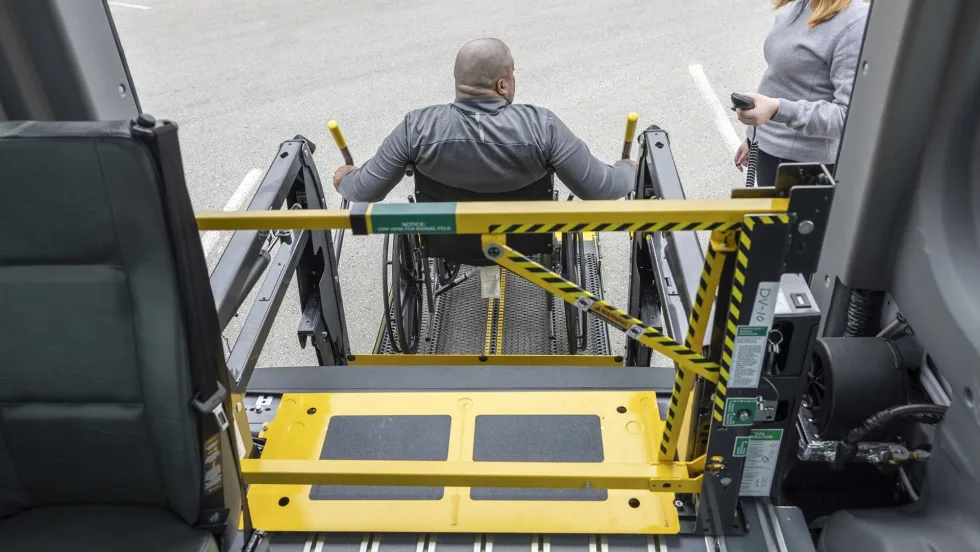
BraunAbility Introduces New Safety Barrier for Wheelchair Lifts
LiftSentinel is designed to add another layer of protection during wheelchair loading and unloading and can be retrofitted to many existing commercial lift installations.
Read More →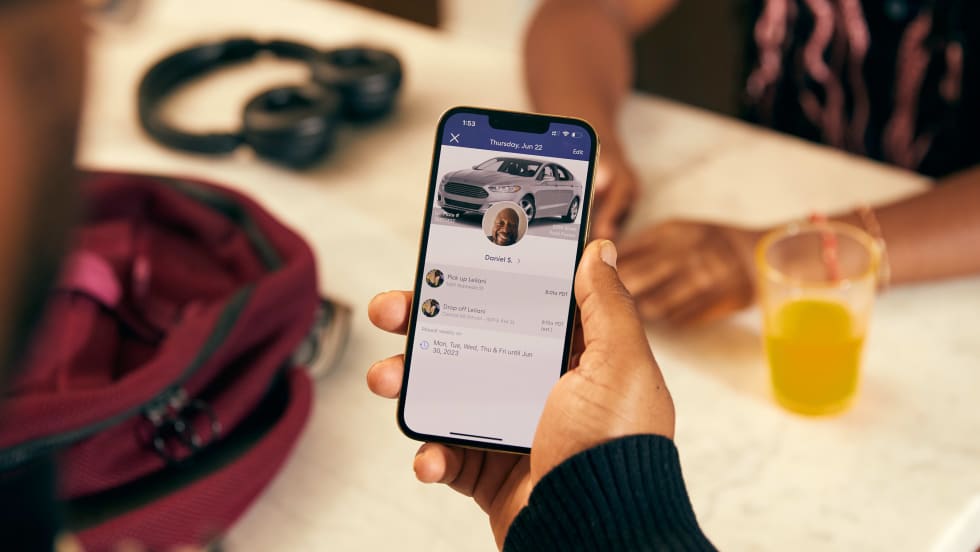
HopSkipDrive Launches New Safety, Driver Consistency Features for 2026-27 School Year
The company’s free ride recording, live ride tracking, and consistent driver assignments aim to improve safety and continuity for diverse student transportation needs.
Read More →
The Most Common Wheelchair Securement Mistakes on School Buses (and How to Fix Them)
Small missteps in wheelchair securement can have serious consequences. Here are 32 tips from experts to reduce risk and increase student safety on the bus.
Read More →
Inside AMF Bruns’ New Showroom: School Bus Securement Solutions Explained
Go inside AMF Bruns America’s new Ohio showroom with Maritza Valentin to see its FutureSafe technology, driver training tools, securement systems, and seating innovations.
Read More →
What AMF Bruns’ New Facility Means for Customers [Video]
Inside AMF Bruns’ new Stow, Ohio, operations: See how expanded space and innovation will enhance customer support and operations.
Read More →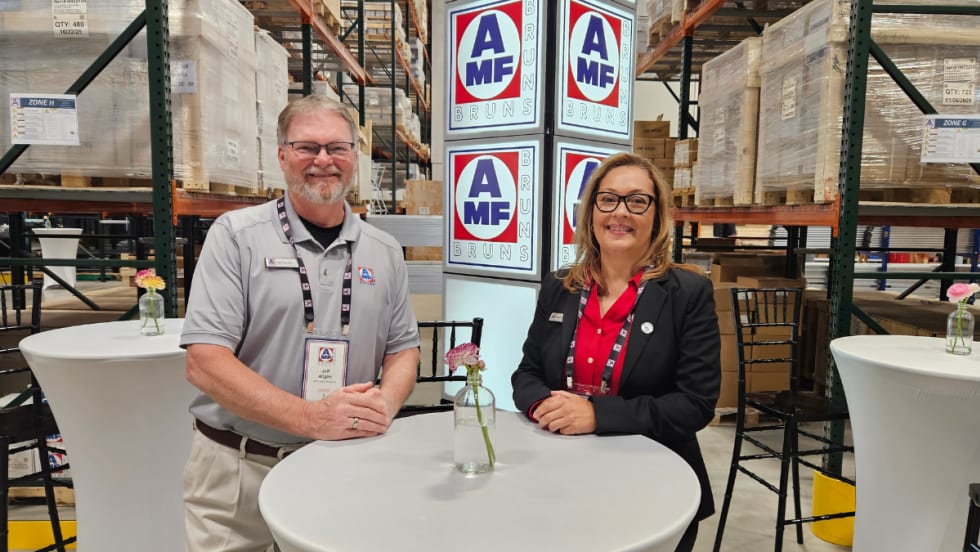
AMF Bruns Expands in Ohio, Investing in Growth and Community
With expanded production space, local investment, and a growing workforce, AMF Bruns is scaling its U.S. presence. Here’s an exclusive first look inside the new Stow, Ohio, HQ.
Read More →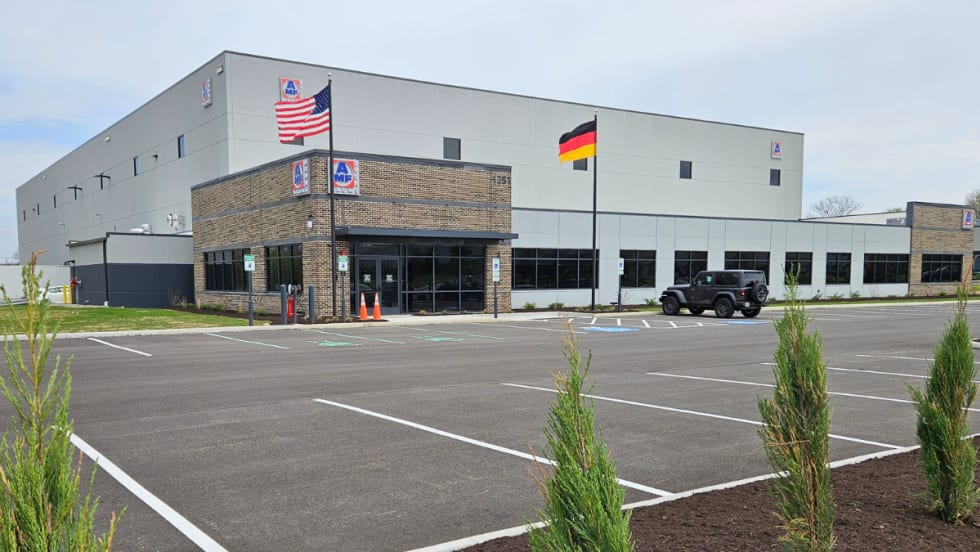
Inside AMF Bruns of America’s New Ohio Manufacturing Facility [Photos]
Take a behind-the-scenes look at AMF Bruns of America’s new 41,000-square-foot Stow, Ohio, headquarters, featuring advanced manufacturing, expanded space, and future-ready mobility solutions.
Read More →
First Student Boosts Student Support in Wichita & Texas
First Student and Wichita Public Schools are using behavioral support strategies to improve student ride experiences, while a separate initiative expands access to after-school programs through a bus donation.
Read More →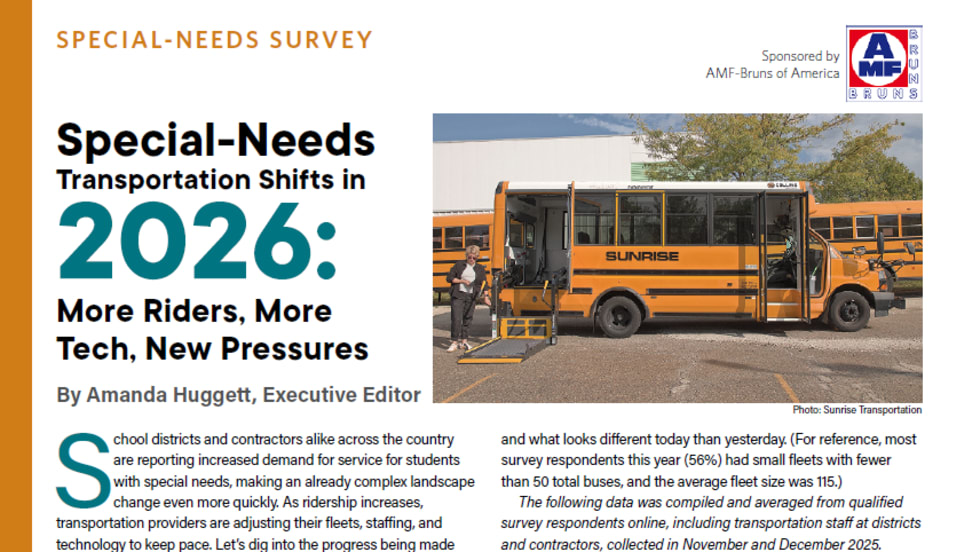
2026 Special-Needs Transportation Survey
What’s changing in special-needs transportation? This year, student transportation operators report a rising need, easing driver shortages, growing tech adoption, and evolving challenges. Sponsored by AMF Bruns of America.
Read More →
The Lived-Experience Gap in Mobility Tech: An Expert Take on Safe Student Transportation
Brianna Pauwee, a product application specialist at AMF Bruns of America and a wheelchair user, drops in to The Route to share practical securement and training insights, plus the story behind the new “Beyond Mobility” podcast. The Route is sponsored by IC Bus.
Read More →