




Want to Switch Seats?
When it comes to school bus seating, "comfortable" hasn't historically topped the list of descriptions. Neither has style, as some might say they tend...
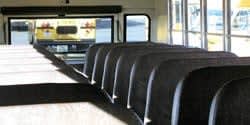
When it comes to school bus seating, "comfortable" hasn't historically topped the list of descriptions. Neither has style, as some might say they tend to be on the side of drab. Add in a few puncture wounds or other marks of vandalism, and you have a seat that most would avoid sitting on if they had the choice.
If anything, school bus seats are known for being utilitarian. The pupil transportation industry is one that holds safety above all else, after all.
While aesthetic appeal isn't the most practical concern, acts of vandalism remain a practical problem. When cuts and tears become big enough, the seat's innards are exposed and susceptible to expensive damage.
There may not be a feasible way to prevent kids from expressing their "creativity" on school bus seats, but more manufacturers are coming out with new technology to make this problem less of a nuisance for operators.
In the process, seating suppliers are also developing products that are more comfortable, safer and maybe even a bit more appealing to the eye. Here's a look at the latest and greatest in the world of school bus seating.
Vandalism and durability
Kids will be kids.
That might sound like an excuse, but other than asking politely, there's not a whole lot school bus operators can do to prevent certain kids from writing on or puncturing the back of the seat in front of them or the cushion they're sitting on.
According to Gary Greenhill, director of transportation at Union Public Schools in Tulsa, Okla., the main problem they face is writing on the seats and occasionally a seat punctured or torn. These problems are common on school buses and there's no way around them.
"Whether you have a monitor on the bus or whether the driver is very strict as far as discipline, you're still going to have some damage," says Roger Ashby, VP of Lichter Rubber Products Co. in Seymour, Ind.
The number one problem facing operators in terms of having to replace seat covers is vandalism. All seats can be vandalized, including Kevlar (a lightweight fiber) models, which were thought to be harder to damage. But lab tests have proven otherwise, according to Earl McMillen, sales manager at BESI Inc. in Hamilton, Ohio.
McMillen believes the industry has the technology to come out with seats that cannot be vandalized, but the high prices would limit many operators from owning them. "Even with that knowledge, we're not sure if we can cut it and sew it," he says. {+PAGEBREAK+} Due to the vandalism problem, seat backs are usually replaced three or four times before one cushion is replaced. The seat itself is good throughout the life of the bus. Dan Cohen, VP at Chicago-based Freedman Seating Co., suggests replacing the seat cushion every seven to 10 years. If vandalism isn't a problem, the covers should last a minimum of two years and possibly up to seven, he says.
Freedman has come up with one solution to deter the problems of vandalism: puncture-resistant fabrics. "Kids can puncture [the seats] with their pencils and pens, and it doesn't do any damage," Cohen says. The fabric can resist puncture marks but is still susceptible to slashing.
Cohen recommends replacing the covers as soon as there are any cuts. "Kids will start to pick at the exposed foam and tear the cover even more," he says. Structural problems, while they do occur, are very rare. In the instance that they do happen, the seat should be taken out of service immediately and should not be repaired. The seat manufacturer should then be contacted.
Comfort and style
"Certain customers want to offer comfort and style so that people want to ride the school bus," says Cohen. Comfort is an important factor when trips are hundreds of miles. With the limited attention span of kids nowadays, asking them to sit still is like forcing them to forgo their TVs or video games. Providing comfortable seating will avoid one more thing they can complain about.
Freedman offers individual bucket-style seats instead of the bench seats typical on most school buses. "People don't want to have to sit in an uncomfortable bench seat if they're going to an away football game or driving across town for band performance or something like that," says Cohen. Freedman's family school bus seats offer molded polyurethane seat and back cushions, contoured headrests that cradle the head and knee-save backrests that increase hip-to-knee room.
The comfort of the seat is based on its foam density. The density and the thickness are determined by individual companies to meet the requirements of the National Highway Traffic Safety Administration (NHTSA).
The aesthetic component is an important consideration in school bus seating. When choosing the types of covers for your seat, the age of the passengers should be taken into consideration. Elementary school students are more likely to cause bodily fluid accidents like vomiting or urination, so the best way to go in that situation would be vinyl. For students in junior high or high school, the problems with vandalism should encourage operators to use fabrics other than vinyl.
As for the color of the seats, the two main colors requested by bus operators are blue and gray. Freedman moves about 90 percent of its volume in those two colors. Of course, each individual company has its own criteria on colors, which are specific to the textures of their own seats.
BESI Inc. is coming out with new technology to meet the demands of operators wishing for a more stylish bus. The system will enable decorations to be put on the vinyl covers prior to assembly, "whether it's channels, imitation stitching, special IDs or something of that nature," McMillen says. All of BESI's cuttings are done on computers by Gerber technology, which allows excellent repeatability of the pattern and a precise fit on seat covers.{+PAGEBREAK+} Safety standards
Safety should always be first and foremost in any circumstance. To ensure the safety of the children riding on your school bus, make sure the seats are independently tested to meet safety regulations. School bus seats are required to pass two standards recommended by NHTSA.
Federal Motor Vehicle Safety Standard (FMVSS) No. 222 requires large buses to provide interior protection so that children are protected without a seat belt. Seats must be closely spaced and have energy-absorbing backs in order to create a protective envelope for students in case of an accident.
"What that amounts to is that if there is an accident, how well compartmentalized is the passenger on that bus?" says Lichter's Ashby. "Is he padded front and back to the standard? If he's going to fall into the seat in front of him, is there enough padding on that seat to avoid a neck, head, shoulder or knee injury?" The standard also requires manufacturers to pass a head and knee impact test.
FMVSS No. 302 protects students in case of fires. The test includes placing a predetermined amount of newspaper in a bag on the seat and on the floor beside and behind the seat. "All three bags are burned simultaneously, and the fire cannot jump over from seat to seat nor can the foam ignite," says McMillen.
When replacing seats, operators are encouraged to use parts that will continue to meet FMVSS standards. The safety level will be greatly reduced if the replacement parts do not perform as well as the original components.
"It's the operator's obligation to put the bus back into its standards," says Ashby. "If in fact he does, he's pretty much free of any liabilities in case of an accident simply because he's replaced the parts on that bus."
Lichter earns ISO certification
Lichter Rubber Products Co. of Seymour, Ind., has achieved International Organization for Standardization (ISO) 9001 2000 certification. The ISO 9000 group of certifications deals primarily with quality management and customer satisfaction.
"This achievement reflects the tremendous work ethic of our loyal and dedicated associates," said Frank Nold, the company's president and CEO.
The supplier of OEM foam seats and seat backs for school buses has been in business for 56 years.
More Safety
What the 2026 National School Bus Safety Month Resolution Means for Student Transportation
The bipartisan resolution highlights illegal school bus passing, student safety during loading and unloading, and the need for driver training and public education.
Read More →
School Bus Stop-Arm Violations Decline 53% Across Verra Mobility Programs
Verra Mobility shares how school bus stop-arm cameras and school zone safety programs are changing driver behavior, reducing violations, and protecting students.
Read More →
Most Bus Crashes Aren’t Your Fault. Here’s How to Prove It.
A guide for what to do in between a school bus crash and a claim: what to preserve, who to notify, and how to keep the facts available when they matter.
Read More →
National School Bus Safety Week 2026: Tips, Toolkits & Resources to Keep Students Safe
School bus safety takes more than awareness. Explore expert tips, enforcement strategies, and free resources to help protect students on every ride.
Read More →
2 Killed, Dozens Injured in Florida School Bus Crash
A multi-vehicle collision caused a Polk County school bus carrying 37 students to overturn on its way to Winter Haven High School.
Read More →
Illegal School Bus Passing Drops 24% in New York Districts
With fewer than 5% of citations involving repeat offenders, Westchester County officials said enforcement, education, and community partnerships are helping change driver behavior.
Read More →
School's Back. Here's What Happened to Traffic, Speeding & Distraction
What happens to traffic when school resumes? New data analysis examines changes in distracted driving, congestion, and speeding around schools.
Read More →
Geotab Expands Fleet Safety Tools With Video Coaching, Risk Insights
New safety and video capabilities aim to help fleet managers assess risk, support drivers, and take targeted action through video coaching, red-light violation detection, and more.
Read More →
How to Build a Better School Bus Driver Training Program
Is it time to strengthen your driver training? Here’s how to pick the right talent and improve recruitment, retention, and safety. This video is brought to you by IC Bus.
Read More →
Recent School Bus Accidents Leave 2 Dead, 2 Injured
Four school bus crashes in Florida, Illinois, and Georgia highlight risks in transportation lots, at bus stops, and during student loading and unloading.
Read More →