




Turning Your Worst Driver Into Your Best
Newspapers and television news shows often cover horror stories about school bus drivers gone bad. From bus crashes and student misbehavior caught on ...
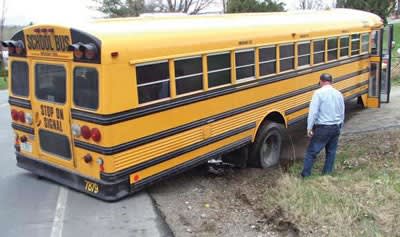
Newspapers and television news shows often cover horror stories about school bus drivers gone bad. From bus crashes and student misbehavior caught on security camera to the more appalling tales of drug use, child abuse and leaving children alone on buses, problem drivers can wreak havoc on a school bus operation’s reputation.
However, most departments only deal with minor infractions day-to-day, such as absenteeism and minor accidents. When it comes to managing drivers, transportation directors seem to agree that it’s all about getting to know each driver individually.
“I think that other than transporting kids to and from school safely, that’s probably second-most important in the transportation department — bolstering employees that are having a hard time and trying to give them the support that they need,” says Randy Mazie, director of the John H. Schee Transportation Center at Miami-Dade County Public Schools.
Counseling
When a driver displays signs of being unreliable or exhibits a less-than-stellar performance on the job, a supervisor’s first step is typically a one-on-one counseling session or informal meeting to assess the problem.
In cases of chronic absenteeism or other dysfunctional problems, Mazie says he will go as far as to schedule weekly meetings with drivers to connect with them on a regular basis. “It gives them a feeling that they don’t have to just come into my office when they’re in trouble,” he explains. This kind of open door policy creates rapport and lessens the perceived pressure of dealing with an authority figure, he explains.
Mazie says his department also keeps a complaint log and tracks unauthorized absences and late arrivals to work. “When I start to see two or three complaints coming in on a person, I take a look at the nature of the complaints,” he says. Mazie also uses staff meetings for his supervisors to keep his finger on the pulse and inquire about driver problems. “If you keep your ears open, other employees will let you know who’s having problems,” he says.
“Depending on the severity of what we’re talking about, if you counsel them advising them to be more careful, it takes care of itself,” says John Myers, director of transportation for North Colonie Central Schools in Latham, N.Y. He says that after a meeting like this, with a letter noting the conversation in the driver’s file, 90 percent of these problems will go away.
But if the behavior continues after the initial meeting, Myers says a second meeting is necessary to address the situation more seriously and reiterate the importance of adhering to department policy. The supervisor should also issue a counseling memo that explains the consequences if the driver’s behavior still does not change. “Usually when you do a documentation letter,” says Myers, “you document what happened and what the consequence is if it happens again.”
Progressive discipline
At Miami-Dade, Mazie says the progressive discipline policy starts with an informal counseling session, moves to a letter of warning if behavior is not corrected, then to a conference for the record — a formal meeting attended by the driver, the supervisor and a union representative.
After the conference, the driver may be issued a letter of reprimand or recommended to the school board for suspension, Mazie says, with termination being the most extreme option. “Generally speaking, it goes from conference for the record and letter of reprimand to a 10-day suspension and even a second 30-day suspension before termination, depending on the situation.”
Linda Thompson, assistant director of transportation at Reorganized R-7 School District in Lee’s Summit, Mo., says that if a driver exceeds his or her allotment of paid time off or comes within a few days of running out of sick time, she will meet with the driver and issue a written warning. “From there, if we keep going downhill, and it’s not an FMLA [Family and Medical Leave Act] issue, then we’ll have to serve some days off as a suspension time,” she says. “This is what I tell my drivers: It’s important for you to be on your route every day. Your route does not run well when you’re not here.”
[PAGEBREAK]Union involvement
In the course of progressing from informal counseling sessions to more serious hearings, the driver has a right to have a union representative present. “Even with informal meetings, anything that may result in discipline, you involve the union right from the get-go,” says Myers. At North Colonie Schools, first and second meetings for the same offense don’t require union involvement, but when a situation requires a third meeting, Myers says he tells the driver that they have the right to have the person of their choice present. “If they say, well I don’t need anybody, I say, well get somebody anyway.”
That way, with both meticulous documentation of the problem and union involvement, a supervisor’s accusation of wrongdoing has legitimacy. “You document everything and follow through, making sure everyone knows where this is at and where it could go,” Myers says. “You need to show that you’ve done your homework and everything is justified.”
Myers notes that the drivers union can get a negative reputation for protecting members at any cost. However, he says, “they’re in it for the same reasons you are, for bus safety and they want drivers to be well thought of.” “They have a job to do, and I respect it,” says Mazie. “They’re there to defend the employee. Some people might say it’s a necessary evil, but I think that they play a very important role.”
Termination
Sometimes, despite an administrator’s best efforts to work with a driver, the situation cannot be resolved and employment must be terminated. As an example, Thompson tells of a driver who was employed in her department for two years but was continuously absent for health reasons. “She used all her sick time and more,” Thompson recalls. “At one time I had to suspend her for three days because she was gone, then ended up not renewing her contract for the upcoming school year.”
Myers encountered a similar situation with a special-needs bus aide in his department. “She had a problem with absenteeism, but she also had an abusive husband and we really tried to work with her,” he says, noting that it was important to him to take her extenuating circumstances into consideration when dealing with her job performance problems. “Try as we might, we couldn’t ‘fix’ her.”
Transportation directors, for the most part, report that terminations are infrequent in their departments. “You’re never looking to get rid of somebody unless they really are a negative part of your workplace,” says Myers. “Generally you can catch that during training, long before you ever put them behind the wheel. You try to hire people the right way to begin with, people that really want to be bus drivers and have an affinity for it.”
Accidents and re-training
When drivers are involved in preventable accidents, most departments send the driver to go through re-training that targets the specific behavior that led to the accident.
At Miami-Dade, an accident review committee meets every month to study the details of every accident and decide whether they were preventable or not, and make recommendations as to actions the supervisor should take with regard to the employee. “Based on that, we would send them back for re-training,” Mazie says. “Afterward, the employee has the ability to request a meeting with the committee to defend themselves if they think the decision was not justified.”
The committee might also be able to identify health issues that could have affected the accident, especially with a driver who is involved in repeated accidents, whether preventable or not. “Sometimes we’ve sent employees for vision tests and physicals, because we suspected there might be a physical problem we’re not aware of,” says Mazie.
[PAGEBREAK]Creative solutions
Occasionally driver supervisors can identify unique ways to address a problem with a driver. Supervisors who have taken the time to get to know staff members can often better address issues as they arise based on their knowledge of the personalities involved.
Thompson describes one such situation with a driver who complained constantly about everything. “Nothing was ever right,” Thompson recalls. “She was an excellent driver, did a great job with her kids, did a great job doing her routes, but everything she saw, nothing was right.” Thompson says she dedicated a lot of time to meeting with this driver and working on her concerns — running the gamut from complaints about other drivers to school district policies and equipment problems — but if they found a solution for one complaint, another would pop up.
“After she’d worked for us about a year, I saw an opportunity,” says Thompson. “I asked her to be a driver trainer and her attitude totally changed.” Thompson realized that this driver was a potential leader who was frustrated with her lack of power to change the situation. Once she was given some degree of control, Thompson says the driver threw all her energy into her new responsibilities as a trainer. “I want people to succeed,” Thompson says. “I’ll bend over backwards to get them to see what needs to be done to have their routes run well and to be happy in their jobs.”
Myers tells of an experience with a driver who had an attendance problem, arriving late or sometimes not showing up for work at all. This driver was also working a second job at night, Myers says. “I was documenting [the absences] because I didn’t think he was going to be able to pull it together,” he recalls. “We gave him lots of chances; he probably had five or six memos. As a driver he was fine; on the road he was fine. With the kids, he was great. But it was basically an attendance issue.”
The situation turned around during Myers’ conversations with the driver about his attendance problems. “It seemed that something was wrong with him. So he went to his doctor and found out he had sleep apnea.” After the driver started receiving medical treatment and quit his night job, he worked for a full school year with no absences, Myers reports. Only a supervisor paying this level of personal attention to each driver will be able to spot this type of special case and avoid the prospect of having to fire a driver and hire a new person to fill the gap.
Transportation directors also tap into the resources available to them through their school district, such as Miami-Dade’s district-wide Employee Assistance Program (EAP). The EAP is a confidential help-line that district employees can call for help with everything from emotional disorders to finding affordable housing. “It’s one of the first things we do when an employee is having trouble getting to work, trouble coping, maybe having trouble with other employees, or trouble with students on the bus,” says Mazie. “We give them the number, and we encourage them to call on their own.”
Supervisors can also ask the EAP to set up a meeting with the employee as a supervisory referral. “Our job is to try to help them cope a little better, support them, and maybe show them some new ways of handling both problems on the job and offer them a couple doors to go through to handle the problems they may have outside of the job,” he adds.
To further his relationship with his drivers as well as to emphasize his open door policy, Mazie also invites drivers and staff to share concerns at informal monthly “town hall” meetings. He encourages drivers to bring up any issue for the group to discuss, demonstrating his interest in creating a well-run department that is supportive of employees.
Individual attention
Transportation directors champion the cause of getting to know their drivers on an individual basis. “As an administrator, you expect to hear the same problems over and over again,” says Mazie. “The most wonderful thing an administrator can do is to keep an open mind and treat each situation as if it’s new.” Mazie explains that expressing genuine interest in a driver’s problems in this manner will not go unnoticed. “The feeling comes across to the person you’re dealing with. The person becomes special and unique. They walk out of there thinking, `They really tried to hear me; I was not prejudged on this.’”
More Management

How to Build a Better Driver Training Program
Ready to boost up your school bus instructor training? Here’s how to pick the right talent and improve recruitment, retention, and safety.
Read More →
CALSTART and Forth Combine to Form Catalyst Mobility
The new name represents a renewed vision for the nonprofit focused on advancing clean, equitable, and affordable transportation solutions that move people and goods.
Read More →
What Makes a Great School Bus Driver Trainer?
Choosing the right school bus driver trainer takes more than experience. Learn six keys to selecting and developing trainers and evaluating program effectiveness.
Read More →

School Bus Contractors Expand Through New Deals, Acquisitions & Partnerships
STA's Canadian division acquires Ontario-based G&L Stevenson Transport while Durham School Services adds a new district contract in California, First Student adds a New Jersey contract, and Minnesota Coaches acquires Halo Transportation.
Read More →
Logan Bus Company Rolls Out AI Phone System for NYC School Bus Families
A summer pilot found that AI agents could handle most routine calls, freeing up time for customer service staff to focus on emergencies and complex family concerns.
Read More →
From Intent to Impact: What I Learned About Leadership from TAPT
A Texas transportation supervisor shares lessons on self-awareness, accountability, managing stress and building trust — and why investing in leadership development matters at every stage of your career.
Read More →
NAPT Names 2026 Award Recipients, Hall of Fame Inductee
Who earned national recognition for their work in student transportation? This year, NAPT named five recipients of its 2026 awards for service, safety, and leadership, plus its newest Hall of Famer.
Read More →
2026 State of Student Transportation Report
Driver shortages. Rising costs. Growing safety expectations. More data, but not enough time to act on it. The 2026 State of Student Transportation Report reveals what transportation leaders say is putting the most pressure on their operations—and where they’re investing next. See how your priorities compare.
Read More →
How to De-Escalate an Angry Person: 5 Steps for Handling Workplace Conflict
What makes emotions run high, and how should you handle an angry colleague or parent? Follow these steps for staying calm, listening, showing empathy, and resolving conflict.
Read More →
What Readiness Looks Like This School Year
Learn about the challenges shaping the 2026–2027 school year, from persistent driver shortages and budget pressure to technology and readiness gaps. See how school districts are responding and adapting in Zonar’s 2026 Back-to-School Readiness Report.
Read More →