




Transporting the Handicapped
Riding the bus is a learning experience for the handicapped child.
Many children afflicted with physical handicaps are unable to respond to or even understand very simple requests or procedures. The bus driver caring for these children needs special equipment on his bus, requires special skills and even a special personality. Actually, the bus driver is essentially a teacher helping the handicapped child to learn how to use the bus as a means of transportation.
Finding suitable drivers for these special buses is a far greater problem than that of finding drivers for regular school buses. The problem of tenure is also more difficult. For the driver with long driving experience is not necessarily suited in personality to handle the job of special children.
Children categorized as “handicapped” include not only those physically hindered but also those emotionally and mentally handicapped. Anyone working with these children should be informed, at least in a general way, about the physical disabilities of each child and the emotional makeup as well.
Information the drivers of buses for handicapped should have to work effectively with the riders, as given here, was outlined by Homer Earl, consultant, Western Michigan University, Kalamazoo, Michigan.
Schedules. Everything should be as regular as possible so the child feels as little “different” from the other riders as possible. It is best for the child to do as much as possible for himself. However, if this means a delay in the trip which would make other children very late for their classes, it is best that the driver help the child, such as carrying the child to the bus.
Parents. Their attitude is important. Special transportation is a privilege, not a right, and is often a difficult one to provide. Parents must be willing to do what they can to help. They should be informed about the important role they play in helping to keep the service in smooth operation.
Information about riders. The driver should know something about the needs and inabilities of his passengers. He should be in communication with both the school and the parents.
Lifting. There are correct and safe ways to carry children with various handicaps. The driver must know them and practice them for his safety and that of the children.
Special conditions. A child’s handicap may not always be visible, such as a heart condition or deafness; the driver should be aware of them and know what to do in an emergency. Frequently a child may be unusually uncooperative on the homeward trip. The driver should understand that some of his riders must be up at 5 a.m. in order to dress, put on braces, eat breakfast and be ready for an early bus pickup. They are thoroughly tired out by mid-afternoon. Some schools are aware of this and take them home early.
Cerebral Palsy. The cerebral palsied child responds slowly, learns slowly and may not perceive the elements of his environment in the same way as a normal child. The driver who knows this will not become angry when his passenger doesn’t respond the way he is expected to.
Epilepsy. Seizures are rare as they can be controlled medically. Nevertheless, each driver can and should know what to do if a rider suffers one. All epileptic seizures, though not always dangerous, are serious and should be reported. Epileptic pupils should be seated in a safe manner which anticipates the possibility of a seizure and would eliminate possible problems.
Seat Belts. These may be especially valuable safety measures for handicapped children. But, for the emotionally disturbed or hyperactive they may represent unpleasant restraints. Education is usually needed before they can use them comfortably and safely. For whatever reason the belts are used, the driver should do all he can to ensure maximum safety and comfort for the passengers.
Discipline. Any unusual episodes should be reported at once and in detail, for they may have medical implications. At no time should the driver be faced with dangerous situations. Any child who is a threat to the other passengers should not be permitted to ride the bus. It may be necessary for an assistant to accompany the driver regularly to be available in case of emergency and to cope with any discipline problems that might arise. Assigned seats are often necessary to ensure that children get along comfortably with their seatmates and do not cause disruption during the ride. This is especially necessary with hyperactive children.
Radios. The expense of two-way radios is justified in the specially equipped buses used in transporting the handicapped children. They enable the driver to summon help without leaving his bus. They may provide communication not only with the school but with parents, or doctors, police, rescue vehicles and even utility company trucks.
Because special markings on the bus can be social stigmas as well as safety measures, it is unnecessary and inadvisable to mark a bus as one for the “handicapped” or for “special” children, Homer Earl advises. However, he suggests that small informative decals by the door indicating that the occupants need special medical attention in events of accident or emergency are a wise safety measure. Each child requiring any special treatment or care should wear a necklace, bracelet or other device which gives specific instructions about the care required. Such identification devices with medical advice are readily available and are inconspicuous, Earl noted.
Since using the transportation service is a learning process for the handicapped child, some educators feel that where possible it is well to increase the distance between a child’s bus stop and his home to give him increased experience with independence.
In the event, a child needs assistance to get from his home to the bus, parents should be aware that some drivers are not permitted, by law, to leave the bus. Thus, the parents must cooperate and bring the child to the bus and come after him on the return.
The driver of the bus for the mentally or physically handicapped soon recognizes that many of these children get special enjoyment from their rides to and from school and that these frequently are their happiest times of the day. As in every social situation, the experience can be pleasant only if there is understanding. Since children cannot be held accountable for most of the difficulties, it is up to the driver to be well-informed on what to expect from the children and how best to handle situations that might arise.
More Special Needs Transportation
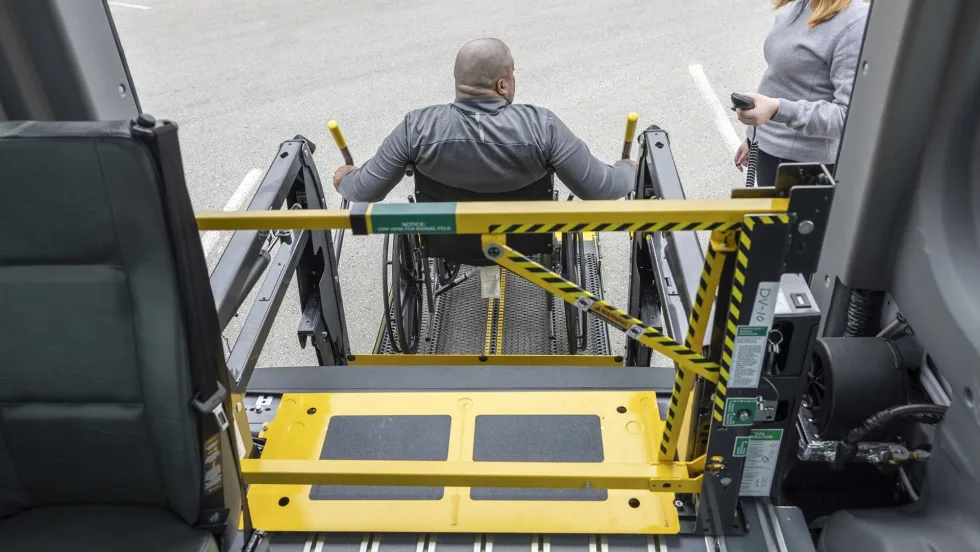
BraunAbility Introduces New Safety Barrier for Wheelchair Lifts
LiftSentinel is designed to add another layer of protection during wheelchair loading and unloading and can be retrofitted to many existing commercial lift installations.
Read More →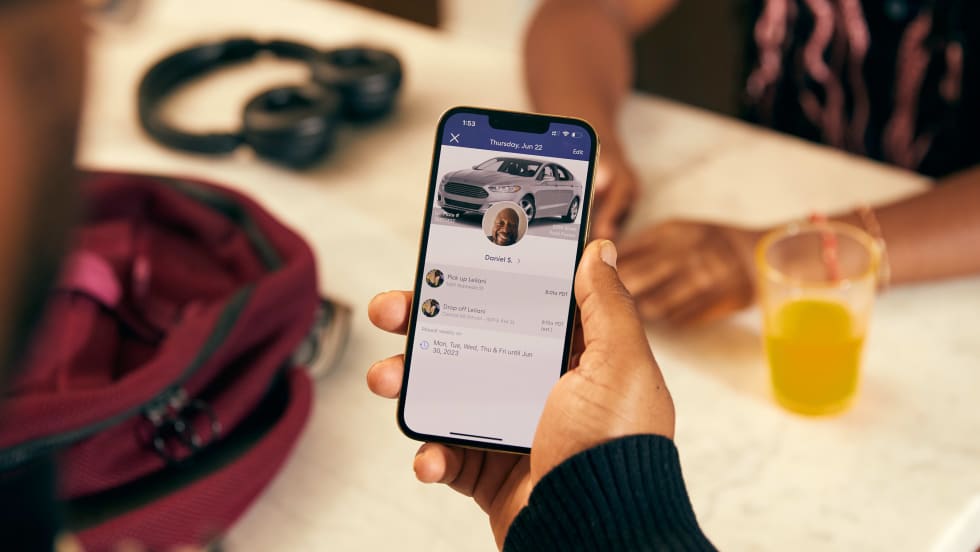
HopSkipDrive Launches New Safety, Driver Consistency Features for 2026-27 School Year
The company’s free ride recording, live ride tracking, and consistent driver assignments aim to improve safety and continuity for diverse student transportation needs.
Read More →
The Most Common Wheelchair Securement Mistakes on School Buses (and How to Fix Them)
Small missteps in wheelchair securement can have serious consequences. Here are 32 tips from experts to reduce risk and increase student safety on the bus.
Read More →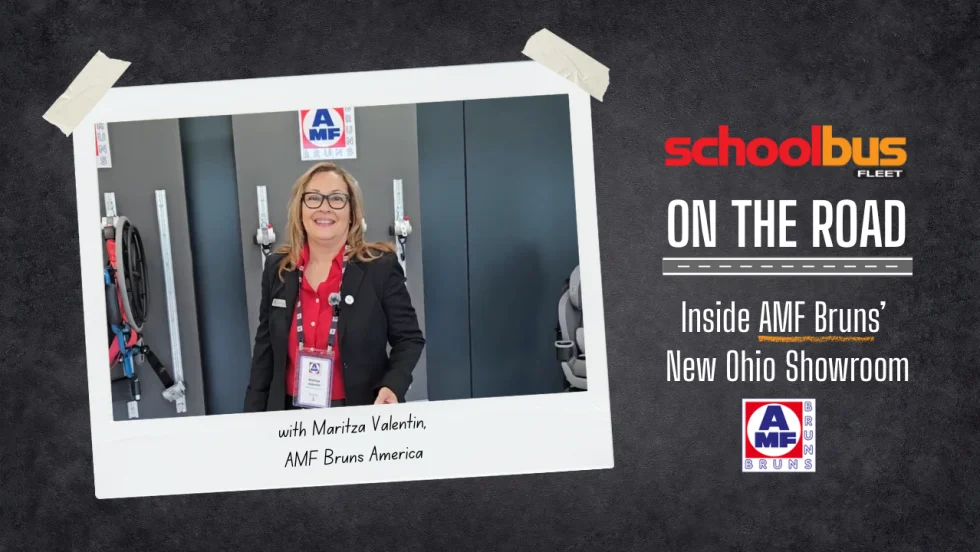
Inside AMF Bruns’ New Showroom: School Bus Securement Solutions Explained
Go inside AMF Bruns America’s new Ohio showroom with Maritza Valentin to see its FutureSafe technology, driver training tools, securement systems, and seating innovations.
Read More →
What AMF Bruns’ New Facility Means for Customers [Video]
Inside AMF Bruns’ new Stow, Ohio, operations: See how expanded space and innovation will enhance customer support and operations.
Read More →
AMF Bruns Expands in Ohio, Investing in Growth and Community
With expanded production space, local investment, and a growing workforce, AMF Bruns is scaling its U.S. presence. Here’s an exclusive first look inside the new Stow, Ohio, HQ.
Read More →
Inside AMF Bruns of America’s New Ohio Manufacturing Facility [Photos]
Take a behind-the-scenes look at AMF Bruns of America’s new 41,000-square-foot Stow, Ohio, headquarters, featuring advanced manufacturing, expanded space, and future-ready mobility solutions.
Read More →
First Student Boosts Student Support in Wichita & Texas
First Student and Wichita Public Schools are using behavioral support strategies to improve student ride experiences, while a separate initiative expands access to after-school programs through a bus donation.
Read More →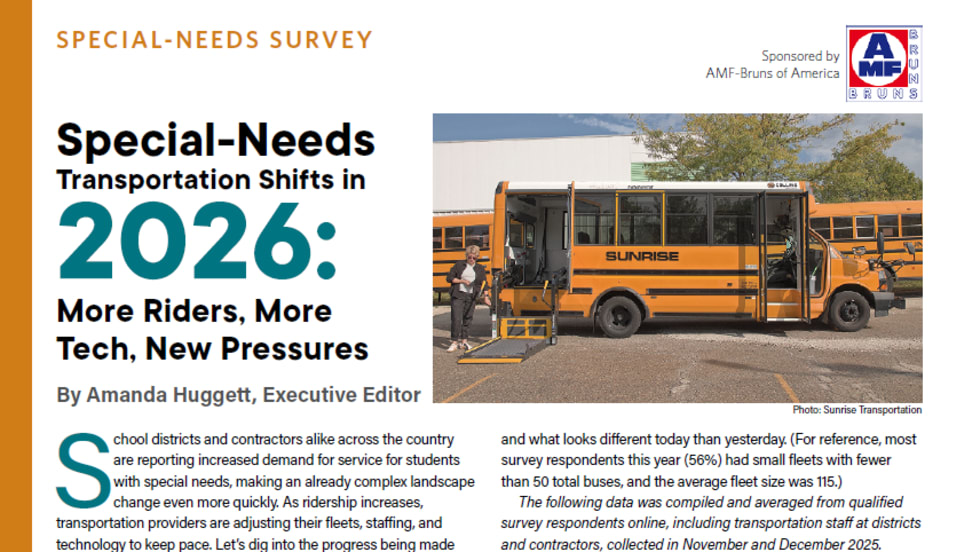
2026 Special-Needs Transportation Survey
What’s changing in special-needs transportation? This year, student transportation operators report a rising need, easing driver shortages, growing tech adoption, and evolving challenges. Sponsored by AMF Bruns of America.
Read More →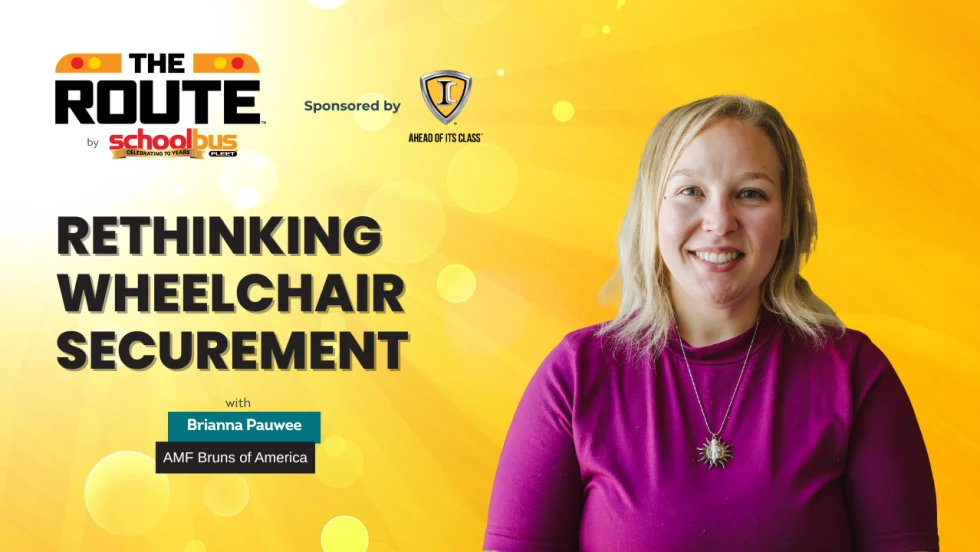
The Lived-Experience Gap in Mobility Tech: An Expert Take on Safe Student Transportation
Brianna Pauwee, a product application specialist at AMF Bruns of America and a wheelchair user, drops in to The Route to share practical securement and training insights, plus the story behind the new “Beyond Mobility” podcast. The Route is sponsored by IC Bus.
Read More →