




Transmission Control System Improves Safety, Ergonomics
A new shift-by-wire transmission control reduces from four to two the number of hand-eye motions typically required to bring a school bus to a stop to...

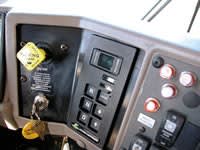
A new shift-by-wire transmission control reduces from four to two the number of hand-eye motions typically required to bring a school bus to a stop to pick up or drop off passengers.
With fewer operations to complete while stopping the bus to load or unload students, and again when returning to the road, operators are better able to focus their attention on what’s going on in the vicinity of the bus as students enter or exit the vehicle.
"I can't stress enough what a breakthrough this is," says Gregg Wilson, transportation director at Rockford (Ill.) Public Schools, of the Safe Bus system from Arens Controls.
"To ensure optimum student safety, each and every bus stop must be fully compliant with state and federal regulations — all of the mandated steps must be carried out," Wilson says. "If a driver consciously or accidentally fails to, say, put the bus in neutral and/or engage the emergency brake, the bus can lurch forward or backward in gear and cause pedestrian injury or even death. Needless to say, these outcomes are unthinkable."
Fewer actions required
The Arens Safe Bus transmission control reduces the number of manual stop and load/unload actions required by the driver to just two left-handed operations. The driver simply activates the amber lights, which arms the Safe Bus system. With the bus stopped, the only other action required by the driver is to activate the open door switch that also activates the stop arm, red flasher lights and the Safe Bus system. At that point, the system automatically shifts the transmission to neutral and engages the emergency brake.
After the students have exited the bus or are safely seated, the driver closes the doors and pushes the keypad drive (D) button, which automatically shifts the transmission to drive and releases the emergency brake.
"The fact that the system literally takes over and performs these important regulated steps automatically significantly improves student safety," says Wilson. "If drivers aren’t looking down at the console, and back and forth from right to left, to manually operate switches, buttons, gears and the brake, they can focus on observing the movements of children as they exit or leave the bus. And, since it cannot be overridden by the driver, it provides those of us in management with tremendous peace of mind."
Options are available
The Arens Safe Bus system is both programmable and expandable to accommodate the inclusion and control of other onboard equipment such as wheelchair lifts and/or display transmission operation data over and above basic gear identification.
Richard Barksdale, a 14-year driver at Rockford, operated a Safe Bus-equipped bus on his regular route during the summer. "It gets everything out of the way," he says. "No more gear shifts sticking up out of the floor jabbing you in the knee and no more having to fool with all those buttons and switches when you should be keeping your eyes on the kids."
Says John Marsh, shop manager at Rockford, "The ergonomic benefits of the system in terms of vision, comfort and relief from repetitive motions positively impacts driver health and morale. We are planning to specify the Arens Safe Bus system on our next order of 28 buses, which is currently in the works."
More Safety

How to Build a Better School Bus Driver Training Program
Is it time to strengthen your driver training? Here’s how to pick the right talent and improve recruitment, retention, and safety. This video is brought to you by IC Bus.
Read More →
Recent School Bus Accidents Leave 2 Dead, 2 Injured
Four school bus crashes in Florida, Illinois, and Georgia highlight risks in transportation lots, at bus stops, and during student loading and unloading.
Read More →
When Every Second Matters, Clarity Keeps Routes Moving
From routine delays to urgent incidents, strong communication practices help drivers, dispatchers, schools, and families respond with confidence.
Read More →

What Happens When a School Bus Catches Fire — and What Can Help
School bus fires are rare but can be devastating. Learn how advances in fire suppression and asset protection help fleets detect fires earlier, reduce damage, and improve safety.
Read More →
Geotab Launches Tool to Help Fleets Investigate Road Incidents
Geotab Investigations combines telematics data, video, documents, and other evidence to help fleets reconstruct incidents, resolve claims, and determine what happened.
Read More →
Texas Sixth Grader Wins 2026 National School Bus Safety Poster Contest
Sai Darshana Yekolu of Moseley Middle School in Prosper, Texas, was named the newest winner for her artwork, bringing the theme of “Safe Rides, Everyday Heroes” to life.
Read More →
Doing More With Less: How Transportation Directors Can Prioritize Safety Amid Budget Uncertainty
With diesel prices soaring and nearly one-third of transportation directors expecting budget cuts, maintaining student safety has never been more challenging. Download this guide to learn how leading districts are prioritizing risk, funding critical safety technology, and building stronger budget cases with data.
Read More →
Walton County Schools Adds Gatekeeper Stop-Arm Enforcement System
The Florida district will deploy Gatekeeper’s updated Student Protector technology, which now incorporates AI to improve video evidence.
Read More →
How To Build a More Secure School Bus Yard During and After Hours
As thefts and overnight security threats continue, school transportation leaders are combining stronger operational practices with AI-enabled surveillance to better protect buses, facilities, and staff.
Read More →
FMCSA Names New Chief Safety Officer: What School Bus Operators Should Know
Steve Dowling is set to lead the federal agency's efforts to advance commercial motor vehicle safety and reduce crashes, fatalities, and injuries on the nation's roadways.
Read More →