




Technology may change, but people remain the same
I believe that life won’t change much in the next 100 years. Houses, neighborhoods, towns and cities will look like they do now. And we’ll still be ferrying children to and from school in yellow buses that look like the ones we’re using today.
July 12, 2098 — The New York Transportation Museum. At a display called Blue Bird Extinctus, a young visitor gapes at a yellow behemoth, squeezes his doting grandfather’s hand and inquires, "Gramps, what’s that?" The elderly gentleman, amused at the child’s naivete, replies, "That’s a school bus. I used to ride one when I was your age." The child, confused, responds, "Was your jet tube broken? Is that why you had to ride in the . . . school bus?" OK, Isaac Asimov, I ain’t. But you get the picture. This scenario is one of many that could come to pass. In fact, I believe that life won’t change much in the next 100 years. Houses, neighborhoods, towns and cities will look like they do now. And we’ll still be ferrying children to and from school in yellow buses that look like the ones we’re using today. Of course, by the end of the next millennium, things will be very much different. In a thousand years, we will have invented technology that we can’t even imagine today. It’s not unlikely that we’ll have perfected a Star Trek-like transporter that will disassemble people, broadcast their molecular pattern to a distant receptor and reassemble them — all in a matter of milliseconds.
Don’t look too far ahead
My speculations about the distant future of the school bus aren’t worth much. Nor should they be. What we need to focus on is the near future. This industry faces worthy challenges right now. Funding shortfalls, driver shortages, passenger management and road rage, to name a few. Although technology will have some effect on school transportation, especially in the areas of global positioning systems (GPS) and the Internet, this will always remain an industry centered around people, not machines. It’s a relationship business — between driver and supervisor, driver and passenger, driver and site administrator, driver and parent. As you can clearly see, the driver is the hub. To ensure that school buses continue to provide safe and efficient transportation for centuries to come, we need to prevent the school bus driver from becoming an endangered species. If it becomes too difficult to recruit and retain drivers, school districts will find other methods of getting children to and from school and extracurricular activities. We need to find ways to make life easier for drivers. Ergonomic driver compartments, with easy-to-reach and intelligently located controls, are a must. Remote-control mirrors help, as do power doors and air-ride seats. If video surveillance helps the driver maintain order on the bus, then we need to install cameras.
Keep adventure to a minimum
Advanced training is essential. Remember those U.S. Army recruiting commercials that trumpeted "It’s not a career, it’s an adventure"? Often, the task of driving a school bus is too much of an adventure. Training, especially in behavior management, can remove some of the adventure. But there will always be challenges to the occupation. The key is to hire people who have the skills — and nerve — to handle the day-to-day stresses of piloting a large vehicle filled with boisterous children. There should be an emphasis on personal as well as professional growth for all employees, who are, after all, more than just cogs in a machine. Encourage your staff members to develop as individuals. Try to learn something about their personal lives. A family atmosphere helps to reduce stress and build morale. Moreover, try to build a community in which all employees are treated fairly. Emphasize courtesy in all dealings with parents, principals, students and peers. Finally, go into the next millennium with grace, courage and the understanding that life is fragile, fleeting and never to be taken for granted. After all, we don’t know what the future holds.
More Management

The Back-to-School Checklist Every Director Should Complete Before the First Bell
Help your transportation team start the school year strong with these tips for contingency planning, communication, fleet visibility, technology, and trip management.
Read More →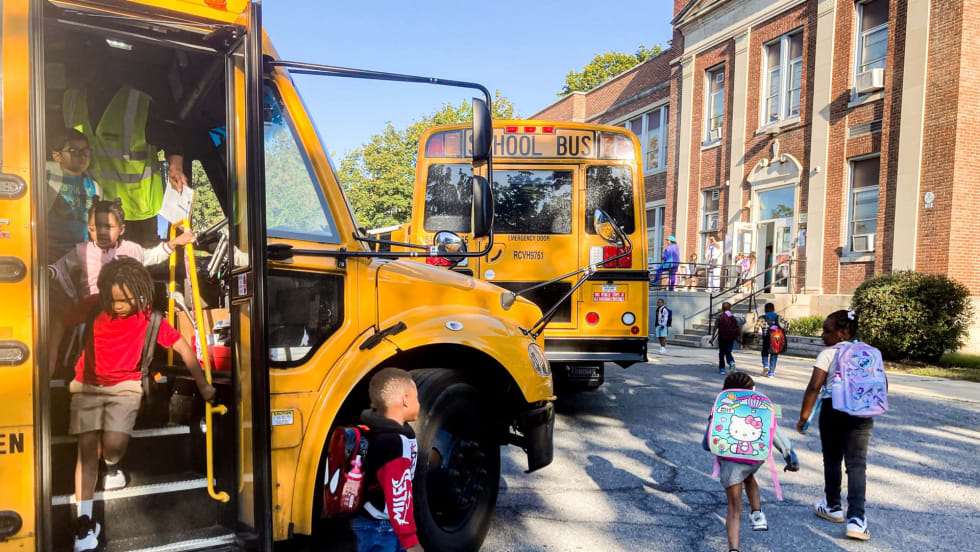
How a New York District Cut Nearly $1M in Transportation Costs While Expanding Bus Access
A data-driven overhaul with BusRight reduced Poughkeepsie City School District's planned routes from 26 to 17 while extending school bus service to about 1,200 additional students.
Read More →
Budgets Down, Enrollment Shifting: What the Data Says Districts Should Watch
School transportation departments face two converging challenges this year: tightening budgets and shifting enrollment. Most districts still address these issues separately, but the assumption that either trend will simplify operations is proving incorrect.
Read More →
These 8 School Transportation Companies Made the 2026 Inc. 5000 List
Find out which school transportation contractors, technology providers, and suppliers ranked among America’s fastest-growing private companies.
Read More →
The Link Between Emotional Intelligence and School Bus Safety
How can emotional intelligence help transportation pros navigate stress, manage change, and build stronger relationships? Listen to find out.
Read More →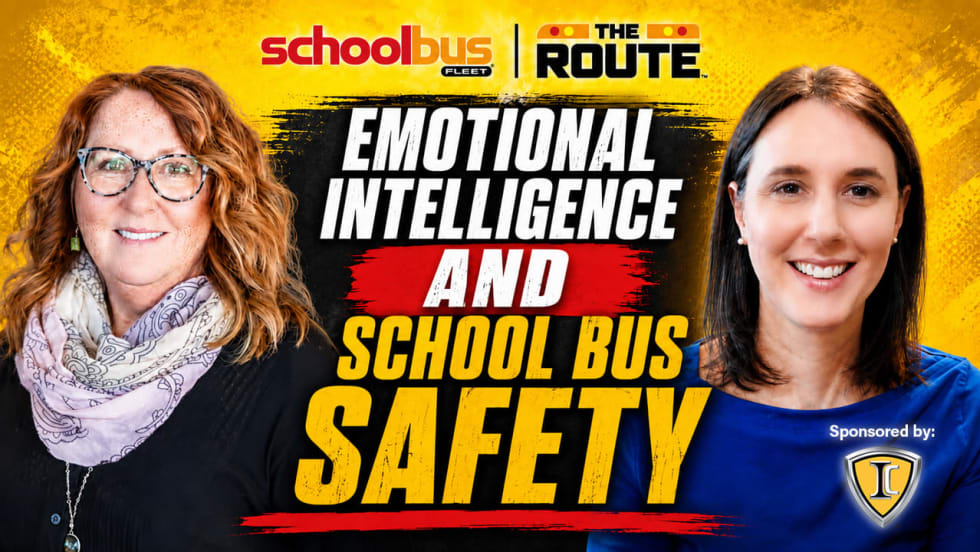
What Emotional Intelligence Has to Do With School Bus Safety
In this video, discover how emotional intelligence can help transportation leaders and drivers navigate stress, manage change, and build stronger relationships. The Route is sponsored by IC Bus.
Read More →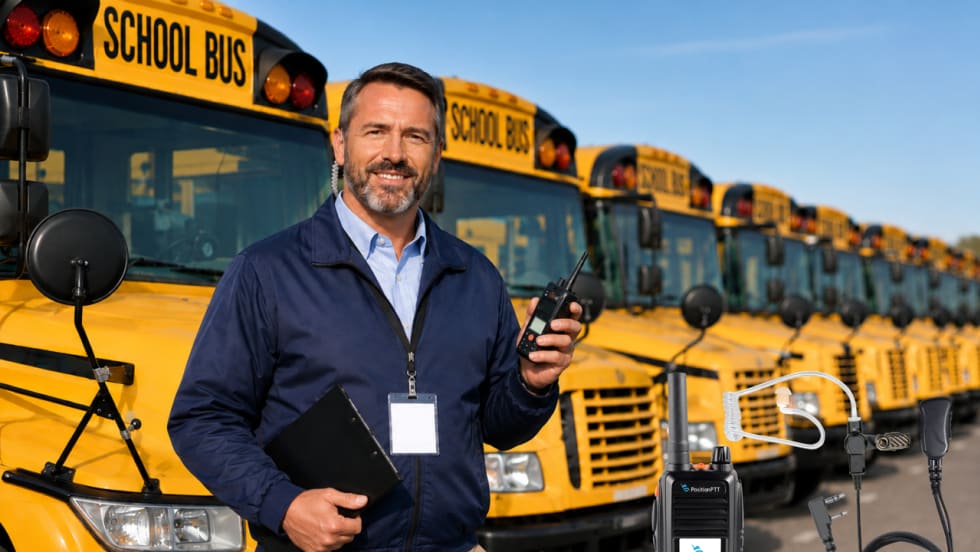
Beyond Two-Way Radios: School Bus Communications Evolve With Push-to-Talk Over Cellular
PRYME Radio and PositionPTT join forces to advance hands-free radio use and reduce distracted driving. See how PoC compares with traditional radios on range, cost, safety, and connectivity.
Read More →
Have School Districts Adapted to Bus Driver Shortages or Simply Accepted Less Service?
According to a recent report from HopSkipDrive, many districts appear to have recalibrated what "normal" transportation service looks like.
Read More →
Reliable Transportation Linked to Better Student Outcomes, New EverDriven Study Finds
See why new research suggests transportation consistency improves student outcomes while influencing attendance, funding, IEP compliance, and family trust.
Read More →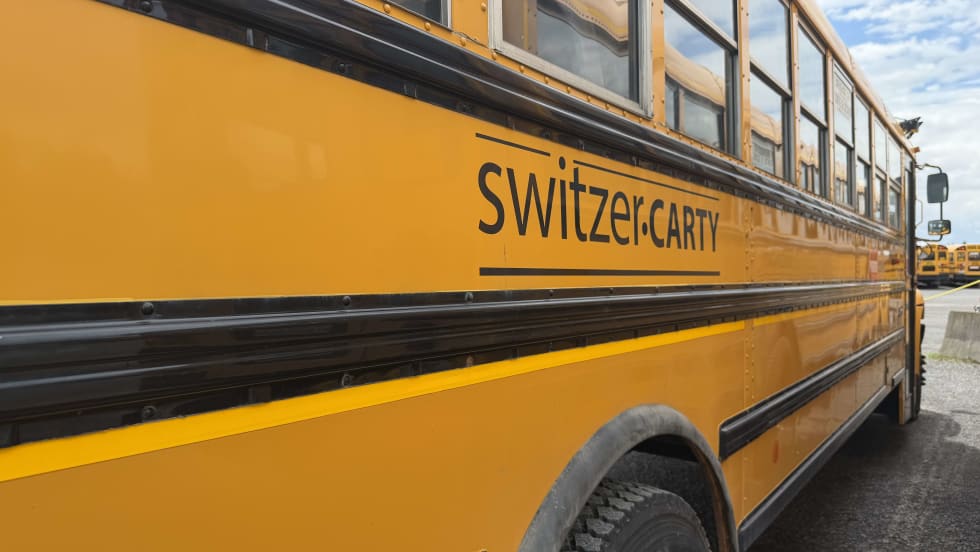
Switzer-CARTY Enters the U.S. with New Acquisition
The Canadian contractor’s acquisition of Minnesota-based Agnes Corporation marks its first cross-border expansion into the United States and adds 350 vehicles.
Read More →