




Specific Special-Needs Evacuations: DMD
Part 2 of this series focuses on Duchenne muscular dystrophy, which causes deterioration of muscle tissue in boys. Knowing how to lift these passengers properly is critical for a safe emergency exit from the bus.
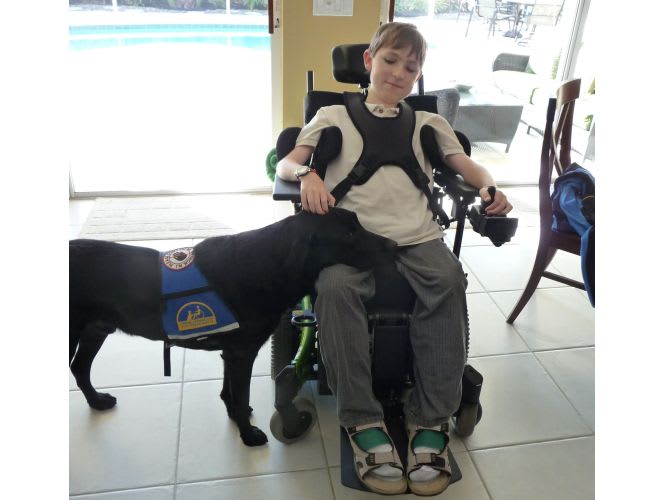
As boys with Duchenne muscular dystrophy get older, their muscle strength decreases. Many get a service animal to allow for some independence.
Previously, we discussed cerebral palsy — the disability itself and how it affects evacuations from a school bus.
In this article, we will discuss Duchenne muscular dystrophy (DMD).
Specifics of DMD
DMD is an actual disease of the muscle that affects males. The disease process causes a progressive deterioration and wasting of muscle tissue.
DMD is a genetic defect in which the mother passes the defective gene to her male offspring. If a mother is a carrier of the defective gene, there is a 50/50 chance that her son will have the muscle disease. If the mother has a female offspring, the daughter will not actually get the disease itself but will have a 50/50 chance that she will be a carrier of the defective gene.
In DMD, the innervations (or messages from the brain to move the muscle) are intact. However, due to the disease process, the muscle is only able to respond very weakly. With time, the muscles become so weak that they cannot respond at all.
Initially, boys with DMD are able to walk. However, around 7 years of age, they will need the assistance of a manual wheelchair. Usually, as the boys get into middle school, they require a motorized wheelchair due to the long distance they need to navigate on a middle school campus.
As boys with DMD get older, their muscle strength decreases, and so in many cases, the family will decide to obtain a service animal to allow for some independence. These amazing animals can open doors, turn on lights and in some cases place arms back on the wheelchair when they have fallen off of the arm trough.
As already noted, DMD is a progressive disease, and as boys become older, their breathing is also involved. They will need to have a tracheostomy to be able to breathe, and eventually they will need the mechanical assistance of a ventilator.
With time, some families will make a very tough decision and will issue a "do not resuscitate" (DNR) order on their boys with DMD. This muscle disease will typically take a young man's life somewhere in his late teens or early twenties.
[PAGEBREAK]
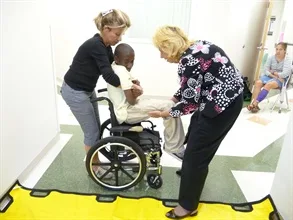
Step 1
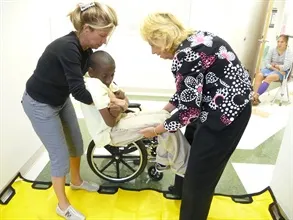
Step 2
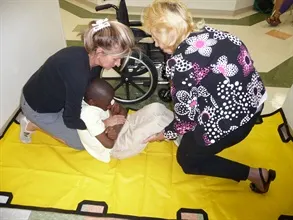
Step 3. When lifting a boy with DMD, one person hugs the boy’s arms into his body, and the other person slides her hands under the boy’s thighs.
Implications for evacuation
The following implications must be taken into account when doing an emergency evacuation from a school bus with a boy with DMD.
● If a boy with DMD is still able to walk, his balance will be precarious. These boys will have difficulty in getting down to the bus floor to sit, scoot and slide out of the emergency door. Then, as the boys are assisted in going out the emergency exit, the level of total assistance continues to be needed. So in spite of the fact that we want to keep the boys walking as long as possible, during an evacuation the safest and quickest way out of the bus would be to have the boys on an emergency evacuation device and drag them out of the bus.
● It is critical that there is consultation and training by a physical therapist on the proper lifting techniques for boys with DMD. The techniques are as follows:
1. Take extreme care to lift correctly, and do not rely on the student's
shoulder muscles. His shoulder muscles will be so weak that he will slide through the bus driver's or attendant's hands.
2. When lifting boys with DMD, have them cross their arms in front on their chest. One person stands behind the student and off to the aisle side, and then reaches around each side of the body and under the arm pits. Then, this person grasps the boy's forearms and pulls the boy's arms into his body. In this way, bus staff will be hugging the boy's arms into his body and then lifting as one total unit.
3. The person in front faces the boy and slides her hands under his upper thighs to be able to support more of the boy's weight. The two people count "one, two, three, lift," and then both adults lift, move and lower the boy onto the emergency evacuation device, keeping the boy in a sitting position.
4. Be sure to support and lower the boy's trunk and head down to the device. The boy will be unable to assist.
● Due to the boys' extreme weakness and their weight, it might be necessary with some heavier or older boys to have three trained adults on the bus to help with the lifting and transfer process. During an emergency is not the time to discover that an additional person is needed. Plan ahead.
● In the case of an emergency evacuation, the boy's ventilator will need to be shut off and left on the bus. The nurse will then need to breathe for the boy by means of an Ambu bag (manual resuscitation device). However, the bus staff should also know how to use the Ambu bag in case the nurse is hurt in the accident.
● Most school systems have policies in regard to DNR orders. It is important for the bus staff to follow these policies, but always remember that a DNR order does not mean do not evacuate.
Summary
Knowing how to lift boys with DMD is going to be critical for a safe emergency exit. This is especially important as the boys get older and lose more and more muscle strength. As with any component of an evacuation, planning and practice are the keys.
Jean M. Zimmerman is supervisor of occupational and physical therapy for the School District of Palm Beach County (Fla.). She is the author of Evacuating Students With Disabilities, a comprehensive manual and training course written in conjunction with the Pupil Transportation Safety Institute. The program can be purchased at www.ptsi.org or by calling (800) 836-2210.
More Special Needs Transportation
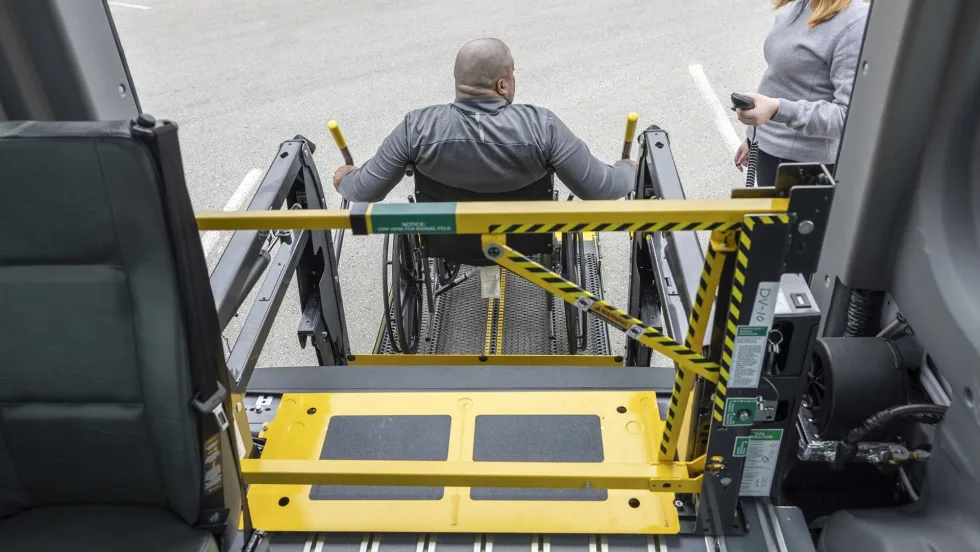
BraunAbility Introduces New Safety Barrier for Wheelchair Lifts
LiftSentinel is designed to add another layer of protection during wheelchair loading and unloading and can be retrofitted to many existing commercial lift installations.
Read More →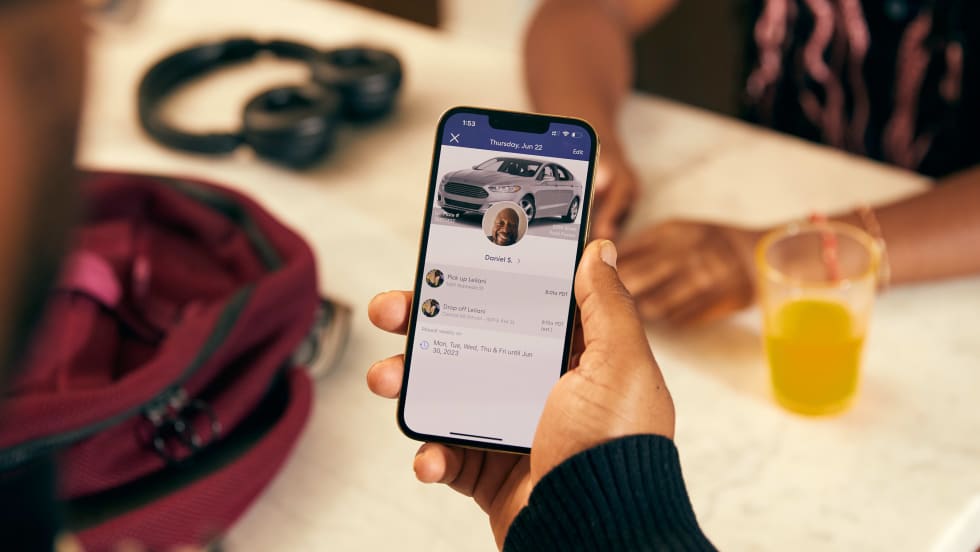
HopSkipDrive Launches New Safety, Driver Consistency Features for 2026-27 School Year
The company’s free ride recording, live ride tracking, and consistent driver assignments aim to improve safety and continuity for diverse student transportation needs.
Read More →
The Most Common Wheelchair Securement Mistakes on School Buses (and How to Fix Them)
Small missteps in wheelchair securement can have serious consequences. Here are 32 tips from experts to reduce risk and increase student safety on the bus.
Read More →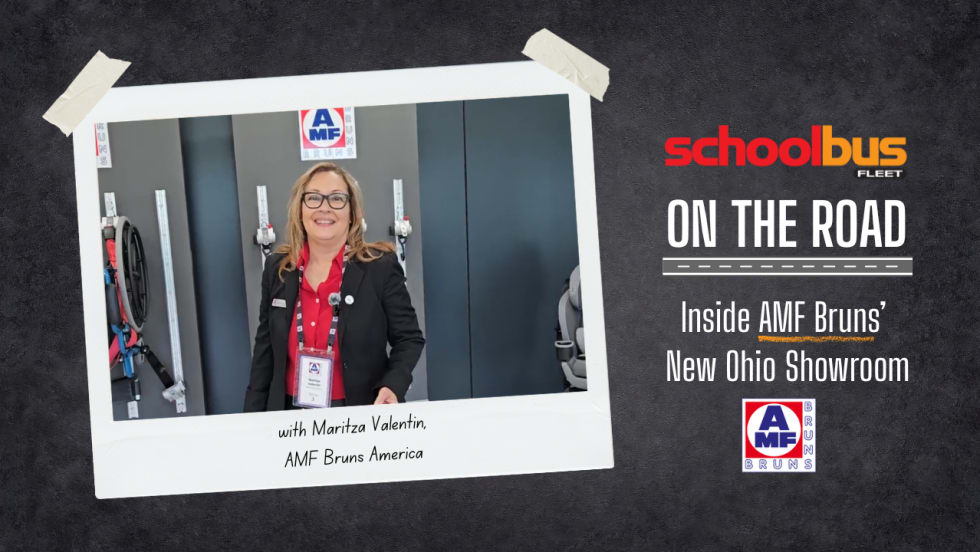
Inside AMF Bruns’ New Showroom: School Bus Securement Solutions Explained
Go inside AMF Bruns America’s new Ohio showroom with Maritza Valentin to see its FutureSafe technology, driver training tools, securement systems, and seating innovations.
Read More →
What AMF Bruns’ New Facility Means for Customers [Video]
Inside AMF Bruns’ new Stow, Ohio, operations: See how expanded space and innovation will enhance customer support and operations.
Read More →
AMF Bruns Expands in Ohio, Investing in Growth and Community
With expanded production space, local investment, and a growing workforce, AMF Bruns is scaling its U.S. presence. Here’s an exclusive first look inside the new Stow, Ohio, HQ.
Read More →
Inside AMF Bruns of America’s New Ohio Manufacturing Facility [Photos]
Take a behind-the-scenes look at AMF Bruns of America’s new 41,000-square-foot Stow, Ohio, headquarters, featuring advanced manufacturing, expanded space, and future-ready mobility solutions.
Read More →
First Student Boosts Student Support in Wichita & Texas
First Student and Wichita Public Schools are using behavioral support strategies to improve student ride experiences, while a separate initiative expands access to after-school programs through a bus donation.
Read More →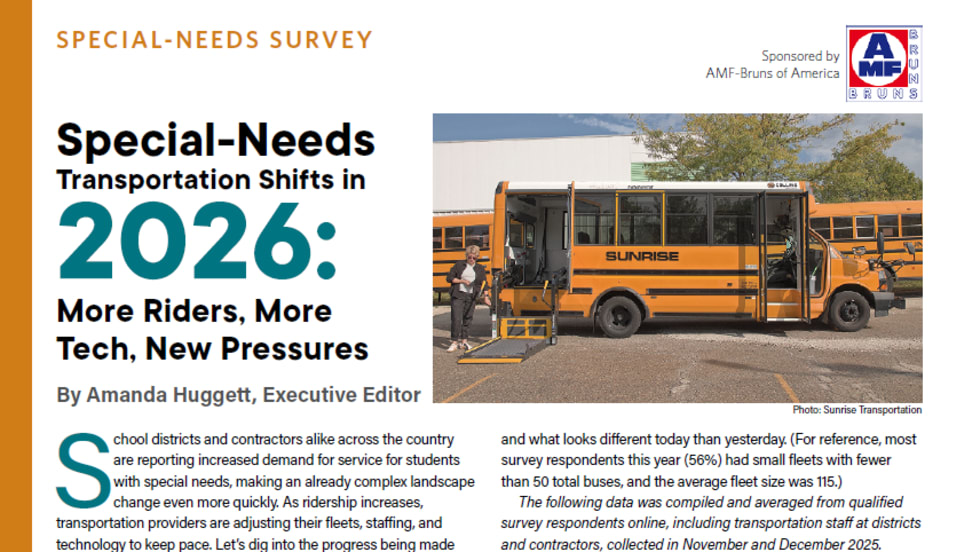
2026 Special-Needs Transportation Survey
What’s changing in special-needs transportation? This year, student transportation operators report a rising need, easing driver shortages, growing tech adoption, and evolving challenges. Sponsored by AMF Bruns of America.
Read More →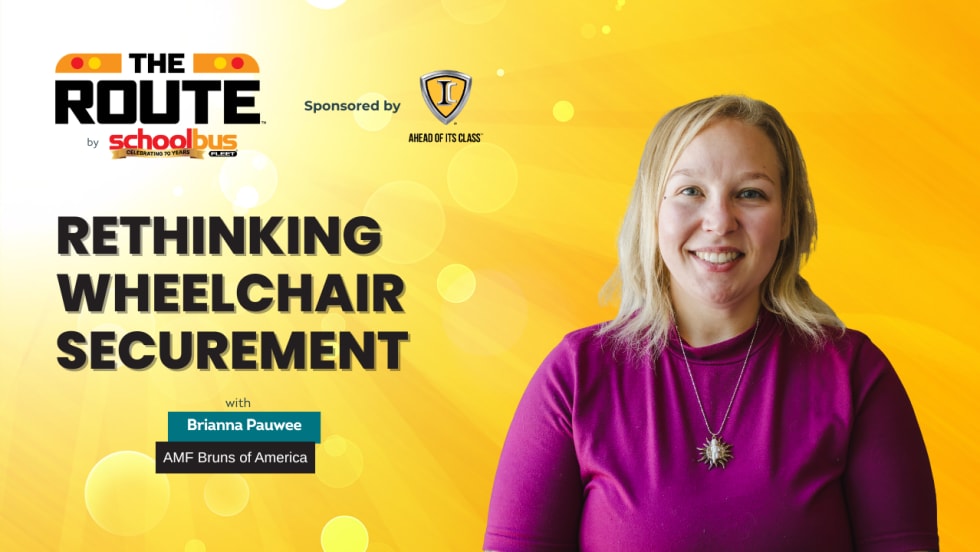
The Lived-Experience Gap in Mobility Tech: An Expert Take on Safe Student Transportation
Brianna Pauwee, a product application specialist at AMF Bruns of America and a wheelchair user, drops in to The Route to share practical securement and training insights, plus the story behind the new “Beyond Mobility” podcast. The Route is sponsored by IC Bus.
Read More →