



Simplifying Wheelchair Lifts
The wheelchair lift industry is moving toward technology that reduces equipment complications and helps users better understand how to operate and maintain their lifts.
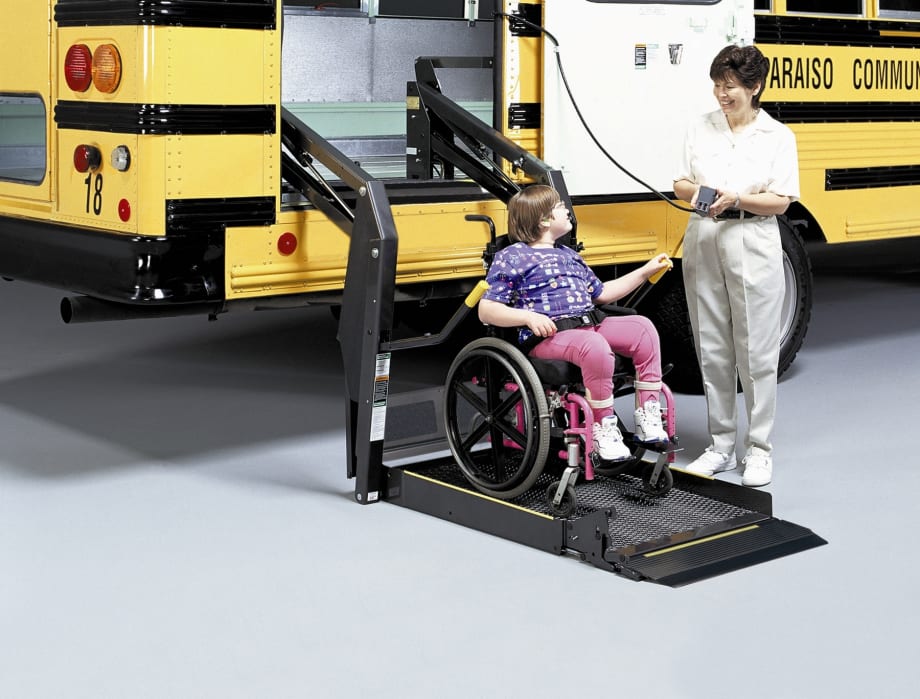
Braun Corp. eliminated the standard diagnostics system from its lifts when it was discovered that the system overcomplicated lift maintenance and repair.
A functioning, well-maintained wheelchair lift is an integral part of transporting special-needs students. Manufacturers have developed lifts with fewer wires and less complicated mechanical systems to make maintenance and repair easier.
Customers can choose from a number of optional safety restraints, handrails and available rollstop mechanisms to better fit the needs of students and operators. And, oftentimes, training in operation and maintenance is available through the manufacturer.
SBF spoke with Braun Corp. and Maxon Lift Corp. for details on the latest lift options that are available for the school bus market.
Different capacities, safety mechanisms available
Braun Corp. manufactures three series of wheelchair lifts for the school bus market: Vista-2, Century-2 and Millennium-2. The Century-2 and Millennium-2 Series have identical features and ratings, but the Century-2 Series is equipped with a spring-loaded rollstop mechanism, while the Millennium-2 Series features a hydraulic rollstop.
Both types of rollstops are effective, says Braun's Commercial Sales Manager Kevin Trudeau, so "it's more for customer preference. If the customer doesn't want hydraulics, they can purchase lifts with the spring-loaded features that we offer."
Alternately, Braun's Vista-2 Series has a stacking platform, meaning that when the lift is placed in the stowed position, it allows for driver and passenger visibility. This unique feature improves safety on the road.
The Maxon Lift Corp., under its Maxon Mobility Division, offers "one lift model [for school buses] with two different capacities," says John Prahl, vice president of sales. The WL7CSmart Lift - part of the WL7 Smart Lift series - is offered as an 800-lb. capacity or 1,000-lb. capacity lift.
"The Maxon model WL7C Smart Lift is durable and reliable, and it lifts its capacity with ease," Prahl adds. The lift provides more cycles with less power through its innovative design.
Simpler electrical, mechanical systems decrease lift problems
Simplified lift systems can improve ease of maintenance and repair, and Maxon and Braun have moved toward lifts with less hardware and less-complicated electrical parts. This has enhanced lift function and led to increased customer satisfaction.
When designing the WL7C Smart Lift, Maxon created a simplified electrical system to improve efficiency. Also, the adjustable micro-switches that aid in the timing of the lift have been removed to reduce downtime.
"The electrical system is so simplistic that we have eliminated 70 percent of the wiring that you normally see on lifts," Prahl says.
The WL7C is equipped with a Brain Box that alerts users immediately when there is a complication with the lift. The Brain Box is capable of identifying specific wires that are shorting, alerting the user to voltage problems or issuing a warning when the pressure sensor is disconnected.
"The technology utilized by the wheelchair lift industry has been stuck in the 1960s," Prahl adds. "The Maxon model WL7C Smart Lift is utilizing technology from the 21st century. The Brain Box has a display that tells the operators - in words - what they did to initiate one of the mandated interlocks. It also displays diagnostics for use by the technicians."
Braun Corp. simplified its lifts by eliminating the standard diagnostics system that the lifts were originally equipped with. As it turned out, the system was largely unnecessary.
"Years ago, we came out with a diagnostic on the lift, which basically was to help diagnose what the problems were if the lift was acting up," Trudeau says. "What we found out is that most mechanics already knew what adjustments to make and that the diagnostic system was overcomplicating things and causing problems. We've gone back to basics and taken [the diagnostics system] out. We've tried to maintain the simplicity of the lift for both the operator and the mechanics that are making adjustments."
[PAGEBREAK]

Maxon's WL7C Smart Lift is equipped with a Brain Box that informs operators of any problems during lift operation.
Companies provide training for better maintenance, safety
To ensure that its customers are properly managing their lifts, Braun's service technicians provide operator training, which is available to both dealers and end users, Trudeau says.
Also, customers have the option of adding additional safety equipment to any lifts they order from the company. These include safety belts and handrails.
"The outward barrier [that comes standard on the lift] is high enough that a chair will not override it. It meets and exceeds ADA [Americans with Disabilities Act] requirements," Trudeau explains. Of the optional safety equipment, he says, "It has more to do with the comfort level of the person in the chair. Some agencies will add a belt just to make [students] feel more comfortable when they're riding up and down the lift."
Trudeau describes lift operation as "pretty cut and dry." Loading passengers on a level surface, he says, is critical, adding that passengers should be loaded onto the lift platform while facing away from the bus, so that the majority of the weight is focused on the interior side of the lift.
"We also recommend that the attendee is not on the platform with the person," Trudeau states. "They should be on the ground - because in case something does happen, you can do more for somebody in a chair on the ground than if you're on the platform with them."
However, Prahl says that, "An increasing number of districts are requiring that the operator ride the platform with the occupant. With that in mind, Maxon designed the WL7C lift so that the platform has little deflection."
"The ADA states that the occupant makes the decision which way they want to face when riding a lift," Prahl adds. Maxon recommends that passengers enter the lift facing forward.
Maxon's WL7C lift meets all requirements set forth by the National Highway Traffic Safety Administration, the ADA and FMVSS 403. Safe operation is aided by the lift's Brain Box, which will identify any problems with the lift and immediately display the corresponding code in the right-hand corner of the Brain Box's LCD screen.
Bus drivers can consult a list of commands to determine what the Brain Box is telling them about the lift. In the case of a dangerous situation, such as an improperly stowed lift, the Brain Box will prevent the bus from moving.
And "although an interlocked seat belt is no longer required in the United States, one can be added to an existing lift in just five minutes," Prahl says of Maxon's safety equipment options.
Maxon offers complimentary in-the-field training covering installation, operation, troubleshooting and maintenance. Operator training is also available on DVD.
More Special Needs Transportation
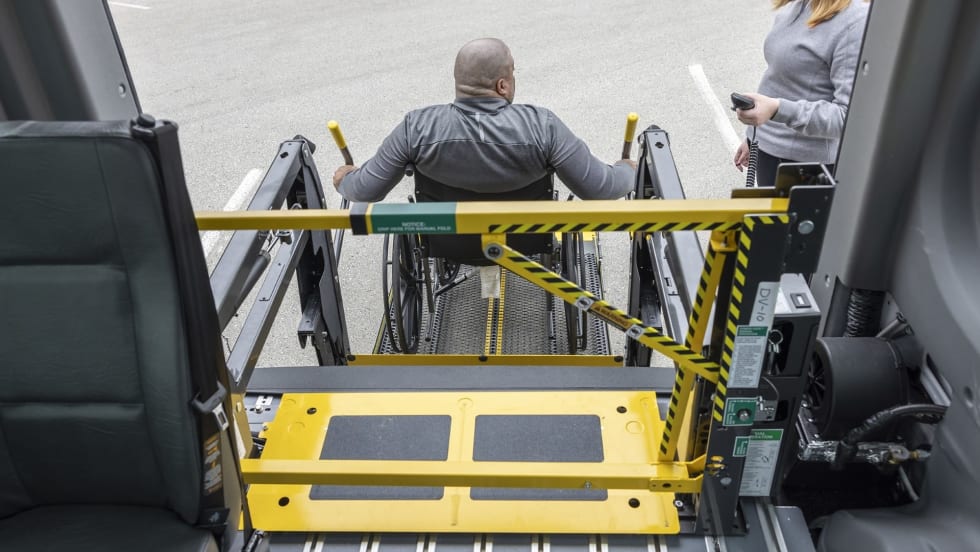
BraunAbility Introduces New Safety Barrier for Wheelchair Lifts
LiftSentinel is designed to add another layer of protection during wheelchair loading and unloading and can be retrofitted to many existing commercial lift installations.
Read More →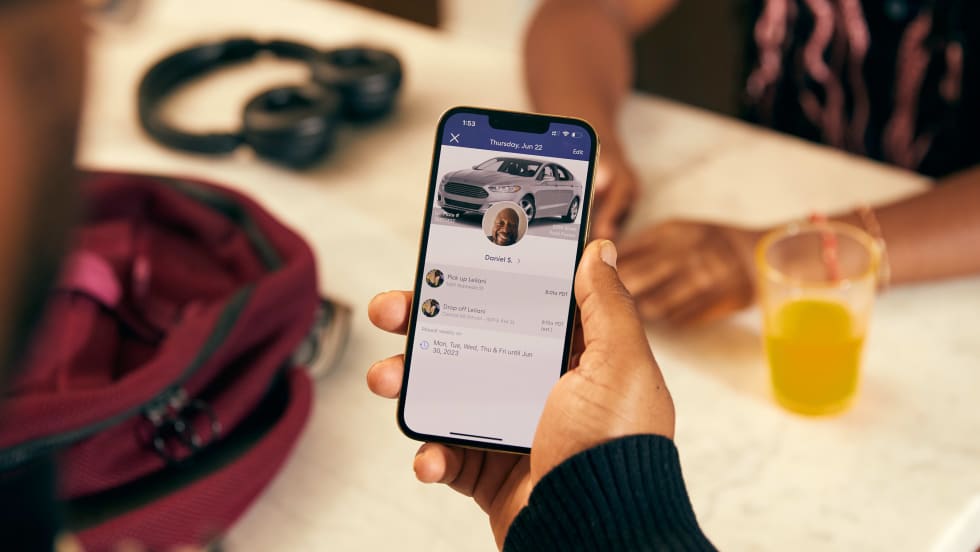
HopSkipDrive Launches New Safety, Driver Consistency Features for 2026-27 School Year
The company’s free ride recording, live ride tracking, and consistent driver assignments aim to improve safety and continuity for diverse student transportation needs.
Read More →
The Most Common Wheelchair Securement Mistakes on School Buses (and How to Fix Them)
Small missteps in wheelchair securement can have serious consequences. Here are 32 tips from experts to reduce risk and increase student safety on the bus.
Read More →
Inside AMF Bruns’ New Showroom: School Bus Securement Solutions Explained
Go inside AMF Bruns America’s new Ohio showroom with Maritza Valentin to see its FutureSafe technology, driver training tools, securement systems, and seating innovations.
Read More →
What AMF Bruns’ New Facility Means for Customers [Video]
Inside AMF Bruns’ new Stow, Ohio, operations: See how expanded space and innovation will enhance customer support and operations.
Read More →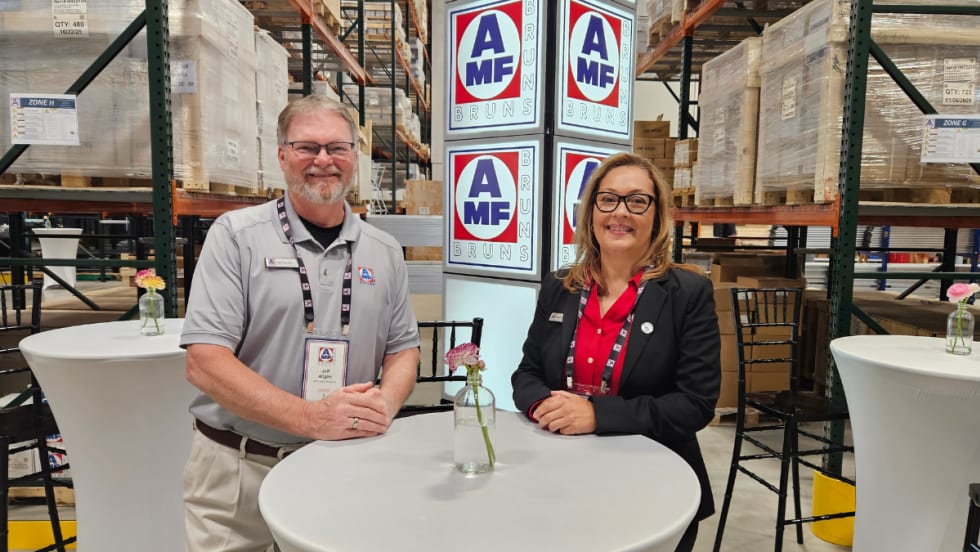
AMF Bruns Expands in Ohio, Investing in Growth and Community
With expanded production space, local investment, and a growing workforce, AMF Bruns is scaling its U.S. presence. Here’s an exclusive first look inside the new Stow, Ohio, HQ.
Read More →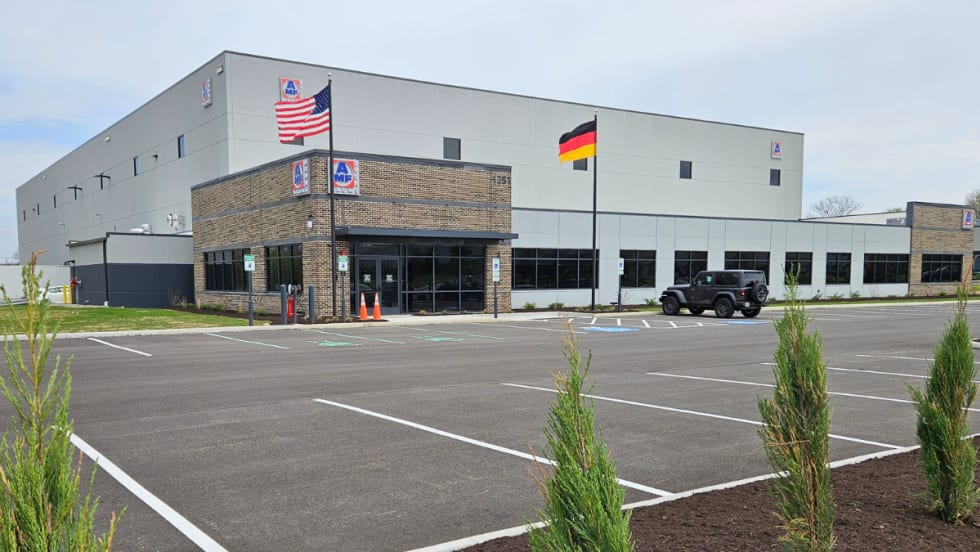
Inside AMF Bruns of America’s New Ohio Manufacturing Facility [Photos]
Take a behind-the-scenes look at AMF Bruns of America’s new 41,000-square-foot Stow, Ohio, headquarters, featuring advanced manufacturing, expanded space, and future-ready mobility solutions.
Read More →
First Student Boosts Student Support in Wichita & Texas
First Student and Wichita Public Schools are using behavioral support strategies to improve student ride experiences, while a separate initiative expands access to after-school programs through a bus donation.
Read More →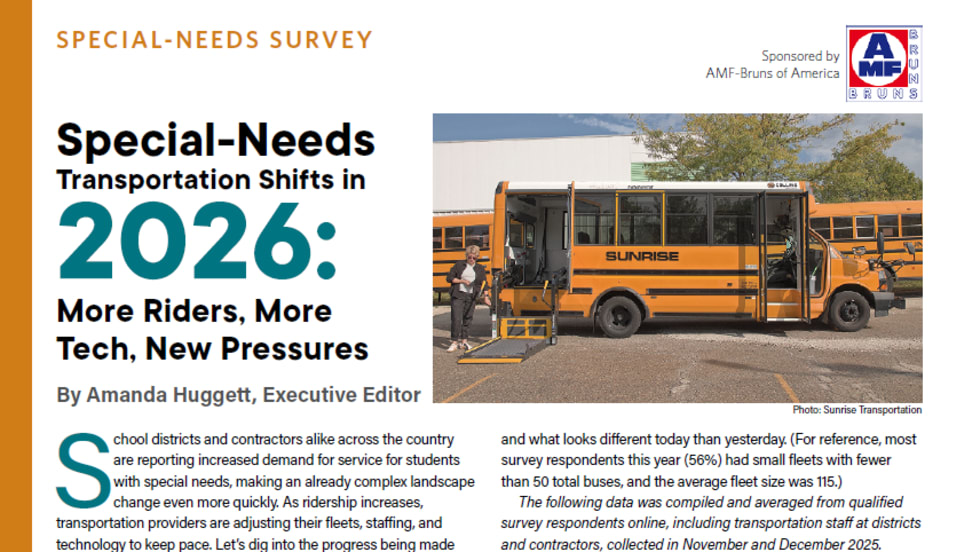
2026 Special-Needs Transportation Survey
What’s changing in special-needs transportation? This year, student transportation operators report a rising need, easing driver shortages, growing tech adoption, and evolving challenges. Sponsored by AMF Bruns of America.
Read More →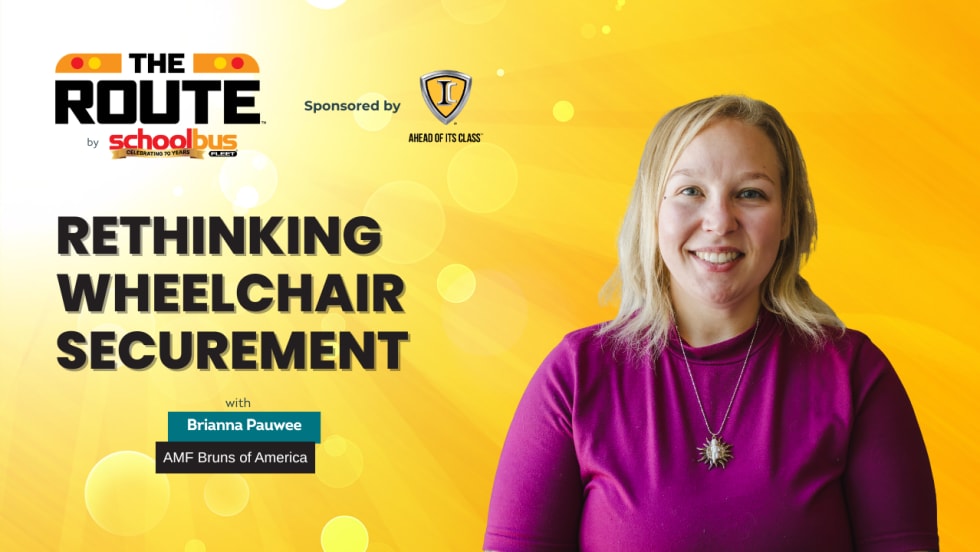
The Lived-Experience Gap in Mobility Tech: An Expert Take on Safe Student Transportation
Brianna Pauwee, a product application specialist at AMF Bruns of America and a wheelchair user, drops in to The Route to share practical securement and training insights, plus the story behind the new “Beyond Mobility” podcast. The Route is sponsored by IC Bus.
Read More →