




Securing Special-Needs Equipment on the Bus
With the bulk of medical and therapeutic equipment student transporters are required to haul these days, it’s easy to feel like you are driving ...
With the bulk of medical and therapeutic equipment student transporters are required to haul these days, it’s easy to feel like you are driving a moving van rather than a school bus. However, it’s important to treat this equipment with care and to secure it safely on the vehicle. The following tips will help you secure six types of equipment you are likely to see on your routes. Communication devices
Many of the students we transport communicate by means of an expensive communication device. Those who use these devices from their wheelchairs have them specially mounted onto the chairs. These mounting systems are nothing more than a set of bolts that could easily loosen and become a projectile in the school bus if left on the chair during transport. In addition, communication devices mounted onto chairs pose a risk to the chair’s occupant, as they are mounted directly in front of the student’s face and could cause serious injury in the event of an accident where the student is thrust forward in his or her seat. Though it would be preferable for all students to have the ability to communicate at all times on the school bus, safety must be the first priority, and communication devices, which compromise student safety, should be removed during transport. Once detached, communication devices should be stored in a well-padded carrying case that is firmly secured in the school bus. If the IEP team determines that a student needs to be able to communicate yes/no messages during the ride on the school bus, the student can be given a soft cloth-type communication board to be placed on his or her lap. Never deny a student the right to communicate, but be sure to take the necessary safety measures to protect the student and the other occupants of the bus. Laptop computers
Many special-needs students who have difficulty with handwriting are provided laptop computers by their school for use in completing homework assignments. Like the communication devices discussed above, laptop computers should be transported in a well-padded carrying case. These carrying cases must be securely attached within the bus interior with a system that will withstand five times the weight of the device in the event of an impact. Possible storage areas include: in an unoccupied seat, anchored with a seat belt that has been properly attached; in a storage bag (approved by the school bus manufacturer) attached to the bus wall; or in a storage bag that fits over a school bus seat and has a secure closure. Some newer school buses have a luggage compartment that, when padded, makes an ideal place to store communication devices and computers. Walkers and crutches
Students with mobility difficulties will need to have their walkers and crutches transported to and from school. As with all other devices transported in the school bus, these mobility devices need to be secured by a system that would withstand five times the force of the weight of the equipment itself. Methods of securing and storing walkers and crutches are the same as for the devices mentioned above. Service animals
The majority of people are familiar with the seeing-eye dogs used by people who are visually impaired. However, not everyone has heard of companion dogs that assist people who are physically impaired. These dogs are trained to help with daily activities such as opening and closing doors and turning lights off and on. Within the school system, these companion dogs can carry a student’s books, retrieve dropped items and even assist with wheelchair mobility. So be prepared - if you haven’t already had a special dog on your school bus - the time will come. These dogs are extremely well trained and well behaved. But where does the dog sit? Best practices generally concur that the best location for the dog is lying down on the bus floor behind the driver’s seat. There are currently no securement systems for dogs on the school bus, but who knows what the future will hold? Just as you are getting accustomed to the idea of having a dog on your bus, the next “passenger” you might have to learn to accommodate is a specially-trained monkey! Oxygen, liquid and gas
There has been a certain amount of confusion lately over the different types of oxygen - liquid and gas - and which type should be permitted on the school bus. A committee in the state of Maryland is studying this issue and will present a report of its findings at the annual meeting of the National Association of State Directors of Pupil Transportation Services in Nashville, Tenn., in November. However, whichever type of oxygen you are transporting, the bottom line is the same - you must secure the oxygen within the school bus. The oxygen tank should be secured to the side wall of the school bus in a rack or mounting system that will sustain at least five times the weight of the tank. In cases where there is an oxygen rack bolted to the wheelchair itself, the oxygen tank may actually be safe to leave on the wheelchair during transport. The decision as to whether or not the oxygen can remain with the chair, however, should not fall upon the transportation staff but rather must be determined by a wheelchair specialist. The oxygen, whether liquid or gas, must be kept away from intense heat or flammable substances, since it is under pressure and could stimulate fire. The need for oxygen to be transported or used during school bus transportation must be documented in the student’s Individualized Education Program (IEP). Oxygen is a prescribed medication and should be considered both medical support and necessary equipment. You should also have an emergency plan for what to do with students and equipment in the event of a medical emergency or equipment failure. Ventilators, suction devices
When transporting students with ventilators and suction machines, we are responsible for assuring that these pieces of equipment are well attached to the wheelchair. Typically, the wheelchair has a ventilator tray on the back of it. The ventilator has traditionally been placed on the tray and secured with a velcro strap. However, this single strap may not be enough to hold the ventilator on the tray in the event of an accident. Therefore, the ventilator should be held on the tray with at least two straps that criss-cross each other and are secured with a buckle or other positive-type securement. This may require you to make a special request when the wheelchair is initially evaluated for transport. Many students also need to have a suction machine transported on their wheelchair. Whether the suction machine is being used during transportation or not, it must also be securely attached to the wheelchair. The method of attachment will vary depending on the type of wheelchair and the set-up of the ventilator. A team composed of the rehabilitation technology specialist (RTS), who is specially trained in designing total wheelchair systems, the physical and occupational therapist and the transportation staff should meet to decide how to best attach all of this equipment to the wheelchair. Remember too that some of this medical equipment may require additional batteries that will also need to be securely attached to the wheelchair. Future challenges
Modern society, in its drive toward innovation, is producing bigger and better challenges on a daily basis for student transporters. Each piece of specialized equipment demands individual evaluation and logical application of transportation concepts - made even more challenging by the increased complexity of the equipment we encounter. Advances in technology in the transportation industry must keep up with the changing needs of the special children we transport. Efforts must focus on seeking advice from knowledgeable people with expertise in securements, bus design, medical technology, disability characteristics, communication and crash dynamics. It may “take a village to raise a child,” but it will take a national cooperative spirit to transport that child safely. Kathy Furneaux is a training specialist for the Pupil Transportation Safety Institute in Syracuse, N.Y. Jean Zimmerman is supervisor of occupational and physical therapy at Palm Beach County School District in West Palm Beach, Fla.
More Special Needs Transportation
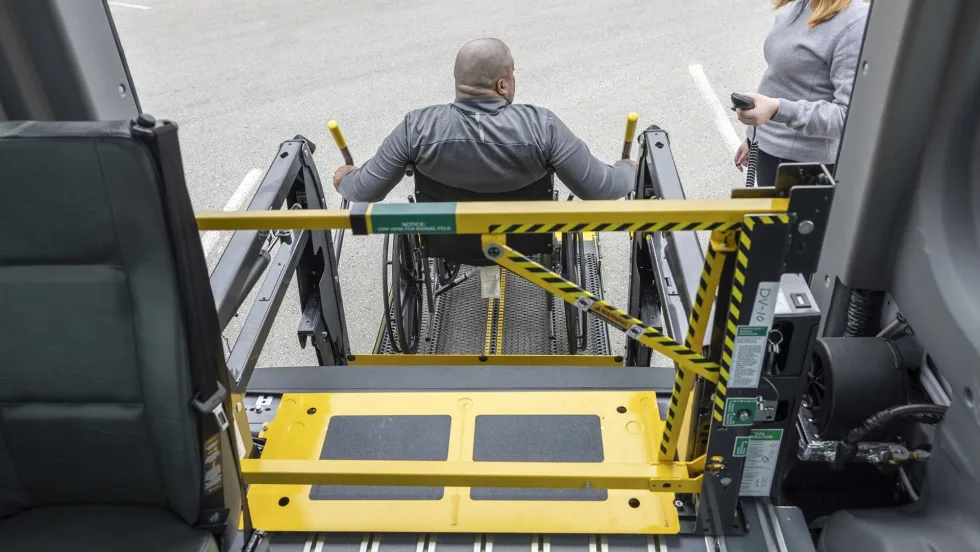
BraunAbility Introduces New Safety Barrier for Wheelchair Lifts
LiftSentinel is designed to add another layer of protection during wheelchair loading and unloading and can be retrofitted to many existing commercial lift installations.
Read More →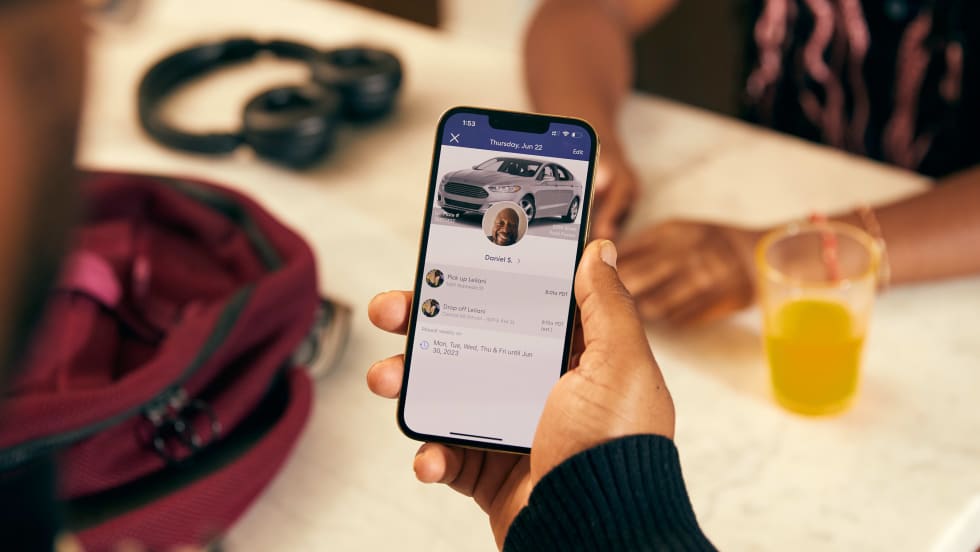
HopSkipDrive Launches New Safety, Driver Consistency Features for 2026-27 School Year
The company’s free ride recording, live ride tracking, and consistent driver assignments aim to improve safety and continuity for diverse student transportation needs.
Read More →
The Most Common Wheelchair Securement Mistakes on School Buses (and How to Fix Them)
Small missteps in wheelchair securement can have serious consequences. Here are 32 tips from experts to reduce risk and increase student safety on the bus.
Read More →
Inside AMF Bruns’ New Showroom: School Bus Securement Solutions Explained
Go inside AMF Bruns America’s new Ohio showroom with Maritza Valentin to see its FutureSafe technology, driver training tools, securement systems, and seating innovations.
Read More →
What AMF Bruns’ New Facility Means for Customers [Video]
Inside AMF Bruns’ new Stow, Ohio, operations: See how expanded space and innovation will enhance customer support and operations.
Read More →
AMF Bruns Expands in Ohio, Investing in Growth and Community
With expanded production space, local investment, and a growing workforce, AMF Bruns is scaling its U.S. presence. Here’s an exclusive first look inside the new Stow, Ohio, HQ.
Read More →
Inside AMF Bruns of America’s New Ohio Manufacturing Facility [Photos]
Take a behind-the-scenes look at AMF Bruns of America’s new 41,000-square-foot Stow, Ohio, headquarters, featuring advanced manufacturing, expanded space, and future-ready mobility solutions.
Read More →
First Student Boosts Student Support in Wichita & Texas
First Student and Wichita Public Schools are using behavioral support strategies to improve student ride experiences, while a separate initiative expands access to after-school programs through a bus donation.
Read More →
2026 Special-Needs Transportation Survey
What’s changing in special-needs transportation? This year, student transportation operators report a rising need, easing driver shortages, growing tech adoption, and evolving challenges. Sponsored by AMF Bruns of America.
Read More →
The Lived-Experience Gap in Mobility Tech: An Expert Take on Safe Student Transportation
Brianna Pauwee, a product application specialist at AMF Bruns of America and a wheelchair user, drops in to The Route to share practical securement and training insights, plus the story behind the new “Beyond Mobility” podcast. The Route is sponsored by IC Bus.
Read More →