




School loading zones should be wheelchair friendly
Extra care needs to be given to school loading-zone safety when buses for children with special-needs are involved, especially when the children are transported in wheelchairs.
Extra care needs to be given to school loading-zone safety when buses for children with special-needs are involved, especially when the children are transported in wheelchairs. Transportation supervisors should review loading-zone safety with site administrators annually. Integrating special-needs vehicles with regular buses, parental vehicles, day-care vans, student vehicles and school campus roadways requires careful planning and review.
A closer look at wheelchairs
For obvious reasons, buses transporting students in wheelchairs require special scrutiny. The best way to judge the safety and convenience of a school loading zone is to test it yourself. You and/or the building administrator should ride in a wheelchair — from the lift platform to the classroom — to see what challenges are presented. Are there curb cuts or ramps for convenience? How about barriers such as steps or difficult doorway entries? Find out for yourself what the obstacles might be. Safety rails that discourage walking between buses or pedestrian entry into the loading zone also force buses with wheelchair lifts to position their platforms at those rail openings. Add curb cuts to open up wheelchair accessibility along a wider expanse of the loading zone. Porches or other weather coverings for all school loading-zone areas add safety and comfort. They also reduce the risk of damage to expensive power wheelchairs, which can cost anywhere from $12,000 and up. Allow lift buses preferential placement in loading-zone spaces nearest building entrances. Many children who require mobility aid have difficulty traversing long distances between loading zones and school entrances. Also, watch for the length of travel within the building for mobility aid users. Establishing alternate entrances and placement for lift buses nearest those entrances provides closer access to special-education classrooms. It also reduces the challenges for driver teams to supervise students in conjunction with special-education building personnel. Also, keep in mind that many students are routed to the school nurse for medications before going on to class.
Traffic and parking concerns
For improved traffic flow and pedestrian control around the building and through the loading zone, campus roadways and boundary streets can be changed to one-way lanes. Keep loading zones separate from parents and school buses. Buses should not mix with parental vehicles because parents may not follow the same traffic rules as buses. Parents must not load and unload their special-needs students in restricted bus loading zones. They have a basic right, however, to a loading-zone area separate from the bus staging area. A handicapped parking sticker does not confer the right to park in a loading-zone space designated for special-needs buses. Finally, the single most important factor in loading-zone safety for all school buses is supervision. School authorities must warn or ticket parents who drive or park unsafely in the loading zone. Often, day-care vans act as buses in the loading zone without the authority to do so. They must be redirected to parental vehicle areas. Campus police should require student vehicles to remain away from the loading zone.
Ray Turner is special-education transportation coordinator at Northside Independent School District in San Antonio, Texas. He is the author of several special-needs transportation handbooks. For more information, visit his web site at www.whitebuffalopress.com or e-mail him at drturner@earthlink.net.
More Special Needs Transportation
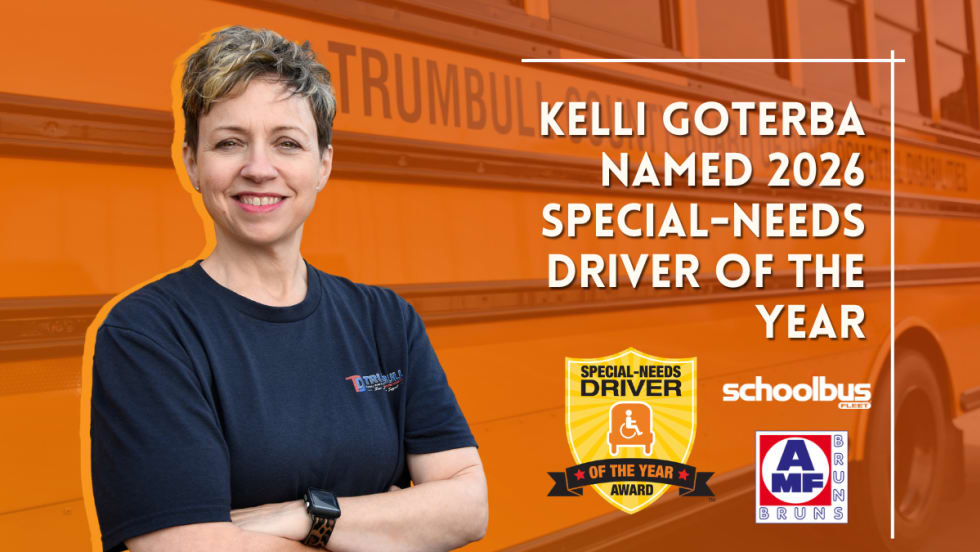
Kelli Goterba Named 2026 Special-Needs School Bus Driver of the Year
Through building trust with students and strengthening her transportation team, Goterba exemplifies the impact special-needs drivers can make.
Read More →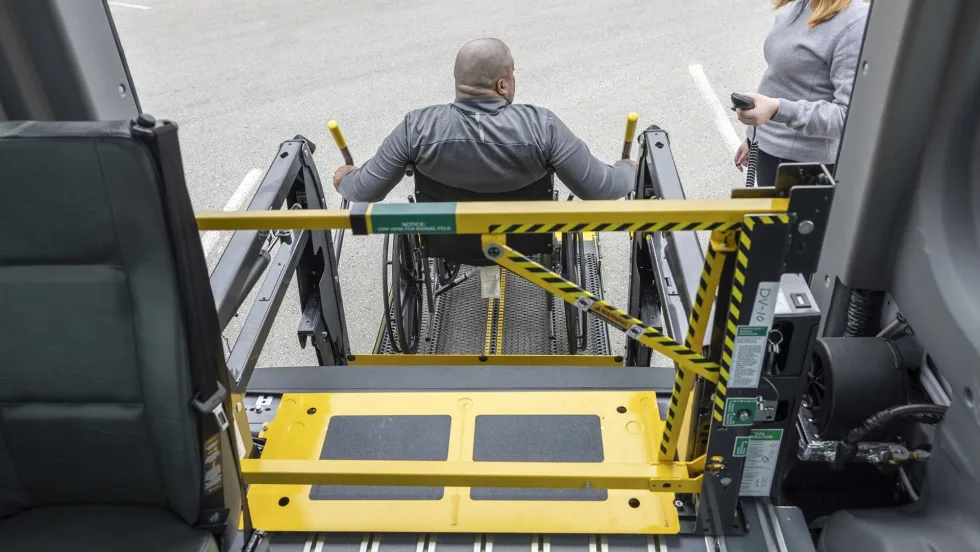
BraunAbility Introduces New Safety Barrier for Wheelchair Lifts
LiftSentinel is designed to add another layer of protection during wheelchair loading and unloading and can be retrofitted to many existing commercial lift installations.
Read More →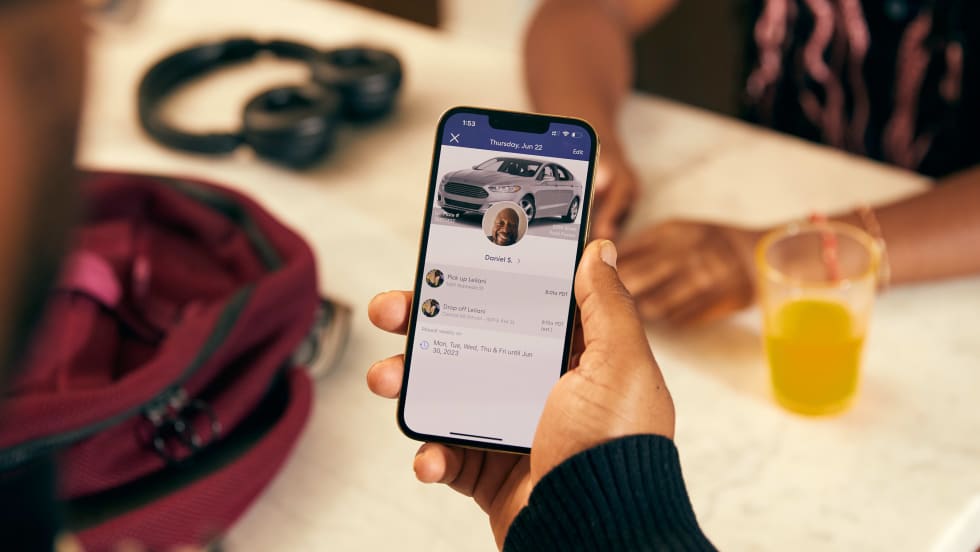
HopSkipDrive Launches New Safety, Driver Consistency Features for 2026-27 School Year
The company’s free ride recording, live ride tracking, and consistent driver assignments aim to improve safety and continuity for diverse student transportation needs.
Read More →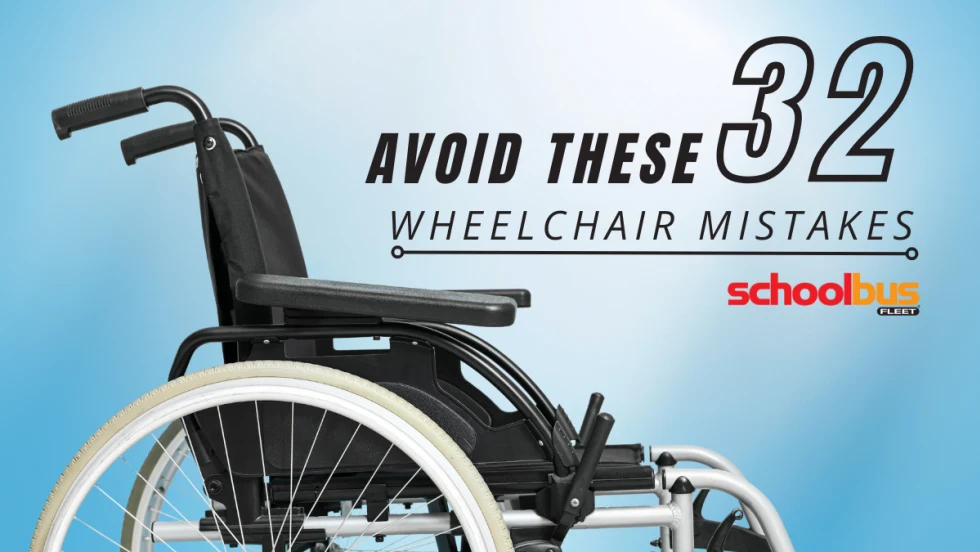
The Most Common Wheelchair Securement Mistakes on School Buses (and How to Fix Them)
Small missteps in wheelchair securement can have serious consequences. Here are 32 tips from experts to reduce risk and increase student safety on the bus.
Read More →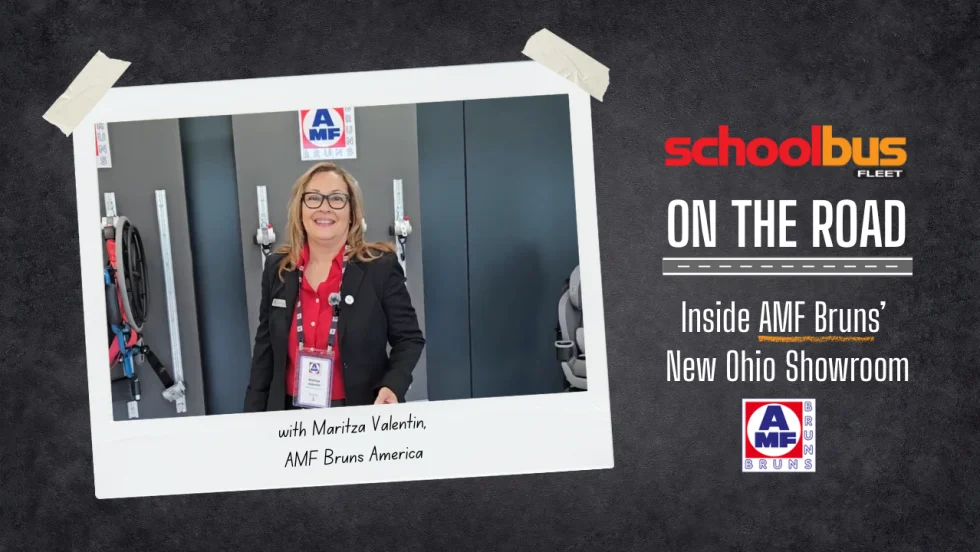
Inside AMF Bruns’ New Showroom: School Bus Securement Solutions Explained
Go inside AMF Bruns America’s new Ohio showroom with Maritza Valentin to see its FutureSafe technology, driver training tools, securement systems, and seating innovations.
Read More →
What AMF Bruns’ New Facility Means for Customers [Video]
Inside AMF Bruns’ new Stow, Ohio, operations: See how expanded space and innovation will enhance customer support and operations.
Read More →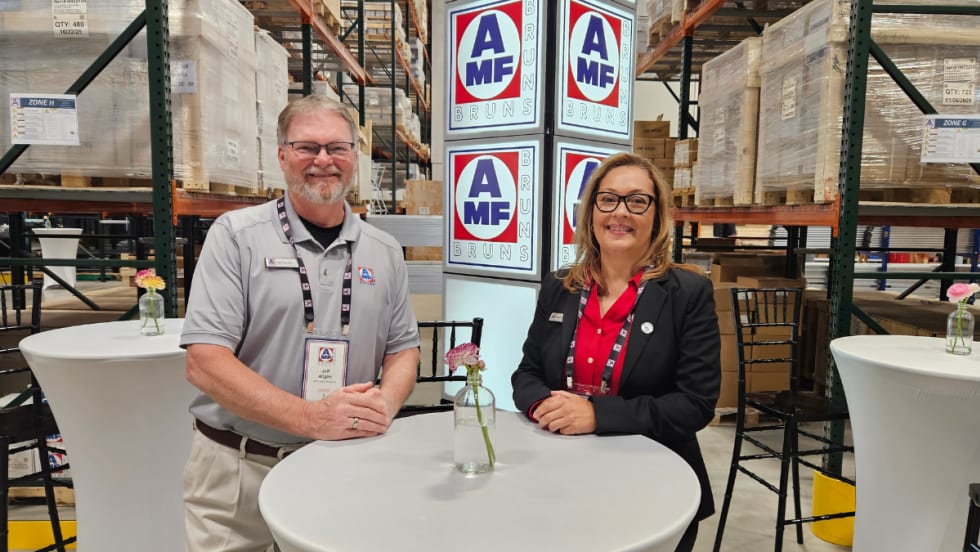
AMF Bruns Expands in Ohio, Investing in Growth and Community
With expanded production space, local investment, and a growing workforce, AMF Bruns is scaling its U.S. presence. Here’s an exclusive first look inside the new Stow, Ohio, HQ.
Read More →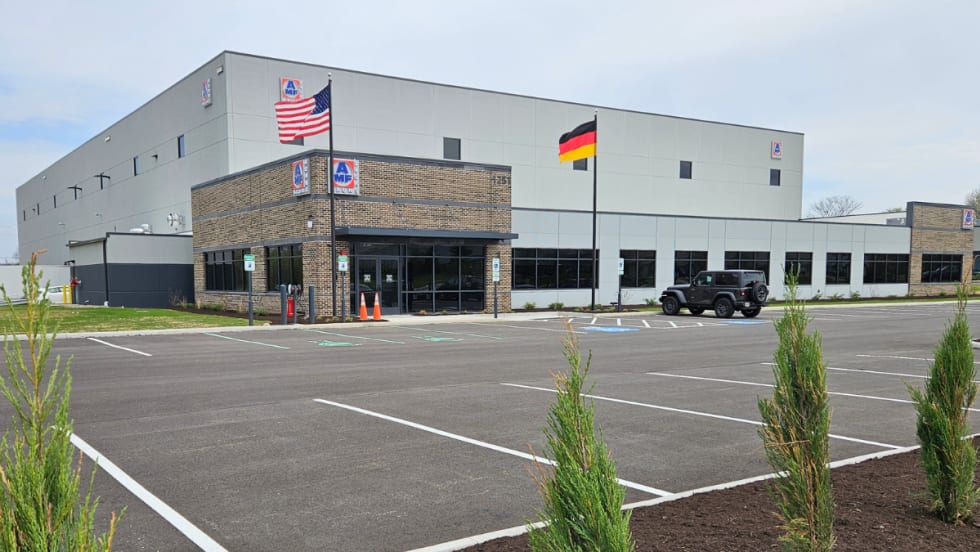
Inside AMF Bruns of America’s New Ohio Manufacturing Facility [Photos]
Take a behind-the-scenes look at AMF Bruns of America’s new 41,000-square-foot Stow, Ohio, headquarters, featuring advanced manufacturing, expanded space, and future-ready mobility solutions.
Read More →
First Student Boosts Student Support in Wichita & Texas
First Student and Wichita Public Schools are using behavioral support strategies to improve student ride experiences, while a separate initiative expands access to after-school programs through a bus donation.
Read More →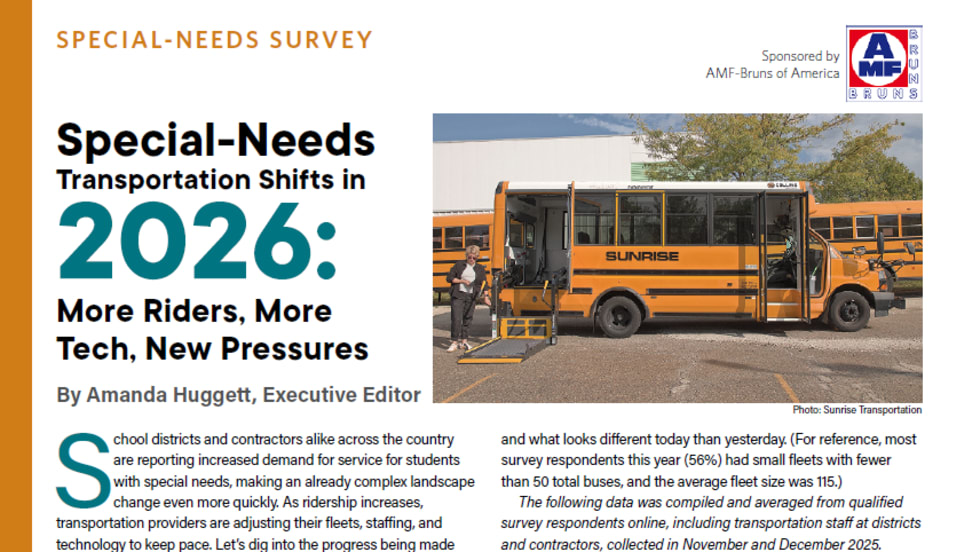
2026 Special-Needs Transportation Survey
What’s changing in special-needs transportation? This year, student transportation operators report a rising need, easing driver shortages, growing tech adoption, and evolving challenges. Sponsored by AMF Bruns of America.
Read More →