




School Bus Seat Belts Catching On
Proponents have developed counterpoints to each of the most common arguments against installing seat belts on school buses, including loss of capacity, problems during evacuations and passengers using seat belts as weapons. Unsurprisingly, cost is the biggest obstruction.

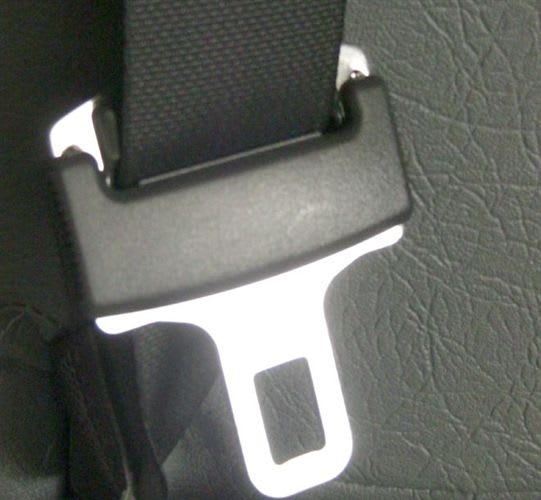
Just seven states have school bus seat belt laws, but many in the pupil transportation industry expect to see more adopted in coming years, as well as school districts that decide to install seat belts independently from any legislative mandate.
“From my perspective, it’s really up to the individual transportation director, individual states and individual school boards to look at the risk and decide what’s best for them, and then to have a chance to plan for it,” says James Johnson, vice president of business development and corporate sales at IMMI, producer of the SafeGuard brand of seating products. “The worst thing that can happen is for school districts to have legislation forced upon them and the net result is leaving children off buses.”
Either way, it’s a slow-growing trend marked by one of the most contentious debates in the industry. “They love ‘em or they hate ‘em,” says Tony Everett, president and CEO at The C.E. White Co. “There is passion on both sides of the issue.”
Specialty seats, including school bus seats equipped with three-point belts, currently represent just 4 percent of C.E. White Co.’s total seating sales, Everett says. “These poor states have got to fund it,” he says. “Let’s face it: The school bus industry has decreased more than 35 percent in the past two years. We don’t see that trend changing.”
However, Everett notes that while belted seating is still not widely adopted, the discussion has changed over the decades. “My partner Robert Knapp, when he took three-point belts to the first trade show many years ago, he was laughed at. We’ve come a long way when it’s OK to talk about three-point seat belts.”
Each year, several states see bills proposed that are frequently rejected due to economic concerns or successful campaigns on the part of those who see seat belts as extraneous for a mode of transportation that is already the safest on the road.
[IMAGE]580[/IMAGE]
“The last time we did a census or a survey, there were about 30 states that were actively working on seat belt legislation. Some of those have temporarily fallen by the wayside as a result of the economy,” says Ron Lamparter, co-chairman of M2K Seating and CEO of SynTec Seating Solutions. “I believe that lap-shoulder belts are inevitable in school buses. The only question is one of timing as to how long it will be before they’re adopted across the board.”
When the economy finally turns around and more funding is available for school systems, seat belt manufacturers say that the arguments against seat belts will be looking weaker.
Compartmentalization no longer enough?
For one, Johnson argues that the problem of capacity loss due to seat belt installation has been solved with seat belt systems that are flexible to allow for either two larger passengers or three smaller passengers to occupy the same seat.
In addition, Everett makes some compelling points about compartmentalization and the limited protection it provides in a bus crash, with a personal twist.
“As a young child, I was in a school bus accident,” he says. “I remember hitting the seat in front of me, and they used to have a stainless steel back panel. We’ve come so far with compartmentalization, but it’s not complete.”
While the compartmentalization concept has helped to prevent fatalities, it does not go far enough to eliminate injuries, he says. “It’s not so much the fatalities that happen in bus accidents, it’s the injuries that happen when a child falls out of the seat,” Everett says. “There are thousands of injuries documented out there — emergency room cases of kids that get hurt just from the bus slamming on the brakes.”
He also points out that crowded buses carrying teenage students often cannot provide complete compartmentalization protection. “Compartmentalization is based upon everybody being contained in that compartment,” he says. “You show me three teenagers sitting in a school bus seat without seat belts and that third teenager on the outside is sitting perfectly in line with the seat in front of them. Their leg’s out in the aisle and they’re hanging on to the outside of the seat.”
[PAGEBREAK]Evacuation concerns
Spokesmen for the belt manufacturers agree that despite concerns about evacuations, seat belts do not pose the obstruction to safe and speedy evacuations that naysayers contend they do. Not only are children familiar with seat belts and how they work, but federal seat belt standards ensure that belts are easily unbuckled.
“Kids learn very early how to unbuckle a seat belt, and federal motor vehicle standards regulate the force it takes to unbuckle a seat belt,” Johnson says. “All children have the motor skills and strength to do that.”
When asked what happens when a bus is in a rollover accident, Everett explains that those federal specifications require that seat belts must release under a certain amount of pressure, no matter what. “Those belts are designed to release even if you’re hanging upside-down with pressure on the belt,” he says.
While earlier generations had to be trained to remember to buckle up, young children today do it without thinking, Lamparter says. “I talk to young parents, and there isn’t an infant that’s 2 or 3 years old that doesn’t know how to buckle and unbuckle his seat belt and it’s become a reflexive action on his part,” he says.
Even if children do have trouble with their seat belts, Everett says it comes down to surviving the accident in the first place. “The argument about evacuations and getting them out is no different if you’re in a car accident,” he says. “Seconds are important, but you go back to the idea [that] you need to survive the accident first.”
Belts as weapons
Opponents of seat belts sometimes raise the issue of students using the belts as weapons to strike each other. Lamparter points out that while still something to be concerned about, this issue only comes up with lap belts, as opposed to lap-shoulder belts. “Lap belts lay loose on the seat, so if you take the buckle to the end, then you can use it as a [weapon] to smack the kid next to you,” he says. “On lap-shoulder belts, you have automatic retractors. There are no loose ends, so the kids can’t use them that way.”
“It’s very simple: If a child is unruly and slapping somebody with a belt, that same child is going to be the one slapping their seat partner with a book bag,” Everett says. “There are studies that show discipline in fact improves with belted passengers.”
Johnson says IMMI’s customers have reported improved student discipline following the installation of seat belts on their buses. “The No. 1 reason for crashes is driver distraction, so with better behavior in the back of the bus, they’re less likely to be in an accident to begin with.”
[IMAGE]581[/IMAGE]
States confront cost issue
A law requiring lap-shoulder belts on all new school buses in Texas went into effect Sept. 1, but according to the statute, “A school district is required to comply with Subsection (e) only to the extent that the Texas Education Agency pays or commits to pay the district for expenses incurred in complying with that subsection.”
The Texas Education Agency (TEA) originally appropriated $10 million for the measure, but after all state agencies were ordered to cut 5 percent of their budgets, that amount was reduced to $3.6 million, leading some to accuse TEA of obstructing the seat belt program.
While some districts will not need to purchase new buses for a few years, others may begin vying for TEA funding as soon as it becomes available. At press time, TEA had received notification from the Texas Legislative Budget Board to release the $10 million in funds and an implementation plan for the school bus seat belt program.
Some districts in the state, including Dallas County Schools, have purchased seat belt-equipped buses with their own funds ahead of the law’s start date. “We feel that the addition of three-point seat belts is an extremely positive decision for Dallas County Schools,” Transportation Director Rex Cole said. “We are always looking for proactive ways to enhance our fleet. Our steadfast goal is to provide the safest transportation possible for the students and districts we serve. We believe that seat belts on buses are just one more step toward meeting that goal.”
The district plans to have its entire fleet outfitted with three-point seat belts in six or seven years, Cole said.
Dallas County Schools began retrofitting buses in 2008 and to date has completed about 75, he says. The district ordered 79 new buses equipped with belts for the 2009-10 school year and 144 for 2010-11.
Cole says the retrofitting costs $7,865 per small bus and $17,116 per large bus. The added cost for the district’s new buses equipped with seat belts is $4,990 for small buses and $10,326 for large buses.
“The [driver] feedback we have received has been extremely positive,” Cole says, adding that students have also expressed eagerness and excitement about the seat belts.
In July, Connecticut Gov. Jodi Rell was able to forge a compromise solution by approving a bill that cuts the sales tax on school buses equipped with three-point belts but does not make them mandatory.
The law reimburses school bus operations for 50 percent of whatever they pay in the state’s 6-percent sales tax for new school buses equipped with three-point belts. It is funded through a $50-increase in the fees paid for restoring suspended or revoked driver’s licenses, commercial driver’s licenses and vehicle registrations.
“I happen to really like the idea of tax incentives. I think that shows innovation,” Lamparter says.
“I think that was a wonderful trade-off between forcing school districts and giving them opportunities to help deflect some of the costs associated with lap and shoulder belts,” Johnson says. “We applaud the state for a creative solution, and the result will certainly be safer transportation for children traveling to and from school and school activities in Connecticut.”
Alabama awaits study results
The three-year pilot study conducted by the University of Alabama’s University Transportation Center for Alabama (UTCA) to test the impact of lap-shoulder belts on school buses has concluded and researchers are preparing the results to be reported to Gov. Bob Riley, State Superintendent of Education Dr. Joe Morton, and the Alabama Study Group on School Bus Seat Belts.
The report will be issued during the first week of October, says Joe Lightsey, director of pupil transportation at the Alabama State Department of Education (SDE). “My program administrator Brad Holley and I have been directly and actively involved in all aspects of the pilot study,” Lightsey says. “We have visited the UTCA numerous times to work with Dr. Dan Turner, Dr. Jay Lindly and their graduate assistants.”
Also awaiting the results is the state Legislature, which funded the study. However, Lightsey says political fervor around the seat belt issue in the state has been minimal. “The political atmosphere has been pretty quiet to date with regard to the study,” he says. “No bills have been introduced in a legislative session or campaigns waged about seat belts.
“The study was never intended to produce ‘crash data’ that could be used in deciding about the installation of seat belts on Alabama school buses,” Lightsey explains. “Rather, the original intent was to yield information on possible passenger injuries, bus discipline, capacity reduction, attitudes and other issues that would need to be addressed should belts be mandated. The study has accomplished these objectives.”
While SDE surveys have indicated that about half of the state’s transportation directors support seat belts on school buses, feeling their installation would make buses safer, concerns remain about cost, loss of capacity and longer route times. “Whatever their personal feelings, I have no doubt that the city and county transportation personnel will embrace whatever the Legislature mandates,” Lightsey says. “And, if seat belts are mandated, the pilot study research will well-equip them to implement the requirement.”
The issue of cost, though, still presents the most significant concern. “In Alabama, the average cost of a 72-passenger school bus is currently around $79,000,” Lightsey says. “For fiscal year 2011, school systems will be funded for less than $47,000 of this cost. Installing seat belts would increase this cost to around $89,000, making new bus purchases even more challenging.”
Positive experience with seat belts
Bartholomew Consolidated School Corp. in Columbus, Ind., installed IMMI’s SafeGuard seats with three-point belts on its buses. Transportation officials from the district describe the benefits they have seen after installation in a video on SBF’s Website. Visit our Videos channel and click on “Lap-Shoulder Belts on Buses: One District’s Experience.”
More Safety
School's Back. Here's What Happened to Traffic, Speeding & Distraction
What happens to traffic when school resumes? New data analysis examines changes in distracted driving, congestion, and speeding around schools.
Read More →
Geotab Expands Fleet Safety Tools With Video Coaching, Risk Insights
New safety and video capabilities aim to help fleet managers assess risk, support drivers, and take targeted action through video coaching, red-light violation detection, and more.
Read More →
How to Build a Better School Bus Driver Training Program
Is it time to strengthen your driver training? Here’s how to pick the right talent and improve recruitment, retention, and safety. This video is brought to you by IC Bus.
Read More →

Recent School Bus Accidents Leave 2 Dead, 2 Injured
Four school bus crashes in Florida, Illinois, and Georgia highlight risks in transportation lots, at bus stops, and during student loading and unloading.
Read More →
When Every Second Matters, Clarity Keeps Routes Moving
From routine delays to urgent incidents, strong communication practices help drivers, dispatchers, schools, and families respond with confidence.
Read More →
What Happens When a School Bus Catches Fire — and What Can Help
School bus fires are rare but can be devastating. Learn how advances in fire suppression and asset protection help fleets detect fires earlier, reduce damage, and improve safety.
Read More →
Geotab Launches Tool to Help Fleets Investigate Road Incidents
Geotab Investigations combines telematics data, video, documents, and other evidence to help fleets reconstruct incidents, resolve claims, and determine what happened.
Read More →
Texas Sixth Grader Wins 2026 National School Bus Safety Poster Contest
Sai Darshana Yekolu of Moseley Middle School in Prosper, Texas, was named the newest winner for her artwork, bringing the theme of “Safe Rides, Everyday Heroes” to life.
Read More →
Doing More With Less: How Transportation Directors Can Prioritize Safety Amid Budget Uncertainty
With diesel prices soaring and nearly one-third of transportation directors expecting budget cuts, maintaining student safety has never been more challenging. Download this guide to learn how leading districts are prioritizing risk, funding critical safety technology, and building stronger budget cases with data.
Read More →
Walton County Schools Adds Gatekeeper Stop-Arm Enforcement System
The Florida district will deploy Gatekeeper’s updated Student Protector technology, which now incorporates AI to improve video evidence.
Read More →