




SBF's Top 10 North American Maintenance Programs for 2003
School bus maintenance workers often are the unsung heroes of transportation departments. In our second annual edition of the top 10 maintenance pro...
School bus maintenance workers often are the unsung heroes of transportation departments. In our second annual edition of the top 10 maintenance programs, we recognize the hard work and dedication of America's school bus maintenance staffs. We profile 10 exceptional maintenance programs, selected for their excellence in technician training, innovative projects, commitment to safety, cost efficiency, staff morale and more. We hope you'll find plenty of entertaining and helpful information in these profiles that you can apply to your own operation. Enjoy.
Caribou School Department
When it comes to getting the job done, the maintenance staff of the Caribou (Maine) School Department is industrious with its bus fleet, which consists of several buses with more than 100,000 miles.
“I’m proud of the guys in my shop,” says Fred Michaud, plant superintendent. “They’ve taken a fleet that was really in bad shape and made it one of the best around.” Even the older buses are kept in excellent shape, he says.
State inspections have yielded numerous perfect scores, and only minor defects such as torn seats or blemishes on mirrors have kept them from the 100 percent level. Minor service is performed every 1,500 miles on every bus, which includes an inspection of all safety items, especially front end, springs and exhaust. The frequent service has saved the school department time and money, ensuring the buses are safe and reliable.
“When I came here, the maintenance program was lacking a lot,” says head mechanic Wayne St. Peters. “I upgraded the preventive maintenance program to include a complete vehicle inspection every time we service.”
Also, St. Peters uses a laptop computer to conduct diagnostic work on the electronic buses, a service that isn’t offered anywhere within 65 miles of the shop.
Pre-trip inspections are made easier by two innovations. The first is the installation of mirrors by the overhead doors, which enable the driver to check rear lights without leaving the seat. The other tool is the undercarriage power washer, which enables drivers to get rid of road salt and grime.
The district has taken the Maine Association for Pupil Transportation team trophy two years in a row, since the award began, for best scores in the driving categories at the regional safety rodeo.
— Alisha Gomez
Clarksville-Montgomery County School System
In his 30 years with Clarksville-Montgomery County School System in Clarksville, Tenn., shop supervisor Paul Blackwell says he has seen it all. All, that is, but a more efficient and well-rounded maintenance staff. “It’s one of the best operations I’ve worked with since I’ve been with the school system,” he says. “I couldn’t ask for any better.”
Blackwell says the strength of this program lies in the versatility of the mechanics. The shop staff includes nine ASE-certified senior mechanics who are proficient in all areas of bus maintenance. Blackwell says he prefers this approach to having each mechanic specialized in one thing, because on a day with multiple electrical problems, for instance, the stress won’t be all on one person. “We try to cross-train in everything,” Blackwell says. “Everyone has to do a little bit of each thing.”
Key components of the maintenance program are the monthly inspections and 15,000-mile preventive maintenance appointments for every bus. The staff keeps the fleet in top shape by catching anything that looks like it could be trouble. “That’s why we can keep the buses on the road and not broken down in the shop or on the side of the road,” says transportation manager Larry Bolden. “We identify the minor stuff that is going to be a problem before it becomes a problem.”
Bolden commends the shop staff’s contribution to the teamwork of the entire operation — especially in their strong working relationship with the bus drivers. “If there is a problem with a driver’s bus, the mechanics take care of it right then, or they’ll get to it as soon as they can,” says Bolden. “They don’t put people on hold or say they don’t have time. The mechanics jump right in there and take care of it.”
— Thomas McMahon
Elizabethtown Lewis Central School District
Judging by its safety inspection ratings from the past few years (high 90s and 100 percents) and a DOT certificate for consistently exceeding requirements, you’d never suspect that Elizabethtown Lewis Central School District in Elizabethtown, N.Y., only has one mechanic.
But sure enough, Jay Bill, a 24-year veteran of the transportation department, manages the entire list of maintenance duties by himself. The fleet may be small, but Bill still faces plenty of pressure.
“New York’s inspections are some of the toughest in the country,” he says, citing the large inventory of state and federal standards covered twice a year. “Sometimes it can seem pretty overwhelming, but I work with the inspectors and take care of whatever they require.”
Bill is adamant about keeping on top of all things in the shop. He uses a computer program to keep track of his maintenance work, and he quickly tends to any glitch on a bus that could become a big problem later on. “Preventive maintenance is the key,” he says.
To illustrate Bill’s mastery of bus maintenance, transportation coordinator Vi Johnston tells the story of when one of the district’s buses broke down on a field trip in Boston: “The driver called us from a dealership. He went to the garage, and they didn’t have a clue how to fix it in the beginning. Our driver called here, Jay told them exactly what was wrong with that bus, and the driver was on his way.”
Bill won’t take all the credit for keeping the buses healthy, though. He relies on the drivers to alert him to problems and keep their vehicles ready for inspection at any given time. “I can’t emphasize enough the help that I get from the drivers and the administration,” he says. “It’s just a close- knit organization that works very well.”
— Thomas McMahon
Fayette County Schools
In June 1999, an electrical fire completely destroyed the Fayette County Schools bus shop in Fayetteville, Ga. The loss of the building was an enormous obstacle for shop supervisor George Davis and his crew, but through some major adjustments and improvements, they turned a tragedy into a triumph.
Pam Holt, coordinator of transportation, credits Davis with making the recovery effort a success. At the time of the fire, Davis was away at a state conference, but he returned quickly to turn the situation around. “He took over the entire process and slowly but surely rebuilt the shop while keeping his men encouraged,” says Holt.
The crew relocated temporarily to an old auto mechanic garage at the high school, fulfilling maintenance duties and still passing state inspections, for which they extended a tarp from the side of the building to keep out the elements.
“The department never missed a beat during that time,” says Holt. “I don't know how they worked in such adverse conditions and did such a fine job.”
Since the bus shop had to be completely rebuilt, there was plenty of room for improvement. By reconfiguring the setup of the shop, Davis and his crew were able to add two more bus bays and create more storage room for parts out of the existing space.
Additional upgrades included painted floors, portable lifts and — most apparently — better lighting. “We installed high-output fluorescent lights throughout the shop, so visibility is tremendously better,” says Davis. “That probably is the single best improvement we made.”
And of course, the shop is well protected for fire. Sprinklers, concrete office walls and a fire hydrant in the parking lot all ensure the safety of the new shop.
That’s not to say the fire of ‘99 didn’t refine this maintenance program. “These kinds of things I couldn’t have gotten before the fire if I’d requested them, but it was required with the rebuild,” says Davis.
— Thomas McMahon
First Student Inc., Augusta, Maine
After scoring 100 percent on each twice-a-year state inspection since 2001, you’d think the technicians at First Student’s Augusta, Maine, shop would be content with their maintenance knowledge. On the contrary, they continue attending specialized classes and learning excitedly.
“One of them just came back from ABS training, and he was so proud of all the information that he brought me out and showed me how to get the ABS to fire on the bus,” says safety coordinator Michelle Raymond. Staffers have also taken classes focused on transmission, engine electrical systems and emissions control. “They’re just really enthusiastic about the stuff they learn,” she says.
That enthusiasm spills over to the rest of the operation. Raymond says the outstanding camaraderie with the drivers is due largely to the shop staff’s infectious attitude. Though they’re always willing to joke around, the technicians take maintenance seriously and respect the drivers and their concerns.
Service manager Randy Phelps says that close relationship is essential. “Communication with the drivers is 99 percent of it. You can’t fix what you don’t know about,” he says.
To guarantee the safety of the buses, as well as the high marks on inspections, First Student specifies a full service on its buses every 4,000 miles or four months.
The Augusta shop also benefits from collaboration with its regional office in New Hampshire. In the Northeast’s extreme weather this winter, First Student was having trouble with heaters, and the buses weren’t staying warm enough. Working with regional managers, the staff discovered that turning the heaters on high in the morning was wearing them out, and they were able to fix the problem.
— Thomas McMahon
Independence School District
News of good maintenance can really travel. John Carr, shop supervisor for Independence (Mo.) School District, has had queries from out of state about his well-maintained fleet. When Carr was trading in five of his buses, he got a phone call from Arkansas asking which two he would keep if he had to. Carr said he wouldn’t hesitate to keep any of them.
The demand to claim the district’s buses second-hand is always high. Carr says a hopeful buyer called at a time when they weren’t selling back any. “He said, ‘Well that’s too bad, because if I can get your buses, it’s almost as good as buying new.’ I take great pride in that,” says Carr.
But the maintenance staff at Independence keeps the buses in top shape with safety in mind. High trade-in rates are just one of the rewards.
“I only have one rule of thumb: you fix them right the first time,” says Carr. “When you transport kids to and from school, you cannot cut safety. Safety has got to be the most important thing on a school bus.”
The shop’s high level of safety is evidenced in its state inspection rating. John Davies, director of transportation, says that the fleet consistently scores between 98 and 99 percent. The mechanics stay up to date on state requirements by attending highway patrol meetings each year.
And Carr is a stickler for the details. “If there’s a nick in a brake hose, it’s coming off regardless of whether it would be rejected by the inspectors,” he says. And with tires, Carr is especially careful. The state allows 4/32 on the front and 2/32 on the rear tires. Carr has both sets pulled at 5/32 or 6/32. “I’ve seen too many tires go when they get down to 4/32,” he says.
Carr says the dedication and experience of his mechanics make the safety and top condition of the buses possible. “These guys are good,” he says. “When a job is done, I don’t have to worry about whether it’s going to be done right.”
— Thomas McMahon
Jones School Bus
For Michael Mendenhall, maintenance supervisor, and his staff of 15 shop technicians, the idea of learning from the past lies at the foundation of the maintenance program at Jones School Bus in Grayslake, Ill. The staff performs monthly inspections and charts their findings to avoid future costly maintenance issues.
Brakes are a critical maintenance issue to Mendenhall. “We monitor our brakes every 10,000 miles or every six months,” he says. “We pull the wheels and inspect the brakes with a micrometer reader. This gives us a guideline or history, and we know that within a certain thickness it won’t last another 10,000 miles or six months.”
Mendenhall believes that the chassis on special-education buses are under-built, causing other issues such as poor front-end alignments, which require his staff to take special precautions.
“The front end alignments on our special-education buses are checked every time they come into the shop. These buses are constantly going out of alignment, so I have the shop staff on a 60-day cycle. Every 60 days the buses come in and they’re inspected from bumper-to-bumper,” says Mendenhall.
To stay on top of technological advances, Jones takes every opportunity to school its mechanics on the buses they service.
“The manufacturers who sell us buses, Cummins, Lakeside International, Midwest Transit and Blue Bird, for example, provide training,” says Mendenhall. “I try to get my mechanics into every class possible.” ASE certification at the master’s level is a top goal for the technicians. Fifty percent of the staff is already ASE certified, Mendenhall says.
Jones has a ratio of 25 buses per mechanic, who is assigned his own fleet. “This gives them a sense of accomplishment when they know that they are out there and running fine,” Mendenhall says.
— Albert Neal
Red Lion Bus Company
Never satisfied with the status quo, the maintenance department at Red Lion Bus Co. in Red Lion, Pa., is constantly searching for ways to improve its efficiency.
Bill Svoboda, maintenance manager, says he was able to reduce overhead by 9.8 percent in the past year. Helping to accomplish this cost reduction has been timely replacement of older buses. Average age of the 112-bus fleet is 6 years.
Another cost-savings program involves Red Lion’s bus drivers. Svoboda developed a two-hour driver training session on how to use the engine and transmission — rather than relying only on the service brakes — to help slow down the vehicle on long, steep grades. The result has been greater longevity of the brake systems. “We used to be doing brake jobs all the time,” he says. “Now we go a long time without doing any brake jobs.”
Svoboda also keeps his staff of six mechanics on the learning curve by encouraging them to take advanced training courses available through manufacturers like International Truck and Engine Corp. and MGM Brakes. Mechanics receive a bonus for passing those courses. Even better, they can earn a salary increase by passing a vo-tech course to become a certified state inspection mechanic.
Mechanics are rated on their skills either yearly, for longer-term employees, or every six or nine months, for newer employees. “We rate them in a lot of areas, including cooperation with their supervisor and other mechanics, dependability, flexibility, safety, neatness and their range of skills.” These ratings are converted into a point total that determines their wage increase. This system has been tweaked several times in the 10 years Svoboda has been with Red Lion. “When people leave, it hasn't been because of the pay system.”
To help reduce costs, Svoboda has extended the preventive maintenance interval from 6,000 to 8,000 miles on buses less than 8 years old. “We used oil analysis to determine that the interval could be extended,” he says. “We also started using an extended-service grease, which stays in the spring pins better, even with the longer PM interval.” — Steve Hirano
Santa Monica-Malibu Unified School District
With only two mechanics and 150 vehicles to tend, the job of maintenance at Santa Monica-Malibu Unified School District in Santa Monica, Calif., should be overwhelming. But the highly experienced and enthusiastic staff works with limited resources and still makes it look easy.
Lead mechanic Emilio Martinez joined the district in 1999, bringing with him a vast knowledge of fleet maintenance. Along with ASE qualifications, he holds an array of certificates from transmission and diesel engine manufacturers.
With the district’s shrinking budget in mind, he and mechanic Richard Bartolomeo have been proactive in saving the transportation department money while keeping the buses in excellent shape. Drawing from his experience of working at commercial fleet dealers, Martinez often negotiates warranty repairs over the phone and cuts down prices.
But Neal Abramson, transportation director, says the biggest savings come from Martinez’ability to take on the most complicated repairs. “These things we would normally contract to an outside vendor, but he’s able to do them in-house,” says Abramson.
Organization and cleanliness are also top priorities in the shop, and the parts room is an excellent example of this. The mechanics use maintenance software to track inventory, and the slim staff size also helps in this endeavor.
“Since there are only two of them working in there, you don’t have a bunch of guys going in and out and moving stuff around. So it’s easy for them to keep it clean and organized,” says Abramson.
— Thomas McMahon
Shelby County Schools
The excellence of the maintenance department at Shelby County Schools in Memphis, Tenn., is a complete reflection of the staff, starting with Ken Mauney, shop foreman. Mauney, who heads up a group of 10 mechanics and several assistants, wears multiple hats in his duties with the school district. Working with the transportation director to develop bus specifications, setting up rotating mechanic shifts to offer 24-hour service and arranging special training for his staff are among the contributions he has made for Shelby County. Mauney even helped with the design and construction of the new transportation operations facility, erected in 2001.
But Mauney is quick to defer credit in favor of others. “Our employees are dedicated 100 percent,” he says. “The one thing I am proudest of at this operation is our people and the way they work together.”
The root of the maintenance staff’s strong work ethic lies in an emphasis on training. All mechanics have taken factory training offered by manufacturers such as Cummins, International and Bendix. They are all certified by the department of transportation on air brake systems and are ASE-certified in refrigeration, helping them to maintain the district’s 50 air-conditioned, special-needs buses.
The maintenance team holds itself to high standards, too. Mechanics rotate a pager among themselves, keeping at least one technician on call 24 hours a day, seven days a week. They service every school bus six times per year and will not let a vehicle back on the road until it passes a 51-point checklist.
Their efforts do not go unnoticed. Says Don Maxedon, school bus inspector with the Tennessee Department of Safety, “Ken Mauney and his staff do an excellent job in all areas. Innovations in upgrading the shop and staff training are continuous.” He says the district’s annual rating for bus inspections is 99 percent.
— Joey Campbell
More Maintenance
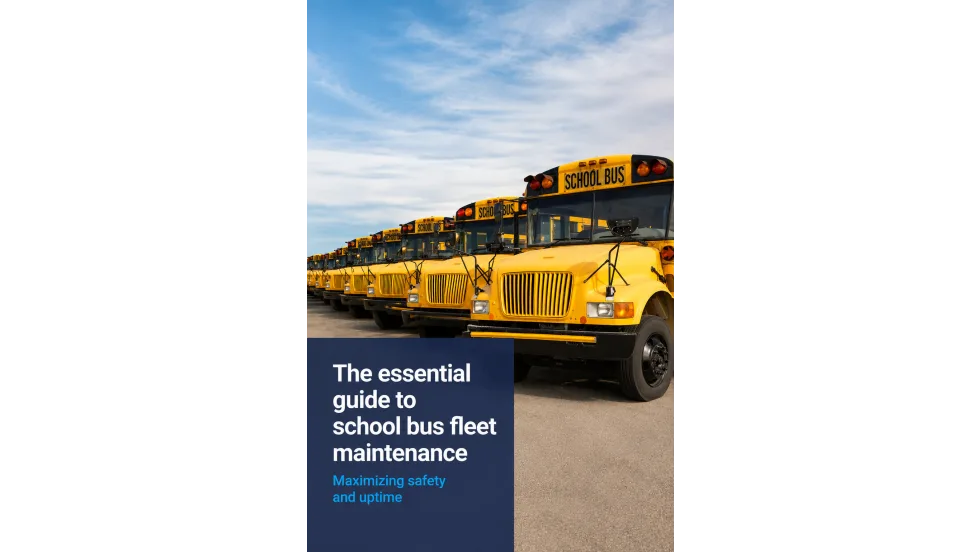
The Essential Guide to School Bus Maintenance and Student Safety
Your district's buses carry students to school every day. This guide shows how predictive maintenance powered by fleet data helps keep buses reliable, drivers accountable and students safer from the first bell to the last stop.
Read More →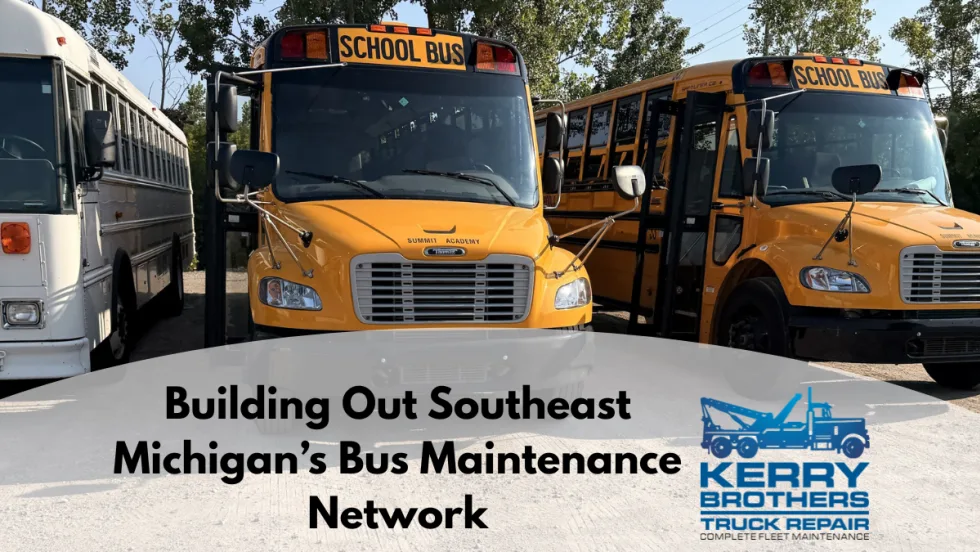
Kerry Brothers Grows Michigan School Bus Repair Network
The acquisition of Downriver Truck and Bus expands Kerry Brothers’ school bus maintenance footprint across southeast Michigan, adding repair capacity, diagnostic resources, and state inspection support.
Read More →
Noregon Introduces CAN Bus Diagnostic Tool, Expands JPRO Features
CAN Mentor and the latest JPRO update aim to simplify vehicle network diagnostics and improve repair efficiency for technicians of all experience levels.
Read More →
Cummins on Smarter, Simpler Engine Innovation
Cummins discusses its first-ever gasoline engine for school buses, EPA 2027, and why bus fleets still want durable, simpler internal combustion options.
Read More →
Report: 72% of Diesel School Buses Now Use Advanced Low-Emission Engines
New data shows advanced low-emission diesel technology continues expanding across school bus fleets, even as electric bus adoption gains momentum.
Read More →
Vampire Tools' CAIMAN 7.5-Inch Multi-Purpose Screw Extractor Long-Nose Pliers with Crimper
Vampire Tools introduced the VAMPLIERS Caiman 7.5-inch multi-purpose pliers, combining screw extraction, cutting, crimping, and gripping functions into a single tool designed for fleet maintenance professionals.
Read More →
How Advanced Diagnostics Helps Bus Fleets Stay Ahead of Repairs
Chat with Noregon’s Kevin Smallhorn at ACT Expo about bus diagnostic tools, telematics integration, CNG maintenance support, and strategies to help reduce downtime and improve uptime.
Read More →
How School Bus Fleets are Getting Ahead of Breakdowns
Don’t let bus downtime wear you down. Here’s how bus operators are shifting from manual processes to AI-powered, data-driven maintenance systems for improved reliability and safety.
Read More →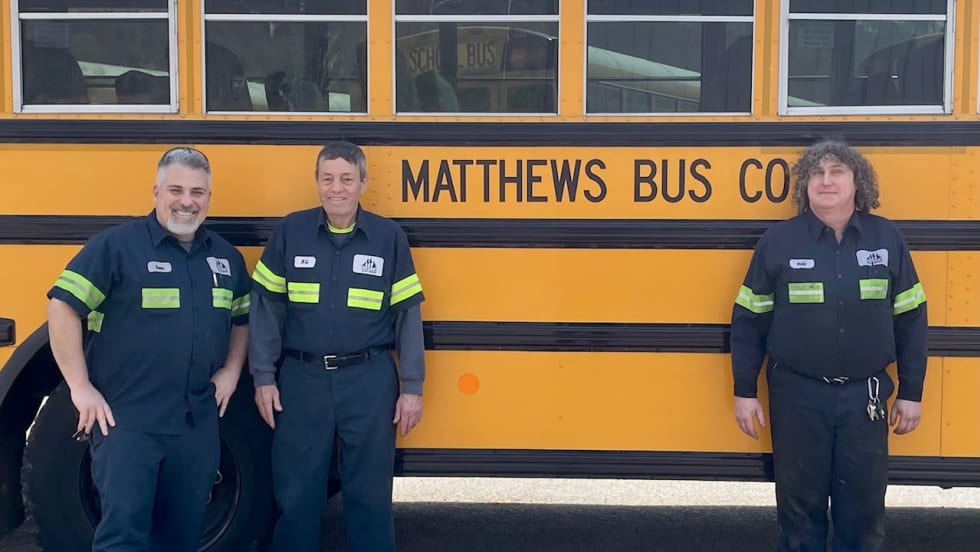
Pennsylvania School Bus Maintenance Team Praised for Dedication to Safety
Matthews Bus Company’s West Jefferson received a letter of commendation from the Pennsylvania State Police for their fleet inspections.
Read More →
From Chaos to Clarity: How School Districts Are Running Leaner Transportation Operations
Covering 38 routes on a Friday afternoon. Buses idling while routes overlap. Parents calling nonstop about late arrivals. Sound familiar? This whitepaper explores how district transportation leaders solved these exact problems — and what measurable results followed.
Read More →