




Safety Restraint Options for Children with Special Needs
In this second of a three-part series, the authors explain how to properly position a child's legs and how to use booster seats and safety vests.
Preschoolers and children with special needs often present a challenge when selecting child safety restraint systems to be used on school buses. In this second of a three-part series, we will continue to discuss common problems of this population and offer possible equipment solutions. As stressed in Part 1, (March 2000, pgs. 52-54), it is important to select equipment and plan transportation procedures with an emphasis on providing the least restrictive scenario. Accordingly, a district’s (or contractor’s) inventory of equipment should offer flexibility and provide transportation team members with a wide range of options.
Lower body support
Providing adequate positioning and support of the child’s lower extremities is a challenge frequently encountered with the preschool population. Children who have weakness or paralysis often need the support of a wheel well or the footplate of a specialty seat to avoid taxing an already compromised circulatory or sensory system. The pressure applied by the edge of the seat into the back of the thigh can constrict blood flow to the main arteries feeding the lower extremities. If you have ever sat on a high bar stool for any length of time without proper support of your feet, you quickly realize how uncomfortable your legs and feet can become. The closely spaced seats required for compartmentalization can make it difficult to achieve proper lower extremity positioning. Even when bus seats are installed at the maximum allowable spacing (as advised in the National Highway Traffic Safety Administration’s “Guideline for the Safe Transportation of Pre-School Age Children in School Buses”), many traditional child safety seats do not leave adequate room for the feet and legs. Proper child restraint systems must allow children to be placed easily in the seat (not forced) and prevent their feet from being crammed against the seat in front of them.
Use of booster seats
One way to deal with this problem is to use a slim-lined, high-backed, belt-positioning booster seat that has a harness strap system. These seats are primarily designed to accommodate children weighing 40 pounds or more, in vehicles equipped with lap/shoulder belts. With high backs, wider, flatter seat pans and a slimmer design, these seats position children closer to the seat crack, allowing for more legroom. However, what about the child who weighs less than 40 pounds or who rides in a vehicle not equipped with lap/shoulder belts, such as a typical school bus? These seats are still effective for children under 40 pounds, if used with a harness strap system. There are a number of belt-positioning booster seats on the market, but many do not come with this harness strap system, so it is important to do the research before purchasing. None of these seats can be used with the harness system on children over 40 pounds. Those children must use a lap/shoulder belt. If none are available, children over 40 pounds must sit on the bus seat (rather than in a booster) and wear a safety vest. Both safety vests and booster seats provide more leg/foot room by positioning the child closer to the seat crack. It is strongly advised to use vests that have crotch straps. Children often attempt to scrunch down under the vest to bend their knees over the seat edge. The crotch strap, when snugly adjusted, helps keep the vest straps correctly positioned on the chest and hips.
Handling braces, casts
For children with bulky lower extremity bracing or casting, achieving proper positioning may be more of a challenge. These children may experience sensory deficits, which make them prone to skin breakdown. In addition, their bones may be more brittle and prone to injury. Transportation staff must be acutely aware of these possibilities when positioning these children in their seats. With careful handling to avoid bumps or pressure points, the previously mentioned child safety restraint options can be tried. Large casts, however, may only be accommodated with systems designed for children with special needs. One of these is a child safety seat called the Spelcast. It was designed for children who are in hip spica casts, which position the child’s legs in an opened, angled position of about 90 degrees. This seat is only effective for smaller children who have some degree of bend in their hips to allow for a sitting posture. Many times, spica casts also position the hips in full extension. Being unable to sit up requires that these students use a Modified E-Z-On Vest on the bus seat. This is a very restrictive option, as the child’s entire length must fit within the bus seat. If this is not possible on the bus but is possible in the caregiver’s private vehicle, he or she may be provided with the vest and financial compensation and asked to transport the child.
Vest prevents escape
Another challenge is the preschooler who gets out of the child safety restraint system. Although a change of seat types may help with some children, the only option for other children may be use of a safety vest that zips up the back. As with all recommended equipment, it must be installed and used in accordance with manufacturer instructions. It must meet FMVSS 213, which includes crash testing at 30-mph and 20-g force conditions along with its seat mount. If used without a lap belt, it should be tested under the same test parameters on a non-reinforced bus seat without a lap belt on a test dummy of similar size to the child transported. Again, a crotch strap is necessary to ensure that the vest stays properly positioned.
Summary
This article discussed the challenges of dealing with preschool passengers who have lower extremity positioning problems or who get out of child safety restraint systems on the bus. In the final installment of this three-part series, procedural considerations will be reviewed for common medical problems experienced by preschool students.
Sue Shutrump is supervisor of occupational and physical therapy for the Trumbull County (Ohio) Educational Service Center. When this article was written, Kentin Gearhart was manager of the Mobile School Bus Project at Riley Hospital in Indianapolis. He has since taken a job with a pharmaceutical firm.
More Special Needs Transportation
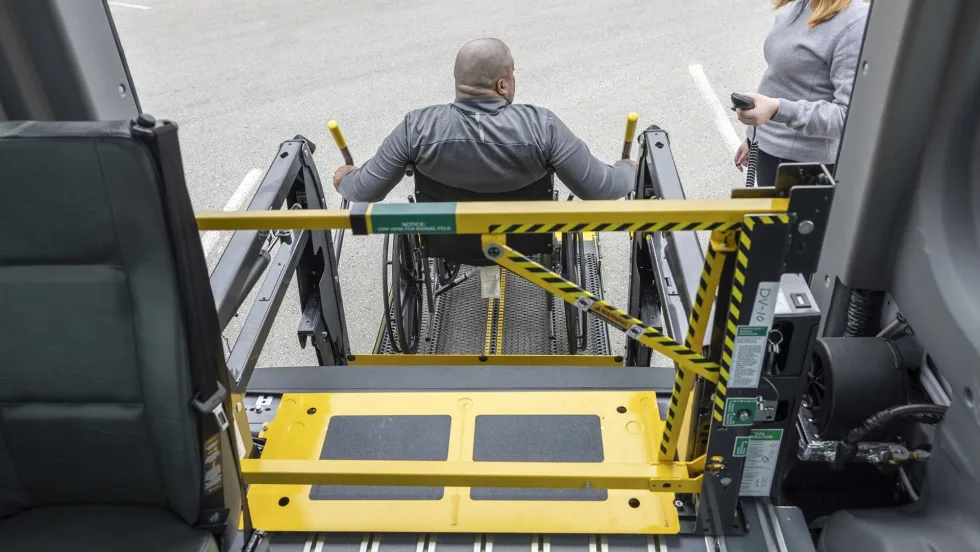
BraunAbility Introduces New Safety Barrier for Wheelchair Lifts
LiftSentinel is designed to add another layer of protection during wheelchair loading and unloading and can be retrofitted to many existing commercial lift installations.
Read More →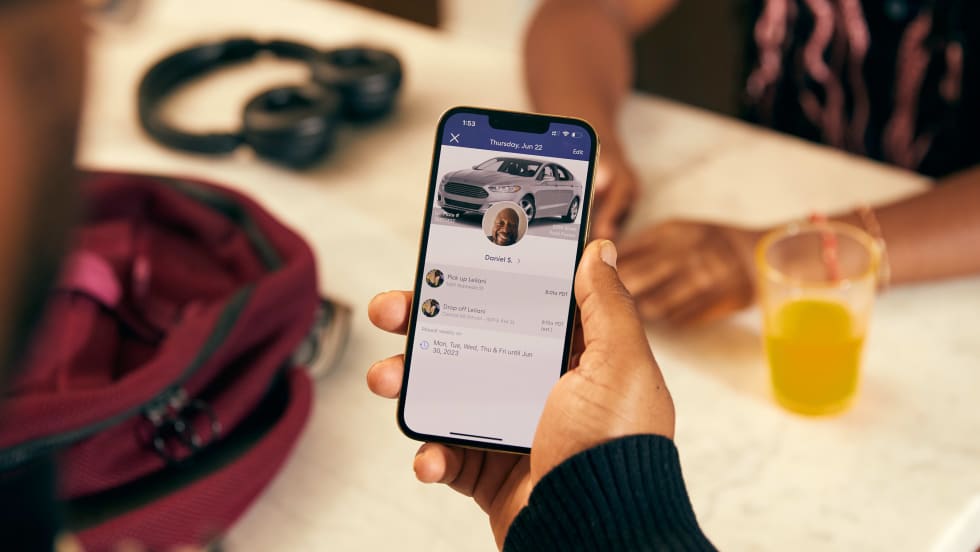
HopSkipDrive Launches New Safety, Driver Consistency Features for 2026-27 School Year
The company’s free ride recording, live ride tracking, and consistent driver assignments aim to improve safety and continuity for diverse student transportation needs.
Read More →
The Most Common Wheelchair Securement Mistakes on School Buses (and How to Fix Them)
Small missteps in wheelchair securement can have serious consequences. Here are 32 tips from experts to reduce risk and increase student safety on the bus.
Read More →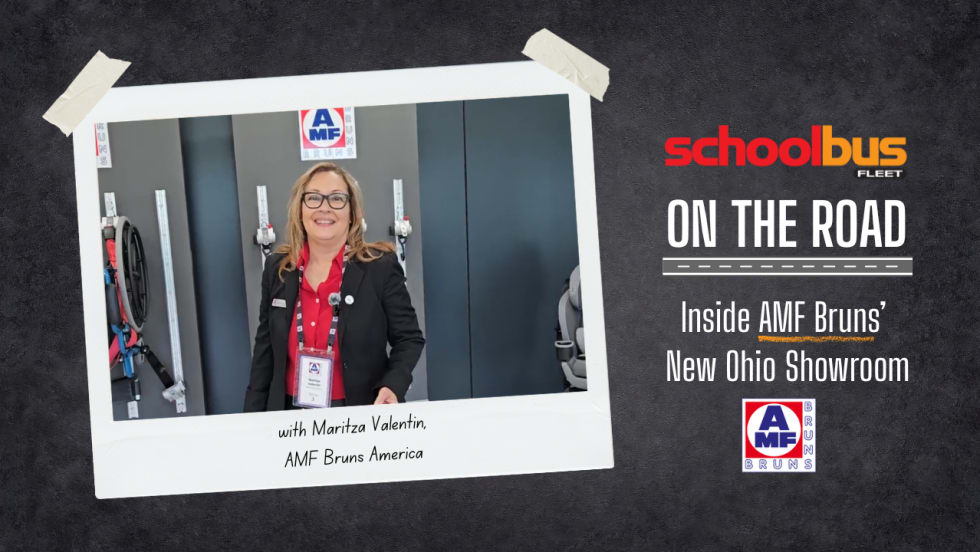
Inside AMF Bruns’ New Showroom: School Bus Securement Solutions Explained
Go inside AMF Bruns America’s new Ohio showroom with Maritza Valentin to see its FutureSafe technology, driver training tools, securement systems, and seating innovations.
Read More →
What AMF Bruns’ New Facility Means for Customers [Video]
Inside AMF Bruns’ new Stow, Ohio, operations: See how expanded space and innovation will enhance customer support and operations.
Read More →
AMF Bruns Expands in Ohio, Investing in Growth and Community
With expanded production space, local investment, and a growing workforce, AMF Bruns is scaling its U.S. presence. Here’s an exclusive first look inside the new Stow, Ohio, HQ.
Read More →
Inside AMF Bruns of America’s New Ohio Manufacturing Facility [Photos]
Take a behind-the-scenes look at AMF Bruns of America’s new 41,000-square-foot Stow, Ohio, headquarters, featuring advanced manufacturing, expanded space, and future-ready mobility solutions.
Read More →
First Student Boosts Student Support in Wichita & Texas
First Student and Wichita Public Schools are using behavioral support strategies to improve student ride experiences, while a separate initiative expands access to after-school programs through a bus donation.
Read More →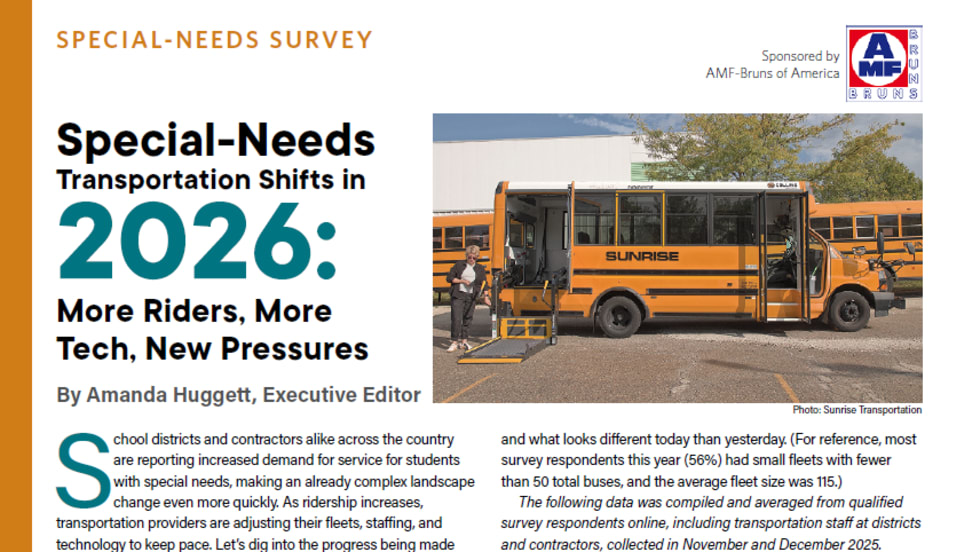
2026 Special-Needs Transportation Survey
What’s changing in special-needs transportation? This year, student transportation operators report a rising need, easing driver shortages, growing tech adoption, and evolving challenges. Sponsored by AMF Bruns of America.
Read More →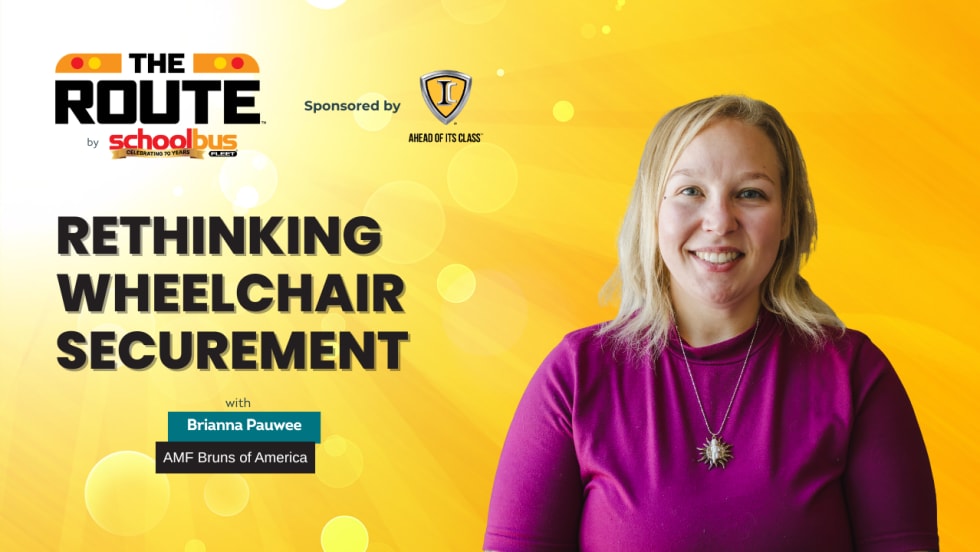
The Lived-Experience Gap in Mobility Tech: An Expert Take on Safe Student Transportation
Brianna Pauwee, a product application specialist at AMF Bruns of America and a wheelchair user, drops in to The Route to share practical securement and training insights, plus the story behind the new “Beyond Mobility” podcast. The Route is sponsored by IC Bus.
Read More →