




Recipe for Successful Spec'ing of a Heating System
There are many factors that weigh in on the spec'ing of a school bus heating system. Operators must consider state requirements, district or contracto...
There are many factors that weigh in on the spec'ing of a school bus heating system. Operators must consider state requirements, district or contractor demands, regional temperatures and warm-up needs, to name a few.
Although school districts in northern areas will have a greater need for powerful heaters than those in warmer areas, every operation should understand how to get the most productivity from its heating system.
State requirements
Each state has its own list of minimum specifications for school bus heaters. These lists meet or exceed the national recommended minimums stipulated in the Federal Motor Vehicle Safety Standards.
The requirements of most states are very similar. All of them call for a convection-type heater in a standard tube and fin system. They recommend heat be transferred by circulating air through heated water or coolant. Circulation is accomplished with the use of blower motors and fans.
Most specifications require an engine thermostat to be rated somewhere between 150 and 200 degrees Fahrenheit. They also list nearly the same minimum BTU (see glossary of terms below) outputs for each heater.
Of course, not every state has the same specs. Some colder states demand four heaters on a Type D (transit-style) bus, as opposed to three in warmer states. Such configurations call for heater placements in different locations on the bus. In addition, auxiliary heaters have become a norm in some states' minimum specifications.
"You definitely need a more powerful system the farther up north you are," says Jim Everett, physical plant manager at Maine School Administration District 20 in Fort Fairfield. "The buses we spec in the northern half of the state have heater cores with a larger amount of BTU output."
Spec'ing procedures
Essentially, the bus manufacturer will determine the layout of the heating system. However, once state specifications are met, it is up to the end users decide how they want their school bus heaters set up.
Says Everett, "We spec our buses to what we demand and not state requirements." He says that the proper BTU level is determined simply by feeling the temperature inside the bus. If necessary, a larger heater is installed, or other measures are taken.
Here are some of the most important points to consider when spec'ing a heating system.
1. Reliable insulation
Make sure that the bus body is well insulated, so that cold air seeping in doesn't counteract the efforts of the heater.
Clint Rooks, maintenance manager for Laidlaw Transit in Anchorage, Alaska, says effective heating depends on bus construction. "You have to have the proper insulation in the floor and in the ceiling, or your heaters aren't going to do you any good at all."
Good insulation is achieved with a solid plywood foundation. It is aided by a fiberboard with special foam insulation attached. This fiberglass-like material must conform to federal specifications and is composed of polyester or an equivalent fabric. It must be undercoated in the roof, ceiling, driver's area, sidewalls of the roof and the front and rear quarter sections of the bus.
2. Parts configuration
With longer buses, it may be a good idea to spec a re-circulating booster pump, like the one made by MP Pumps in Fraser, Mich. This device, which can easily replace an existing pump, will increase the movement of coolant throughout the bus.
The hoses that connect the heat exchangers can be installed inside or outside the body of the bus. Hoses installed inside will retain more heat than those on the outside, but they may pose as an obstacle for emergency exit access. The best setup will depend on the needs of the operator.
All school bus heaters must be spec'ed with an air filter. There should be a barrier to protect the filter from damage, but it should be designed to allow sufficient airflow. You should check and clean your air filter periodically to prevent the heat exchanger from becoming clogged with dust and dirt, which will diminish heat transfer.
Heating can be further improved by adding viscous or electric fan clutches and radiator shutters. Fan clutches allow air to be circulated at the right temperature. Radiator shutters keep heat trapped inside the engine core.
3. Defroster additions
Most buses come with dual defrosters on the front winshield-one for each side. In most districts, this is adequate. Still, some maintenance managers believe that you can never be too secure when it comes to driver visibility.
Malcolm Cavalier, shop foreman for Canon McMillan School District in Strabane, Pa., likes to add defrosters to his district's buses. "We're pretty much locked into heater location by the manufacturer, but we spec two extra defroster fans above the windshield to assist," he says.
Everett agrees with the importance of adding defrosters, but says that it has become less important than in the past. "The last 10 years the improvements have been unreal. I have seen buses with three fans blowing on a windshield and not doing anything," he says.
4. Startup enhancements
One of the biggest concerns with heating a school bus is the time it takes to warm the engine in the morning. Any operator will tell you that the fastest way to heat a bus is to have a warm bus from the start.
"We have 200,000 square feet of indoor parking for our buses, so they start out warm," says Cavalier. Of course, he admits that it is unrealistic to think that every district can take advantage of such a luxury. Fortunately, there are alternatives.
One of these is a block heater. These auxiliary heaters require a plug-in outlet at every stall in a bus yard, but they pre-heat buses electrically, successfully cutting down on the amount of fuel it takes to warm a bus in the traditional manner of idling.
Skip Duckart, shop foreman for Shoreline (Wash.) School District, says that block heaters help an engine burn more efficiently as well. "Everyone is so conscious about emissions nowadays, and the block heaters cut down on smoke," he says.
There are other auxiliary heaters of varying styles that can help heat buses quickly at startup time. One popular type connects directly with engine coolant to heat it faster. A newer design, manufactured by Webasto Thermosystems Inc. in Lapeer, Mich., heats the bus interior with fire from the vehicle's fuel.
5. Potential problems
School bus heaters have improved dramatically over the past decade. The major problems of yesterday have been nearly erased by modern technology. Yet, practicing good maintenance on your heating system means looking out for some of the traditional shortcomings.
"In the past, we would have under-seat heaters that were so hot they would burn a person's leg, so we had to pad around them," says Duckart. Routine checks of the motor and the motor switches will reveal whether this potential for overheating exists. The problem can also be attributable to water line or hose ruptures. To avoid this problem, it is best to spec electrochemical-resistant silicone hoses.
Another typical problem, says Rooks, is bearing failure. "When you have a school bus operating six hours a day, 200 days a year, sometimes they [the bearings] just quit," he says. A noisy blower motor is the primary indicator of this problem.
Glossary of heater terms
BTU -- British Thermal Unit, the common unit of measurement for bus heaters. This represents the amount of heat required to change the temperature of one pound of water one degree Fahrenheit at sea level.
heat exchanger -- the actual heater. It is the system around an engine that is the source of hot water or coolant. It can be a tube and fin system or a heating coil.
psi -- pounds per square inch. This is used to measure the internal pressure that a heat exchanger can withstand.
convection -- the process of heating air by circulating it through hot water or coolant with a fan. Most school bus heaters are convection style.
auxiliary heater -- a separate unit that can tie into an engine to supplement a bus' existing heater. Some of the newer models generate heat entirely on their own.
block heater -- a device used to warm up engines. The bus is plugged into an electrical connection, and the block heater begins warming engine oil based on a timer setting.
booster pumps -- the devices that deliver hot fluid to the heat exchanger.
copper elbows -- pieces that are used to connect hoses, pipes and tubes at an angle.
fan clutch -- a device that ensures that the fans are blowing air when the coolant system reaches the right temperature. It can be either viscous or electric.
radiator shutter -- a device used to prevent air from escaping the engine core.
More Maintenance
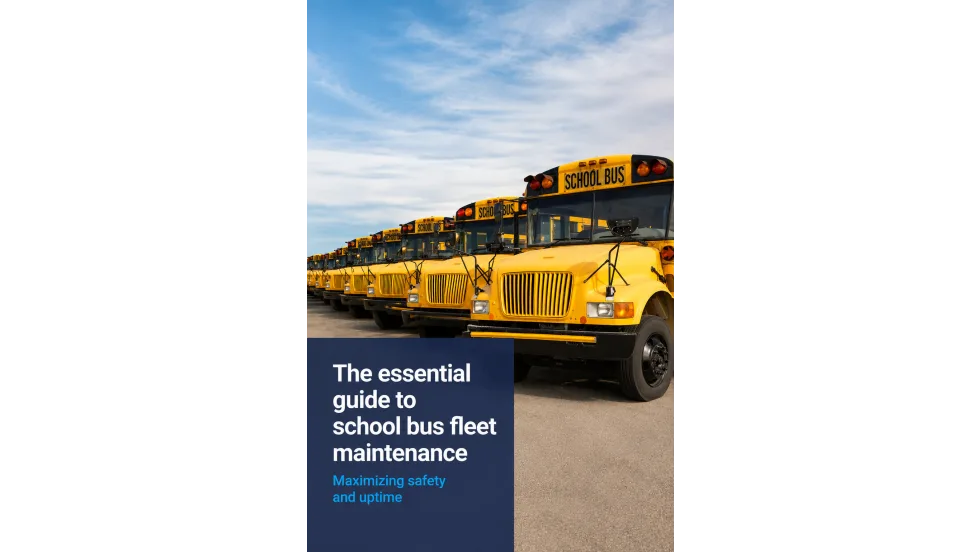
The Essential Guide to School Bus Maintenance and Student Safety
Your district's buses carry students to school every day. This guide shows how predictive maintenance powered by fleet data helps keep buses reliable, drivers accountable and students safer from the first bell to the last stop.
Read More →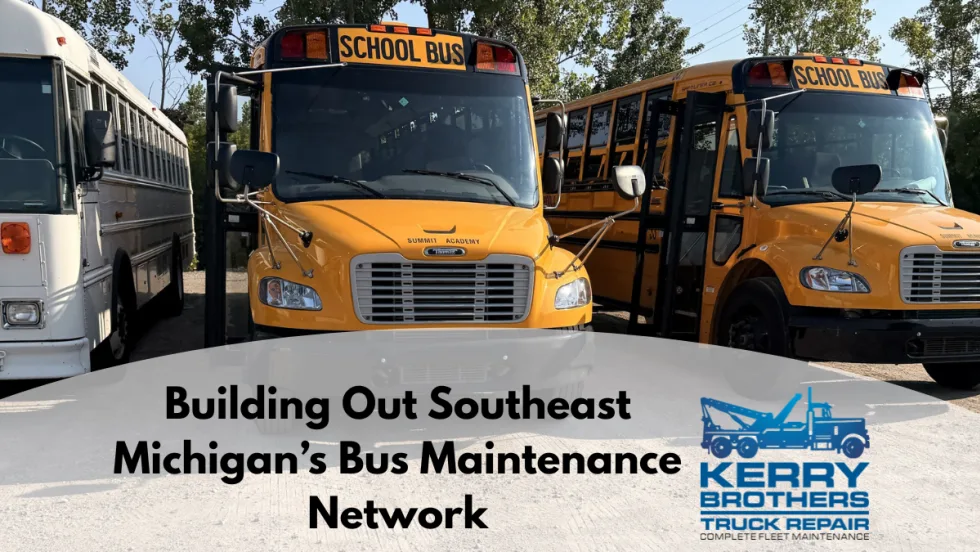
Kerry Brothers Grows Michigan School Bus Repair Network
The acquisition of Downriver Truck and Bus expands Kerry Brothers’ school bus maintenance footprint across southeast Michigan, adding repair capacity, diagnostic resources, and state inspection support.
Read More →
Noregon Introduces CAN Bus Diagnostic Tool, Expands JPRO Features
CAN Mentor and the latest JPRO update aim to simplify vehicle network diagnostics and improve repair efficiency for technicians of all experience levels.
Read More →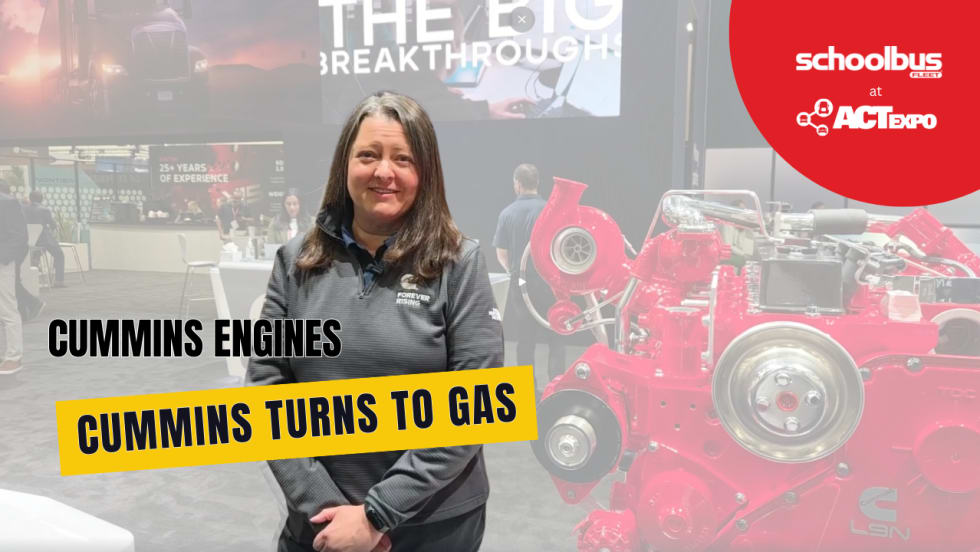
Cummins on Smarter, Simpler Engine Innovation
Cummins discusses its first-ever gasoline engine for school buses, EPA 2027, and why bus fleets still want durable, simpler internal combustion options.
Read More →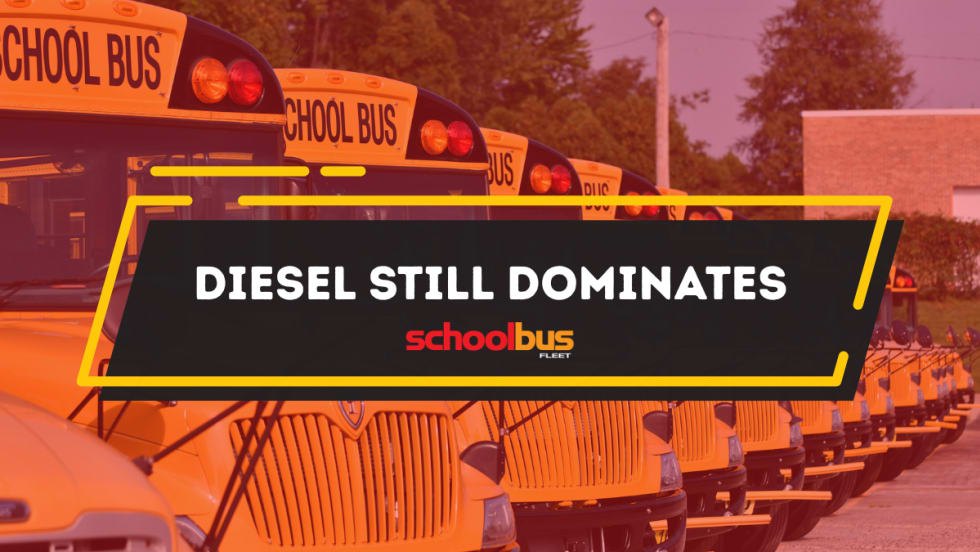
Report: 72% of Diesel School Buses Now Use Advanced Low-Emission Engines
New data shows advanced low-emission diesel technology continues expanding across school bus fleets, even as electric bus adoption gains momentum.
Read More →
Vampire Tools' CAIMAN 7.5-Inch Multi-Purpose Screw Extractor Long-Nose Pliers with Crimper
Vampire Tools introduced the VAMPLIERS Caiman 7.5-inch multi-purpose pliers, combining screw extraction, cutting, crimping, and gripping functions into a single tool designed for fleet maintenance professionals.
Read More →
How Advanced Diagnostics Helps Bus Fleets Stay Ahead of Repairs
Chat with Noregon’s Kevin Smallhorn at ACT Expo about bus diagnostic tools, telematics integration, CNG maintenance support, and strategies to help reduce downtime and improve uptime.
Read More →
How School Bus Fleets are Getting Ahead of Breakdowns
Don’t let bus downtime wear you down. Here’s how bus operators are shifting from manual processes to AI-powered, data-driven maintenance systems for improved reliability and safety.
Read More →
Pennsylvania School Bus Maintenance Team Praised for Dedication to Safety
Matthews Bus Company’s West Jefferson received a letter of commendation from the Pennsylvania State Police for their fleet inspections.
Read More →
From Chaos to Clarity: How School Districts Are Running Leaner Transportation Operations
Covering 38 routes on a Friday afternoon. Buses idling while routes overlap. Parents calling nonstop about late arrivals. Sound familiar? This whitepaper explores how district transportation leaders solved these exact problems — and what measurable results followed.
Read More →