




Q&A: Funding, Lap/Shoulder Belts Challenge the Industry
The issues of occupant protection on school buses and school transportation funding have been brought into focus recently by reports issued by the Nat...

The issues of occupant protection on school buses and school transportation funding have been brought into focus recently by reports issued by the National Highway Traffic Safety Administration (NHTSA) and the National Research Council (NRC) of the National Academy of Sciences.
NHTSA's four-year research report on occupant protection ("School Bus Safety: Crashworthiness Report") and the NRC's study of school travel modes ("The Relative Risks of School Travel: A National Perspective and Guidance for Local Community Risk Assessment") prompted the National Association of State Directors of Pupil Transportation Services (NASDPTS) to release its own statement, "Enhancing School Bus Safety and Pupil Transportation Safety."
Editor Steve Hirano discussed the findings of the NHTSA and NRC reports with Charlie Gauthier, executive director of NASDPTS, and Pete Baxter, outgoing president of NASDPTS and state pupil transportation director in Indiana.
SBF: There was much anticipation about NHTSA's report to Congress on its study of occupant protection in school buses. What was your initial response to the report?
CHARLIE GAUTHIER: A lot of people may have expected that this research report would provide definitive guidance, recommendations and conclusions as to what [NHTSA] would be doing in terms of occupant crash protection regulations. But we need to remember that a research program by the federal government is just that . . . It's a research program that develops data and science. Out of that data and science, the agency then can make decisions about new regulations or changing existing regulations, which involves the process of public notice, soliciting comments and reviewing those comments before they come up with what will end up being the changes to the federal regulations. While some people thought a research report would provide the silver bullet, it provided exactly what most research reports do — data and science. Out of that, the agency will now make decisions about what to do.
PETE BAXTER: I would offer a corresponding viewpoint. From the layman's side, when we read things that said this NHTSA research report will be developing the next generation of passenger crash protection, I think we expected something different than what came out. I'm not disputing the accuracy of Charlie's comments, but I think some people in the transportation community were a little disappointed when they heard some of the conclusions that came out.
Have you heard of any talk on Capitol Hill about mandating lap/shoulder belts on all school buses?
GAUTHIER: I've not heard of anything nor have I heard of anyone soliciting information. And I would hope that if a congressional staffer or lobbying group was seriously interested in that type of legislation, they would have contacted our industry, whether it be the School Bus Information Council or whoever.
BAXTER (jokingly): Since former Sen. [Frank] Lautenberg has entered the U.S. Senate race in New Jersey, that could be coming in early November depending on the outcome of the elections.
There has been some criticism of NHTSA for not studying improved occupant protection in side-impact and rollover crashes. How do you feel about this?
GAUTHIER: The program did not look extensively at side impact or rollover crashes. NHTSA primarily looked at frontal crashes and came to some conclusions based on those frontal crashes, but we do know that there are a lot of side-impact, angular-impact and rollover crashes that result in passenger injuries or deaths. It's unfortunate that we have not gotten more data and science on these non-frontal crash modes so that we could have a more complete picture of the potential benefits of improvements in passenger crash protection in school buses.
How should states such as New York, New Jersey and Florida [all mandate lap belts on small and large school buses] respond to this report, which confirmed that lap belts offer few benefits on large school buses and could actually increase injuries in some cases?
GAUTHIER: I think all three of those states need to seriously review the NHTSA report with respect to what it said about lap belts. Given what the report said about lap belts, those states should be asking whether it's wise to continue to require lap belts in new school buses or whether they should make a change to something else. They really only have three choices: staying with lap belts, removing the lap belts or switching to lap/shoulder belts. New York, New Jersey and Florida may say, "We're no longer going to have lap belts in our buses; we're going to install lap/shoulder belts and follow the lead of California [which has mandated lap/shoulder belts on all new buses beginning in 2003 and 2004]."
BAXTER: At the very least, the NHTSA report offers those states some recent data that suggest that they might want to reevaluate whether they still want to continue with lap belts.
The NASDPTS position paper "Enhancing School Bus Safety and Pupil Transportation Safety" suggests that if funding were available, the association would support the installation of lap/ shoulder belts. How and where can school districts get more funding for lap/shoulder belts or any other types of safety enhancements?
BAXTER: The idea that the funding can come from the state level is tenuous at best. It's difficult to even maintain the current level. The other source would be the federal government. Our industry might have to do a better job of advocating our safety record and value for the dollar in what we can do with more funding. For example, we'll put more kids on buses, get pre-1977 buses off the road, buy equipment with advanced emissions and fuel technologies. We would have to knock on the door of the federal government to provide us with that assistance.
The transit industry receives billions of dollars each year in federal funding and is advocating for even more funding under the reauthorization of the Transportation Equity Act for the 21st Century (TEA 21), which Congress will most likely approve next year. Is there a way for the school transportation community to get some of that funding?
GAUTHIER: Things are going on among various groups to try to get the message to the feds that we need more money to do all kinds of things. The federal No Child Left Behind Act got us into the game of receiving federal funding. But the reauthorization of TEA 21 is not the only way to get federal funding. Why not try to get new and distinct legislation? Why not start from scratch to build momentum and interest in doing something to promote kids' safety?
Who would spearhead that type of initiative?
GAUTHIER: It could come from anywhere. It could come from a coalition of parents and advocacy groups. The National Research Council's study says that 800 kids are being killed each year because they're not on school buses. Most parents would find the 800 fatalities to be a totally unacceptable number. There's probably a child or two dying almost every day because theyÕre not riding a yellow school bus to and from school. As the media picks up on these tragedies, you might actually see a grass-roots movement on the state and federal level. It's clear that if you could move kids out of passenger cars and into school buses, you would make a significant difference. Are you going to move every kid on a school bus? No. But it may be worthwhile to have a goal of transporting more than 50 percent.
Who should take responsibility for trying to persuade kids who are eligible to ride the bus?
GAUTHIER: I think it's everyone's responsibility. Parents, safety advocates — anyone who has an interest in the safety of children.
BAXTER: I concur that we should do what we can when information like the NRC report will do some good. I was reading a story in the Indianapolis Star earlier this week about a school district with a year-round program that was experiencing some financial challenges. One of those challenges was the cost of transportation. They looked at either eliminating it or reducing it. So I called one of my contacts at the school district and told him to look at the NRC study, which shows that parents driving their kids to school is not the safest alternative.
Instead of eliminating or reducing transportation, the school district needs to look at finding alternative ways to handle the costs associated with it. I think the NRC study can be used on a case-by-case basis to influence decisions at a local level.
The NRC report certainly validated the notion that school buses are the safest mode of travel to and from school. But it also suggested that "other buses," such as transit and motorcoach buses, are equally as safe. How should the industry respond to that?
GAUTHIER: I think the reason that the NRC report did not discuss the "other buses" findings was because it's a "small numbers" phenomenon. It's a data problem. Quite honestly, when you look at the Fatality Analysis Reporting System to find the fatalities of school-age children during normal school transportation hours, you're talking about small numbers. It probably doesn't make a lot of sense to keep chasing after small numbers in transit buses because you're not going to make a big safety improvement.
We'd be the first to admit that transit buses have a very good safety record in terms of passenger protection. However, it should be pointed out that when kids get off a transit bus and move through traffic, they do not have the benefits of the traffic-control systems on a school bus. That's a serious risk. The problem is, it's very hard to find fatality statistics of people killed after getting off a transit bus. It's not recorded as a "transit bus accident." But anyone getting off a yellow school bus and being struck and killed by another vehicle is recorded as a "school bus fatality."
What do you see as the biggest challenge facing the school transportation industry right now?
BAXTER: I think it's the restraint debate, which hasn't gone away and will be debated more fervently than ever before. I've gotten a sense that the industry breathed a sigh of relief when the NHTSA research report came out, but because of what it said as well as what it didn't say, that issue is still out there for states and school districts to debate. These debates will not only be on the merits of lap belts, they will also include lap/shoulder belts. I'm fearful that because of NHTSA's report on the effects of lap/shoulder belts on capacity and the cost of buses, people may gravitate toward lap belts, arguing that it's better than nothing. It makes it more of a challenge for us.
Do you think there could be a domino effect once California implements its requirement to put lap/shoulder belts on all new buses?
BAXTER: I read recently in the newspaper that legislative trends start on the coast. With that type of program in California, I think some of the fears and myths associated with lap/shoulder belts will be eliminated. We saw the implementation of lap belts in New York and New Jersey, then a lull and then a whole host of states where restraint laws were passed.
GAUTHIER: Hypothetically, let's just say that officials in New York, New Jersey and Florida say, "We agree with NHTSA that lap belts are not such a good idea, but we believe that we need some kind of restraint systems in our school buses so we're now going to go to lap/shoulder belts, as did California." That would be four states with lap/shoulder belts. And two other states — Louisiana and Minnesota — have legislation on their books that requires active restraint systems on large school buses. Theoretically, you could have seven out of the 50 states requiring lap/shoulder belts within a few years. Once that happens, you'll have the advocacy groups and the parents asking why their states don't have the same requirement for lap/shoulder belts. Pretty soon you have them across the nation.
I think, however, that the biggest challenge facing the industry is funding. The bottom line is finding more money. We don't believe that it should be an either/or question: Are we going to do something about reducing the 800 fatalities each year or are we going to put lap/shoulder belts on buses. We think you have to do both. All kids deserve the best possible safety that we can provide. It really does boil down to finding the necessary resources because if you mandate lap/shoulder belts but you don't provide the necessary funding, you're going to have fewer kids riding buses and more fatalities.
For more information about the reports mentioned in this article, please visit www.nasdpts.org for the position paper "Enhancing School Bus Safety and Pupil Transportation Safety," www.nhtsa.dot.gov for NHTSA's research report on occupant protection and www.nas.edu for the National Research Council's study of the relative safety of school travel modes.
More Safety
School's Back. Here's What Happened to Traffic, Speeding & Distraction
What happens to traffic when school resumes? New data analysis examines changes in distracted driving, congestion, and speeding around schools.
Read More →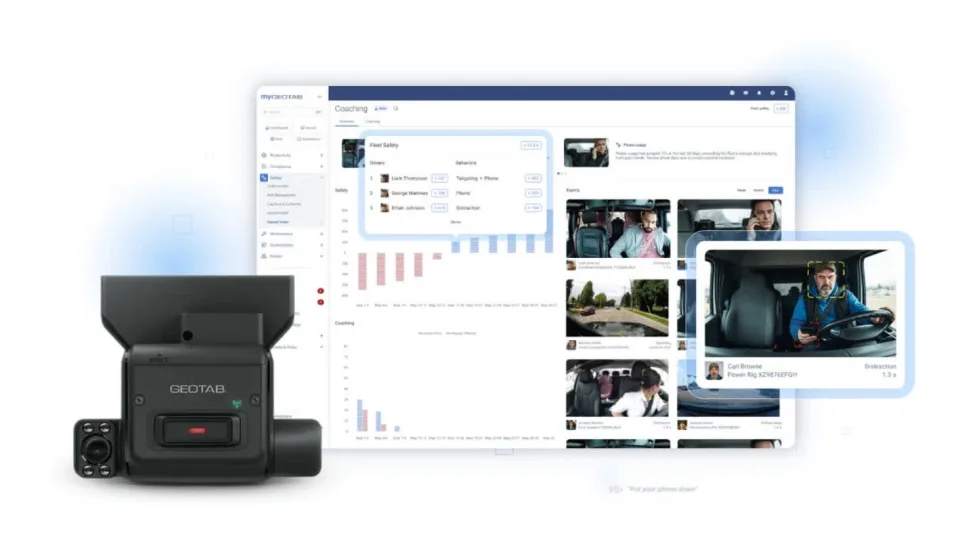
Geotab Expands Fleet Safety Tools With Video Coaching, Risk Insights
New safety and video capabilities aim to help fleet managers assess risk, support drivers, and take targeted action through video coaching, red-light violation detection, and more.
Read More →
How to Build a Better School Bus Driver Training Program
Is it time to strengthen your driver training? Here’s how to pick the right talent and improve recruitment, retention, and safety. This video is brought to you by IC Bus.
Read More →

Recent School Bus Accidents Leave 2 Dead, 2 Injured
Four school bus crashes in Florida, Illinois, and Georgia highlight risks in transportation lots, at bus stops, and during student loading and unloading.
Read More →
When Every Second Matters, Clarity Keeps Routes Moving
From routine delays to urgent incidents, strong communication practices help drivers, dispatchers, schools, and families respond with confidence.
Read More →
What Happens When a School Bus Catches Fire — and What Can Help
School bus fires are rare but can be devastating. Learn how advances in fire suppression and asset protection help fleets detect fires earlier, reduce damage, and improve safety.
Read More →
Geotab Launches Tool to Help Fleets Investigate Road Incidents
Geotab Investigations combines telematics data, video, documents, and other evidence to help fleets reconstruct incidents, resolve claims, and determine what happened.
Read More →
Texas Sixth Grader Wins 2026 National School Bus Safety Poster Contest
Sai Darshana Yekolu of Moseley Middle School in Prosper, Texas, was named the newest winner for her artwork, bringing the theme of “Safe Rides, Everyday Heroes” to life.
Read More →
Doing More With Less: How Transportation Directors Can Prioritize Safety Amid Budget Uncertainty
With diesel prices soaring and nearly one-third of transportation directors expecting budget cuts, maintaining student safety has never been more challenging. Download this guide to learn how leading districts are prioritizing risk, funding critical safety technology, and building stronger budget cases with data.
Read More →
Walton County Schools Adds Gatekeeper Stop-Arm Enforcement System
The Florida district will deploy Gatekeeper’s updated Student Protector technology, which now incorporates AI to improve video evidence.
Read More →