




Q&A: Changes Are Afoot in Pupil Transportation
Alternative fuels have gained increasing attention in the school bus industry as soaring diesel costs and concerns over emissions have come to the for...


Roger Howsmon says that Blue Bird’s Propane-Powered Vision has surprised end users with its quiet power in any terrain and temperature.
Alternative fuels have gained increasing attention in the school bus industry as soaring diesel costs and concerns over emissions have come to the forefront.
Roger Howsmon, Blue Bird Corp.’s chief marketing officer and senior vice president – sales, sees particular potential in cleaner-burning propane for addressing the industry’s needs.
This summer, Northside Independent School District in San Antonio became the first in the nation to purchase Blue Bird’s new Propane-Powered Vision school bus. The district received a grant of more than $66,000 from the Texas Railroad Commission to assist in its purchase of 16 of the buses.
In addition to opportunities for grant money, Howsmon says that the Propane-Powered Vision provides upwards of a 50-percent fuel cost savings compared to diesel.
Howsmon discussed fuel, federal funding, seat belts and other pressing topics with SBF Executive Editor Thomas McMahon.
SBF: What would you say is one of the top concerns for school bus operators right now, and how does it affect their purchasing decisions?
ROGER HOWSMON: The top concern for both school districts and contractors right now has to be the rising fuel cost and how not only to budget for this but to win increases to meet these costs when districts, suffering from the same rising costs, are struggling with where to cut expenses and where to allocated limited dollars for teachers and students as well as school buses. This is why Blue Bird focuses on total lifecycle cost of ownership.
What are some of the top challenges for school bus manufacturers right now?
Top challenges for school bus manufacturers right now mirror that of everyone in the manufacturing industry: increasing raw material, fuel and transportation costs. We meet those costs head on with our focus to improve processes, lower costs and continue to bring the safest, most durable, reliable, and lowest lifecycle cost products to the school bus industry. At the same time, while volume purchases would offer production efficiencies, we are seeing lower volume orders as the total school bus market is depressed due to lower district budgets as the schools struggle with increased transportation costs.
What kind of feedback have you gotten so far on the Propane-Powered Vision?
The feedback on our Blue Bird Propane-Powered Vision from both drivers and riders across North America has been phenomenal. Our dealers and Blue Bird sales and marketing teams have been shortening actual presentations with “let the bus speak for itself, let’s go for a ride.” The Blue Bird Vision is already a proven bus with great handling characteristics, turning radius and vision sight-lines. What is surprising to both drivers and riders is the quiet power of the propane-powered drivetrain in any terrain and any temperature. Customers come aboard expecting the lack of power and poor cold starting capability of the older aftermarket propane vapor powered units and are blown away with improved power, starting and acceleration of this liquid injection system.
Do you see an increased role for propane as a fuel in the school bus industry?
The message is clear that Blue Bird’s Propane-Powered Vision is the lowest cost alternative fuel powered school bus offered. It has the lowest incremental MSRP cost over diesel, CNG or hybrid equipped school buses and delivers upwards of 50-percent fuel cost savings over diesel. Our responsibility is to continue to get this message out and, as we do, we will see an increased role for propane as a fuel in the school bus industry.
Blue Bird’s North Georgia Body Co. plant was recently awarded the Shingo Bronze Medallion for operational excellence in manufacturing, and it was recognized by IndustryWeek magazine as one of the Top 10 plants in North America in 2007. What are some of the key factors in the plant’s success?
We are very proud of the fact that IndustryWeek has named Blue Bird’s La Fayette, Ga., plant among its Top 10 winners in the magazine’s Best Plants in North America competition. Key to its success is its dedication to continuous improvement and outstanding performance in safety, quality and productivity. Our La Fayette-based plant has been in operation since 1982 and presently manufactures our Blue Bird Vision Type C conventional model school bus. Kevin Wood, our La Fayette plant general manager, said it best in that the award validates the entire Blue Bird Corporation as we pride ourselves on being an industry leader, in both product and manufacturing processes.
You’ve been working with other industry representatives in the American School Bus Council (ASBC). What do you see as some of the most important things that can be accomplished by working with that group?
The American School Bus Council, consisting of the leadership of NAPT [National Association for Pupil Transportation], NASDPTS [National Association of State Directors of Pupil Transportation Services], NSTA [National School Transportation Association], Blue Bird Corporation, IC Bus and Thomas Built Buses, remain committed to working together to reach and educate parents, school officials and lawmakers in the essential role of the yellow school bus in the safety, health and security of America’s schoolchildren. Council members continue to collaborate on valuable projects to keep the yellow school bus front, center and in the positive press. The ASBC is about to initiate a marketing campaign that will be reaching out to all supplier-based industry stakeholders with an Industry Partnership Program. The ASBC will, with full industry support, continue to work to strengthen the yellow school bus industry.
Do you think that federal funding for the school bus industry is something that can be attained in the near future?
Federal funding for the school bus industry is so long overdue it is hard to say this will be corrected in the near future. Even in this election year, we don’t believe we have heard either party or candidate articulate this concern. The industry as a whole must continue to press the issue. The best approach may be specific targeted areas for funding, such as the use of alternative fuel powered drivetrains, seat beats and child locator systems.
Do you think that, in general, the public understands how safe school bus transportation is?
Some 50 percent of today’s students ride the yellow bus to school. While this produces some impressive ridership numbers, it is only 50 percent. If it was truly known and understood not only how much safer a school bus is but how unsafe other means of transporting student are, school bus ridership would increase dramatically. We all need to continue to press this message for the safety of our children.
Last year, Texas became the latest state to mandate seat belts — lap-shoulder belts specifically — on school buses. Do you expect more states to follow suit?
No matter where you are on the issue of the value of seat belts, the parent factor will eventually push more and more states to mandate seat belts. Eventually, seat belts will, in all probability, be a federally mandated standard and hopefully federally funded.
Our research found that, overall, school bus sales were down almost 15 percent last year. How are sales this year?
School bus sales continue to be hampered by decreased funding at a time when fuel costs are at an all-time high. Transportation directors have been forced to delay some bus replacements to offset these rising costs while knowingly concerned that this can only go on so long. Delaying replacements has an immediate impact on increasing maintenance costs, and the long-term replacement costs can have a severe impact on future budgets.
In 2006, there was a sharp rise in sales, apparently due to school bus operators wanting to buy in advance of the EPA’s 2007 engine emission requirements. Do you expect a similar occurrence next year, in advance of the 2010 requirements?
Initially we thought we would again see a spike in sales in anticipation of, and to beat, 2010 emission requirements. However, as we approach 2010, we do not feel it will happen. The districts are just not reporting the available funds to do this and are taking more of a wait-and-see approach as they struggle with current inflated costs. This may result in as high as a 20-percent-plus sales reduction in 2009 versus 2008.
Is there anything I haven’t asked about that you’d like to address?
Blue Bird recognizes that school districts are struggling with both environmental and fuel cost concerns, and we are investing in our designs and in plant facilities to bring to market the best in alternative-fueled buses. We currently offer CNG and propane-powered school buses. We will also leverage the capabilities of our affiliate companies to bring a hybrid unit to market when this technology becomes cost effective. The Blue Bird Propane-Powered Vision Type C school bus not only has the lowest incremental cost for clean, alternative-fueled school buses in its class — the bus has demonstrated fuel savings up to 50 percent, and that is really answering the needs of the industry.
More Management
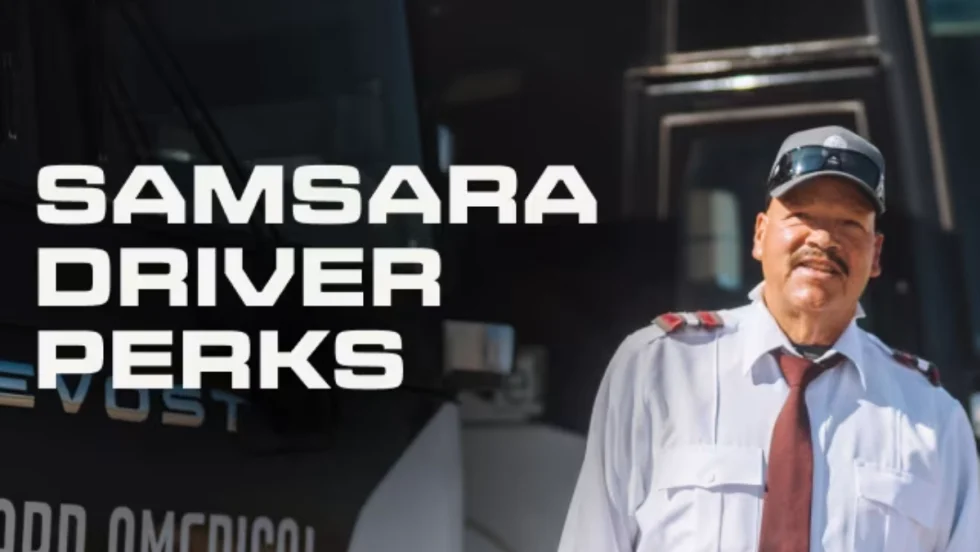
Samsara Launches Free Driver Rewards Program
The new Driver Perks program gives eligible professional drivers access to discounts and offers without adding a cost for participating fleets.
Read More →
How Tax-Exempt Municipal Leases Can Help Finance School Buses
Let’s explore school bus financing options, including municipal leases, vendor payable accounts, and balloon payments, and how they can help stretch fleet budgets.
Read More →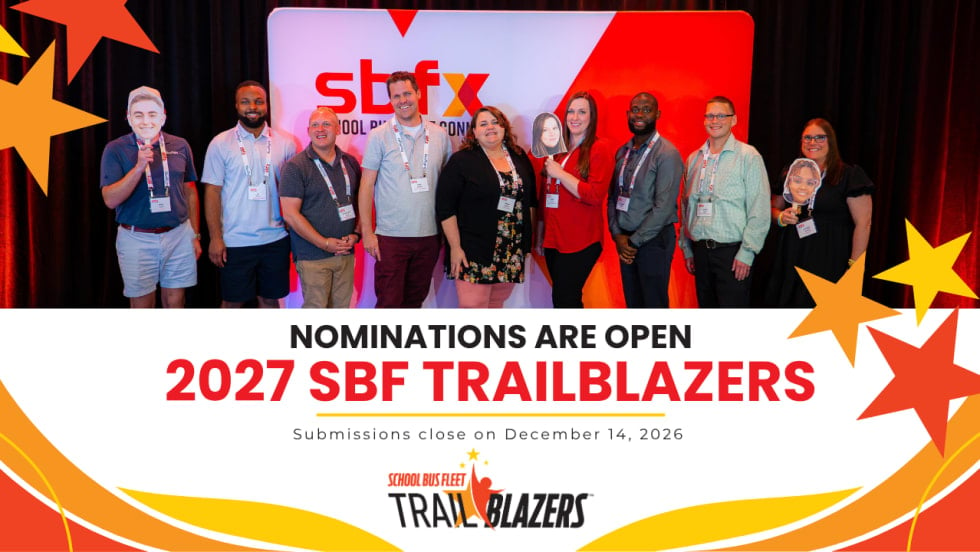
Nominate Rising School Transportation Pros Under 40!
We’re searching for the next generation of leaders making an impact across the K-12 student transportation industry to recognize as SBF’s 2027 Trailblazers. Nominations are open now!
Read More →

Changing Lanes: BusWhere, EverDriven, InterMotive, Summit School Services, Switzer-Carty & Thomas Built Buses
Check out who's been hired, promoted, and appointed to leadership positions at various school transportation suppliers, contractors, and manufacturers.
Read More →
The Most Expensive Thing You Do Before Selling a School Bus: Wait
When should you sell an aging school bus? Learn how maintenance, mileage, corrosion, specifications, and timing can affect resale value long before the auction.
Read More →
American Student Transportation Partners Acquires AJ Myers and Sons
A new deal brings a 75-year Pennsylvania student transportation provider into one of the nation’s largest private school bus contracting groups.
Read More →
What I Brought Home From SBFX: Relationships, Leadership, and Preparing What's Next
Who could lead your transportation operation tomorrow if you couldn't? Bernando Brown explores succession planning, mentorship, and preparing emerging leaders to step up.
Read More →
Inside School Bus Fleet ConneX 2026: Industry Leaders Connect in Scottsdale [Photos]
See highlights from SBFX 2026 in Arizona, where school bus operators and suppliers gathered for meetings, education, networking, awards, and more.
Read More →
School Transportation’s Biggest Pressures and Opportunities: SBFX Attendees Weigh In
School bus operators point to rising costs, staffing, and vehicle prices as immediate pressures while identifying technology, training, and routing as opportunities for growth.
Read More →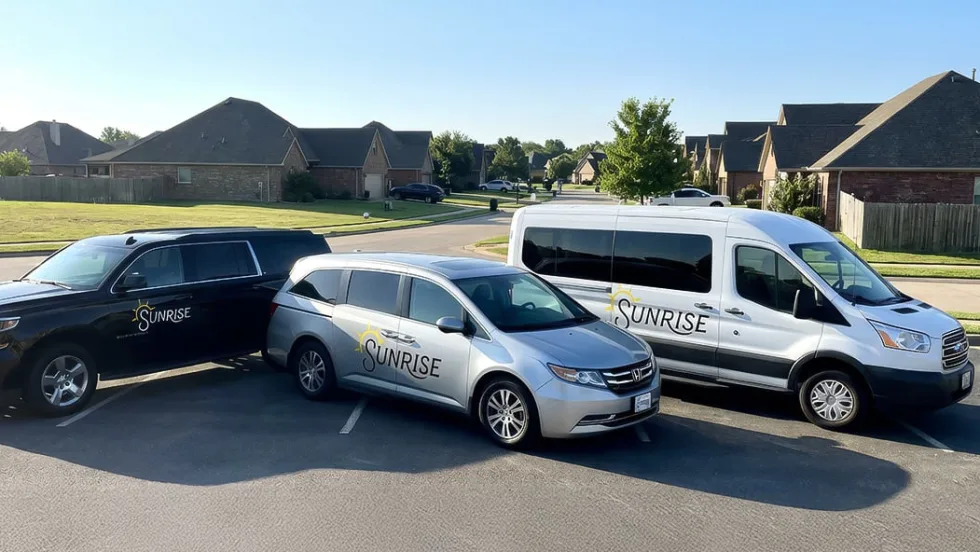
STA Acquires Sunrise Transportation
Student Transportation of America expands in Illinois and Connecticut through Sunrise's fleet of nearly 1,000 vehicles.
Read More →