


Q&A: Blue Bird Seeks to Improve Cost Position, Supplier Security
With school districts and contractors constrained by tight budgets from purchasing large numbers of new buses, these are hard times for the school bus...

With school districts and contractors constrained by tight budgets from purchasing large numbers of new buses, these are hard times for the school bus industry.
In Fort Valley, Ga., venerable Blue Bird Corp. is launching new products, including a purpose-built conventional school bus with a proprietary chassis, with the hope of capturing marketshare in a very competitive environment.
At the helm, Richard Maddox, president and CEO and a 29-year company veteran, has been making some difficult decisions of late, including last year’s closing of Blue Bird’s Mt. Pleasant, Iowa, plant because of a need to reduce capacity.
Maddox works closely with Blue Bird’s parent company, U.K.-based Henlys, to implement a growth plan that will serve all the divisions of Blue Bird — school bus, commercial bus and luxury motor homes.
The company’s core business, Maddox says, remains school buses. However, increasing competition from school bus rivals owned by large truck manufacturing concerns are forcing Blue Bird to mount its own offensive, with a new array of products and supplier partnership such as its agreement with engine manufacturer Caterpillar.
Maddox sat down recently with SBF Editor Steve Hirano at Blue Bird’s corporate offices in Fort Valley to discuss some of the key issues facing the company and the industry.
What are your key goals at Blue Bird?
Richard Maddox: This January begins my 29th year here at Blue Bird. From both a personal and professional point of view, my primary goal is to ensure the company's great reputation and its long-term success continue well into the future.
In March of 1999, I was named president at Blue Bird. Prior to this, my entire career with the company had been in sales and marketing. Shortly after becoming president, our owners made the decision to sell the company. During this process, I became keenly aware that “growing the company” would continue to be a primary objective going forward. Also, I realized the company’s future success would require continuous improvement in our products and processes as well as the building of a strong team from top to bottom for the present and the future. To date, we have made considerable progress in each of these areas.
Blue Bird and its parent company, Henlys Group, have developed a strategic plan for continuous growth. The plan has three primary elements — develop and introduce all-new, purpose-designed products for each market segment we serve; implement cost-reduction measures for the here and now that will last well into the future; and transform the company into a lean enterprise by pursuing initiatives to eliminate waste and improve efficiencies.
You recently unveiled your new Vision conventional school bus built on a propriety chassis. How did that come about?
The Blue Bird Vision, our new Type C school bus, was born out of our search for a replacement for the General Motors B-7 school bus chassis. Blue Bird and General Motors entered into a supply agreement for Type C school bus chassis in 1992. The program was very good for both companies, but most importantly, it was good for our mutual customers. Our annual volumes were 2,500 to 3,000 units.
Periodically, truck manufacturers make significant changes in their product platforms. When GM decided to change their medium-duty truck offering, we were faced with the option to change with them or stay the course with an outdated product. For a variety of reasons, we determined the best alternative was to work with GM to develop a school bus offering on GM’s new 560 medium-duty truck platform. Early in the process, however, Blue Bird and its distributors determined this new truck design was just not optimal for a school bus application.
About the time GM decided to change their truck platform, thereby ending availability of their B-7 school bus chassis, representatives from Ford Motor Company approached Blue Bird. Ford was interested in partnering with Blue Bird to develop a Type C school bus chassis. As you may remember, we exhibited the product at the 2001 NAPT conference in Nashville. The product was well received! Even so, shortly thereafter, Blue Bird and Ford mutually agreed to end the program.
We considered several other alternatives in our search for a replacement for the GM B-7 school bus chassis. At the end of the day, we determined the best solution for our company, our distributors and our customers would be a purpose-designed, Type C school bus designed and manufactured by Blue Bird itself.
Blue Bird has been building Type D school bus chassis for many, many years. The company produces approximately 5,000 Type D chassis per year. We are very convinced a Type D school bus offers many benefits for school bus operators. Even so, we are certain many customers will continue to prefer a Type C school bus design. Considering this and considering that chassis design and assembly is one of our company’s core competencies, we developed the Blue Bird Vision.
By offering our own Type C school bus, we ensured security of supply for our distributors and our customers. Also, we ensured the school bus market would have a supplier for the traditional Conventional school bus in the event other truck manufacturers followed the lead of General Motors with all-new medium-duty truck platforms. Having said this, the Blue Bird Vision is much more than the traditional “me too” Conventional school bus.
What are some of the unique features of this bus?
For one, the Blue Bird Vision offers the industry’s best driver field of vision for a Type C school bus. In addition, our development team focused on design features and components that ensure industry-leading reliability and durability. We will be offering several features that are unique to the Blue Bird Vision. Of course, driver ergonomics and safety were primary considerations in the development of the all-new Vision. In short, the product is purpose-designed for the school bus market.
As I previously mentioned, the Blue Bird Vision replaces our Type C school bus offering with GM B-7 school bus chassis. Presently, we are also working with International on their next generation 3800 model, Type C, school bus chassis. We will continue to offer Type C school buses with an International chassis as long as the chassis is available and there is market demand. We have many customers that prefer a Blue Bird body with an International chassis. Going forward, we have every intention to continue offering our customers a choice of product configurations.
How much interest have you seen in the Type A compressed natural gas (CNG) bus that you’ve developed with Ford?
We have worked with Ford to develop a Type A, CNG school bus. This product has been demonstrated in California for about 90 days. The feedback has been very positive. The vehicle is reported to get 10 miles to the gallon equivalent.
Blue Bird has offered compressed natural gas with our Type D school bus products for many years. Presently, we offer CNG engines from John Deere and Cummins. Incidentally, we are considering a CNG offering with our Type C school bus, the Blue Bird Vision, as well.
Clearly, there is a growing interest in alternative fuels, especially in select areas such as California, Texas and the northeast. Concerns about clean air and our country’s dependency on foreign oil are driving this growing demand. We believe CNG provides an affordable, effective solution to those concerns.
What are some of the greatest challenges on the horizon?
In my view, our greatest challenges as a company are, in effect, the same challenges our competitors and our customers are facing. Everyone in the industry is being challenged by the economic slowdown, by increasing competitive pressures and by rising expectations of our customers.
Clearly, in our business, we must aggressively seek continuous improvements in our products and processes. Our customers are being asked to “do more with less.” Because of this, we must be responsive to their situation by improving our cost position and the competitiveness of our products. By doing so, we can continue to offer affordable solutions to their transportation needs.
Any other challenges?
Certainly, as a supplier to the education industry, we have great empathy for our customers and their many challenges as educators. Education is a top priority in our country, as it should be. Within the education community, there are many needs — the need to reduce pupil-to-teacher ratios, the need for more classrooms and teachers and, of course, the need for new school buses.
At Blue Bird, we believe we are part of the education process. For a number of years, we have offered a financial solution for our customers with Blue Bird’s factory-direct lease purchase program. This program provides a way for schools to purchase new school buses through their operating funds rather than through large capital purchases. With this program, schools can afford the new buses they need and place them in service at any time throughout the year.
Blue Bird closed its plant in Mt. Pleasant, Iowa, last year. How difficult was it to make that decision?
That was a very difficult decision for us! Blue Bird Midwest has been building school buses for 40 years. Quite frankly, it feels like the death of a close family member.
We determined, however, that we could realize significant benefits from the economies of scale available through consolidation of our manufacturing operations. After considerable analysis, we determined Blue Bird Midwest would be closed. Going forward, our school bus products will be produced at our facilities in Brantford, Ontario, and Lafayette, Georgia. School bus chassis, including the chassis for the new Blue Bird Vision, will be produced at our facility here in Fort Valley, Georgia.
We could not have made the decision to close an assembly plant if we were planning to operate our manufacturing facilities in the company’s traditional manner, which has been a four-day, 40-hour week. Going forward, it is unlikely there will be a one-shift operation in any of Blue Bird’s business units, including the company’s motor home and commercial bus divisions.
These kind of decisions are necessary in today’s competitive environment to ensure our company remains cost competitive in the market segments we serve and, most importantly, to ensure that Blue Bird remains profitable. Our customers demand and deserve the very best. We cannot meet the expectations of our school bus customers, unless our school bus business is profitable.
How do you plan to add work shifts without compromising your production quality?
At Blue Bird we are committed to the value discipline of Operational Excellence. What this means is that our corporate focus is to provide reliable, dependable products and services to our customers at the lowest possible cost.
Considering today’s business environment, we cannot afford to ignore opportunities to improve our cost position and competitiveness. Clearly, multiple shifts and the resulting operational gearing improve a manufacturer’s cost position. The automotive and truck industry have operated multiple shifts for many years without an erosion in product quality. At Blue Bird, we have occasionally operated multiple shifts to address the seasonal nature of the school bus market. From our 75 years of experience as a school bus manufacturer, we have learned the keys to producing a quality product are effective management, well-trained employees, parts availability and well-documented, repeatable processes. This is true regardless of the company’s work schedule.
With the economy as tight as it is, do you have a sense that competition among bus manufacturers, especially for low-bid business, is creating situations where profit margins are being sliced to almost nothing?
Blue Bird has a long history of providing industry-leading products and services. Our marketing strategy is based on differentiation. Blue Bird and its distributors make every effort to offer our mutual customers the best overall value. We are proud that many of our customers recognize and appreciate this. In fact, 40 to 50 percent of our sales are to customers who choose Blue Bird even though we were not the lowest initial price.
We have the best distribution in the industry. Our distributors are the key component of this overall offer of added value to our customers. The primary business of our school bus distributors is school buses. Unlike truck dealers, the primary focus of Blue Bird’s dealer organization is school buses.
What prompted your recent supply agreement with Caterpillar?
Our company has a long history with both Caterpillar and Cummins. There were two significant issues that led to our alliance with Caterpillar. First, we were seeing the alignment of medium-duty truck and engine manufacturers. General Motors is aligned with Isuzu. Ford is aligned with Navistar. Freightliner is aligned with Mercedes. And, of course, Navistar supplies its own engines, although the majority of their engines are shipped to Ford. Secondly, there is the issue of present and future emissions standards.
Because of these factors, we determined Blue Bird should pursue a mutually beneficial alliance with an engine manufacturer. For a variety of reasons, our search was narrowed to Caterpillar and Cummins. We were especially interested in Caterpillar’s ACERT technology as compared to the cooled EGR (exhaust gas recirculation) approach other companies such as Cummins and Navistar have adopted. After considerable evaluation, we determined Caterpillar was the best overall solution.
Do you expect to see a jump in sales of Type A buses with the feds requiring Head Starts to only use school buses or allowable alternate vehicles beginning in 2005?
Yes, we believe these new requirements could create a much larger market for Type A school buses and school bus derivatives. Some people have suggested the Type A small bus market could grow to an annual volume of 20,000 vehicles.
In any event, Blue Bird has made a significant commitment to address this growing market with new product development. Historically, we have primarily focused on large school buses. Going forward, I can assure you that we will be very active in the Type A small school bus market.
What would you like our readers to know about Blue Bird and its plans?
Your readers should know that Blue Bird and its parent company are absolutely committed to our core business — school buses. We are investing millions of dollars to develop and introduce new products. We are also making significant investments to improve our manufacturing processes and methods. For example, we recently built a $7 million metal treatment facility for our fabricated parts produced in Fort Valley.
As for new products, we recently introduced a new Type D school bus product, the all-new All American. We have developed and introduced an all-new Type C school bus, the Blue Bird Vision. And, we are continually developing and introducing new Type A product configurations.
More Management
The Back-to-School Checklist Every Director Should Complete Before the First Bell
Help your transportation team start the school year strong with these tips for contingency planning, communication, fleet visibility, technology, and trip management.
Read More →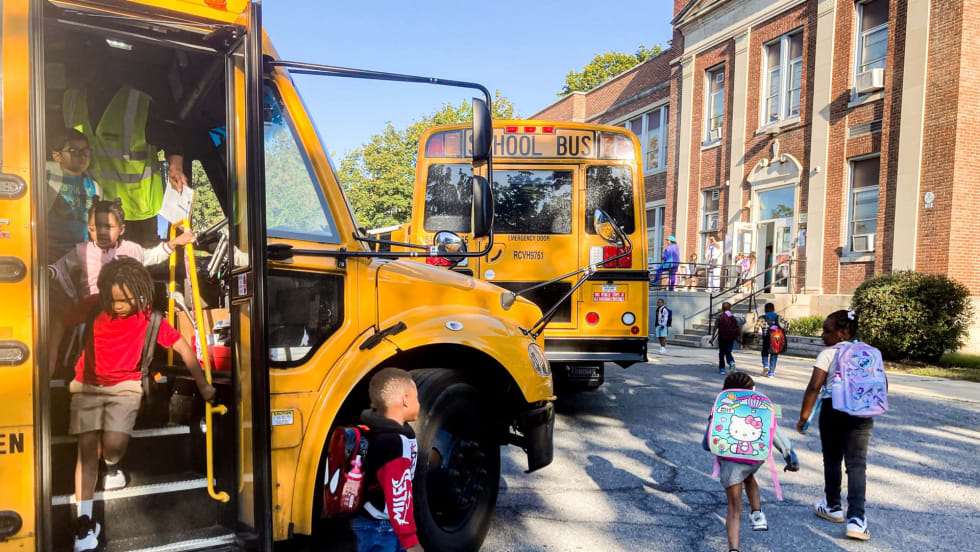
How a New York District Cut Nearly $1M in Transportation Costs While Expanding Bus Access
A data-driven overhaul with BusRight reduced Poughkeepsie City School District's planned routes from 26 to 17 while extending school bus service to about 1,200 additional students.
Read More →
Budgets Down, Enrollment Shifting: What the Data Says Districts Should Watch
School transportation departments face two converging challenges this year: tightening budgets and shifting enrollment. Most districts still address these issues separately, but the assumption that either trend will simplify operations is proving incorrect.
Read More →
These 8 School Transportation Companies Made the 2026 Inc. 5000 List
Find out which school transportation contractors, technology providers, and suppliers ranked among America’s fastest-growing private companies.
Read More →
The Link Between Emotional Intelligence and School Bus Safety
How can emotional intelligence help transportation pros navigate stress, manage change, and build stronger relationships? Listen to find out.
Read More →
What Emotional Intelligence Has to Do With School Bus Safety
In this video, discover how emotional intelligence can help transportation leaders and drivers navigate stress, manage change, and build stronger relationships. The Route is sponsored by IC Bus.
Read More →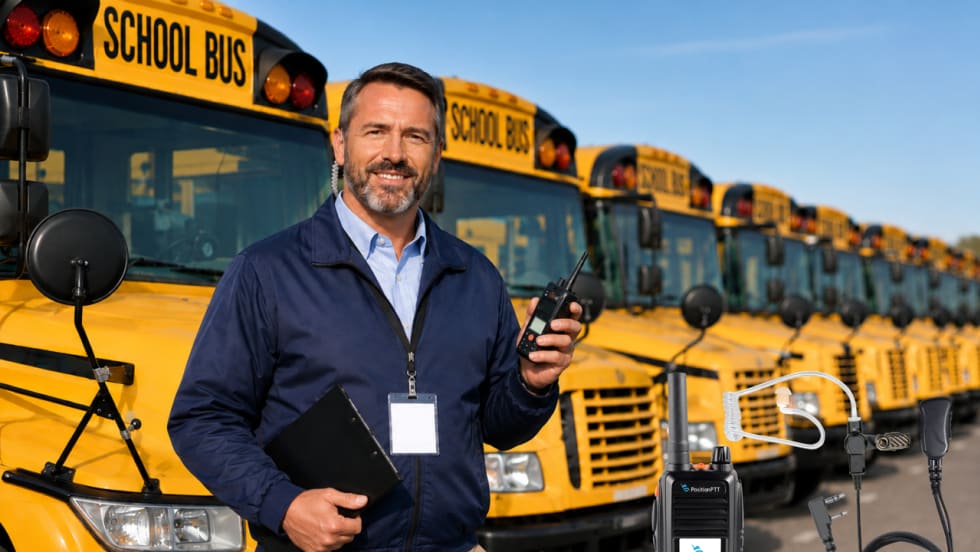
Beyond Two-Way Radios: School Bus Communications Evolve With Push-to-Talk Over Cellular
PRYME Radio and PositionPTT join forces to advance hands-free radio use and reduce distracted driving. See how PoC compares with traditional radios on range, cost, safety, and connectivity.
Read More →
Have School Districts Adapted to Bus Driver Shortages or Simply Accepted Less Service?
According to a recent report from HopSkipDrive, many districts appear to have recalibrated what "normal" transportation service looks like.
Read More →
Reliable Transportation Linked to Better Student Outcomes, New EverDriven Study Finds
See why new research suggests transportation consistency improves student outcomes while influencing attendance, funding, IEP compliance, and family trust.
Read More →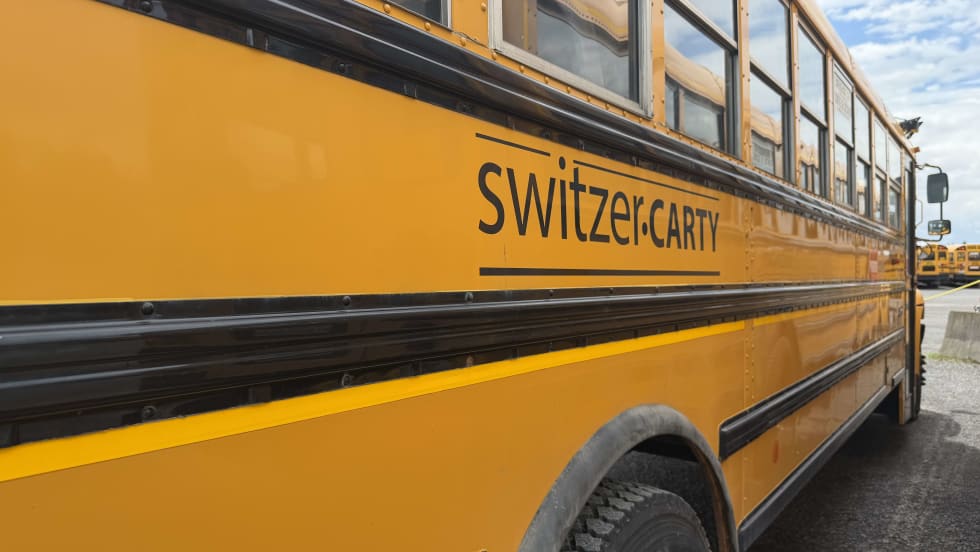
Switzer-CARTY Enters the U.S. with New Acquisition
The Canadian contractor’s acquisition of Minnesota-based Agnes Corporation marks its first cross-border expansion into the United States and adds 350 vehicles.
Read More →