




Product Enhancement Improves Safety Margin
‘Minor’ improvements to school bus components, such as remote-control mirrors, take school bus safety to a new level.
When school bus safety is discussed, the intermittent wiper doesn’t immediately pop into most people’s minds. But maybe it should. A driver who constantly has to flick the wiper switch to clear a persistent mist on the windshield is prone to distraction. Meanwhile, the driver of a bus with the intermittent wiper feature can focus on the road and his passengers, not the annoying mist on the windshield. Heated remote-control mirrors, a relatively new development, are expected to have a significant impact on safety. The value of these relatively new mirror systems are obvious. They allow bus drivers to adjust their mirrors from their seats and they improve visibility by reducing condensation. Product enhancement is a critical issue in school transportation because it can raise safety levels without requiring overhauls of school bus safety standards at the federal level. States are constantly fine-tuning their specs and pushing for new levels of product safety. "It's incremental stuff, but it can make a difference," says Ted Finlayson-Schueler, executive director of the Pupil Transportation Safety Institute in Syracuse, N.Y.
Another refinement in visibility for the driver is the glass panel that’s installed in front of the service doors on some Type A buses. These glass strips give the driver a better view of other motorists and of children during the loading and unloading process. A slip by a student in the stepwell is rarely a calamity, but heated step treads reduce the chances of an accident by melting away snow and ice. Again, a minor improvement but drivers certainly appreciate the added peace of mind.
A call to arms
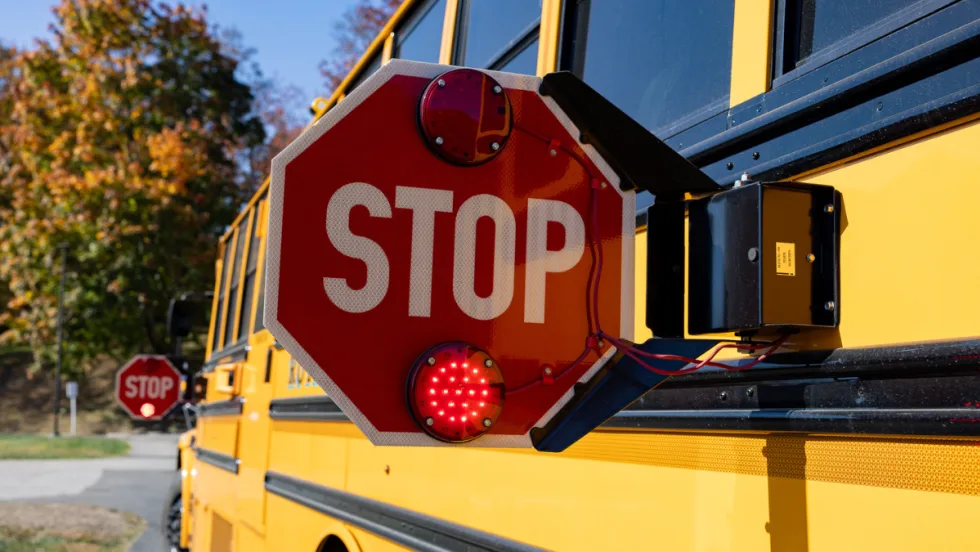
In addition to subtle product enhancements that improve school bus safety, there are components that speak more directly to the issue. Crossing-control arms, for example, continue to gain in popularity. In the past few years, Illinois, Missouri and New Jersey joined a dozen other states in requiring the safety device. And several large contractors, including Laidlaw Transit Inc., have outfitted their entire fleets with crossing arms. Although this safety product has become widely accepted, refinements are still being made. At Boston Public Schools, crossing gates are wired with automatic resetting switches. This switch allows drivers to disable the crossing gates (for parking in school loading zones that require buses to park so closely together that the device can’t be deployed) and have them automatically reset. This protects a driver from forgetting to re-enable the device. Another piece of safety equipment that has been modified for improved performance is the stop arm. The National Highway Traffic Safety Administration recently approved additional light sources, including LEDs that spell STOP on the blade (see sidebar). Although this change required an amendment to Federal Motor Vehicle Safey Standard 131, the result is a stop arm that is at least as effective as traditional stop arms in preventing illegal passes of stopped school buses.
More than just talk
Improved communication — with dispatch, other drivers, emergency services and passengers — is a growing need for many school bus operators, especially as concerns mount over security issues. As you might expect, two-way radios are being installed in an increasing number of school buses. The ability to communicate rapidly with the bus terminal is essential in many areas where crime is a concern. Some districts have chosen to outfit their drivers with cellular phones, which opens up direct contact with police and other emergency service agencies. "I think all school buses should also be equipped with a speaker system so we can communicate better with our children," says Phyllis Broderdorp, a driver-trainer for McCracken County School District in Paducah, Ky. In particular, Broderdorp says a P.A. system would help drivers signal children to cross the street. "How many times has a driver beat the devil out of their windshield to get the attention of a child that did not follow her instructions and was put in danger?"
Safety net for training
This emphasis on safety equipment does not ignore the value of driver training, which is critical to the safety of school bus passengers and drivers as well as motorists and pedestrians. But, as school bus operators know, training has its limits. For example, a driver who's suffering through a life crisis, such as a divorce or the death of close relative, could very well be distracted while behind the wheel of the school bus. It's an understandable situation, yet it creates greater risk of an accident. Minimizing any other distractions that might plague a driver sometimes is all a school bus operator can do to ensure a safe environment.
More Safety
Illegal School Bus Passing Drops 24% in New York Districts
With fewer than 5% of citations involving repeat offenders, Westchester County officials said enforcement, education, and community partnerships are helping change driver behavior.
Read More →
School's Back. Here's What Happened to Traffic, Speeding & Distraction
What happens to traffic when school resumes? New data analysis examines changes in distracted driving, congestion, and speeding around schools.
Read More →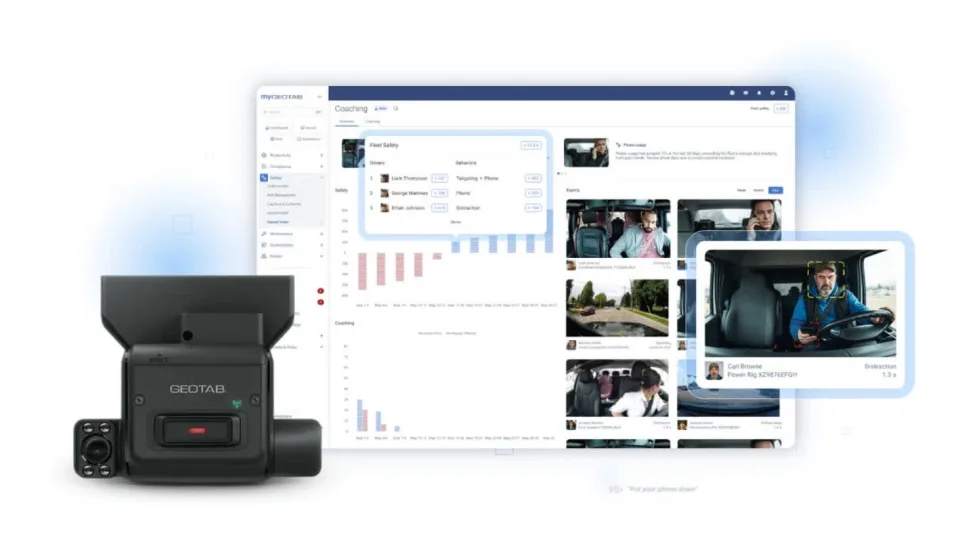
Geotab Expands Fleet Safety Tools With Video Coaching, Risk Insights
New safety and video capabilities aim to help fleet managers assess risk, support drivers, and take targeted action through video coaching, red-light violation detection, and more.
Read More →

How to Build a Better School Bus Driver Training Program
Is it time to strengthen your driver training? Here’s how to pick the right talent and improve recruitment, retention, and safety. This video is brought to you by IC Bus.
Read More →
Recent School Bus Accidents Leave 2 Dead, 2 Injured
Four school bus crashes in Florida, Illinois, and Georgia highlight risks in transportation lots, at bus stops, and during student loading and unloading.
Read More →
When Every Second Matters, Clarity Keeps Routes Moving
From routine delays to urgent incidents, strong communication practices help drivers, dispatchers, schools, and families respond with confidence.
Read More →
What Happens When a School Bus Catches Fire — and What Can Help
School bus fires are rare but can be devastating. Learn how advances in fire suppression and asset protection help fleets detect fires earlier, reduce damage, and improve safety.
Read More →
Geotab Launches Tool to Help Fleets Investigate Road Incidents
Geotab Investigations combines telematics data, video, documents, and other evidence to help fleets reconstruct incidents, resolve claims, and determine what happened.
Read More →
Texas Sixth Grader Wins 2026 National School Bus Safety Poster Contest
Sai Darshana Yekolu of Moseley Middle School in Prosper, Texas, was named the newest winner for her artwork, bringing the theme of “Safe Rides, Everyday Heroes” to life.
Read More →
Doing More With Less: How Transportation Directors Can Prioritize Safety Amid Budget Uncertainty
With diesel prices soaring and nearly one-third of transportation directors expecting budget cuts, maintaining student safety has never been more challenging. Download this guide to learn how leading districts are prioritizing risk, funding critical safety technology, and building stronger budget cases with data.
Read More →