




Physical therapists are valuable resource for transportation
From providing information on disabilities and how they will impact the school bus ride to offering tips for proper wheelchair securement and evacuations, these individuals can greatly assist in safely transporting special-needs students. In the new school year, they should be involved in planning and training sessions.
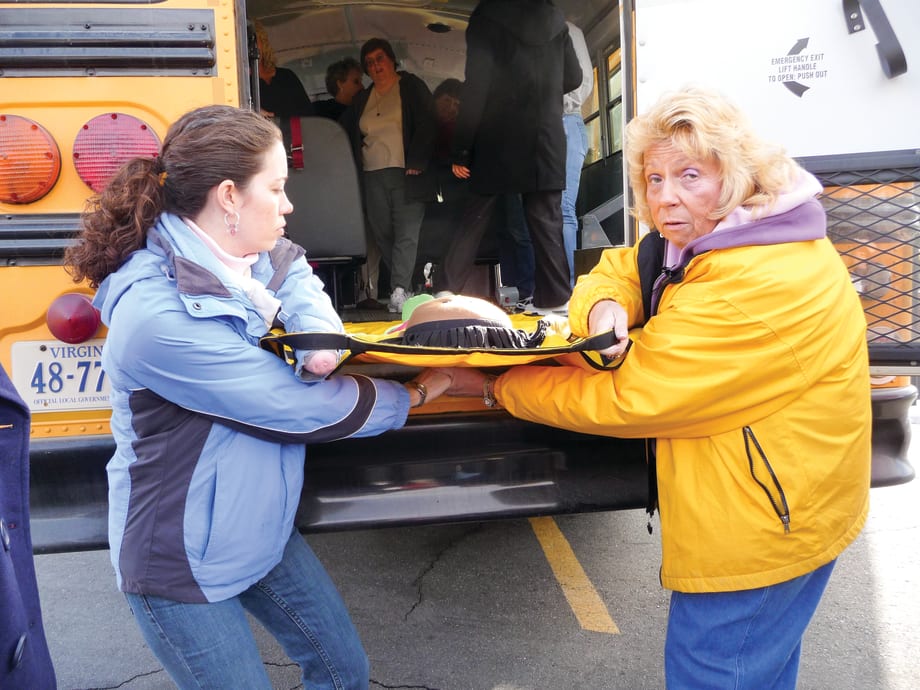
Author Jean Zimmerman (right) says physical therapists will teach transportation personnel how to protect their back and lift students safely when evacuating them from the bus.
School begins the minute students are picked up to be transported on the school bus. As school-based physical therapists (PTs), it is our responsibility to assist districts’ transportation staff in knowing how to work with special-needs students. With the new school year upon us, the following are a few ways PTs can help the transportation staff.
An overview of students with disabilities
There is a tremendous amount of information that a PT can teach transportation personnel about children with special needs.
The medical disability that we see most often on the school bus among students is cerebral palsy (CP). CP is damage to the developing brain that affects the movement of the trunk and extremities. These students may have seizure activity and will have difficulty with their arm and leg movements. Some of these children may walk, while others use a manual or motorized wheelchair.
Spina bifida is a birth defect in which the spinal column and the spinal cord are not formed correctly. When the child is born, the nerves are actually outside the body, and the nerves from the point of the defect cannot be reattached. The child is paralyzed and has no feelings in the extremities, so transportation staff must be aware that these children cannot bear any weight on their legs. The PT will need to instruct the transportation staff on how to evacuate these students. A student with a spinal cord injury is similar to a student with spina bifida in that they are usually paralyzed and will need specialized instructions from the PT in regard to evacuations.
Another disease that the PT will need to instruct transportation employees about is Duchenne muscular dystrophy (DMD). DMD is a disease of the muscle that causes progressive deterioration of muscle tissue. These students can walk early in life; then they lose muscle strength, so they must use a manual wheelchair, and then a motorized wheelchair. When evacuating a student with DMD, the transportation staff must be taught by the PT staff how to lift the student and drag him or her out of the bus during an evacuation.
Autism spectrum disorder (ASD) is a developmental disorder that adversely affects a student’s ability to adjust to changes in routine or surroundings. ASD is characterized by problems with social interaction and communication. The student demonstrates patterns of behavior, interest or activities. These characteristics can range from mild to severe.
PTs will have knowledge of many other disabilities, and they can inform school bus drivers and other transportation staff members on how the disability will affect transportation.

Paul assists in evacuating granddaughter Yahminah during a training session. Adults on either side increases a student’s safety.
The wheelchair: securement, loading and unloading
Before a student is even put on the school bus, the PT and the transportation team should evaluate the student’s wheelchair. The features the team should be looking for are a head rest, a pelvic positioning belt and wheel locks. Some students need additional postural supports, such as lateral trunk supports, an anterior chest support and a medial thigh support, an arm support and footrests. Transportation staff should also be taught how a wheelchair tilts in space and why the anti-tippers are so important when the wheelchair is tilted.
If a student has a motorized wheelchair, it is critical that the PT and transportation staff examine it prior to the student riding the bus. The employees should also practice the process of loading and unloading the motorized wheelchair, and they must be able to locate the gears and learn how to disengage and engage them. The team must also practice pulling the wheelchair into the bus and how to push the wheelchair back onto the lift. The PT should emphasize that the power should never be on when a student is in a motorized wheelchair on the lift.
In addition, the PT should be part of the team that helps to determine where and how to tie down the wheelchair so that school bus drivers and/or monitors don’t injure themselves. In one day, the driver or monitor secures a wheelchair 16 times. If these people do not move correctly, they have the potential to hurt their back 16 times. Some people are able to squat to tie down the wheelchair correctly; those of us who cannot squat need to go down onto one knee. The staff should never bend over with their trunk and keep their knees straight. With time, this could cause a serious back injury.
Assistance in proper loading and unloading, evacuations
Another area where drivers and monitors could injure their back is in the process of loading and unloading the students. Staff should never carry a child up and down the steps. They could slip and fall with the student, or the student could have a seizure. The employee should stand behind the student as they go up the steps and in front of the child as they go down the steps. In this way, the child is well protected should he or she start to fall, and the staff is also well protected. The therapist should teach the team how to place a student onto a school bus seat correctly as well.
PTs will also teach drivers and monitors how to protect their back and lift students safely when evacuating them and using evacuation equipment. They will discuss the use of a belt cutter and the quickest way to use it.
In addition, PTs will review how to lift a student and how to “drag” a student out of the bus, and they will help decide the best way to evacuate the student. PTs should be involved in the design of the written evacuation plan and participate in the evacuation drills.
Head Start children
In February 1999, the National Highway Traffic Safety Administration developed guidelines for the safe transportation of preschool age children in school buses. The Head Start program decided that it would follow these guidelines in regard to child passenger restraint systems, so all students in a Head Start program must be in some type of child safety restraint system. PTs can assist a transportation staff in deciding what restraint is the best for each student.
A student in a Head Start program will most likely be in a baby car seat. As the student becomes older, the options become greater, i.e., a larger car seat, an integrated seat, an add-on system or a safety vest. The PT needs to ride the school bus and help decide what system provides the student with the most support. Should there be a problem with head control, then the student may need a soft cervical collar.
Summary
As PTs, there is a tremendous amount of information we can provide to a school district’s transportation team. Listed above are just some of the ways. Ask your therapist any questions you have. Call on the PT — this is part of his or her job, and we need to work together for the safe transportation of our students.
Jean Zimmerman is supervisor of occupational and physical therapy for the School District of Palm Beach County (Fla.).
More Special Needs Transportation
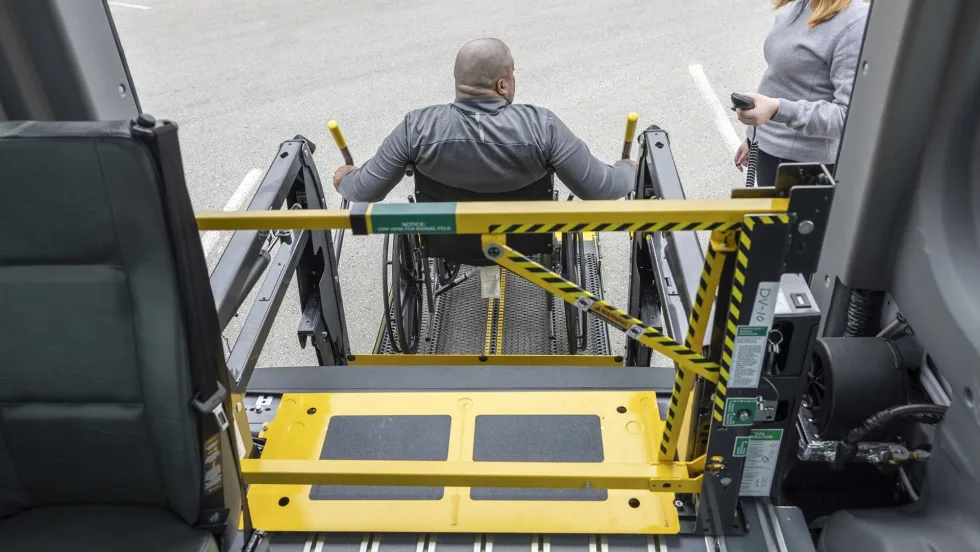
BraunAbility Introduces New Safety Barrier for Wheelchair Lifts
LiftSentinel is designed to add another layer of protection during wheelchair loading and unloading and can be retrofitted to many existing commercial lift installations.
Read More →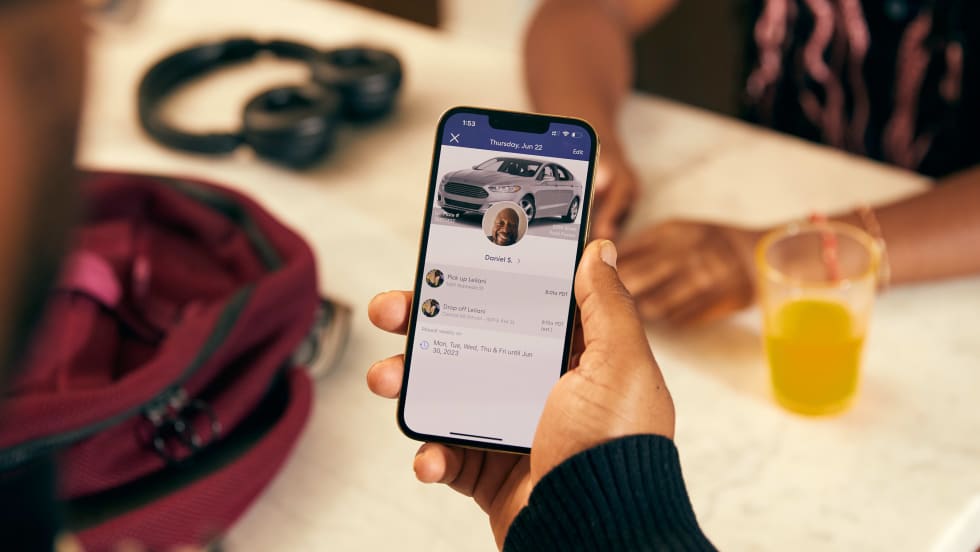
HopSkipDrive Launches New Safety, Driver Consistency Features for 2026-27 School Year
The company’s free ride recording, live ride tracking, and consistent driver assignments aim to improve safety and continuity for diverse student transportation needs.
Read More →
The Most Common Wheelchair Securement Mistakes on School Buses (and How to Fix Them)
Small missteps in wheelchair securement can have serious consequences. Here are 32 tips from experts to reduce risk and increase student safety on the bus.
Read More →
Inside AMF Bruns’ New Showroom: School Bus Securement Solutions Explained
Go inside AMF Bruns America’s new Ohio showroom with Maritza Valentin to see its FutureSafe technology, driver training tools, securement systems, and seating innovations.
Read More →
What AMF Bruns’ New Facility Means for Customers [Video]
Inside AMF Bruns’ new Stow, Ohio, operations: See how expanded space and innovation will enhance customer support and operations.
Read More →
AMF Bruns Expands in Ohio, Investing in Growth and Community
With expanded production space, local investment, and a growing workforce, AMF Bruns is scaling its U.S. presence. Here’s an exclusive first look inside the new Stow, Ohio, HQ.
Read More →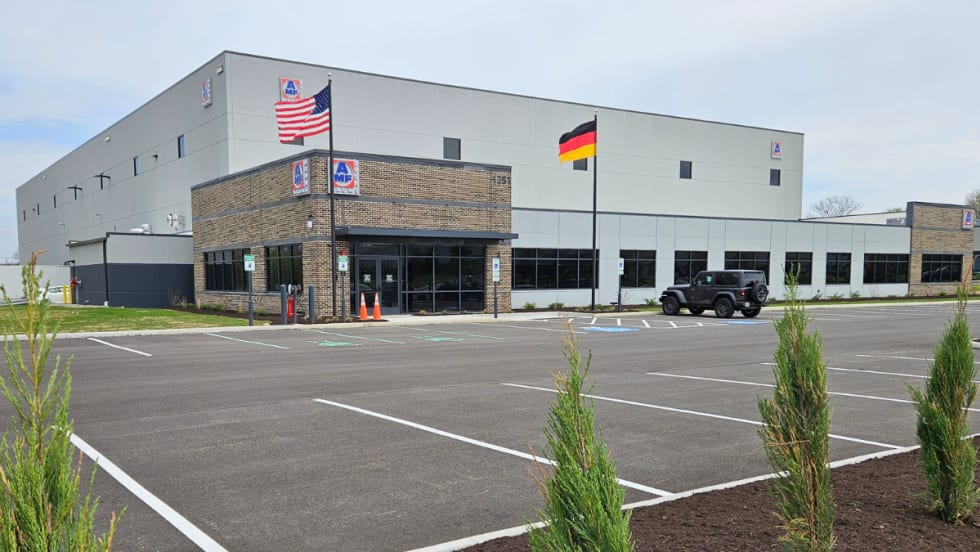
Inside AMF Bruns of America’s New Ohio Manufacturing Facility [Photos]
Take a behind-the-scenes look at AMF Bruns of America’s new 41,000-square-foot Stow, Ohio, headquarters, featuring advanced manufacturing, expanded space, and future-ready mobility solutions.
Read More →
First Student Boosts Student Support in Wichita & Texas
First Student and Wichita Public Schools are using behavioral support strategies to improve student ride experiences, while a separate initiative expands access to after-school programs through a bus donation.
Read More →
2026 Special-Needs Transportation Survey
What’s changing in special-needs transportation? This year, student transportation operators report a rising need, easing driver shortages, growing tech adoption, and evolving challenges. Sponsored by AMF Bruns of America.
Read More →
The Lived-Experience Gap in Mobility Tech: An Expert Take on Safe Student Transportation
Brianna Pauwee, a product application specialist at AMF Bruns of America and a wheelchair user, drops in to The Route to share practical securement and training insights, plus the story behind the new “Beyond Mobility” podcast. The Route is sponsored by IC Bus.
Read More →