





Check Out: Fueling the Future: Green-Powered Technology
MANAGING THE MILES: Telematics and School Bus Fuel Efficiency
These solutions can help school districts master data that drive cost savings in their fuel tanks.
February 5, 2024
Fuel savings can prove critical for school districts and bus fleet operations that face limited financial resources year to year. Through telematics, transportation fleet directors can plot efficient routes, track driver behaviors, and remain aware of potential maintenance issues.
Image: Canva
6 min to read
The school buses managed by Lynch Bus Lines in British Columbia use telematics to improve efficiencies.
Like many operations that use this technology, Lynch Bus Lines wants to keep an eye on details that can help technicians maintain the fleet in the best condition possible, running reliably and on time. Reduced fuel consumption is among the factors that can be improved with technology installed on school buses.
“We currently don’t focus on fuel savings so much as keeping the time and mileage to a minimum for student satisfaction,” says Cory Lynch, office manager for the contractor bus company. “The fuel savings naturally follow.”
His company currently uses Transfinder’s Servicefinder system.
“We notice overall fuel usage by volume is down,” Lynch says. “We track this by mileage as opposed to dollars.”
Fuel savings can prove critical for school districts and bus fleet operations that face limited financial resources year to year. Through telematics, transportation fleet directors can plot efficient routes, track driver behaviors, and remain aware of potential maintenance issues.
Here’s a look at some of the available offerings on the market that can be used to conserve fuel and improve school bus fleet performance.
Samsara: Reducing Fuel Spend in School Bus Fleets
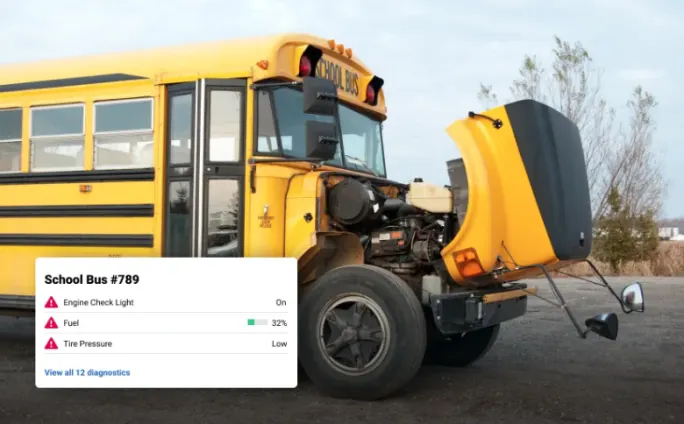
Samsara’s fuel and energy report displays MPG, energy use, carbon emissions, and estimated cost across all vehicle types, whether it’s an electric vehicle or if it runs on an internal combustion engine.
Image: Samsara
Joe Ryan, vice president and general manager of Samsara, says their integrated platform allows customers to connect the dots across their entire operation and view data in one place, with more than 260 integrations available to leverage.
“Our telematics solution has several different features and reports to help school bus fleets reduce their fuel consumption and meet sustainability goals,” Ryan says. “Data from our vehicle gateways can be used to optimize fuel spend with visibility into key metrics like fuel consumption, cost, and mileage. Customers can also control emissions levels with customizable alerts for diesel levels, engine idling, and risky driving behaviors that contribute to higher fuel spend – such as speeding, harsh braking, or acceleration. This driving behavior contributes to an overall Driver Efficiency Score that allows managers to easily spot areas for improved fuel efficiency and benchmark individual performance for the rest of your fleet.”
Samsara’s fuel and energy report displays MPG, energy use, carbon emissions, and estimated cost across all vehicle types, whether it’s an electric vehicle or if it runs on an internal combustion engine. The fuel and energy benchmarks report allows an operation to compare its vehicle data to similar fleets to analyze performance and set more informed target metrics, Ryan says.
The Samsara platform is designed for integration with existing systems, “whether that’s pulling third-party side and rear camera feeds into our dashboard or sending our telematics data into your Edulog routing software,” Ryan says. “We want to help our customers make sense of their operational data regardless of where it comes from – either our own hardware devices or existing technology they might be using.”
Transfinder: Finding Fleet Maintenance Efficiencies in Service
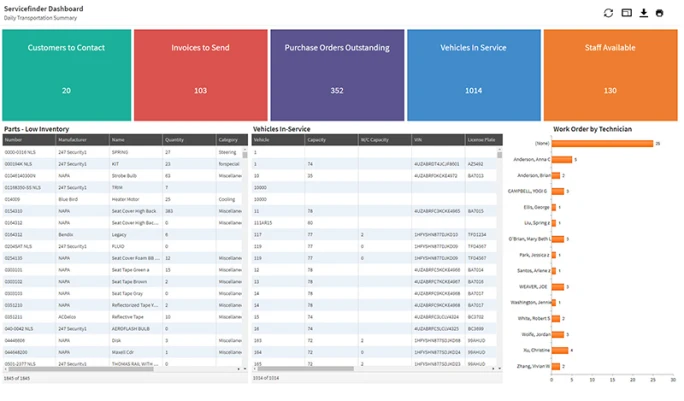
Servicefinder, a browser-based fleet maintenance and asset-management solution from Transfinder, aims to improve fleet productivity while tracking costs and reducing the risk of missing critical repairs.
Image: Transfinder
Servicefinder, a browser-based fleet maintenance and asset-management solution from Transfinder, aims to improve fleet productivity while tracking costs and reducing the risk of missing critical repairs.
The application, originally released in 2010, provides an interface to manage bus fleets, track parts, and evaluate fuel consumption trends.
Features include:
Inventory management.
Recurring service schedules.
Warranty information tracking.
Management of multiple garages, locations, and campuses.
Invoicing.
Zach Moren, sales enablement manager for Transfinder, said the main impacts customers see in school bus fuel efficiencies include:
Routing: The most efficient route is not always the route taken, despite best efforts. Traffic, personal preference, and construction can all cause drivers to take less than optimal routes that lead to worse fuel efficiency.
Driving Behavior: How a vehicle is driven plays a large role in efficient fuel use. Harsh braking and acceleration, for example, can be big drivers of fuel consumption. The good news is that more efficient driving behavior can be encouraged through feedback, coaching, and training.
Maintenance: Tire issues, old oil, and other problems can lead to decreased fuel efficiency. This is why it’s important to adhere to a preventative maintenance schedule and address small maintenance issues before they become larger problems.
Excessive Loads: Heavy loads can also weigh down a vehicle and decrease fuel efficiency.
“With our new and improved ServiceFinder solution, schools now have a more robust way to improve fleet productivity, track costs, and ensure that critical repairs are not missed, which all point to a more efficiency fleet,” said Rick D’Errico, the company’s public relations director. “Districts with Servicefinder can easily monitor asset life cycles, conduct timely maintenance, and analyze reports to make data-driven decisions designed to improve safety, security, and compliance.”
Tyler Technologies: Customization and Customer Needs
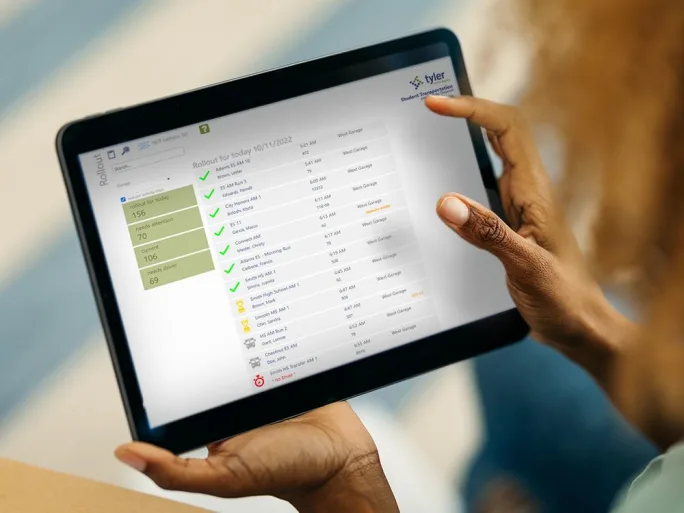
The telematics products provided by Tyler Technologies can track engine diagnostic data, including idle time and harsh braking, along with GPS and automatic vehicle location (AVL) data.
Image: Tyler Technologies
The telematics products provided by Tyler Technologies can track engine diagnostic data, including idle time and harsh braking, along with GPS and automatic vehicle location (AVL) data.
“This data can be used to create ‘scorecards’ and benchmarks for transportation managers to measure driver behavior against,” says C.J. Vose, Tyler’s vice president of K-12 sales. “This information can also help with driver training and onboarding.”
The reporting functionality in Tyler’s student transportation software uses data from the telematics devices installed on the vehicle. Many data points can be viewed live on the map within the software, Vose says.
The application also includes “robust planned vs. actual functionality” that school personnel can use to make more efficient routes and improve operating costs, Vose says.
Custom report building is a key feature, Vose says, “and we encourage our clients to create the reports that best fit their individual needs. If a client has more complex reporting needs, Tyler offers report-building services. If a client uses technology from vendors in the Onboard iPaaS partner network, additional dashboards can be created to get a more in-depth view of their fleet operations.”
Zonar: Assessing Critical Fleet Usage Variables
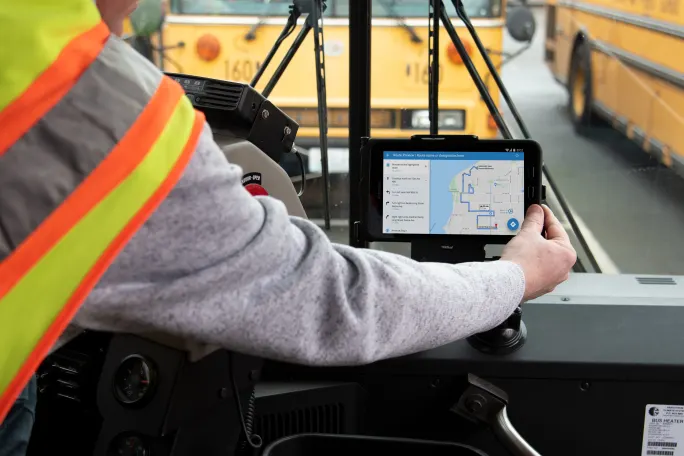
Zonar, which has been in business for more than 20 years, has integrated with major routing software providers, fuel management systems, and analytics platforms.
Image: Zonar
The ultimate contributor to fuel waste is vehicle idling, according to Tim Ammon, Zonar’s vice president and general manager of passenger services. Their telematics product focuses on idling, route efficiency, and fuel analysis.
“Key distinguishing characteristics include the robustness of the data collection, the scope of the data that can be collected and integrated into the analytical plan, and the simplicity with which data-driven insights on fuel level and vehicle activity can be integrated to evaluate fuel usage,” Ammon says.
Zonar, which has been in business for more than 20 years, has integrated with major routing software providers, fuel management systems, and analytics platforms.
“As a result,” Ammon says, “our integration process is very simple and well-understood. In the event of a complex challenge, we have a team of engineers and integration specialists on standby who can make any project go very smoothly.”
Ammon notes that while fuel costs won’t ever be zero, “fuel analysis and management practices aim to minimize the variance between the amount of fuel that is necessary to effectively operate the routing and operational structure of the district and the actual amount of fuel consumed.”
Zonar assess three variables to evaluate such disparities:
Mileage: Are we driving farther than expected?
Driver behavior: Is the bus left idling too much? Does the driver stomp the gas pedal pulling away from a stop?
Maintenance practices: Well-maintained school bus fleets use less fuel.
“Add in any identified maintenance issues during pre-trip inspections using our verified inspection process, and these insights are key to enhancing the fleet’s awareness around fuel-cost variances associated with maintenance issues,” Ammon says. “Zonar’s comprehensive capabilities allow us to be a high-value partner in any district’s effort to manage fuel usage.”
Topics:Maintenance
Subscribe to Our Newsletter
More Maintenance
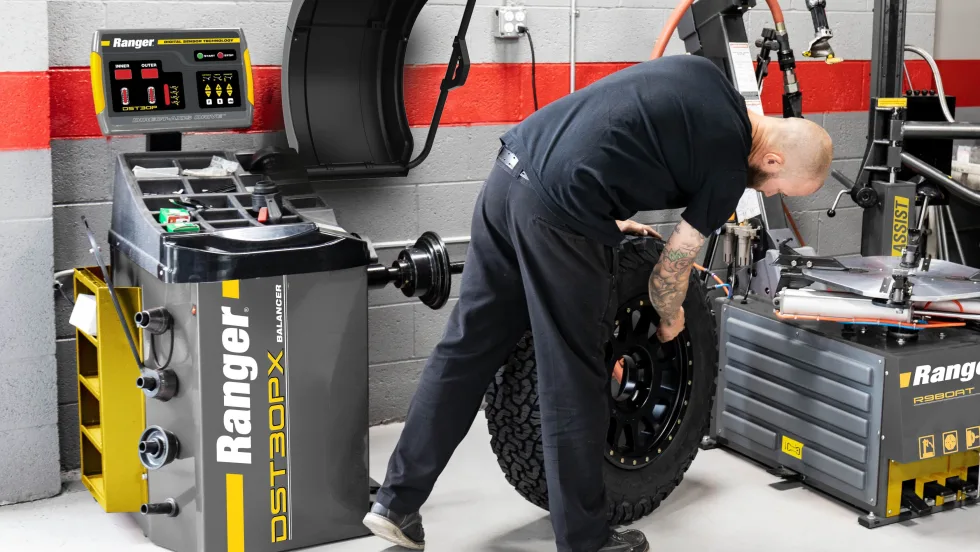
BendPak Launches Ranger DST30PX Wheel Balancer
BendPak's new wheel balancer handles tires up to 43 inches in diameter, with a reinforced design, precise weight placement, and faster service cycles.
Read More →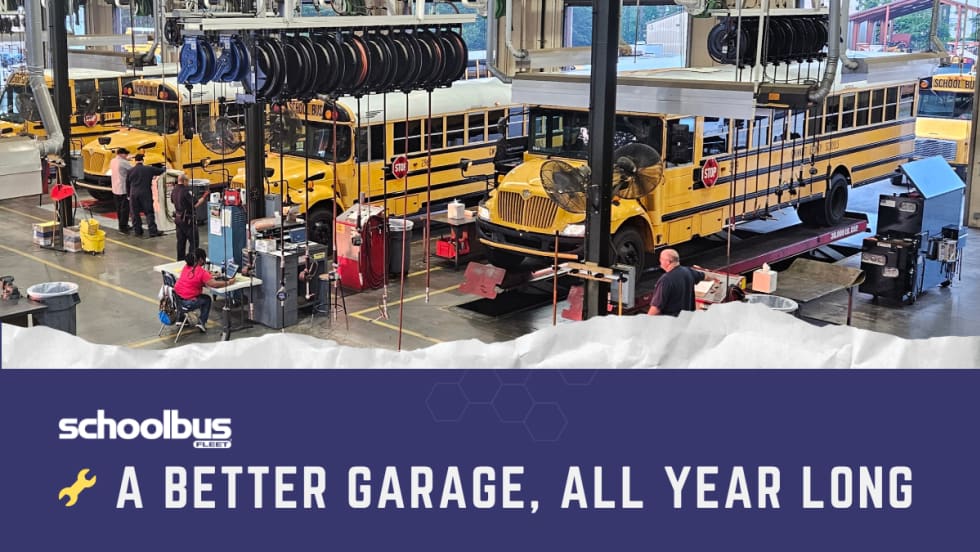
Tips for Ensuring School Bus Garages Are Safe and Warm Year-Round
Cold maintenance bays and rising heating costs? Learn how school bus garages can improve comfort with targeted heating, better airflow, and winter preparation.
Read More →
ASE Highlights School Bus Technician Certification Requirements
ASE is encouraging school bus maintenance professionals to maintain their certifications, highlighting seven specialized tests and five-year renewal requirements.
Read More →
International Adds E-Commerce Capabilities to Fleetrite.com
IC Bus customers can now browse, buy, and track shipments for more than 400,000 aftermarket parts online.
Read More →
The Most Expensive Thing You Do Before Selling a School Bus: Wait
When should you sell an aging school bus? Learn how maintenance, mileage, corrosion, specifications, and timing can affect resale value long before the auction.
Read More →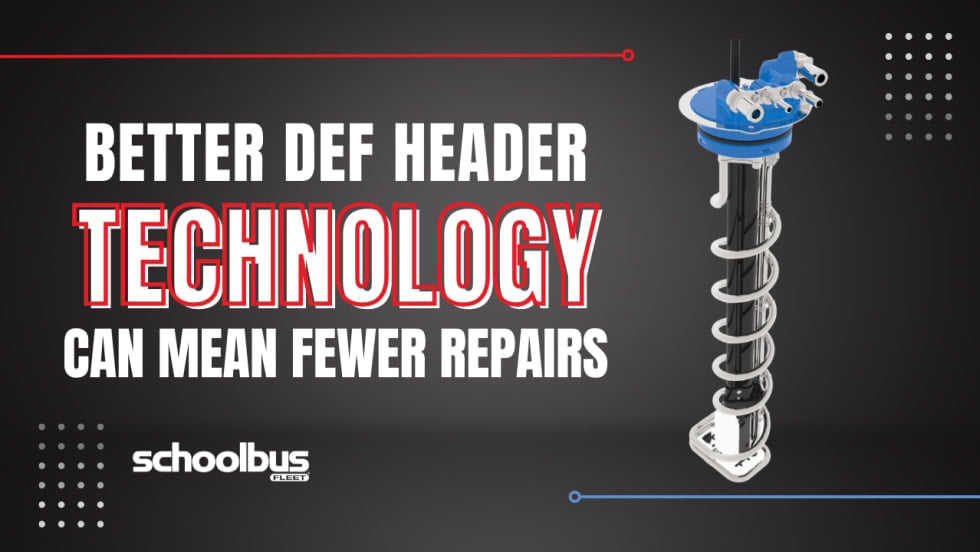
The Evolution of DEF Header Technology: What School Bus Operations Should Know at Replacement Time
See what school bus fleets should consider when replacing DEF headers to improve reliability, reduce repeat repairs, and control maintenance costs.
Read More →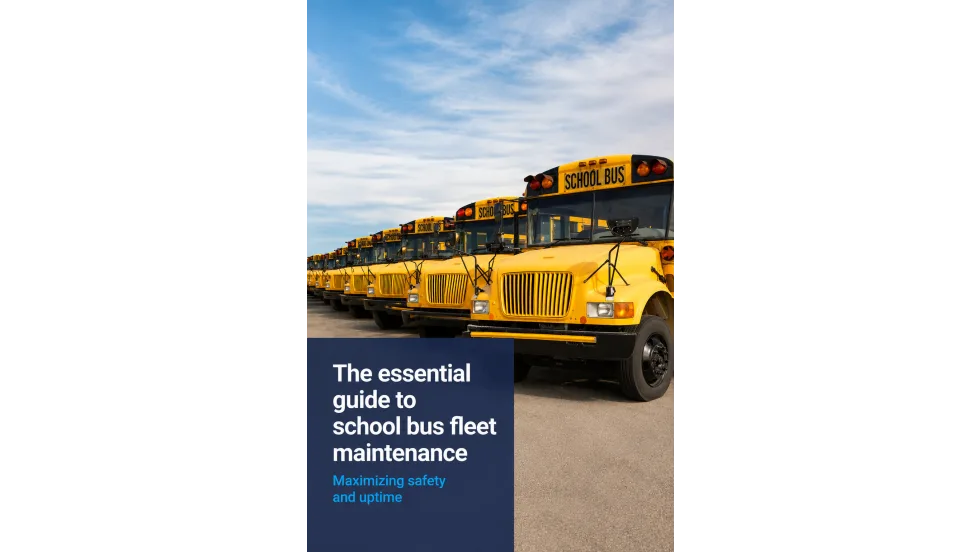
Sponsored•September 8, 2026
The Essential Guide to School Bus Maintenance and Student Safety
Your district's buses carry students to school every day. This guide shows how predictive maintenance powered by fleet data helps keep buses reliable, drivers accountable and students safer from the first bell to the last stop.
Read More →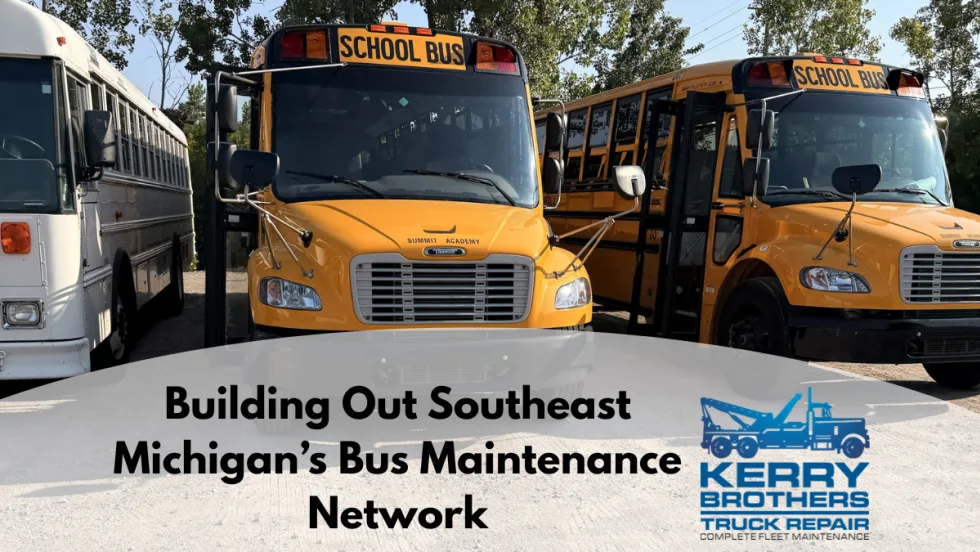
Kerry Brothers Grows Michigan School Bus Repair Network
The acquisition of Downriver Truck and Bus expands Kerry Brothers’ school bus maintenance footprint across southeast Michigan, adding repair capacity, diagnostic resources, and state inspection support.
Read More →
Noregon Introduces CAN Bus Diagnostic Tool, Expands JPRO Features
CAN Mentor and the latest JPRO update aim to simplify vehicle network diagnostics and improve repair efficiency for technicians of all experience levels.
Read More →
Cummins on Smarter, Simpler Engine Innovation
Cummins discusses its first-ever gasoline engine for school buses, EPA 2027, and why bus fleets still want durable, simpler internal combustion options.
Read More →