




Keys to safely transporting students with tracheostomies
Thoughtful planning is required to safely and smoothly integrate a student with a tracheostomy into school activities. Transporting the child with a t...
Thoughtful planning is required to safely and smoothly integrate a student with a tracheostomy into school activities. Transporting the child with a trach or trach and ventilator provides many special challenges for the transportation team. Considerations include providing safe, comfortable seating, conforming to applicable laws, training personnel and ensuring that all the proper equipment is transported with the student.
All students with tracheostomies must be monitored by an adult who is prepared to provide emergency support. Some students may require an individual attendant at all times. The bus driver is responsible for safe operation of the vehicle and therefore cannot monitor the medical needs of the student. At the same time, a driver who has an understanding of the special needs of his or her passengers can help make the trip safe and relaxing.
What is a tracheostomy?
A tracheostomy tube, often just called a trach or trach tube, may be placed for a variety of reasons. For some children, the placement of the trach tube bypasses a blockage in the airway to allow air to pass easily into the lungs. The trach tube may be placed to protect the airway from becoming blocked with food or secretions. A trach may also be placed so that a ventilator may be used to assist the child’s breathing.
Children with a trach have a variety of needs. Some require almost constant care and others may need minimal support. Many children with tracheostomies need extra help learning or have special-education needs, while some may have only physical disabilities. It is also important to realize that most children with tracheostomies may have difficulty communicating because the vocal cords depend on air passing over them to produce sound, which may be limited by the trach tube. In short, it is important to realize that each child with a tracheostomy is unique.
Train for emergencies
In addition to attendants, it is best if drivers are trained to respond to emergencies. A training session for drivers should include a brief overview of the types of emergencies that may arise with students who have trachs and how they can best assist the attendant. The most common problem is blockage of the trach tube with mucus, which requires suctioning. Another common problem is the accidental disconnection of the trach tube. Both of these occurrences require immediate attention and may require the driver to pull over and stop the vehicle in order to allow the attendant to properly care for the student. Many other common problems, such as increased or thickened secretions, would not require immediate attention and could be resolved when the student reaches his or her destination.
Training for emergencies might include guidelines on when to call for additional assistance, helping retrieve emergency supplies or simply helping with the other students on the bus. It should be made clear in the plan and in any training sessions that this type of training does not eliminate the need for care attendants or make the driver responsible for providing medical care. The object instead is to make the driver more comfortable with assisting during any emergency that requires immediate resolution.
{+PAGEBREAK+} Develop school care plans
The student’s individual needs should be assessed well before he or she arrives for the first day of school. A school care plan must be developed that includes an assessment of the child’s transportation needs. It is essential that the transportation coordinator be involved with the educational team if the student will be riding a school bus. The ideal school care and transportation plan should be written for the individual in great detail. It should be developed jointly by family and caregivers as well as school and transportation personnel. The plan must determine what type of equipment is to be provided by the student and what will be supplied by the school. It should also detail the emergency equipment that is needed and that must be kept with the student at all times. Both plans will need periodic review in order to remain current and effective. This may require a yearly assessment or more often if the student’s care needs change.
What to include in the plan
The transportation plan will need to include specific information about how the student is transported on the bus. Safety restraint methods should be detailed and must include information about the equipment to be transported with the child. For example, all oxygen containers and ventilators must be secured, preferably to the wheelchair, if there is one. The student’s suction machine is a key piece of equipment that is used immediately for all problems that may occur with the trach. The suction machine and most of the emergency equipment is student specific and must be available and accessible at all times. In addition, some states have special requirements about how some equipment, such as extra batteries or oxygen, can be transported when not in use.
Maintain special equipment
At Phoenix Children’s Hospital, caretakers pack all the emergency equipment in a special backpack called the “trach go bag.” A copy of the transportation plan should be kept with the student in the bag so it’s readily available to those administering care. In general, the bag should be packed with a portable suction machine that may be used with electric current (AC or DC power) and also runs on a battery. Other items should include suction catheters, a Delee mucus trap (a manual suction device that can be used if the electric- or battery-powered suction machine stops working) and a self-inflating mechanical ventilation bag (sometimes called an ambu bag). This ambu bag can be used to give air to the student if he or she stops breathing and needs resuscitation.
The trach bag should also include two spare trach tubes — one regular size and one a size smaller — to be used if and when the trach tube needs to be changed in an emergency, extra trach ties to hold the trach tube in place, a brief medical history and a list of emergency phone numbers. Students should have the trach bag with them at all times.
Personal protective equipment should be available to all staff for use when providing care. It is helpful if drivers are familiar with what this equipment looks like and have a basic idea of how it works.
Transporting children with special needs requires planning, teamwork and patience. It is essential that the transportation specialist be involved in the process to make sure that safety and comfort issues are addressed, as well as any state and federal laws or regulations. A successful experience will be the result of teamwork among the transportation department, the educational team and the medical team.
More Special Needs Transportation
Kelli Goterba Named 2026 Special-Needs School Bus Driver of the Year
Through building trust with students and strengthening her transportation team, Goterba exemplifies the impact special-needs drivers can make.
Read More →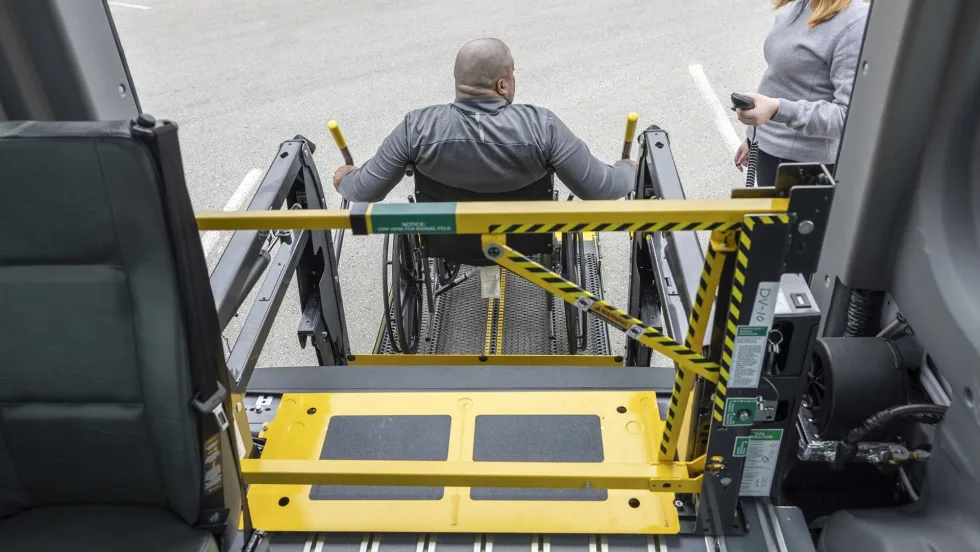
BraunAbility Introduces New Safety Barrier for Wheelchair Lifts
LiftSentinel is designed to add another layer of protection during wheelchair loading and unloading and can be retrofitted to many existing commercial lift installations.
Read More →
HopSkipDrive Launches New Safety, Driver Consistency Features for 2026-27 School Year
The company’s free ride recording, live ride tracking, and consistent driver assignments aim to improve safety and continuity for diverse student transportation needs.
Read More →
The Most Common Wheelchair Securement Mistakes on School Buses (and How to Fix Them)
Small missteps in wheelchair securement can have serious consequences. Here are 32 tips from experts to reduce risk and increase student safety on the bus.
Read More →
Inside AMF Bruns’ New Showroom: School Bus Securement Solutions Explained
Go inside AMF Bruns America’s new Ohio showroom with Maritza Valentin to see its FutureSafe technology, driver training tools, securement systems, and seating innovations.
Read More →
What AMF Bruns’ New Facility Means for Customers [Video]
Inside AMF Bruns’ new Stow, Ohio, operations: See how expanded space and innovation will enhance customer support and operations.
Read More →
AMF Bruns Expands in Ohio, Investing in Growth and Community
With expanded production space, local investment, and a growing workforce, AMF Bruns is scaling its U.S. presence. Here’s an exclusive first look inside the new Stow, Ohio, HQ.
Read More →
Inside AMF Bruns of America’s New Ohio Manufacturing Facility [Photos]
Take a behind-the-scenes look at AMF Bruns of America’s new 41,000-square-foot Stow, Ohio, headquarters, featuring advanced manufacturing, expanded space, and future-ready mobility solutions.
Read More →
First Student Boosts Student Support in Wichita & Texas
First Student and Wichita Public Schools are using behavioral support strategies to improve student ride experiences, while a separate initiative expands access to after-school programs through a bus donation.
Read More →
2026 Special-Needs Transportation Survey
What’s changing in special-needs transportation? This year, student transportation operators report a rising need, easing driver shortages, growing tech adoption, and evolving challenges. Sponsored by AMF Bruns of America.
Read More →