




Improve Your Special-Needs Evacuation Drills
Emergency evacuations require staff to make vital decisions under tremendous pressure. Make sure they're properly prepared.
There was a fire in the front of the bus on the right side! I was sitting in the second row on the right, role-playing a student who is autistic. There were four other "students" on the bus. They were seated two to three rows behind me. One was in a wheelchair in the middle of the bus. When each team went through its evacuation drill, I was the last student removed from the bus. However, I was the student most in danger from the fire. Why was I the last student evacuated? The answer is simple: drivers and aides have been taught that students who are autistic tend to run. That's why they didn't evacuate me first; they thought I might wander away, possibly into traffic. However, I was not safe in this case. These evacuation drills took place at the first National Special Transportation Safety Roadeo in Orlando, Fla., on March 8, 1998. The roadeo provided an excellent opportunity to practice evacuation techniques with special-needs students. I learned that we cannot train in absolutes. In many cases, students who are autistic do run. If possible, they should be the last students evacuated. However, our training programs must empower the transportation staff to make vital decisions on the spot - using all of their resources. They need to be able to address the emergency and plan accordingly. The bus driver and aide should have been monitoring how rapidly the fire was spreading. Was there a passer-by who could have held the autistic student? Could the student have been moved back a few rows, away from the flames, until everyone else was evacuated? Only by training and practice will drivers and aides be able to make split-second decisions.
Plan requires teamwork
Every bus should have an emergency evacuation plan developed by a team of professionals who are familiar with the students. Whenever possible, teachers should be involved because they know the students the best. In addition, teachers can assist with classroom instruction on emergencies. Another key person is the student's occupational therapist (OT) and/or physical therapist (PT). They have a wealth of knowledge about the physical capability of the student, whether the student is orthopedically fragile and how to transfer, lift or carry the student.
Students need training
Special-education students often have difficulty with changes in their routines. That's why they should be involved in evacuation drills. For example, students who use a wheelchair often have difficulty leaving their chair behind. During a drill, they can see for themselves how important it is to quickly evacuate the bus. You can always replace equipment; a student's life is more important. Toddlers and infants in car seats should be evacuated while strapped into the seat. By leaving the little ones in the car seats, you reduce the potential for them to start wandering into dangerous situations. Also, with the children in car seats, you already have protection for them when they are put on the ground.
Wheelchair options
Every student who uses a wheelchair is unique. He may have brittle bones or serious deformities that are not obvious. The OT and/or PT must be involved in planning for these students. One of the first questions to ask: Is the student more easily moved in or out of the wheelchair? In the case of a motorized wheelchair, which can weigh 200 pounds, you have no choice. You will need to transfer the student out of the wheelchair. Most likely a student who needs a motorized wheelchair will not be able to physically assist you. This student will need to be lifted, lowered to a fire blanket and then dragged out of the bus. Always remember, if a blanket drag is necessary, the student should be positioned so his head leaves the bus first. In this way you can support the head and neck. Some students with serious deformities may be more easily removed in their wheelchairs. Don't be deceived by the size of these students - their deformities may make lifting them out of the wheelchair precarious. Some students may spasm when quickly taken out of the wheelchair, and this movement could throw someone off balance. With the help of the OT and/or PT, the bus staff can determine which students should remain in their wheelchairs.
A calming voice helps
Whether you are in an emergency situation or routine process, always talk to the students. Some may not be able to understand your words, but a calming tone will help them remain calm. In summary, evacuation plans must be well thought out. Back-up plans should also be discussed. However, we cannot stop there. The emergency plans must be physically executed. Practicing with weighted dummies - or fellow staff members as students - can make the process more comfortable. In my opinion, however, we must perform evacuation drills with the students themselves. OTs and PTs should be present for these drills. Together, we can effectively plan for emergencies. Remember, in emergencies, quick thinking is key, and that comes from practice.
Jean Zimmerman is a district resource therapist for occupational and physical therapy at the School District of Palm Beach County in West Palm Beach, Fla.
More Special Needs Transportation
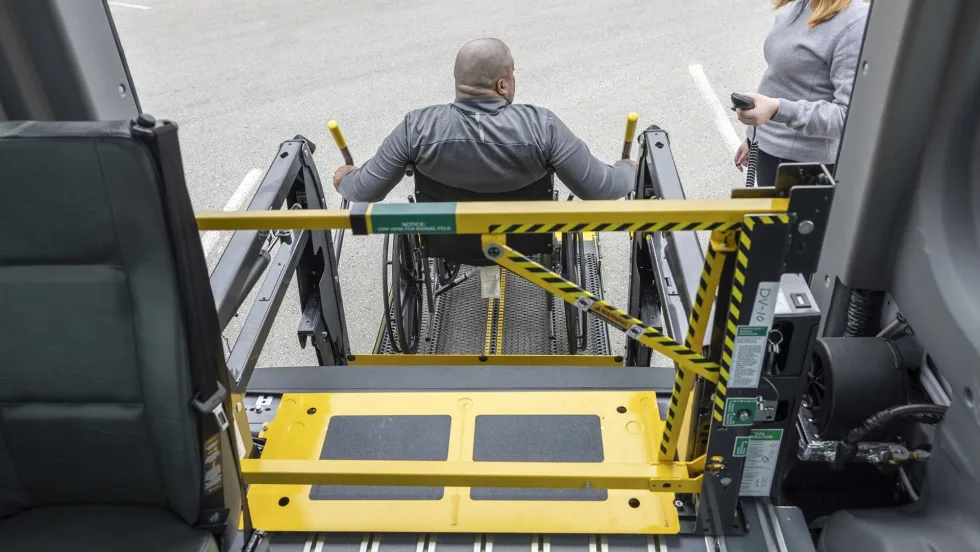
BraunAbility Introduces New Safety Barrier for Wheelchair Lifts
LiftSentinel is designed to add another layer of protection during wheelchair loading and unloading and can be retrofitted to many existing commercial lift installations.
Read More →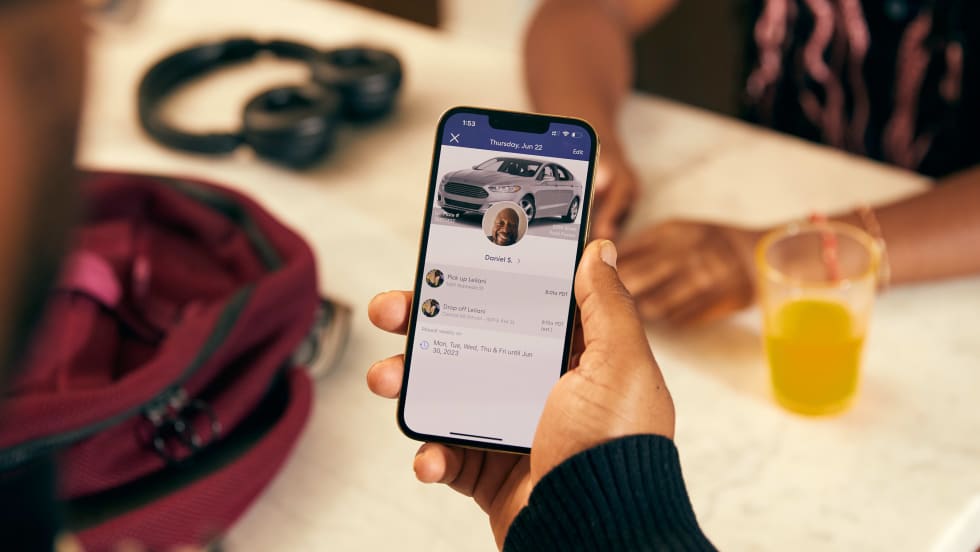
HopSkipDrive Launches New Safety, Driver Consistency Features for 2026-27 School Year
The company’s free ride recording, live ride tracking, and consistent driver assignments aim to improve safety and continuity for diverse student transportation needs.
Read More →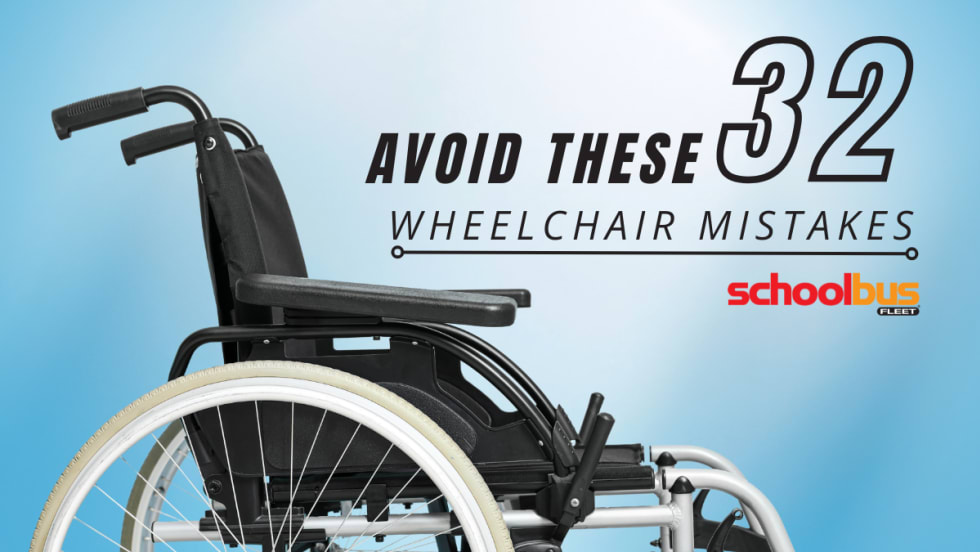
The Most Common Wheelchair Securement Mistakes on School Buses (and How to Fix Them)
Small missteps in wheelchair securement can have serious consequences. Here are 32 tips from experts to reduce risk and increase student safety on the bus.
Read More →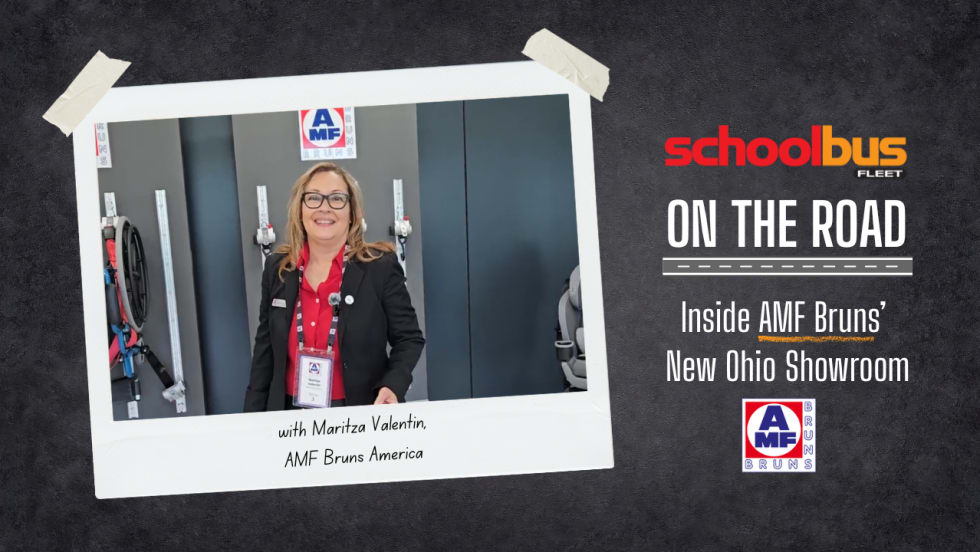
Inside AMF Bruns’ New Showroom: School Bus Securement Solutions Explained
Go inside AMF Bruns America’s new Ohio showroom with Maritza Valentin to see its FutureSafe technology, driver training tools, securement systems, and seating innovations.
Read More →
What AMF Bruns’ New Facility Means for Customers [Video]
Inside AMF Bruns’ new Stow, Ohio, operations: See how expanded space and innovation will enhance customer support and operations.
Read More →
AMF Bruns Expands in Ohio, Investing in Growth and Community
With expanded production space, local investment, and a growing workforce, AMF Bruns is scaling its U.S. presence. Here’s an exclusive first look inside the new Stow, Ohio, HQ.
Read More →
Inside AMF Bruns of America’s New Ohio Manufacturing Facility [Photos]
Take a behind-the-scenes look at AMF Bruns of America’s new 41,000-square-foot Stow, Ohio, headquarters, featuring advanced manufacturing, expanded space, and future-ready mobility solutions.
Read More →
First Student Boosts Student Support in Wichita & Texas
First Student and Wichita Public Schools are using behavioral support strategies to improve student ride experiences, while a separate initiative expands access to after-school programs through a bus donation.
Read More →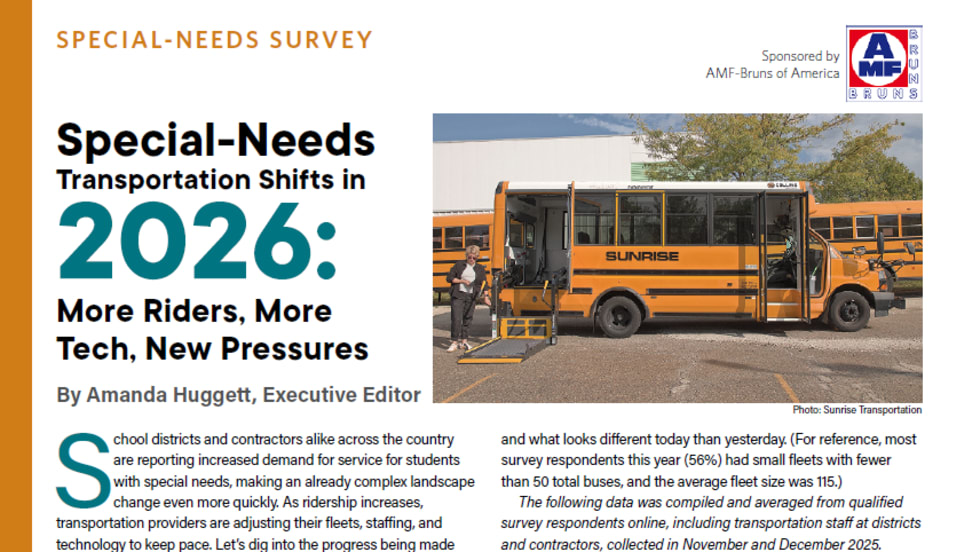
2026 Special-Needs Transportation Survey
What’s changing in special-needs transportation? This year, student transportation operators report a rising need, easing driver shortages, growing tech adoption, and evolving challenges. Sponsored by AMF Bruns of America.
Read More →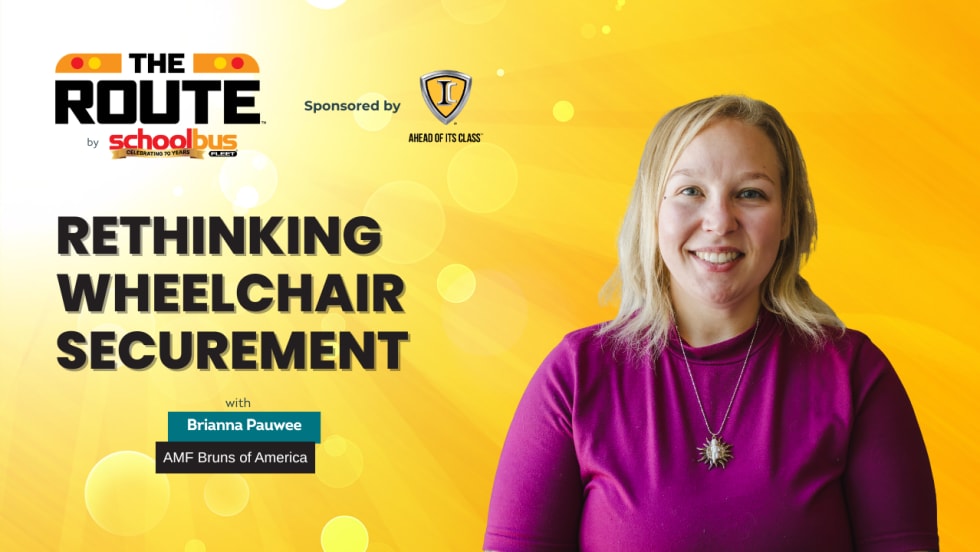
The Lived-Experience Gap in Mobility Tech: An Expert Take on Safe Student Transportation
Brianna Pauwee, a product application specialist at AMF Bruns of America and a wheelchair user, drops in to The Route to share practical securement and training insights, plus the story behind the new “Beyond Mobility” podcast. The Route is sponsored by IC Bus.
Read More →