Getting Up to Speed on Wheelchair Transport Safety
Key improvements include accommodations for transporting smaller children, more stringent crash testing of wheelchair tiedowns for wheelchair-anchored lap belts, a logo that identifies equipment that meets standards, and pass/fail ratings for proper seat belt use.
by Larry Schneider, Miriam Manary and Nichole Orton
February 8, 2016
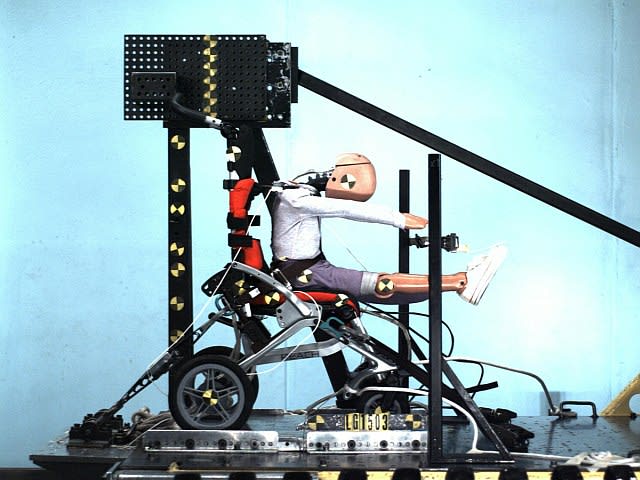
This peak-of-action photo from high-speed side view video shows a Reach pediatric
wheelchair protecting a 6-year-old crash-test dummy in a 30 mph frontal sled-impact test by a five-point wheelchair-integrated harness.
unknown node
7 min to read
In 2008, we wrote an article for School Bus Fleet entitled “The Dos and Don’ts of Wheelchair Transport Safety.” Many best-practice guidelines described in that article — such as transferring students in wheelchairs to the school bus seats, using WC19 wheelchairs and ensuring students in wheelchairs are using properly positioned, crashworthy pelvic and shoulder belt restraints — have not changed.
However, there have been some important updates to the voluntary industry equipment standards, often called Wheelchair Transportation Safety (WTS) standards, which are critical to providing safe transportation for anyone who remains in their wheelchair when traveling in motor vehicles. This article provides an update on those standards and addresses:
Consolidation of all U.S. WTS standards into one new volume of American National Standards Institute (ANSI) and Rehabilitation Engineering and Assistive Technology Society of North America (RESNA) wheelchair standards: Volume 4: Wheelchairs and Transportation;
A new logo that easily identifies equipment that complies with WTS standards;
Wheelchairs with integrated crashworthy five-point harnesses for use by smaller children;
More severe crash testing of wheelchair tiedowns to account for the use of crashworthy wheelchair-anchored lap belts;
New pass/fail ratings of wheelchairs that reflect how easily and how well the wheelchair works with vehicle-anchored seat belts;
A new website with information on wheelchair transportation safety.
Ad Loading...
WTS Standards Consolidation
In December 2012, updated versions of the WTS voluntary industry standards were published in a single volume of RESNA wheelchair standards called RESNA Volume 4: Wheelchairs and Transportation.
The volume contains three sections: Section 18, or “WC18,” for Wheelchair Tiedown and Occupant Restraint Systems for Use in Motor Vehicles (WTORS), which replaces SAE J2249; Section 19, or “WC19,” for Wheelchairs Used as Seats in Motor Vehicles; and Section 20, or “WC20,” for Wheelchair Seating Systems for Use in Motor Vehicles that are sold separately and can fit to several wheelchair frames. The complete Volume 4, or the individual sections, can be purchased from RESNA.
Look for the WTS Logo
A common feature of all three sections of Volume 4 is that compliant WTORS, wheelchairs and wheelchair seating systems must be crash tested in a severe frontal sled-impact test. Because of this, equipment that complies with any of these sections is considered suitable for use in all types of motor vehicles, including smaller vehicles, such as vans and minivans, for which higher severity crashes are more common. These vehicles are typically used for transporting people in wheelchairs in door-to-door paratransit service and serve as family-owned vehicles, but they may also be used in some school transportation services.
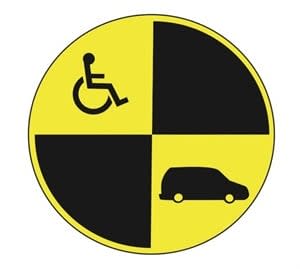
To more easily identify equipment that meets the Volume 4 standards, manufacturers of WTS-compliant products are now required to place a permanent label with the circular logo shown on the following page on their products in locations that are easily visible. The design of this logo is based on the high-contrast targets placed on crash-test dummies and equipment during the frontal-impact testing required by the standards.
The logo must also be on a permanent label in a visible location on crashworthy seat belts that are anchored to wheelchairs so as to distinguish these belts from postural belts that are encouraged for use during transportation, but that will not provide effective occupant protection in crash situations. This logo can be made with any two contrasting colors and must be at least ½ inch in diameter.
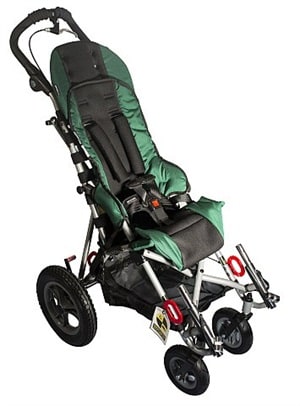
Shown here is a pediatric wheelchair with a five-point integrated harness.
unknown nodeWheelchairs for Transporting Small Children
Before 2012, the scope of the WC19 standard was limited to children who weighed 50 pounds or more, who are usually 6 years of age or older. This is because it was initially thought that children under 50 pounds in wheelchairs would usually be transferred to child safety seats (CSS) that could be installed on school bus seats. While transferring is still best practice, it is not a common occurrence for a variety of reasons, including the lack of seat belts or LATCH (Lower Anchors and Tethers for Children) in most school buses that are needed to install a CSS, and the need for many smaller children to remain in the special seating systems provided with their wheelchair.As a result, one of the most important additions to WC19 was expanding the standard to include wheelchairs for children who weigh as little as 26 pounds, corresponding to a typical 2-year-old child. Because children between 2 and 6 years of age lack sufficient skeletal development for effective use of three-point, lap-shoulder belts, WC19 also requires that wheelchairs designed for smaller children are equipped with a five-point belt system integrated into the wheelchair and/or seating-system frame similar to the five-point harness system provided with forward-facing CSS. The wheelchair is typically crash tested with a 6-year-old crash-test dummy protected by only the five-point wheelchair-integrated harness.
More Severe Tiedown Crash Testing for Wheelchair-Anchored Lap Belts
WC19 has always required manufacturers of compliant wheelchairs to provide the consumer with the option of purchasing a crashworthy, wheelchair-anchored lap belt that can connect to a vehicle-anchored shoulder belt to create a complete seat belt system. The use of a wheelchair-anchored lap belt provides more effective crash protection along with several other benefits, but it also results in higher forces on the rear tiedown straps of a four-point strap-type tiedown system during a frontal crash. The new version of the WTORS standards, WC18, now requires that WTORS manufacturers conduct an additional, more severe test of their tiedown systems with the crash-test dummy protected by a lap belt anchored to the wheelchair, such that the tiedown/securement system is loaded by both the wheelchair and the crash-test dummy during the frontal sled impact.
New Ratings for Accommodation of Vehicle-Anchored Pelvic Belt
In the original version of WC19, wheelchairs were assigned a single rating, ranging from “poor” to “excellent,” for how well the wheelchair allowed the proper use and positioning of vehicle-anchored lap-shoulder belts. But these ratings were not pass/fail criteria for WC19, even when a wheelchair received a “poor” score.
Ongoing research conducted by the University of Michigan Transportation Research Institute (UMTRI) on real-world crashes has shown that the primary cause of serious and fatal injuries to passengers seated in wheelchairs is non-use or improper use of a lap-shoulder belt. These injuries and fatalities can even occur in relatively minor collisions or non-collision events.
This research also indicates that there are two primary reasons that passengers in wheelchairs are not provided with effective and properly positioned seat belts. One is that drivers and caregivers are not properly trained in how to route and position lap and shoulder belts on people seated in different types of wheelchairs. The second is that the designs of many wheelchairs, and especially the wheelchair arm supports, make it extremely difficult to properly position a vehicle-anchored lap-shoulder belt on their occupants.
As a result of these observations from UMTRI’s real-world investigations, the new version of WC19 requires that wheelchairs are assigned two ratings related to the proper use of vehicle-anchored lap-shoulder belts.
The first rating is the “ease” by which an attendant can achieve proper use and positioning of a seat belt. The second is a rating of proper seat belt positioning (e.g., lap belt low on the pelvis near the thigh/pelvis junctions, good contact of the pelvic belt around the hips). In both cases, a rating of “acceptable” is required, although ratings of “good” and “excellent” are preferred.
Therefore, when recommending the purchase of a WC19 wheelchair that complies with the new standard, it is important to know not only that the wheelchair passed the frontal crash test, but it is equally important to know the ratings that the wheelchair model received regarding accommodation of vehicle-anchored seat belts.
Ad Loading...
To more easily identify equipment that meets the Volume 4 standards, manufacturers of WTS-compliant products are now required to place a permanent label with the logo shown here on their products in locations that are easily visible.
New WTS Website
Because the popular WTS website “rercwts.org” is no longer active or updated, UMTRI developed a new WTS website about a year ago. The new website contains most of the information that was available on the previous website, along with updated information on WTS standards, current lists of products that comply with WTS standards, and answers to frequently asked questions. This resource is often updated, and school transportation teams should find the information on the website useful as they seek to improve transportation safety for students in wheelchairs.
Lawrence Schneider is a research professor with the University of Michigan Transportation Research Institute (UMTRI). Miriam Manary is a senior engineering research associate with UMTRI and the chair of the RESNA committee on wheelchair transportation. Nichole Orton is an engineering research associate with UMTRI and UMTRI’s impact-sled engineer.
LiftSentinel is designed to add another layer of protection during wheelchair loading and unloading and can be retrofitted to many existing commercial lift installations.
The company’s free ride recording, live ride tracking, and consistent driver assignments aim to improve safety and continuity for diverse student transportation needs.
Small missteps in wheelchair securement can have serious consequences. Here are 32 tips from experts to reduce risk and increase student safety on the bus.
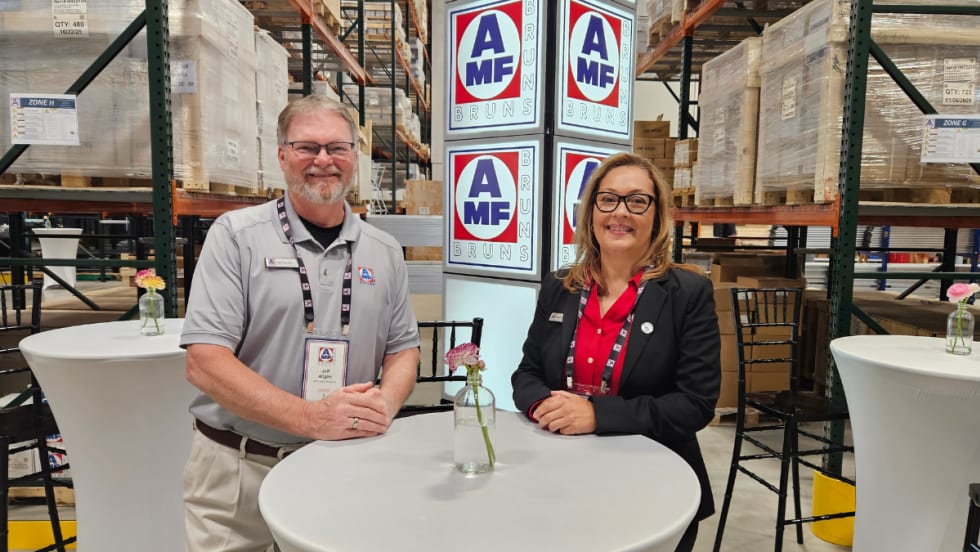
Go inside AMF Bruns America’s new Ohio showroom with Maritza Valentin to see its FutureSafe technology, driver training tools, securement systems, and seating innovations.
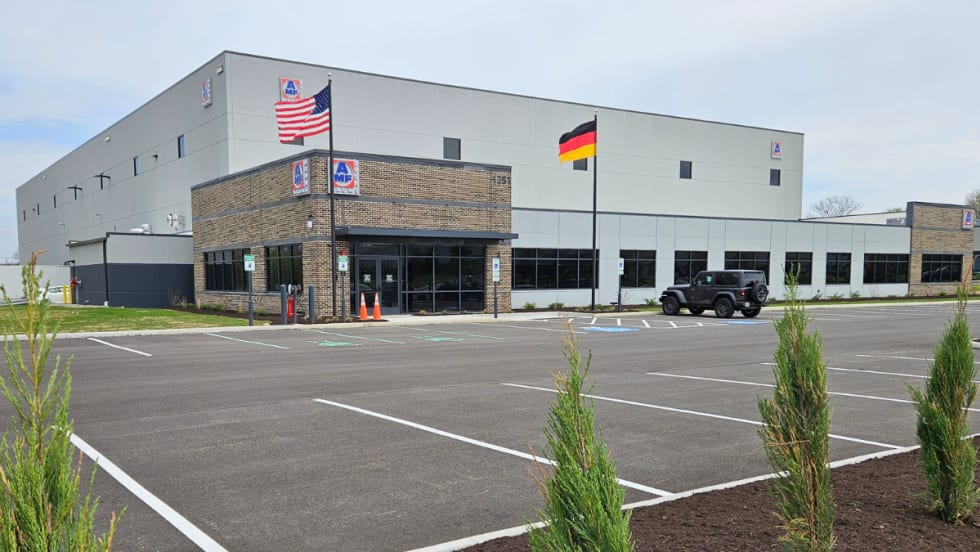
With expanded production space, local investment, and a growing workforce, AMF Bruns is scaling its U.S. presence. Here’s an exclusive first look inside the new Stow, Ohio, HQ.
Take a behind-the-scenes look at AMF Bruns of America’s new 41,000-square-foot Stow, Ohio, headquarters, featuring advanced manufacturing, expanded space, and future-ready mobility solutions.
First Student and Wichita Public Schools are using behavioral support strategies to improve student ride experiences, while a separate initiative expands access to after-school programs through a bus donation.
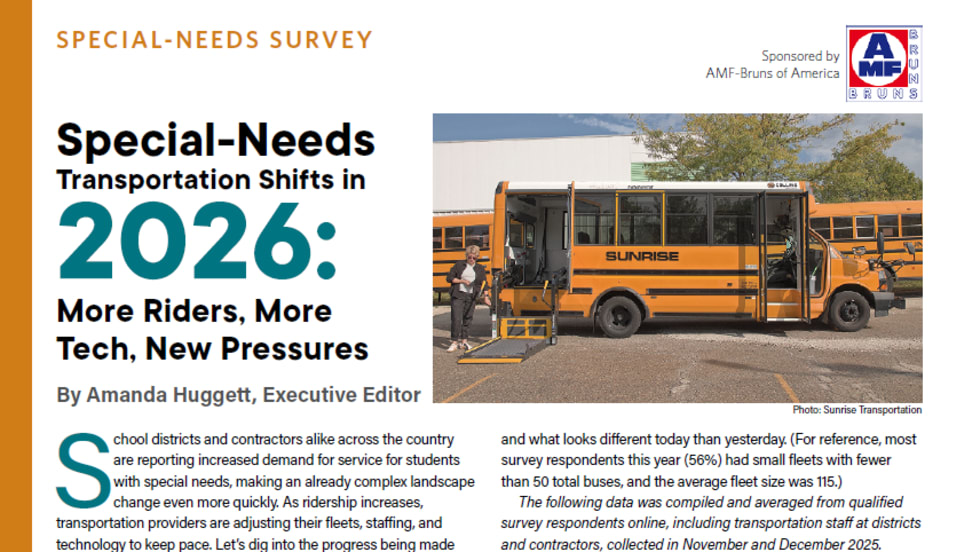
What’s changing in special-needs transportation? This year, student transportation operators report a rising need, easing driver shortages, growing tech adoption, and evolving challenges. Sponsored by AMF Bruns of America.
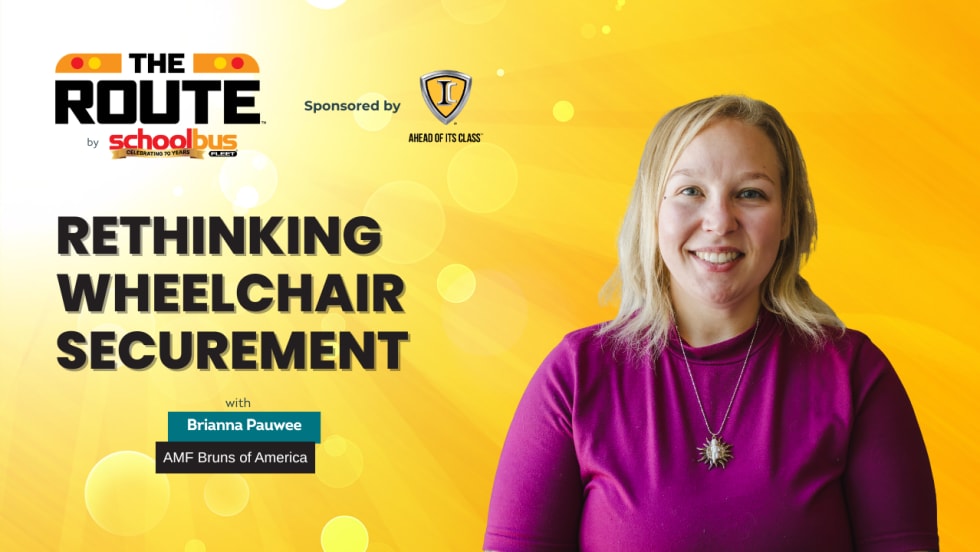
Brianna Pauwee, a product application specialist at AMF Bruns of America and a wheelchair user, drops in to The Route to share practical securement and training insights, plus the story behind the new “Beyond Mobility” podcast. The Route is sponsored by IC Bus.