




Focused on occupant safety
Ricon Corp.’s K and S Series wheelchair lifts feature an interlocked restraint belt, as well as barriers to prevent excessive rolling on the platform. The company offers training for operators and technicians.
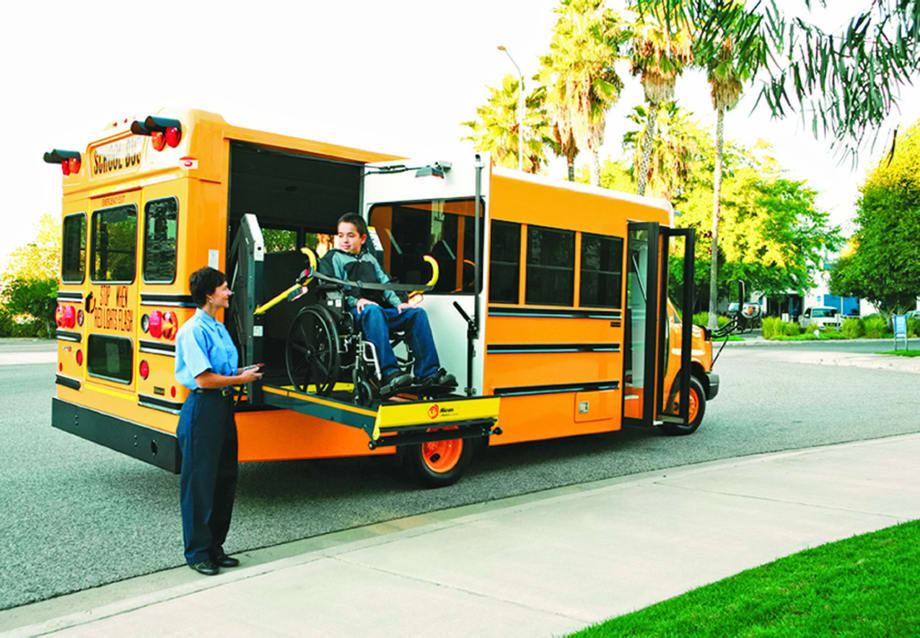
Ricon suggests that its lifts be loaded with the wheelchair facing out of the bus, so the battery of the chair is at the back of the lift.
For 40 years, Ricon Corp. has been designing, manufacturing and installing wheelchair lifts and ramps for a variety of vehicles, including school buses.
Currently, Ricon offers two series of lifts for the school bus market: the S Series and the K Series. These lifts are lightweight, and both come equipped with the company's patented interlocked occupant restraint belt; the K Series — also called KlearVue — provides an unobstructed view through the bus' windows due to its folding platform design.
To learn more about Ricon's wheelchair lifts for the school bus industry, SBF spoke with Tony Ward, sales manager for Ricon.
Lifts have a 'safety zone'
Safety is a No. 1 priority for Ricon, Ward says.
"Our lifts feature what we call a Ricon safety zone, which encapsulates the passenger on the lift's platform before they ever leave the ground," Ward explains.
The safety zone includes front and rear barriers on the lift platform and 3.75-inch-high barriers on each side of the platform to prevent a mobility device from rolling off the lift.
In addition, the interlocked restraint belt must be secured before the lift will operate.
"A lot of the new wheelchairs have joysticks that are used to move them around. In the lift, if an occupant hits the joystick, that belt will stop them from rolling off the lift," Ward explains.
Operators, technicians need training
When planning to operate a Ricon lift, "make sure that the operators are up-to-date on training," Ward advises. "Making sure that the operators have taken the course and know what they are supposed to be doing is a key component."
"You need to make sure that the equipment is properly maintained by a trained technician," Ward adds. "Ricon offers technician training."
The training for both operators and technicians is available online, as a video or in a live seminar.
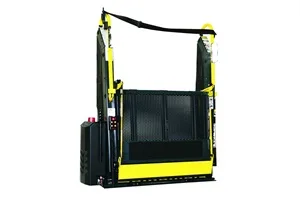
Ricon's K Series lifts provide an unobstructed view out of the bus' windows due to the folding platform design.
During training, attendees become certified to perform all aspects of maintenance for both the S Series and K Series wheelchair lifts. The training also covers basic to advanced maintenance procedures that are intended to increase the life of a lift.
Wheelchairs should be loaded facing outward
Ricon suggests that wheelchairs or mobility devices be loaded facing outward.
"For maximum safety, Ricon requires that passengers always face outward," Ward explains. "This is due to variations in the size and configuration of mobility aids."
For instance, the back of a mobility aid — where the battery is located — is often the heaviest part of the device. For this reason, it should be nearest to the bus.
Ward also urges lift operators to stay on the ground, rather than get on the lift with the occupant.
"The weight limit for the standard lift is 800 pounds," he says. "Depending on what wheelchair or motorized cart you have, they can reach weights of 300 or 400 pounds. And so, depending on the occupant, you really could exceed that limit if you put someone else on the platform."
Many options are available
Ward says the company's K and S Series lifts are available in many platform sizes that can accommodate any size mobility aid.
"You want a safe lift that is going to be easy for the operator to use and easy for the shop to maintain," he says. "Ricon's S and K Series lifts have been a school bus industry standard for 40 years."
More Special Needs Transportation
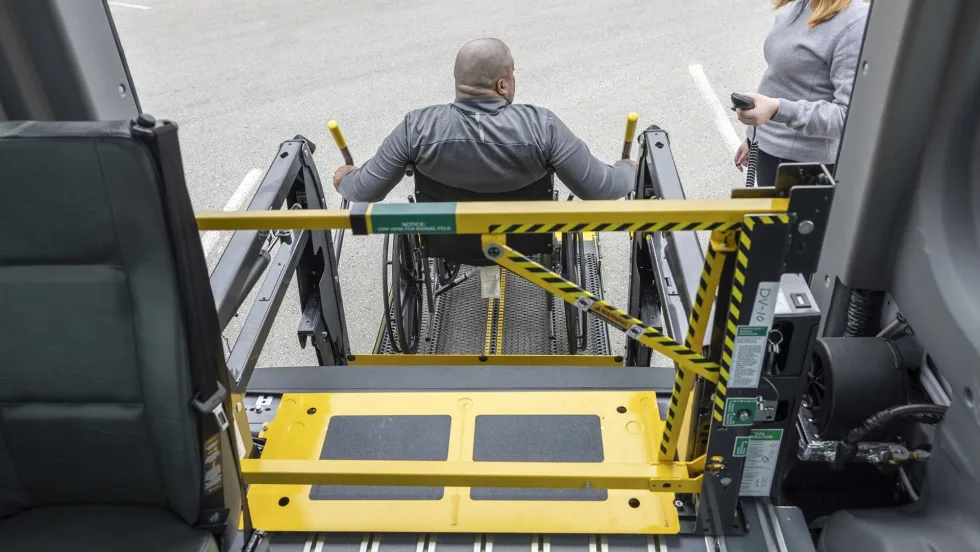
BraunAbility Introduces New Safety Barrier for Wheelchair Lifts
LiftSentinel is designed to add another layer of protection during wheelchair loading and unloading and can be retrofitted to many existing commercial lift installations.
Read More →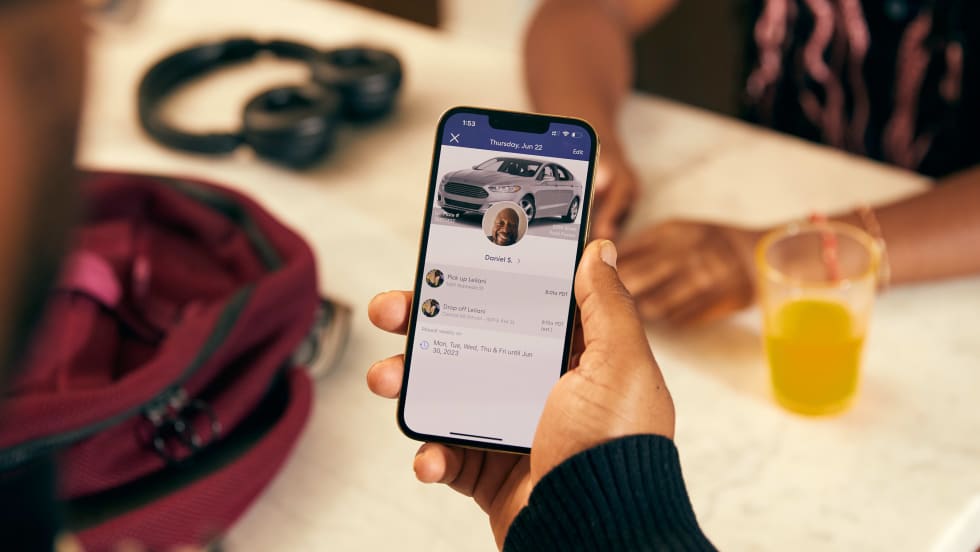
HopSkipDrive Launches New Safety, Driver Consistency Features for 2026-27 School Year
The company’s free ride recording, live ride tracking, and consistent driver assignments aim to improve safety and continuity for diverse student transportation needs.
Read More →
The Most Common Wheelchair Securement Mistakes on School Buses (and How to Fix Them)
Small missteps in wheelchair securement can have serious consequences. Here are 32 tips from experts to reduce risk and increase student safety on the bus.
Read More →
Inside AMF Bruns’ New Showroom: School Bus Securement Solutions Explained
Go inside AMF Bruns America’s new Ohio showroom with Maritza Valentin to see its FutureSafe technology, driver training tools, securement systems, and seating innovations.
Read More →
What AMF Bruns’ New Facility Means for Customers [Video]
Inside AMF Bruns’ new Stow, Ohio, operations: See how expanded space and innovation will enhance customer support and operations.
Read More →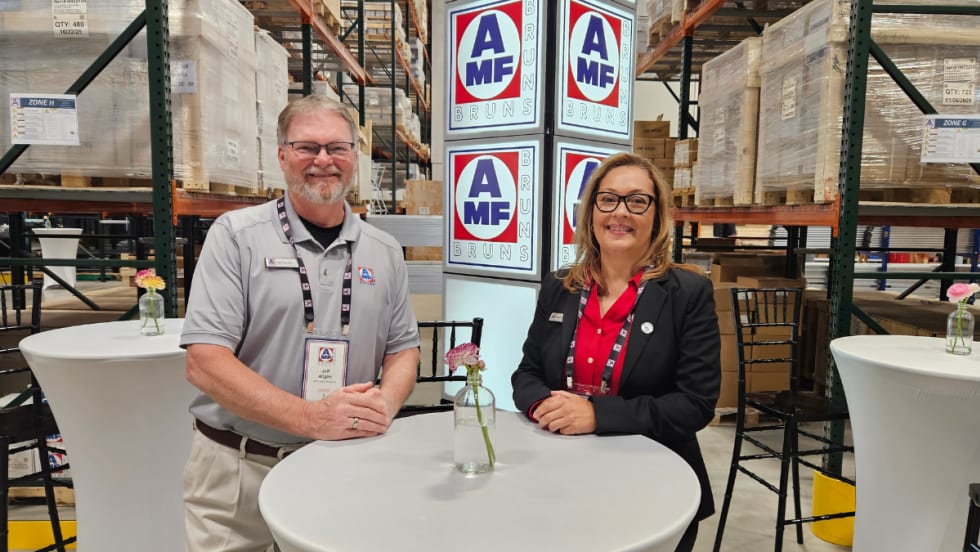
AMF Bruns Expands in Ohio, Investing in Growth and Community
With expanded production space, local investment, and a growing workforce, AMF Bruns is scaling its U.S. presence. Here’s an exclusive first look inside the new Stow, Ohio, HQ.
Read More →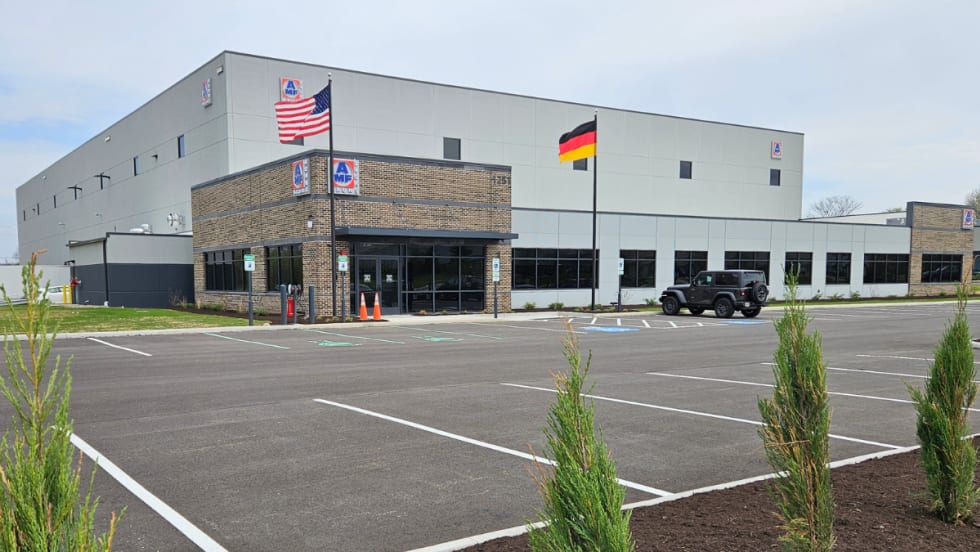
Inside AMF Bruns of America’s New Ohio Manufacturing Facility [Photos]
Take a behind-the-scenes look at AMF Bruns of America’s new 41,000-square-foot Stow, Ohio, headquarters, featuring advanced manufacturing, expanded space, and future-ready mobility solutions.
Read More →
First Student Boosts Student Support in Wichita & Texas
First Student and Wichita Public Schools are using behavioral support strategies to improve student ride experiences, while a separate initiative expands access to after-school programs through a bus donation.
Read More →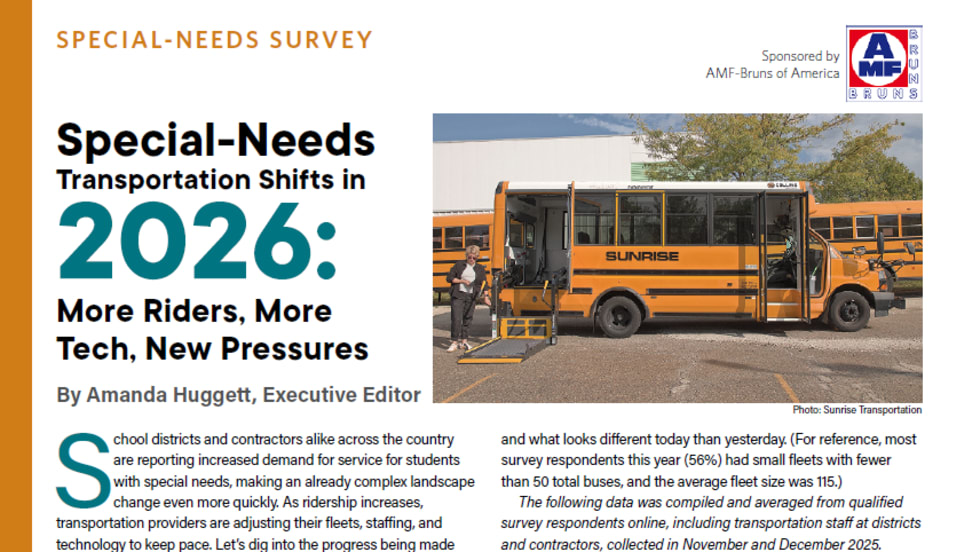
2026 Special-Needs Transportation Survey
What’s changing in special-needs transportation? This year, student transportation operators report a rising need, easing driver shortages, growing tech adoption, and evolving challenges. Sponsored by AMF Bruns of America.
Read More →
The Lived-Experience Gap in Mobility Tech: An Expert Take on Safe Student Transportation
Brianna Pauwee, a product application specialist at AMF Bruns of America and a wheelchair user, drops in to The Route to share practical securement and training insights, plus the story behind the new “Beyond Mobility” podcast. The Route is sponsored by IC Bus.
Read More →