




Fire and ice: Transporting students with liquid oxygen
Are school transportation officials taking appropriate precautions when transporting oxygen? The Maryland State Department of Education publishes guid...
Are school transportation officials taking appropriate precautions when transporting oxygen? The Maryland State Department of Education publishes guidelines for transporting students with this hazardous material on school buses.
The problem
A survey taken in the fall of 2000 revealed a common misconception among some school transportation officials in the state of Maryland. These transporters were unaware that students carrying oxygen on school buses in their districts were using liquid oxygen instead of compressed gas oxygen.
At the same time, a report surfaced about a disabled patient suffering severe frostbite on his back from a liquid oxygen spill in an emergency vehicle. This information, combined with a lack of knowledge of liquid oxygen, caused a great deal of concern among transporters.
As a result, the Maryland State Department of Education convened a committee in January 2001 to study the safe use of both gas and liquid oxygen in various school settings, including on the school bus. The committee was made up of transportation, special-education and risk management specialists, health care professionals and attorneys.
The committee produced a comprehensive set of guidelines for managing oxygen in the schools and on school buses. The guidelines represent a major step in establishing best practices for transporting gas or liquid oxygen on school buses.
IEP issues
The decision to transport an oxygen-dependent student on the school bus is the responsibility of the IEP team based on the individual needs of the student. The IEP team and transportation staff should work closely together to determine the best way to manage the physical and medical needs of the student while protecting the safety of others on the bus.
There are questions that need to be addressed before the student begins to ride the bus. Does the student need continuous oxygen or on an as-needed basis? Who should be responsible for adjusting the level of oxygen: the student, the bus assistant or a nurse? What should trigger a 911 call? These are the types of questions that the IEP team should resolve within the context of federal law, individual state laws and school system policies.
Although these are important issues discussed in the Maryland guidelines, they are beyond the scope of this article. The focus of this article is the danger posed by oxygen on the bus and the steps transporters should take to ensure the safety of those traveling with the oxygen.
Characteristics of oxygen
Oxygen makes up 21 percent of the air we breathe. In addition to supporting life, oxygen, along with fuel and heat, is a vital ingredient for ignition and combustion. The oxygen itself doesn’t burn, but it supports and accelerates combustion.
It takes a considerable amount of heat to ignite flammable materials in air. However, it takes much less heat to ignite flammable materials in an oxygen-enriched atmosphere of 23 percent or more. Additionally, some materials that are not flammable in air will burn in an oxygen-enriched atmosphere. The more oxygen present, the less heat it takes to ignite, and the fire will burn more quickly and intensely. In a pure oxygen atmosphere, like that caused by a liquid oxygen spill, even the friction of a shoe hitting the ground has been known to cause ignition.
Pure oxygen gas (GOX) is clear and odorless. It is heavier than air and will settle to collect in low areas. Liquid oxygen (LOX) is light blue and has the consistency of water. It has a boiling point of -297 degrees F and will evaporate to a gas if heated above this temperature. It is extremely cold, or cryogenic. It will instantly freeze tissue, causing acute frostbite. Most materials that come into contact with liquid oxygen immediately become brittle enough to shatter.
Gas vs. liquid delivery systems
Students using oxygen carry an oxygen delivery system containing either compressed GOX or LOX. All delivery systems require a user connection with delivery tubing and a breathing device. The long, clear plastic delivery tubing connects the oxygen supply to the breathing device. The breathing device may be a nasal cannula, face mask or tracheotomy tube.
The compressed gas oxygen is stored in a cylinder under extremely high pressure, about 2,000 pounds per square inch. One inherent danger with compressed GOX is that a valve stem can eject from the cylinder, turning the cylinder into a high velocity missile. Wear, abuse, improper assembly or a forceful impact may cause this type of accident to occur. In one documented case occurring in a hospital, the cylinder shot with such force that it embedded in a concrete wall. Smaller compressed gas units are carried in a shoulder pack, while the larger units are carried in a cart or attached to the patient’s wheelchair or scooter.
LOX is stored in an insulated metal container similar to a thermos. In the portable units, the container and the metal tubing for filling, dispensing and venting are housed in a plastic casing. As the liquid oxygen in the container warms to above -297 degrees, it creates a pocket of evaporated oxygen gas at the top of the container. This evaporated gas is further warmed through a series of coiled tubes and delivered to the breathing device. When this pocket of gas reaches a pressure of about 40 pounds per square inch, the container is designed to vent the excess oxygen through a pressure relief valve. This venting causes a periodic hissing sound that is perfectly normal.
Because portable units are designed to vent pure oxygen gas, they must be stored in well-ventilated areas to prevent an oxygen-enriched atmosphere from building up around the unit. Attached to the top of the insulated container are metal tubes used to fill the container, regulate the flow to the patient and warm the gas. Therefore, the container must be kept in an upright position or dangerously cold liquid oxygen may leak from the unit.
Steps for safe transport
The Maryland guidelines state that oxygen cylinders or containers must be secured in the following manner:
All respiratory-related equipment must be securely mounted or fastened to a wheelchair, bus seat or bus floor during transit.
Compressed gas oxygen cylinders should be secured to prevent movement.
Liquid oxygen containers should be secured in an upright position to prevent leakage.
Liquid oxygen containers should be secured to prevent contact with cryogenic material.
Liquid oxygen containers must be stored in a well-ventilated area.
All oxygen containers should be secured in a location that would allow all passengers free access to and egress from emergency exits.
Additional recommendations:
The school bus should be equipped with two-way communications.
A sign or sticker should be posted on or near each door to notify emergency personnel that oxygen is on board.
The student should be seated so that the oxygen is not in the proximity of any heater or motor.
The driver and assistant should receive thorough training in the safe use of oxygen.
By determining the individual needs of the oxygen-dependent student, establishing common sense procedures for securing the oxygen and thoroughly training drivers and assistants, transporters can reasonably ensure the safety of all students traveling on a bus with oxygen.
Les Douglas is an area transportation supervisor for the Howard County (Md.) Public School System.
More Special Needs Transportation

Kelli Goterba Named 2026 Special-Needs School Bus Driver of the Year
Through building trust with students and strengthening her transportation team, Goterba exemplifies the impact special-needs drivers can make.
Read More →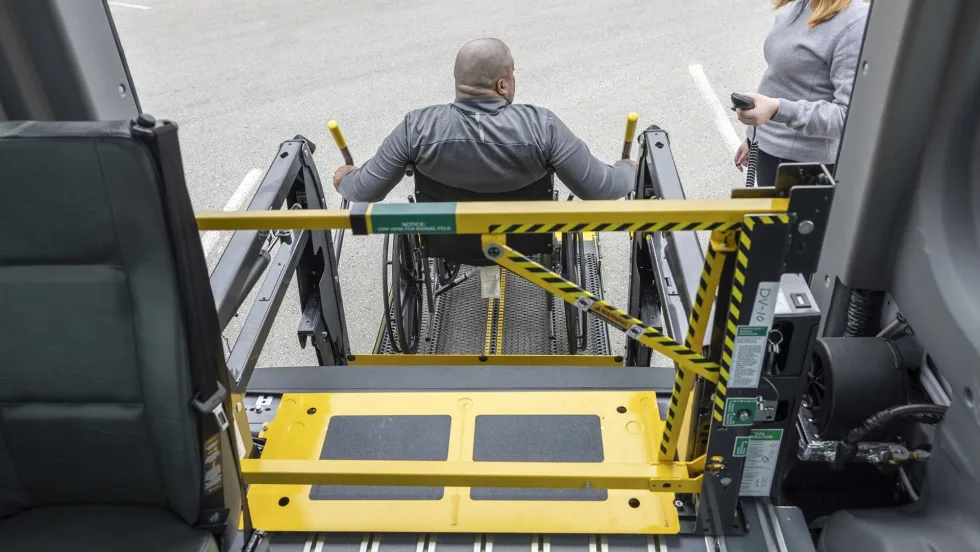
BraunAbility Introduces New Safety Barrier for Wheelchair Lifts
LiftSentinel is designed to add another layer of protection during wheelchair loading and unloading and can be retrofitted to many existing commercial lift installations.
Read More →
HopSkipDrive Launches New Safety, Driver Consistency Features for 2026-27 School Year
The company’s free ride recording, live ride tracking, and consistent driver assignments aim to improve safety and continuity for diverse student transportation needs.
Read More →
The Most Common Wheelchair Securement Mistakes on School Buses (and How to Fix Them)
Small missteps in wheelchair securement can have serious consequences. Here are 32 tips from experts to reduce risk and increase student safety on the bus.
Read More →
Inside AMF Bruns’ New Showroom: School Bus Securement Solutions Explained
Go inside AMF Bruns America’s new Ohio showroom with Maritza Valentin to see its FutureSafe technology, driver training tools, securement systems, and seating innovations.
Read More →
What AMF Bruns’ New Facility Means for Customers [Video]
Inside AMF Bruns’ new Stow, Ohio, operations: See how expanded space and innovation will enhance customer support and operations.
Read More →
AMF Bruns Expands in Ohio, Investing in Growth and Community
With expanded production space, local investment, and a growing workforce, AMF Bruns is scaling its U.S. presence. Here’s an exclusive first look inside the new Stow, Ohio, HQ.
Read More →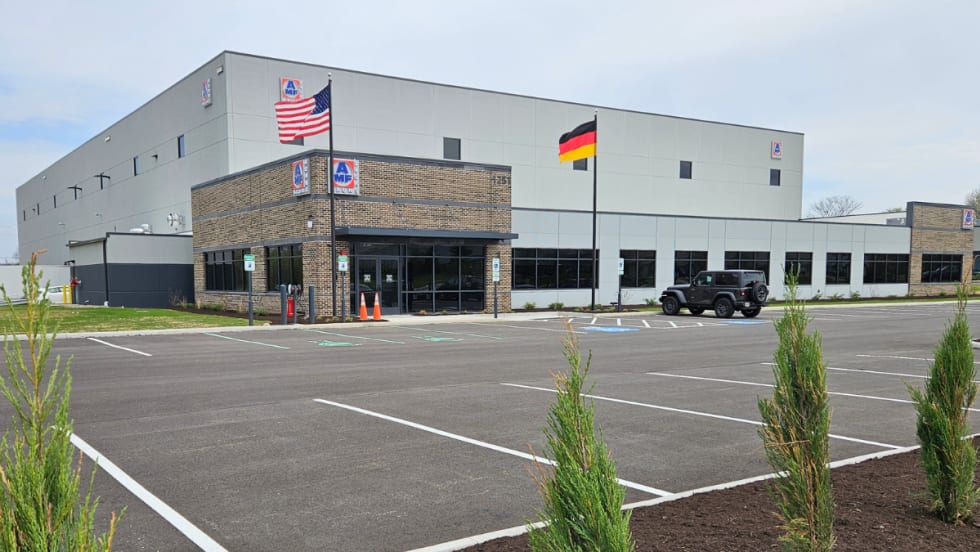
Inside AMF Bruns of America’s New Ohio Manufacturing Facility [Photos]
Take a behind-the-scenes look at AMF Bruns of America’s new 41,000-square-foot Stow, Ohio, headquarters, featuring advanced manufacturing, expanded space, and future-ready mobility solutions.
Read More →
First Student Boosts Student Support in Wichita & Texas
First Student and Wichita Public Schools are using behavioral support strategies to improve student ride experiences, while a separate initiative expands access to after-school programs through a bus donation.
Read More →
2026 Special-Needs Transportation Survey
What’s changing in special-needs transportation? This year, student transportation operators report a rising need, easing driver shortages, growing tech adoption, and evolving challenges. Sponsored by AMF Bruns of America.
Read More →