




Dramatic Moments Highlight 1998 NAPT Show
NTSB Chairman Jim Hall challenges the industry to 'commit' to lap-shoulder belts, while CNN's Jim Polk challenges the NAPT.
Without missing a beat, the issue of seat belts on large school buses took center stage at the National Association for Pupil Transportation's 24th Annual Conference and Trade Show in Austin, Texas. The five-day event drew approximately 850 delegates and guests. In addition, the trade show at the Austin Convention Center featured 129 vendors. The lively discussion of occupant protection on school buses followed the National Transportation Safety Board's (NTSB) one-day hearing on bus crashworthiness in August in Las Vegas, Nev. In Austin, federal regulators and an executive producer for CNN weighed in on the issue, providing their diverse opinions on the continuing controversy.
Hall calls for change
In his keynote address, NTSB Chairman Jim Hall signaled that the federal agency was ready to call for installation of a restraint system, possibly lap-shoulder belts, on large school buses. "We have to stop being indecisive on this issue," he said. "Let's commit to doing it, but let's do it right." Hall said the NTSB's ongoing study of school bus crashes that resulted in nine fatalities and 121 injuries suggests that compartmentalization does not necessarily prevent ejections or injuries to youngsters sitting away from the impact zone. "These findings may challenge our 1987 findings," Hall said, referring to the NTSB's study of 43 school bus crashes that indicated that seat belts would not have significantly changed the injury outcomes in the accidents. To bolster his position, Hall suggested that the school transportation industry look more closely at its responsibility to all of the nation's children, not just those on school buses. Hall said children are being sent conflicting signals about seat-belt use: It's acceptable to ride in one type of vehicle — a school bus — without buckling up, but not in a passenger car. "We need to be concerned about this mixed message," he said. In what he described as his personal opinion, Hall said ". . . it's our turn to step up to the plate on the issue of lap/shoulder belts on school buses."
NHTSA shows restraint
As the NTSB applies pressure for a commitment to some form of a belt-restraint system on school buses, the National Highway Traffic Safety Administration (NHTSA) holds steady with its position that a determination cannot be made without extensive crash testing and additional accident analysis. Toward that end, NHTSA announced in August a two-year, $900,000 plan to develop the "next-generation occupant protection system." Philip Recht, NHTSA's deputy administrator, told delegates that the three-phase program most likely will investigate countermeasures such as padded side walls and arm rests as well as lap belts and lap/shoulder belts. "We will go into this entire process, particularly the testing, with no preconceptions," Recht said. "It is our goal to be an honest broker and let the science tell us where to go." Recht added, however, that any improvements to compartmentalization will have to satisfy several criteria, including affordability, applicability to passengers of all sizes and maintenance of seating capacity.
[PAGEBREAK]
CNN exec exhorts NAPT
"It is time to stop using our children as crash dummies." According to James Polk, executive producer of CNN/Time's "Newstand," the statement was made by an attorney who was interviewed earlier this year by CNN for one of its segments on seat belts on school buses. Polk told conferees that they have become too comfortable with the notion that compartmentalization is the best protection for children on school buses. "Is there something else that can be done to better protect them? You ought to be trying to find out," Polk said. It's hard to argue with that logic. Certainly, the school transportation industry is looking for the "next-generation occupant protection system," as the National Highway Traffic Safety Administration (NHTSA) has labeled its objective in a $1 million, two-year research and crash-testing program. But Polk chastised the industry for not energizing a grass-roots movement to aggressively explore the possibility that compartmentalization can be improved upon. Specifically, he urged the NAPT to bring its influence into the public arena. "Most Americans don't even know you exist," he said. "Rightly or wrongly, people already believe that [improving occupant protection] is an issue that you should be working on," Polk said. "Regardless of what your beliefs are, your purpose is safer school transportation." Michael Martin, executive director of the NAPT, said his organization is considering a "modified grass-roots campaign" in collaboration with the National School Transportation Association and the National Association of State Directors of Pupil Transportation Services (NASDPTS). "We are going to take up the challenge that Jim Polk issued," Martin said. "We want to let people know about all the good things that this industry does."
Route hazards discussed
Identification, information and training were the themes of a report on school bus route hazards compiled by NASDPTS under a grant from NHTSA. The report was discussed at a workshop hosted by NASDPTS Executive Director Charlie Gauthier and Diane Wigle, highway safety specialist at NHTSA. During his presentation, Gauthier identified several components that should be part of any route hazard identification system, including a system for reviewing routes and a tool for distributing hazard information to drivers. "The driver of that bus, the substitute driver, the substitute's substitute — whoever drives that bus — needs to know the route they're going to be on," Gauthier said. To get the report out to drivers and transportation officials, Gauthier will post a copy of the report on the Internet. He has already made 100 copies of the report for dissemination. Gauthier also plans to launch a massive distribution blitz, sending the report to all 10,000 school districts in the country. Gauthier asked drivers and transportation officials to make careful notice of regulatory signs and devices to prevent another commuter train-school bus disaster like the one in Fox River Grove, Ill., in 1995. Gauthier also warned drivers to be careful of large vehicles. "When a tragic school bus crash happens, 99 times out of 100 it's not because a school bus was involved in a crash with a passenger car or a light truck," Gauthier said. "It's because of accidents with big heavy vehicles such as trains, dump trucks, cement trucks and tractors."
NTSB probe update
As mentioned earlier, the NTSB is preparing a report on several school bus accidents that involved fatalities and serious injuries. The report, which is due in the spring, examines the dynamics and the body mechanics of all types of buses, including school buses. Joe Osterman, director of highway safety at the NTSB, said there are two common denominators in school bus accidents: 1) Very few people die in school buses and 2) There is no clear definition of what constitutes a school bus. "We're looking at the whole scope of the environment when it comes to bus crashworthiness," Osterman said. Traditionally, the NTSB focuses their investigations on a particular aspect of the accident, whether it be the grade crossing issue, bus crashworthiness or alcohol and drug-related incidents. But Osterman said that the NTSB decided to take a more holistic approach to its investigations due to investigators studying crashes that fall outside of a particular subset of incidents. The NTSB's more holistic approach to investigations includes studying how the impact of a school bus and another large vehicle affects what is happening inside the school bus. Osterman said that they are studying how the children are tossed around in a school bus in an effort to determine how G-forces affect passenger ejections during crashes.
[PAGEBREAK]
Keys to driver happiness
Student misbehavior, lack of administration support and low wages are the three main reasons why drivers quit, according to Bobby Sheroan, director of transportation for Hardin County Schools in Kentucky. Sheroan and Bobby Gaffney, transportation director at Woodford County (Ky.) Schools, told an audience at the NAPT conference about their techniques in recruiting and retaining drivers. Sheroan said a district's benefit package can be helpful in recruitment and retention, especially if it features attractive medical and dental insurance, flexible work schedules, paid sick days and vacation. In addition, certificates of merit and appreciation were also mentioned as a way to retain drivers. Sheroan cautioned, however, that for the certificate to work, it has to mean something to the driver. "A certificate of evaluation is no good if you don't put any validity into them by reviewing routes and inspecting buses," Sheroan said. Gaffney said it's important to never forget that drivers are the most important people in a school transportation operation. "We give appreciation meals; we make the drivers feel good about themselves; we provide clean, safe buses and make the drivers into a family," Gaffney said. One of the activities that Gaffney said helps his drivers feel more like a family is a poster design contest. Here, drivers are encouraged to express their creative side for judgment later by the other drivers and administrators.
Making highways smarter
Establishing and maintaining an integration of systems and coordination among agencies was the focus of the intelligent transportation systems (ITS) seminar led by Jeff Tsai, program director at the Institute for Transportation Research and Education at North Carolina State University. Because of increasing traffic congestion and worsening air, Tsai said that he would like to encourage transportation engineers to rethink their approaches to these problems. Using ITS, Tsai said engineers can cut the costs of meeting increased demand. By installing crash-avoidance countermeasures in vehicles, they can also field a 17 percent reduction in all accidents, Tsai asserted. But engineers are not the only ones who will be actively involved in ITS. Tsai said drivers can get involved by recording the rate of acceleration, deceleration and braking. Tsai said this leads to a better driver performance evaluation, more successful accident prevention and investigation in the event of a crash. It can also serve to identify the driver's skill level and areas of improvement.
Mile High City in 1999
Next year, the NAPT will hold the conference in Denver, from Oct. 31 to Nov. 4. By that time, the NTSB's report on the crashworthiness of buses will have been released, and delegates can expect further discourse on the subject from advocates on all sides of the issue.
More Management

Samsara Launches Free Driver Rewards Program
The new Driver Perks program gives eligible professional drivers access to discounts and offers without adding a cost for participating fleets.
Read More →
How Tax-Exempt Municipal Leases Can Help Finance School Buses
Let’s explore school bus financing options, including municipal leases, vendor payable accounts, and balloon payments, and how they can help stretch fleet budgets.
Read More →
Nominate Rising School Transportation Pros Under 40!
We’re searching for the next generation of leaders making an impact across the K-12 student transportation industry to recognize as SBF’s 2027 Trailblazers. Nominations are open now!
Read More →

Changing Lanes: BusWhere, EverDriven, InterMotive, Summit School Services, Switzer-Carty & Thomas Built Buses
Check out who's been hired, promoted, and appointed to leadership positions at various school transportation suppliers, contractors, and manufacturers.
Read More →
The Most Expensive Thing You Do Before Selling a School Bus: Wait
When should you sell an aging school bus? Learn how maintenance, mileage, corrosion, specifications, and timing can affect resale value long before the auction.
Read More →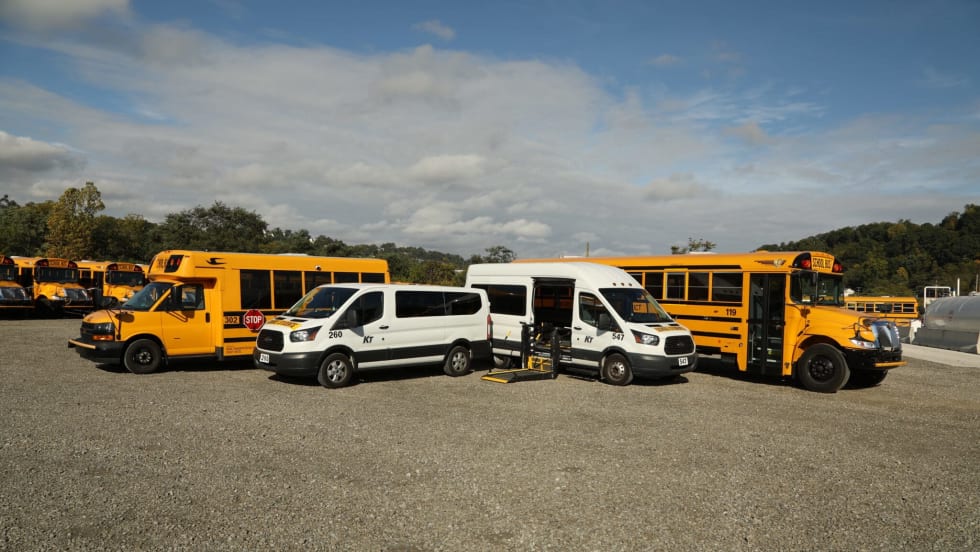
American Student Transportation Partners Acquires AJ Myers and Sons
A new deal brings a 75-year Pennsylvania student transportation provider into one of the nation’s largest private school bus contracting groups.
Read More →
What I Brought Home From SBFX: Relationships, Leadership, and Preparing What's Next
Who could lead your transportation operation tomorrow if you couldn't? Bernando Brown explores succession planning, mentorship, and preparing emerging leaders to step up.
Read More →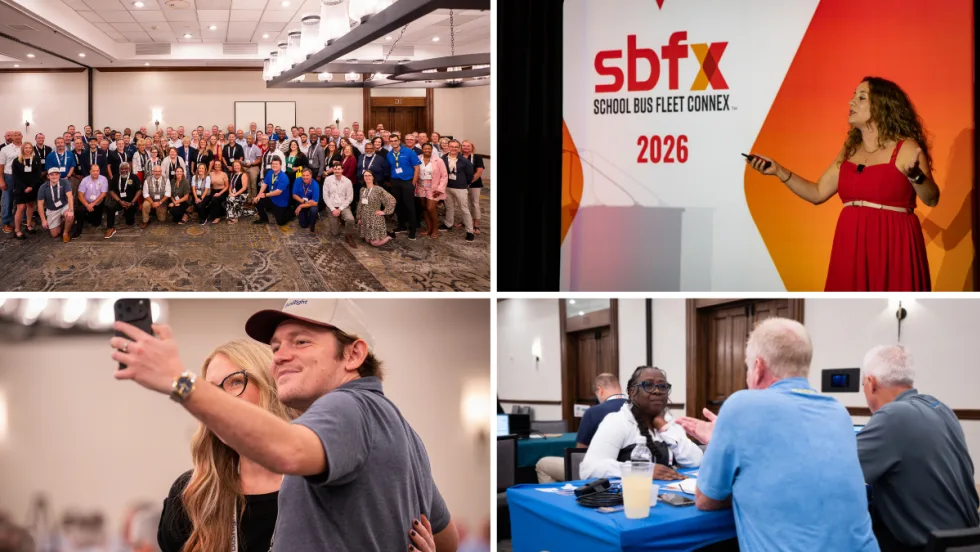
Inside School Bus Fleet ConneX 2026: Industry Leaders Connect in Scottsdale [Photos]
See highlights from SBFX 2026 in Arizona, where school bus operators and suppliers gathered for meetings, education, networking, awards, and more.
Read More →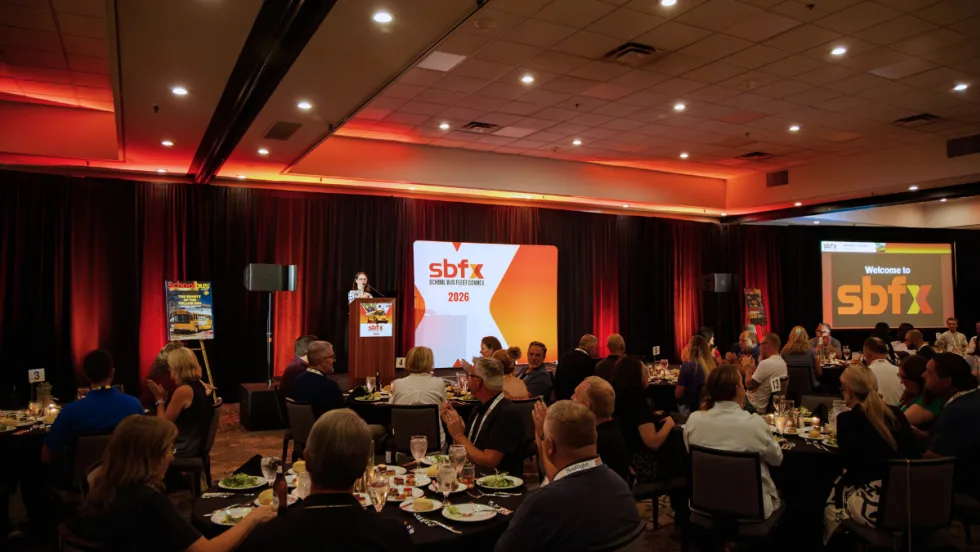
School Transportation’s Biggest Pressures and Opportunities: SBFX Attendees Weigh In
School bus operators point to rising costs, staffing, and vehicle prices as immediate pressures while identifying technology, training, and routing as opportunities for growth.
Read More →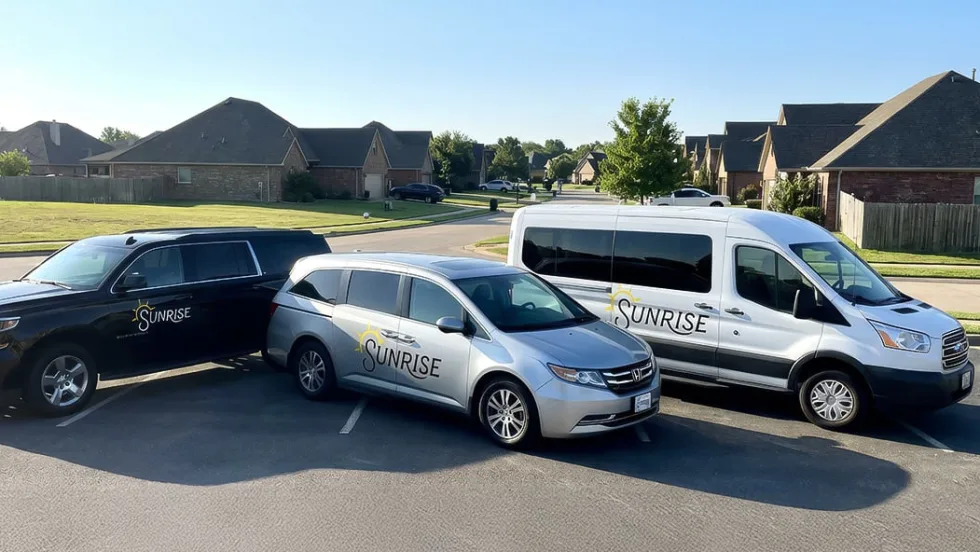
STA Acquires Sunrise Transportation
Student Transportation of America expands in Illinois and Connecticut through Sunrise's fleet of nearly 1,000 vehicles.
Read More →