




Don't dismiss this idea
What else can be done to protect students from stop-arm runners? There’s one approach that, despite its long record of effectiveness, is only required in one state.

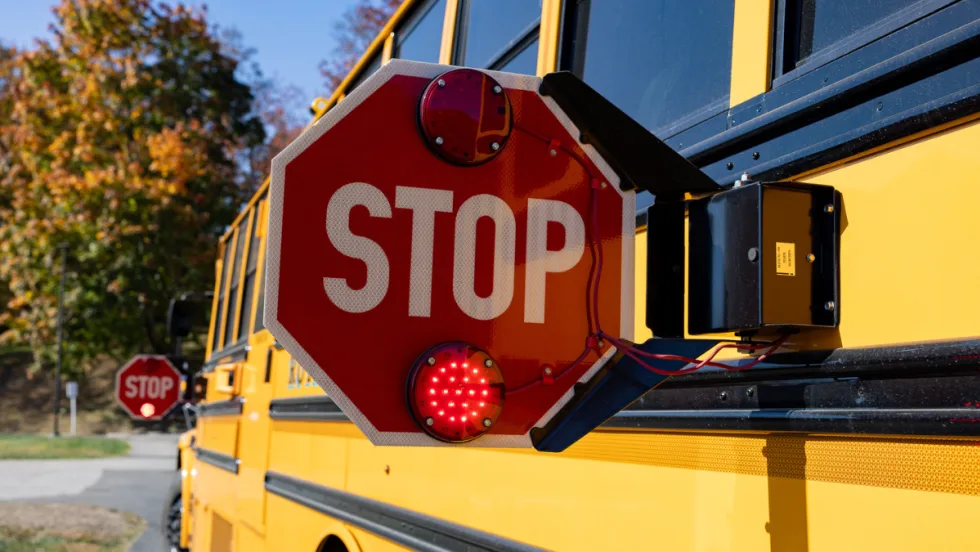
Despite the ongoing efforts of the pupil transportation community, law enforcement and state legislators, motorists continue to illegally pass stopped school buses at alarming rates.
Over the years, we've devoted many pages to the topic of stop-arm running, discussing strategies to cut down on this dangerous scourge. Legislation to increase penalties, using cameras on the outside of the bus, and setting up sting operations with police officers are among the efforts that can help catch, punish and deter bus passers. And these efforts should continue.
But the problem is never going to go away completely. There will always be those motorists who don't realize that they need to stop or who think they can get around the bus without incident.
So what else can be done to protect students from stop-arm runners while they cross the street? There's one approach that, despite its long record of effectiveness, is only required in one state in the country.
As you'll read in our feature on ways to improve safety, California mandates that school bus drivers escort children who need to cross the street to or from the bus. The driver shuts down the bus and walks into the road with a hand-held stop sign to help the student cross safely.
State pupil transportation director John Green says that California has not had a documented death of a student during the driver escort procedure, and the requirement was put in place in the 1950s.
According to the Kansas State Department of Education's most recent national survey, seven children in the U.S. were killed by a passing vehicle while loading or unloading from their school buses in the 2008-09 school year. Ten children were struck and killed by their own bus.
Green has long been following the loading/unloading statistics and has been urging other states to give the driver escort practice a shot. He gained some headway at the National Congress on School Transportation in May when it was included as an approved alternative method in the appendix of the industry's specifications manual.
But Green says that he typically meets resistance when he shares the idea with industry people from other states. Common concerns include the amount of time the process might add to routes, whether chaos would break out when the driver leaves the bus, and whether it would work in winter weather.
"I think we have an excellent answer for each and every one" of the concerns, Green says. For example, he says that the escort process can actually save time — particularly with middle schoolers, who are known to lollygag when left to their own devices.
And any kind of transportation environment experienced in other states most likely exists in some form in the expansive state of California.
"We have major metropolitan areas with gang violence. We have deserts and rural areas. We have freezing weather in the Sierras. And [the escort method] seems to work in every single situation," Green says.
But it's not about wanting everyone to just do what California does, Green insists.
"The bottom line is the statistics," he says. "If the driver gets out of that seat, they'll protect the kids better than any piece of technology."
More Safety
Illegal School Bus Passing Drops 24% in New York Districts
With fewer than 5% of citations involving repeat offenders, Westchester County officials said enforcement, education, and community partnerships are helping change driver behavior.
Read More →
School's Back. Here's What Happened to Traffic, Speeding & Distraction
What happens to traffic when school resumes? New data analysis examines changes in distracted driving, congestion, and speeding around schools.
Read More →
Geotab Expands Fleet Safety Tools With Video Coaching, Risk Insights
New safety and video capabilities aim to help fleet managers assess risk, support drivers, and take targeted action through video coaching, red-light violation detection, and more.
Read More →

How to Build a Better School Bus Driver Training Program
Is it time to strengthen your driver training? Here’s how to pick the right talent and improve recruitment, retention, and safety. This video is brought to you by IC Bus.
Read More →
Recent School Bus Accidents Leave 2 Dead, 2 Injured
Four school bus crashes in Florida, Illinois, and Georgia highlight risks in transportation lots, at bus stops, and during student loading and unloading.
Read More →
When Every Second Matters, Clarity Keeps Routes Moving
From routine delays to urgent incidents, strong communication practices help drivers, dispatchers, schools, and families respond with confidence.
Read More →
What Happens When a School Bus Catches Fire — and What Can Help
School bus fires are rare but can be devastating. Learn how advances in fire suppression and asset protection help fleets detect fires earlier, reduce damage, and improve safety.
Read More →
Geotab Launches Tool to Help Fleets Investigate Road Incidents
Geotab Investigations combines telematics data, video, documents, and other evidence to help fleets reconstruct incidents, resolve claims, and determine what happened.
Read More →
Texas Sixth Grader Wins 2026 National School Bus Safety Poster Contest
Sai Darshana Yekolu of Moseley Middle School in Prosper, Texas, was named the newest winner for her artwork, bringing the theme of “Safe Rides, Everyday Heroes” to life.
Read More →
Doing More With Less: How Transportation Directors Can Prioritize Safety Amid Budget Uncertainty
With diesel prices soaring and nearly one-third of transportation directors expecting budget cuts, maintaining student safety has never been more challenging. Download this guide to learn how leading districts are prioritizing risk, funding critical safety technology, and building stronger budget cases with data.
Read More →