




Do your fleet's wiring specs follow NCST recommendations?
Last year, the 13th National Conference on School Transportation (NCST) approved a 361-page document called National School Transportation Specificati...

Last year, the 13th National Conference on School Transportation (NCST) approved a 361-page document called National School Transportation Specifications and Procedures. The document proffers recommendations on equipment and operations, including a section on school bus wiring, which is reprised here. To order a copy of the document, contact the Missouri Safety Center, Central Missouri State University, Humphreys Ste. 201, Warrensburg, MO 64093. Or you can call (660) 543-4830. A. All wiring shall conform to current SAE standards. B. Circuits
1. Wiring shall be arranged in circuits, as required, with each circuit protected by a fuse or circuit breaker. A system of color and number coding shall be used and an appropriate identifying diagram shall be provided to the end user, along with the wiring diagram provided by the chassis manufacturer. The wiring diagrams shall be specific to the bus model supplied and shall include any changes to wiring made by the body manufacturer. Chassis wiring diagrams shall be supplied to the end user. A system of color-and-number coding shall be used on buses. The following body interconnecting circuits shall be color-coded as noted:
FUNCTION -- COLOR
Left Rear Directional Lamp –- Yellow
Right Rear Directional Lamp -- Dark Green
Stop Lamps -– Red
Back-up Lamps -- Blue
Tail Lamps -– Brown
Ground –- White
Ignition Feed, Primary Feed -– Black
The color of the cables shall correspond to SAE J 1128. 2. Wiring shall be arranged in at least six regular circuits as follows:
a. Head, tail, stop (brake) and instrument panel lamps
b. Clearance lamps and stepwell lamps that shall be actuated when the service door is open
c. Dome lamps
d. Ignition and emergency door signal
e. Turn signal lamps
f. Alternately flashing signal lamps
Any of the above combination circuits may be subdivided into additional independent circuits.
4. Heaters and defrosters shall be wired on an independent circuit.
5. Whenever possible, all other electrical functions (such as sanders and electric-type windshield wipers) shall be provided with independent and properly protected circuits.
6. Each body circuit shall be coded by number or letter on a diagram of circuits and shall be attached to the body in a readily accessible location.
C. The entire electrical system of the body shall be designed for the same voltage as the chassis on which the body is mounted.
D. All wiring shall have an amperage capacity exceeding the design load by at least 25 percent. All wiring splices are to be done at an accessible location and noted as splices on the wiring diagram.
E. A body-wiring diagram of a size that can easily be read shall be furnished with each bus body or affixed in an area convenient to the electrical accessory control panel.
F. The body power wire shall be attached to a special terminal on the chassis.
G. All wires passing through metal openings shall be protected by a grommet.
H. Wires not enclosed within the body shall be fastened securely at intervals of not more than 18 inches. All joints shall be soldered or joined by equally effective connectors, which shall be water- and corrosion-resistant.
More Maintenance
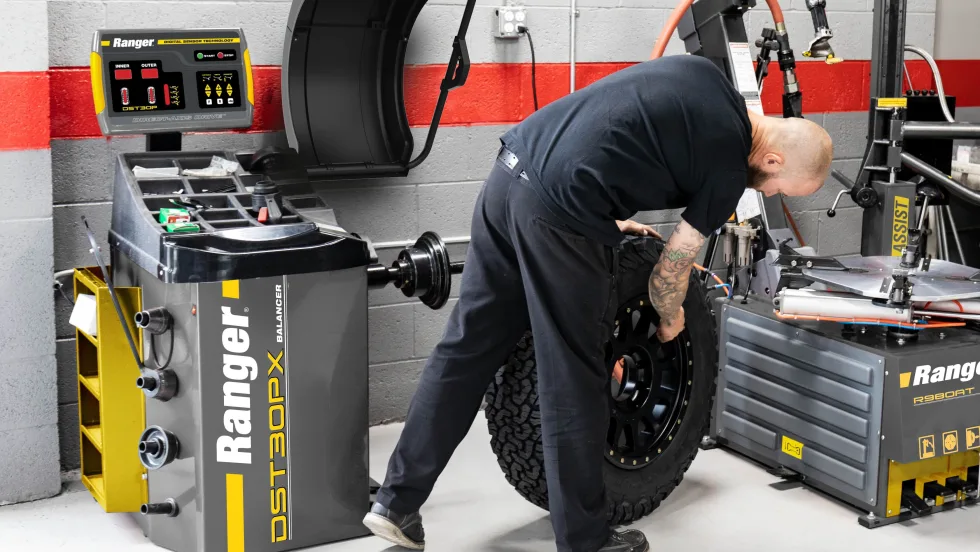
BendPak Launches Ranger DST30PX Wheel Balancer
BendPak's new wheel balancer handles tires up to 43 inches in diameter, with a reinforced design, precise weight placement, and faster service cycles.
Read More →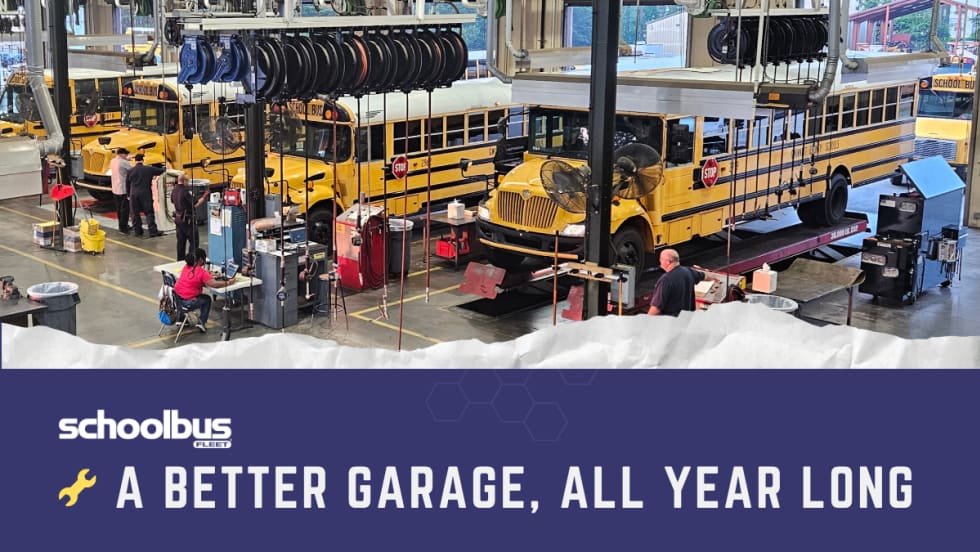
Tips for Ensuring School Bus Garages Are Safe and Warm Year-Round
Cold maintenance bays and rising heating costs? Learn how school bus garages can improve comfort with targeted heating, better airflow, and winter preparation.
Read More →
ASE Highlights School Bus Technician Certification Requirements
ASE is encouraging school bus maintenance professionals to maintain their certifications, highlighting seven specialized tests and five-year renewal requirements.
Read More →
International Adds E-Commerce Capabilities to Fleetrite.com
IC Bus customers can now browse, buy, and track shipments for more than 400,000 aftermarket parts online.
Read More →
The Most Expensive Thing You Do Before Selling a School Bus: Wait
When should you sell an aging school bus? Learn how maintenance, mileage, corrosion, specifications, and timing can affect resale value long before the auction.
Read More →
The Evolution of DEF Header Technology: What School Bus Operations Should Know at Replacement Time
See what school bus fleets should consider when replacing DEF headers to improve reliability, reduce repeat repairs, and control maintenance costs.
Read More →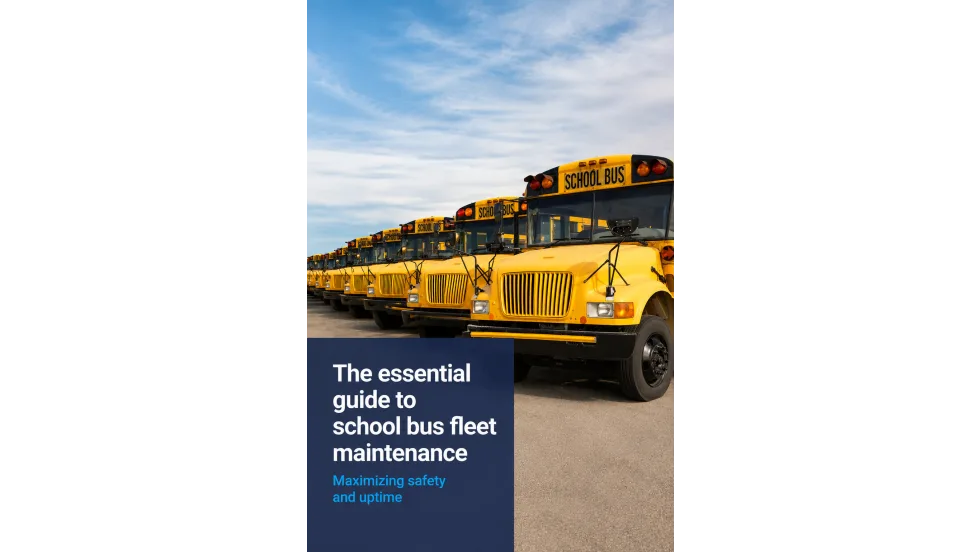
The Essential Guide to School Bus Maintenance and Student Safety
Your district's buses carry students to school every day. This guide shows how predictive maintenance powered by fleet data helps keep buses reliable, drivers accountable and students safer from the first bell to the last stop.
Read More →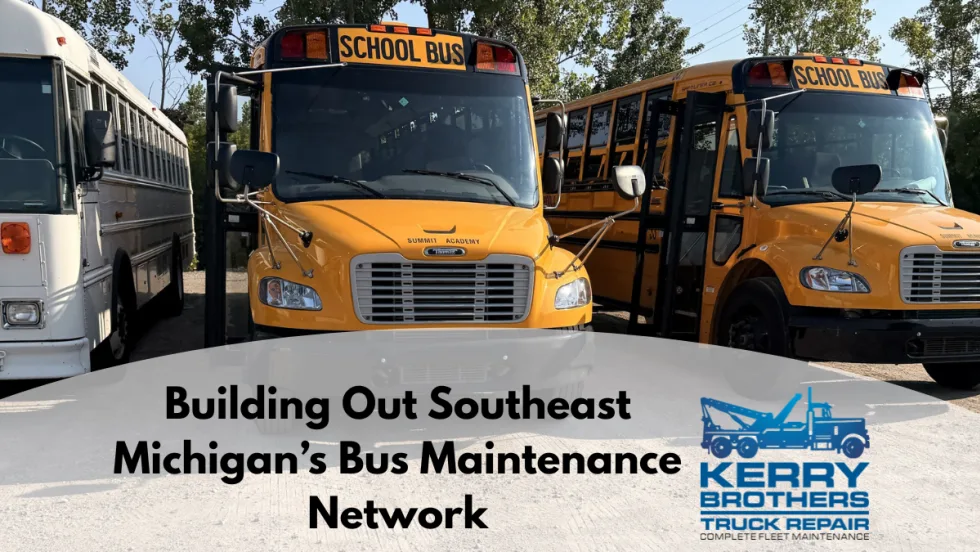
Kerry Brothers Grows Michigan School Bus Repair Network
The acquisition of Downriver Truck and Bus expands Kerry Brothers’ school bus maintenance footprint across southeast Michigan, adding repair capacity, diagnostic resources, and state inspection support.
Read More →
Noregon Introduces CAN Bus Diagnostic Tool, Expands JPRO Features
CAN Mentor and the latest JPRO update aim to simplify vehicle network diagnostics and improve repair efficiency for technicians of all experience levels.
Read More →
Cummins on Smarter, Simpler Engine Innovation
Cummins discusses its first-ever gasoline engine for school buses, EPA 2027, and why bus fleets still want durable, simpler internal combustion options.
Read More →