




A mile in their wheelchairs
Drivers who transport people with disabilities should be aware of their passengers’ needs and challenges. But can they be taught to truly understand? ...
Drivers who transport people with disabilities should be aware of their passengers’ needs and challenges. But can they be taught to truly understand? An extreme example of “sensitivity” training provides insight.
In 1982, when I began my paratransit operating company, PTS Transportation, in Los Angeles County, I had just completed directing a U.S. Department of Transportation (DOT) funded study of 30 systems in 18 U.S. cities, and I had just written a three-volume manual on the subject published by the DOT in 1980.
As far as the state-of-the-art, three cities (Portland, Maine; Ft. Lauderdale, Fla.; and especially Tulsa, Okla.) knew what they were doing. The others were beyond clueless, and it would not be unfair to describe their operations as laughingstocks of ignorance.
But from the three communities that knew what they were doing, I managed to derive the principles of demand-responsive operations that literally governed system efficiency. These same principles apply to special-education transportation and, to a lesser degree, fixed-route service.
Among the activities I observed during my DOT study was driver training. Because it was in its formative stages (almost a decade before the ADA’s promulgation), sensitivity training was included in some form or another and was rife with innovation.
So when I finally began my own operation in 1982, we integrated everything of value that I had seen and learned into a unique program that effectively made our drivers “live the life” for at least one long day.
‘Journey of Hell’
We told our new trainees to report to work on an empty stomach, bringing only a change of underwear. When they arrived, we:
duct-taped them into wheelchairs,
sprinkled popcorn in their shoes (to simulate bunions),
stuffed cotton in their ears,
outfitted them with cheap sunglasses coated with Scotch tape,
taped their good arm to an arm of the wheelchair,
and fed them breakfast — lots of strong, caffeinated coffee and bran muffins.
They were then loaded onto a vehicle for their “field day” as a disabled individual.
Of course, they all knew they only had to bear this ruse for a crummy day. Still, a third of them quit after merely riding up on the wheelchair lift. So much for their potential.
Otherwise, after spinning their unsecured wheelchairs a few laps around the parking lot (we spaced the chairs too close together to tip over), we then secured the chairs properly, and the passengers properly into them, and began the “Journey of Hell.”
We dropped them off at a shopping mall and set them loose for three hours to wheel themselves around, each with some “pocket change.”
Unbeknownst to them, we had hired a few “thugs” to not only hassle them, kick their chairs, and degrade and humiliate them, but to actually shake them down and steal their spending money and other personal articles. (Of course, we tipped off the mall’s security forces to this scam.)
Around 10 a.m., the bran muffins began to kick in. So by 11:30, when we picked them up, most of our trainees were pretty sticky, pretty angry and pretty smelly.
But they were beginning to understand being disabled — even while they knew they would return to normal life in a few more hours.
You call that a break?
Around noon, we took the drivers to a nutrition program for lunch. They were finally allowed out of their chairs for a belated bathroom break. But no change of underwear.Back into the chairs, good arm taped to the armrest, they were then treated to what we had arranged to be the worst lunch of their lives.
After lunch, we drove them around for a long time, mostly over bumpy roads and in stop-and-go freeway traffic, jerking and jolting them to nausea to the degree we could.
Then we let them off at a supermarket (a few had some money left from their morning robbery), and 90 minutes later, we returned to pick them up and deliver them to the storage yard — where they were met by a handful of genuine wheelchair users (who expressed their appreciation) and a camera crew.
A lot of tears were exchanged, and the driver trainees then learned that the entire episode had been filmed by a local TV network crew.
It was shown on television that evening, everyone felt great and I thought we had performed a miracle. We felt like we had a work force that really understood.
From pity to respect
As good as all this sounds, I slowly began to learn that, to a degree, our efforts defeated the purpose of our training and provided a corporate culture counter to our needs and our goals.Our fundamental mistake was that we made our drivers feel sorry for the passengers.
This realization began to sink in as we began to transport more and more severely disabled individuals — individuals frozen into bodies that barely worked, many with speech capabilities resembling grunts that their case workers barely understood.
These folks were trapped into prison sentences that few of our drivers could or would have endured had they been given any chance to do otherwise.
Yet with all the suffering these individuals endured, they laughed, they told stories, they cracked jokes, they sang along with the tunes on the vehicles’ radios and they were intensely interested in not only one another’s lives, but also in what our drivers had to say and the lives they led.
And the passengers loved the programs they attended. They loved the ride. And they loved our drivers. They looked forward to almost everything.
As these experiences slowly sank in with our drivers, one by one, a miraculous transformation began to occur: The feelings of pity they had felt for the passengers began to erode and were replaced by feelings of genuine respect.
We were dealing with passengers who, despite severe impairments that might leave others in despair, chose to embrace life and never waste a moment of it.
The essence of these passengers was not pity or helplessness — it was courage.
As our drivers began to recognize this, our corporate culture morphed into a strange mix of dedication and self-enforcement, where doing anything less than perfectly was unthinkable.
Our drivers didn’t pity these passengers at all. They were, simply put, in awe of them.
Dedicated service
When this sensibility began to pervade the work force, our management efforts became a cakewalk. The peer pressure was so forceful that our management rarely encountered a passenger-related mistake serious enough to address.Not everything was perfect, of course. We still reviewed logs daily, and the typical operating adjustments were made to match the actual running times with those on the schedules, allowing for loading and other variables.
And we caught our drivers doing plenty of dumb things apart from the passengers.
But errors and omissions that are commonplace today — failing to secure a wheelchair, speeding, rudeness, sexual harassment, molestation — were unheard of and, frankly, unthinkable in our operation, so much so that while we had a litany of policies for which we would fire drivers on the spot, we rarely had to do so. In 10 years of operations, I don’t recall hearing of a single wheelchair tipping over. And with tens of millions of miles of travel, we experienced only one serious accident injuring a passenger.
I think that developing this type of work force is a lot easier in a special-education environment than in a general-education one.
The ultimate reality is that drivers must learn to recognize the depths to which their passengers’ lives are unlike their own.
Ned Einstein is a consultant and forensics expert in various transportation fields, including school bus, transit, paratransit and motorcoach. He can be reached ateinstein@transalt.com.
More Special Needs Transportation
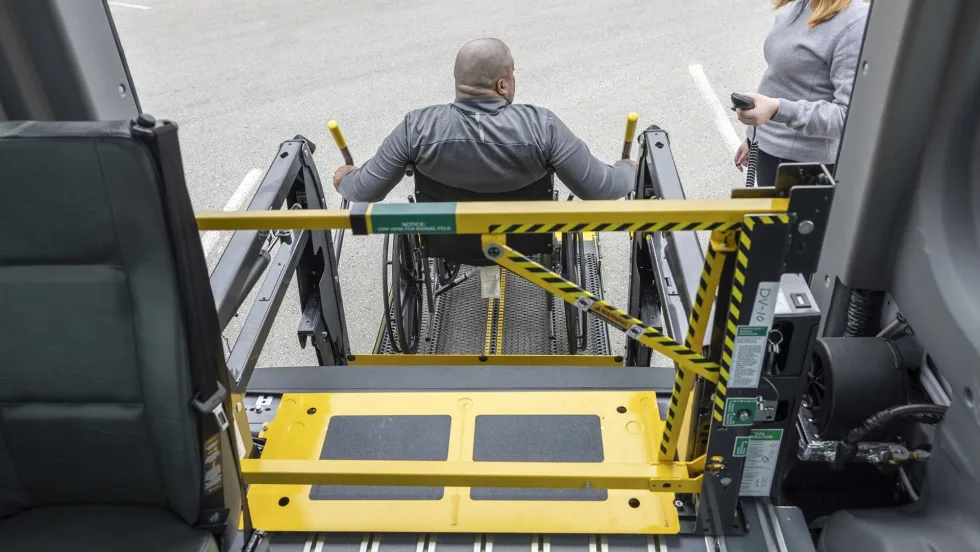
BraunAbility Introduces New Safety Barrier for Wheelchair Lifts
LiftSentinel is designed to add another layer of protection during wheelchair loading and unloading and can be retrofitted to many existing commercial lift installations.
Read More →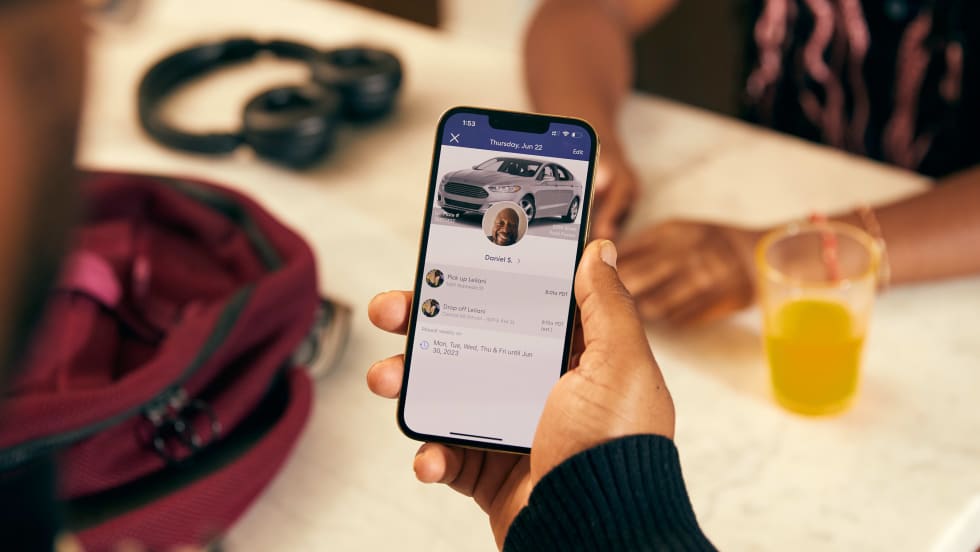
HopSkipDrive Launches New Safety, Driver Consistency Features for 2026-27 School Year
The company’s free ride recording, live ride tracking, and consistent driver assignments aim to improve safety and continuity for diverse student transportation needs.
Read More →
The Most Common Wheelchair Securement Mistakes on School Buses (and How to Fix Them)
Small missteps in wheelchair securement can have serious consequences. Here are 32 tips from experts to reduce risk and increase student safety on the bus.
Read More →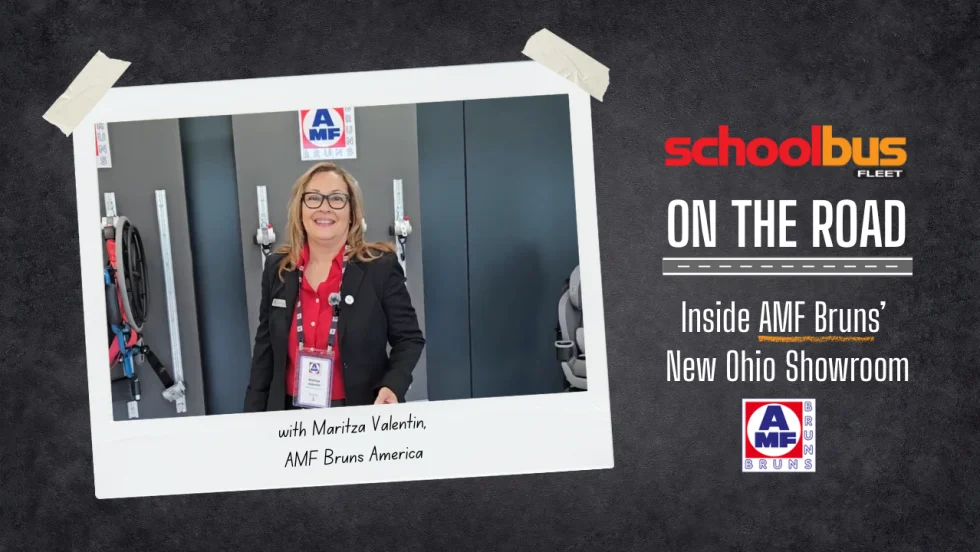
Inside AMF Bruns’ New Showroom: School Bus Securement Solutions Explained
Go inside AMF Bruns America’s new Ohio showroom with Maritza Valentin to see its FutureSafe technology, driver training tools, securement systems, and seating innovations.
Read More →
What AMF Bruns’ New Facility Means for Customers [Video]
Inside AMF Bruns’ new Stow, Ohio, operations: See how expanded space and innovation will enhance customer support and operations.
Read More →
AMF Bruns Expands in Ohio, Investing in Growth and Community
With expanded production space, local investment, and a growing workforce, AMF Bruns is scaling its U.S. presence. Here’s an exclusive first look inside the new Stow, Ohio, HQ.
Read More →
Inside AMF Bruns of America’s New Ohio Manufacturing Facility [Photos]
Take a behind-the-scenes look at AMF Bruns of America’s new 41,000-square-foot Stow, Ohio, headquarters, featuring advanced manufacturing, expanded space, and future-ready mobility solutions.
Read More →
First Student Boosts Student Support in Wichita & Texas
First Student and Wichita Public Schools are using behavioral support strategies to improve student ride experiences, while a separate initiative expands access to after-school programs through a bus donation.
Read More →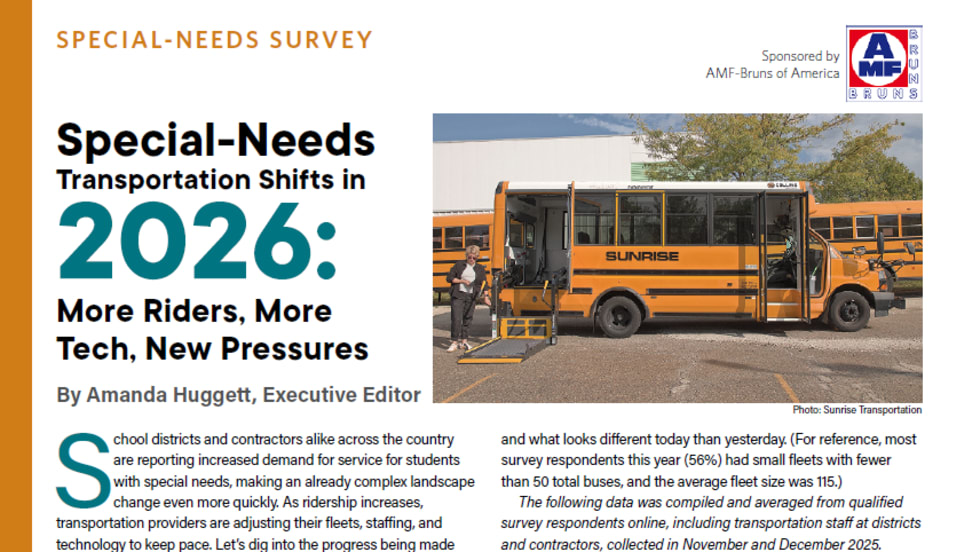
2026 Special-Needs Transportation Survey
What’s changing in special-needs transportation? This year, student transportation operators report a rising need, easing driver shortages, growing tech adoption, and evolving challenges. Sponsored by AMF Bruns of America.
Read More →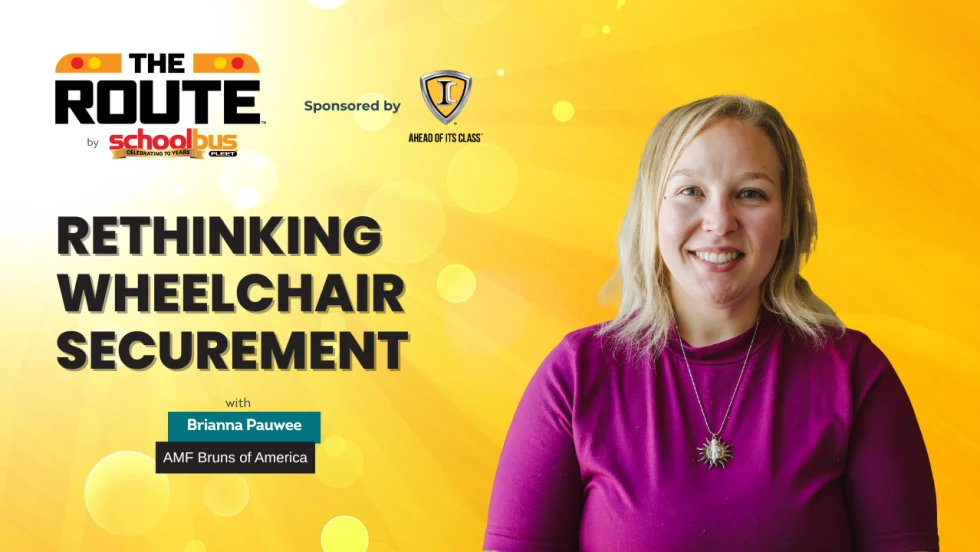
The Lived-Experience Gap in Mobility Tech: An Expert Take on Safe Student Transportation
Brianna Pauwee, a product application specialist at AMF Bruns of America and a wheelchair user, drops in to The Route to share practical securement and training insights, plus the story behind the new “Beyond Mobility” podcast. The Route is sponsored by IC Bus.
Read More →