




11 Special-Needs Driver Team Mistakes and Their Remedies
The school bus driver is the leader of the special-needs driver team and, as such, has many responsibilities to fulfill for a successful and safe rout...
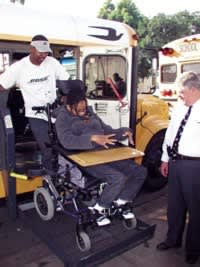
The school bus driver is the leader of the special-needs driver team and, as such, has many responsibilities to fulfill for a successful and safe route service for special-needs student riders. This article outlines 11 common mistakes special-needs driver teams make. Special-needs bus drivers can replace these mistakes with their corresponding remedies, assuring a greater level of success and safety for riders and increased professionalism among the transportation team. Success as a school bus driver team can be reasonably guaranteed when these mistakes are recognized and remedied and when those remedies are regularly tested for successful implementation.
1. Pre-trip cooperation breakdown
The first major mistake occurs when a driver fails to work with the assistant during the pre-trip inspection. It’s especially important to work with the assistant when checking the rear turn signals, brake lights, red and amber flashers and the clearance lights on the bus exterior. The driver alone cannot observe these all-important bus functions from inside the bus, especially in the dark or during early morning hours. A much more convenient way to perform the pre-trip inspection is to have the assistant help by observing from the outside while the driver operates the bus from within. For the driver to "go it alone" is not safe, regardless of the number of years of experience that driver has on a special-needs bus.
Consider the following question: Where is a lift bus most likely to be struck when loading a wheelchair user? From the rear, the front or the side? Answer: The lift bus is most likely to be struck from the rear. Could rear lights that are improperly working be a contributing factor to such an accident? Of course. Is the bus assistant’s help during the bus exterior pre-trip inspection really all that important? You bet your life, and (literally) the lives of all others on board.
REMEDY: Have the bus assistant inspect the exterior of the bus while the driver operates the switches and controls from within the special-needs bus. The driver and assistant should cooperate to perform this test together every morning without fail.
2. Leaving prematurely
A driver must never leave the bus lot without doing a complete check of the hydraulic lift equipment with the bus assistant. If the lift is not deployed completely, does not go to the ground completely, is not powered back up and not stowed by both driver and assistant, it will be impossible to know if the lift will fail during the first real use with a wheelchair student.
Regardless of its continuous lifting capacity, a lift platform should perform flawlessly during an empty test lift in the bus yard. When the driver does not do a lift test together with the bus assistant before every morning run, it makes both team members potential co-conspirators in lift failure. Murphy’s Law suggests that without a thorough lift pre-test, lift failure might occur at an inopportune time and under trying or unsafe circumstances along the route with a real student in a real wheelchair or a scooter.
REMEDY: Inspect and operate lifts through a complete test cycle with an assistant’s help before every morning run. Performing lift equipment tests reduces the safety risk of lift failure during the remainder of morning and afternoon runs.
3. Not checking the wheelchair tiedowns
Special-needs buses require drivers and assistants to check out the equipment within the bus to see if all is present, operating safely and ready to use. By checking together, both can confirm and reconfirm that the wheelchair or scooter tiedowns are present, that they are working effectively and that no parts are missing or defective or need repair.
REMEDY: Assistants and drivers must communicate when inspecting interior bus equipment and take appropriate action when something is wrong. Have drivers cross-check with assistants the wheelchair tiedown equipment. Any equipment needing repair or replacement should result in a work order being written up immediately.
4. Not inspecting occupant restraint systems
Without proper occupant restraint safety, such as when chest belts are not in the right place, students can tip over in their chairs or suffer injuries. Since both driver and assistant know the size and the configuration of each wheelchair user’s equipment and where it will be situated on the bus, they know after a careful inspection of the occupant restraint system whether it will work for each student.
The worst-case scenario for both wheelchair tiedown and occupant restraint inspections occurs when drivers and assistants do not perform the inspection before the morning route. This is the worst situation because, should there be a collision, those occupant restraints will be improperly positioned on the chair or around the student or could prove to be damaged equipment that fails during a collision.
REMEDY: Ensure that drivers and assistants cross-check with one another that all occupant restraint equipment is in working order and properly configured before every run.
5. Not inspecting CSRS
Inspecting every child safety restraint system (CSRS) must be a shared duty and responsibility between both driver and assistant before CSRSs are used on any route. For infants transported in rear-facing CSRSs, for children weighing less than 40 pounds being transported in forward-facing CSRSs and for children weighing more than 40 pounds being transported in EZ-On Vests or Gorilla Seats™, this equipment must be inspected frequently and carefully. These types of CSRSs must be installed correctly in a seat-belt ready Federal Motor Vehicle Safety Standard 213 school bus bench seat. The seat’s lap belts must be positioned correctly through the right belt pathways and fit snugly for every infant or child required to use a CSRS.
Remedy: Drivers and assistants must know each student’s CSRS equipment. They must be able to comply with the CSRS manufacturer’s directions. They must also know how to check all types of CSRS on their buses, and do so before every individual route.
6. Mishandling student needs
School bus drivers who do not read their operation’s special-needs transportation eligibility forms do not know the special handling requirements of each of their students. They will have trouble communicating with others who do know. Such drivers do a disservice to every student bus rider, their families and to the assistant on the driver team.
In addition to not reading paperwork about their student riders, drivers who do not learn by observing and working with each special-needs student on every run are making an even greater mistake. By not making the effort to understand the student as an individual and by not understanding his disability (or multiple disabilities), the driver cannot understand when or why the student may act the way he does.
REMEDY: Make it mandatory for drivers and assistants to read about their students. Encourage them to ask questions of their rider’s parents, special educators at school and other transportation staff to learn everything possible about providing appropriate special handling on the bus for each student. Test your staff by asking them if they know the names of the following: the school principals, the special-needs teachers and the school nurses. If they do not know the answers, there is much room for improvement.
7. Mismanaging student behavior issues
Special-needs student management on the bus is primarily the responsibility of the assistant, not the driver, whose first obligation is to operate the vehicle safely and appropriately. While the driver may have (in the eyes of the students) more authority than the assistant, any professional driver should be completely supportive of the assistant in his or her efforts to manage the behavior of special-needs students during the bus ride.
REMEDY: Make sure driver teams assign students seats and enforce their using those assigned seats. Ask drivers and assistants to address students as they board by first name and notice how much better they usually behave if they are recognized as individuals. Always have a valid and current seating chart for each special-needs bus and make sure the students are abiding by it. Make sure drivers allow assistants to handle minor discipline issues while the bus is moving.
8. Avoiding confrontation
When special-needs students seriously act out on the bus or when they have a crisis, drivers must not avoid getting involved. Pulling over and waiting for the police to arrive is not an intervention technique. Drivers and assistants together can prevent crises from occurring on their bus in several ways.
1. They can intervene between two students when conflicts are building between them by pulling over before a fight breaks out.
2. They can write up each student who misbehaves on the bus and submit the write-ups for a solution from the school administration. For special-needs students, it may require having the special-education instructional assistant ride the bus to arrive at a better bus behavior solution.
3. Drivers can write a more serious incident report when a student threatens the life of another, injures herself or others, needs a nurse’s attention or when the police are called. The response from the IEP committee may be to develop a behavior intervention program that includes what the driver team should do when responding to special-needs student crises on the bus.
REMEDY: Have your school district’s special-needs student management training program and crisis prevention programs apply to the bus ride. Never allow drivers or assistants to walk away from a student crisis without directly assisting the person managing the problem.
9. Ignoring proper lifting techniques
When special-needs students require lifting or transfer from their wheelchairs or scooters to their school bus seats, the driver should wear a back-support belt and use proper lifting techniques. Bus drivers and assistants together must often perform two-person lifts to transfer small children from a lift platform ride to their strollers onboard the bus and into a CSRS. Improper lifting can result in back injuries to either adult or possibly the child.
REMEDY: Have a physical therapist demonstrate how each student should be lifted using a one-person or two-person lifting technique. The driver must coordinate the lift every time with an assistant to perform the lift as instructed by the therapist. Have the driver team use back-support belts at all times when lifting. However, do not rely on the belt solely to prevent back injuries. Improper lifting may cause back injuries whether the belt is worn or not.
10. Failing to report all injuries
The driver team should report all injuries to the school nurse no matter how minor they may be. School district liability is greatly enhanced when all school employees do not perform their responsibilities consistently and according to school district policy. It is a requirement of all school districts to report any major or minor injuries wherever they occur. This includes the approach to the school bus (even on private property), within the school bus, at the school loading zone (during exiting or boarding) and on the afternoon ride home. Injuries sustained while a student exits the bus at the stairwell and injuries sustained all the way back up to a student entering the door of his residence also apply.
REMEDY: The driver should have available on the special-needs bus a form for reporting minor injuries and a copy of the school district policy stating that all injuries, no matter how minor, should be reported to the school nurse. The school nurse is, in turn, responsible for contacting the parents following the inbound bus ride to school or during the outbound bus ride to home. Parents can be contacted directly by the driver, but it is preferable to contact the school nurse, have her examine the child and then contact the parents.
11. First-aid failures
A driver team is responsible for maintaining full and current certifications on First Aid and CPR on a year-to-year basis by taking proper certification renewal classes. Unfortunately, a great many drivers delay or ignore their initial training in First Aid and CPR, which is provided by the American Heart Association, the National Safety Council, the American Red Cross and others. Even more drivers get certified but fail to renew their certification when the time comes to do so. By not being retested, drivers cannot assure themselves and their employing school district or transportation operation that they are capable of saving a life.
REMEDY: Examine the CPR and First-Aid certification cards for your driver teams. Make a note of the dates when the classes were taken and when they need to be renewed. Establish a mandatory schedule for drivers and assistants to follow.
Dr. Ray Turner, special-needs transportation coordinator at Northside Independent School District in San Antonio, is the author of 72 newsletters and matching PowerPresentations on special-needs transportation training topics. For more information about these newsletters and other training materials, visit www.whitebuffalopress.com or e-mail drturner@earthlink.net.
More Special Needs Transportation
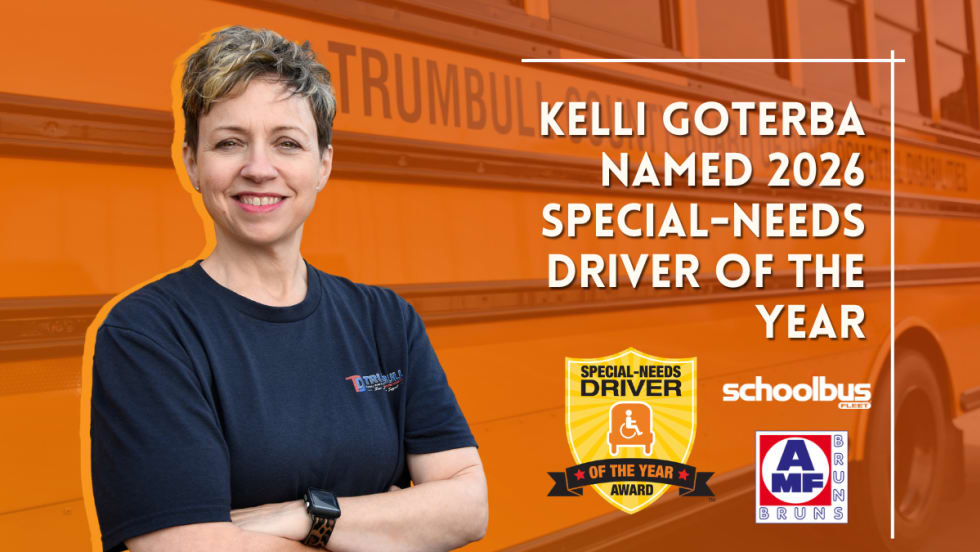
Kelli Goterba Named 2026 Special-Needs School Bus Driver of the Year
Through building trust with students and strengthening her transportation team, Goterba exemplifies the impact special-needs drivers can make.
Read More →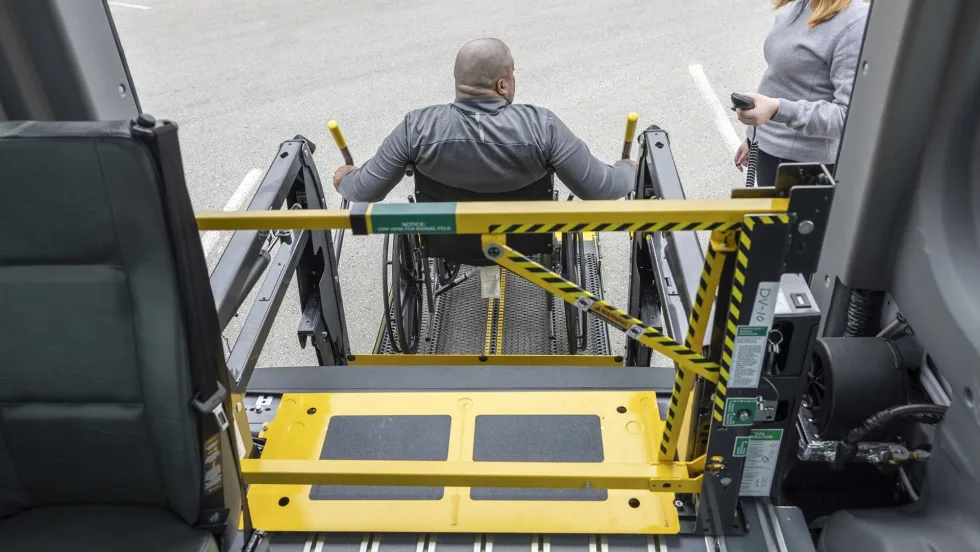
BraunAbility Introduces New Safety Barrier for Wheelchair Lifts
LiftSentinel is designed to add another layer of protection during wheelchair loading and unloading and can be retrofitted to many existing commercial lift installations.
Read More →
HopSkipDrive Launches New Safety, Driver Consistency Features for 2026-27 School Year
The company’s free ride recording, live ride tracking, and consistent driver assignments aim to improve safety and continuity for diverse student transportation needs.
Read More →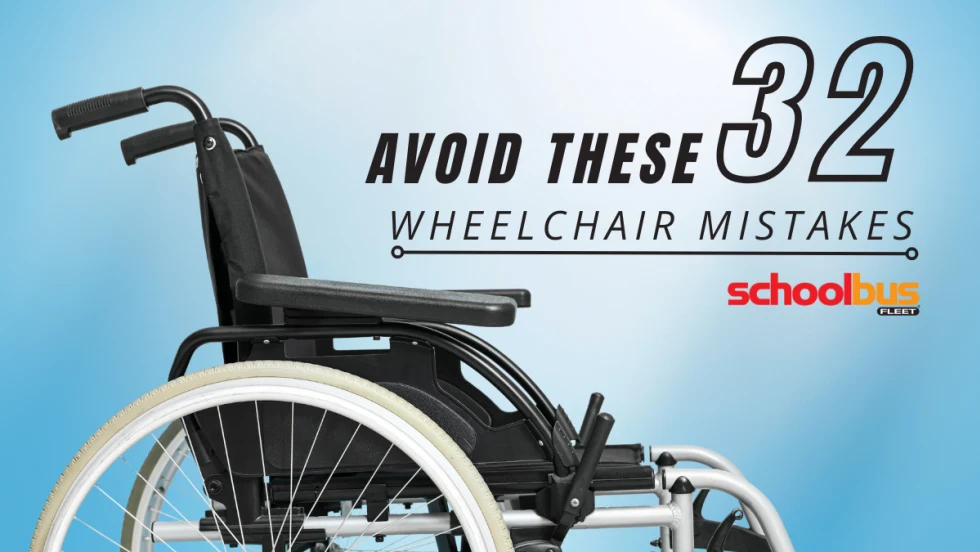
The Most Common Wheelchair Securement Mistakes on School Buses (and How to Fix Them)
Small missteps in wheelchair securement can have serious consequences. Here are 32 tips from experts to reduce risk and increase student safety on the bus.
Read More →
Inside AMF Bruns’ New Showroom: School Bus Securement Solutions Explained
Go inside AMF Bruns America’s new Ohio showroom with Maritza Valentin to see its FutureSafe technology, driver training tools, securement systems, and seating innovations.
Read More →
What AMF Bruns’ New Facility Means for Customers [Video]
Inside AMF Bruns’ new Stow, Ohio, operations: See how expanded space and innovation will enhance customer support and operations.
Read More →
AMF Bruns Expands in Ohio, Investing in Growth and Community
With expanded production space, local investment, and a growing workforce, AMF Bruns is scaling its U.S. presence. Here’s an exclusive first look inside the new Stow, Ohio, HQ.
Read More →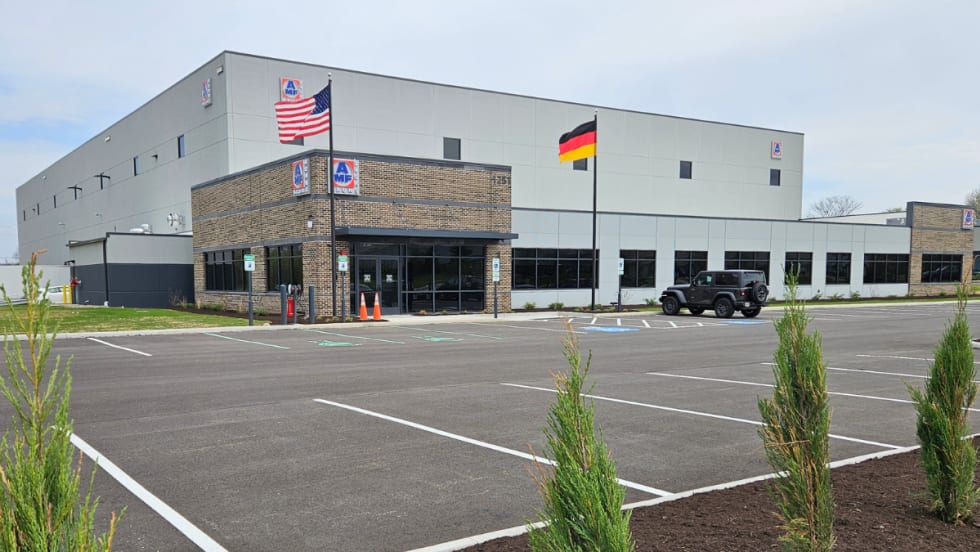
Inside AMF Bruns of America’s New Ohio Manufacturing Facility [Photos]
Take a behind-the-scenes look at AMF Bruns of America’s new 41,000-square-foot Stow, Ohio, headquarters, featuring advanced manufacturing, expanded space, and future-ready mobility solutions.
Read More →
First Student Boosts Student Support in Wichita & Texas
First Student and Wichita Public Schools are using behavioral support strategies to improve student ride experiences, while a separate initiative expands access to after-school programs through a bus donation.
Read More →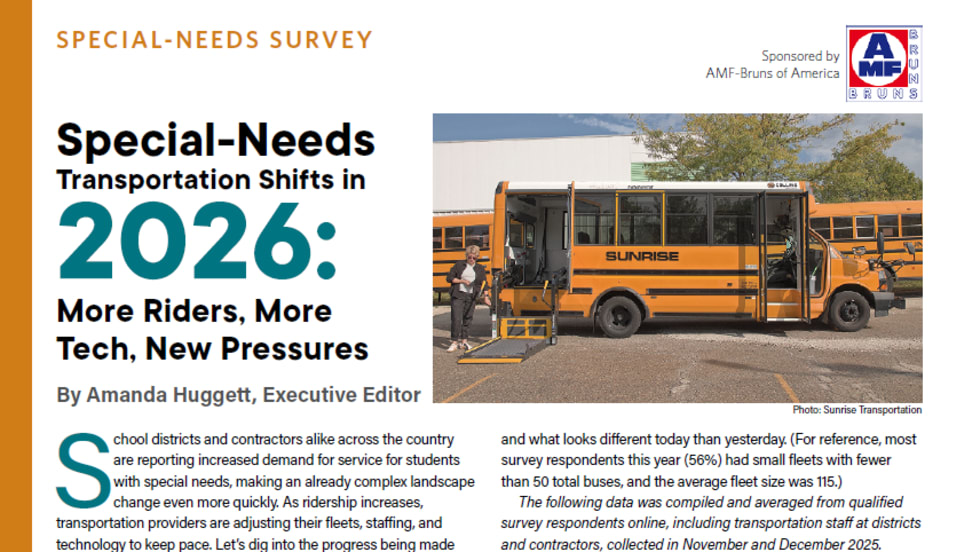
2026 Special-Needs Transportation Survey
What’s changing in special-needs transportation? This year, student transportation operators report a rising need, easing driver shortages, growing tech adoption, and evolving challenges. Sponsored by AMF Bruns of America.
Read More →